
Acute Coronary Syndromes — Flashcards

In Inferior wall MI with hypotension, brisk administration of _____ is recommended to prevent cardiogenic shock
One complication that may occur _____ - 4 days post-MI is ventricular free wall rupture, which causes cardiac tamponade
One complication that may occur _____ - 7 days post-MI is papillary muscle rupture, which often causes mitral regurgitation
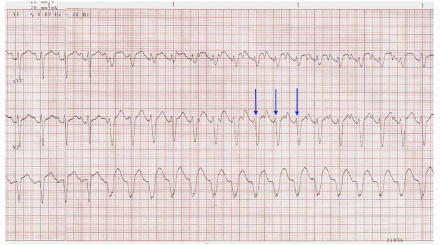
The given ECG shows ventricular _____, and the blue arrows indicate _____
_____ is a cardiac biomarker that is useful for detecting reinfarction following acute MI
The most important treatment for STEMI is _____ therapy, such as angioplasty (preferred) or fibrinolysis
In patients with non-valvular atrial fibrillation, oral anticoagulation is recommended (Class I) when the CHA2DS2-VASc score is ≥ ___ in men or ≥ ___ in women.
In patients with hypertension and what comorbidity should ACE inhibitors / ARBs become first line? _____

Electric cardioversion is _____effective in the management of Multifocal atrial tachycardia
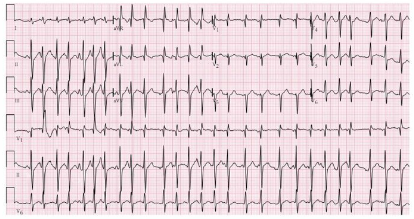
What pathology is indicated on the ECG below? _____
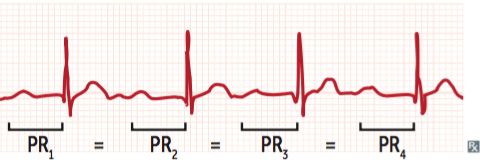
Acute Coronary Syndromes Flashcards for NEET-PG
Study 10 flashcards on Acute Coronary Syndromes for NEET-PG Internal Medicine. These active recall cards cover the key concepts, clinical associations, and high-yield facts from this chapter of Cardiology. Each card is designed to test your understanding rather than just recognition, building stronger and more durable memories for exam day.
For personalised spaced repetition scheduling and unlimited flashcards, download the Oncourse app.
Frequently Asked Questions
Are Acute Coronary Syndromes flashcards free?
How many flashcards does this chapter have?
How should I use these flashcards for NEET-PG?
Are there more flashcards for Cardiology?
Want unlimited flashcards?
Get full access to all flashcards, spaced repetition, and progress tracking.
Scan to download app