Cardiology Indian Medical PG Flashcards - Medical Study Cards
Master Cardiology with OnCourse flashcards. These spaced repetition flashcards are designed for medical students preparing for NEET PG, USMLE Step 1, USMLE Step 2, MBBS exams, and other medical licensing examinations.
Cardiology Flashcard Deck - 195 Cards
Flashcard 1: In patients with hypertension and what comorbidity should ACE inhibitors / ARBs become first line?
_____

Answer: Hypertension with Diabetes Mellitus
Flashcard 2: Electric cardioversion is _____effective in the management of Multifocal atrial tachycardia
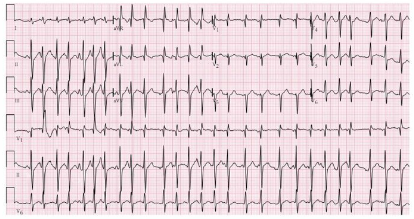
Answer: in
Flashcard 3: What pathology is indicated on the ECG below?
_____
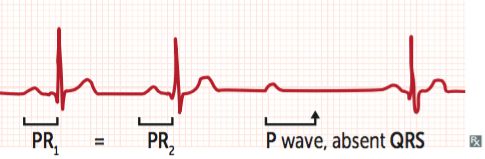
Answer: 1st degree AV block
Flashcard 4: What pathology is indicated on the ECG below?
_____
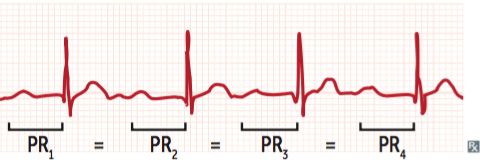
Answer: 2nd degree AV block, Mobitz type II
Flashcard 5: What pathology is indicated on the ECG below?
_____
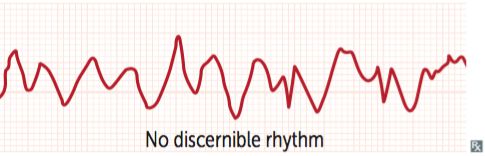
Answer: Ventricular fibrillation
Flashcard 6: _____ wave is commonly seen in patients with arrhythmogenic right ventricular cardiomyopathy (ARVC).
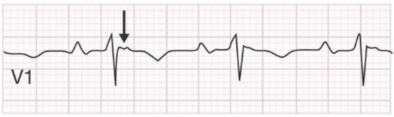
Answer: Epsilon
Flashcard 7: What pathology is indicated on the ECG below?
_____
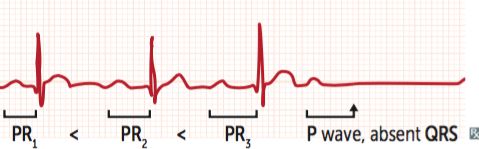
Answer: 2nd degree AV block, Mobitz type I (Wenckebach)
Flashcard 8: What pathology is indicated on the ECG below?
_____
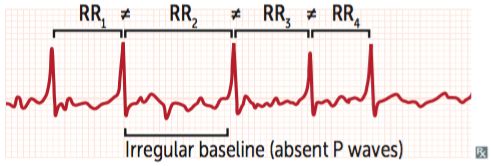
Answer: Atrial fibrillation
Flashcard 9: The given ECG shows ventricular _____, and the blue arrows indicate _____
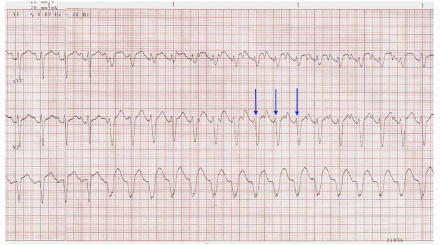
Answer: tachycardia
Flashcard 10: What pathology is indicated on the ECG below?
_____
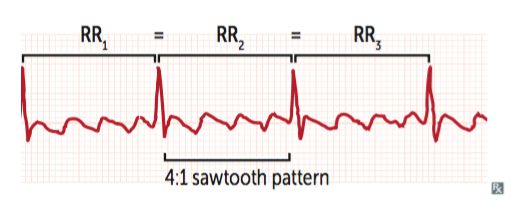
Answer: Atrial flutter
Flashcard 11: What pathology is indicated on the ECG below?
_____
Answer: 3rd degree AV block
Flashcard 12: Bradycardia treatment algorithm: No answer _____
Answer: :)
Flashcard 13: be6b875edd77406e88eba674189c4434-ao-2
Answer: trials and studies for cardiovascular diseases
Extra:
Flashcard 14: be6b875edd77406e88eba674189c4434-ao-1
Answer: trials and studies for cardiovascular diseases
Extra:
Flashcard 15: be6b875edd77406e88eba674189c4434-ao-3
Answer: trials and studies for cardiovascular diseases
Extra:
Flashcard 16: _____ years age group is mc affected in RHD
Answer: 5 to 15
Extra:
Flashcard 17: Homocystinuria causes increased risk for _____ and atherosclerosis, which may cause stroke and MI
Answer: thrombosis
Flashcard 18: LDH levels rise _____ hours after an MI and peak at 3-6 days
Answer: 24
Flashcard 19: One complication of _____ is high-output heart failure due to formation of AV shunts in bone
Answer: Paget disease of bone
Flashcard 20: A pericardial knock is a brief, high frequency, precordial sound heard in early _____ in patients with constrictive pericarditis
Answer: diastole
Flashcard 21: According to the American heart association and Europian cardiac society, high-risk cardiac lesions include:_____ cyanotic congenital heart disease, including palliative shunts or conduits.
Answer: Unrepaired
Flashcard 22: Hypertension is defined as persistent systolic BP > _____ mmHg and/or diastolic BP > 80 mmHg
Answer: 130
Flashcard 23: _____ anemia may be seen with prosthetic heart valves and aortic stenosis Extra: name of the syndrome?
Answer: Macroangiopathic hemolytic
Flashcard 24: Cardiovascular manifestations of lupus include accelerated _____, small-vessel necrotizing vasculitis, pericarditis, and libman-sacks endocarditis
Answer: atherosclerosis
Flashcard 25: In regards to the development of infective endocarditis; _____ is the most common underlying valvular disease in developed countries, whereas rheumatic heart disease is the most common underlying valvular disease in non-developed countries
Answer: mitral valve prolapse
Flashcard 26: The most common risk factors for atrial fibrillation include _____ and coronary artery disease (CAD)
Answer: hypertension
Flashcard 27: According to the American heart association and Europian cardiac society, high-risk cardiac lesions include:Incompletely repaired congenital heart disease with residual _____ or valvular regurgitation.
Answer: shunt
Flashcard 28: _____ is a complication that may occur months after an MI and increases risk for mural thrombus
Answer: True ventricular aneurysm
Flashcard 29: _____ beriberi is characterized by high-output cardiac failure (dilated cardiomyopathy) and edema +/- dry beriberi symptoms
Answer: Wet
Flashcard 30: _____ is a virus that causes myocarditis which progresses to dilated cardiomyopathy
Answer: Coxsackie B
Flashcard 31: A _____ interval between A2 (of S2) and the opening snap sounds of a mitral stenosis murmur correlates with increased disease severity
Answer: decreased
Flashcard 32: One complication that may occur _____ - 5 days post-MI is interventricular septal rupture, which causes a ventricular septal defect (VSD)
Answer: 3
Flashcard 33: _____ angina is due to rupture of atherosclerotic plaque with thrombosis and incomplete occlusion of a coronary artery
Answer: Unstable
Flashcard 34: In _____, pulmonary capillary wedge pressure (PCWP) is greater than LV end diastolic pressure
Answer: mitral stenosis
Flashcard 35: Hemochromatosis can cause _____ cardiomyopathy or dilated cardiomyopathy
Answer: restrictive
Flashcard 36: _____-capillary pulmonary hypertension also called as pulmonary hypertension involves group 2-5 of WHO classification
Answer: Post
Flashcard 37: _____ syndrome occurs when administration of vasodilators shunts blood towards well-perfused areas, increasing ischemia in post-stenotic regions
Answer: Coronary steal
Flashcard 38: In addition to _____, the presence or absence of valvular disease/residual heart disease also determines the duration of secondary prophylaxis in a patient of ARF.
Answer: carditis
Flashcard 39: 2nd degree Mobitz type I AV block is characterized by a _____, irregular patterned rhythm on ECG
Answer: regularly
Flashcard 40: Aortic _____ may present with a bounding pulse (Corrigan / Water-hammer pulse), pulsating nail bed (Quincke pulse), and head bobbing when severe
Answer: regurgitation
Flashcard 41: Aortic _____ may cause macroangiopathic hemolytic anemia as RBCs are damaged while crossing the calcified valve, producing schistocytes
Answer: stenosis
Flashcard 42: Cardiac symptoms of Corynebacterium diphtheriae infection include _____, arrhythmia, and heart block
Answer: myocarditis
Flashcard 43: Aortic dissection may present with sudden sharp, tearing _____ pain that radiates to the back
Answer: chest
Flashcard 44: A dicrotic pulse typically occurs in patients with severe _____ dysfunction and low systemic arterial resistance
Answer: systolic
Flashcard 45: Patients with acute _____ heart failure typically present with progressive dyspnea, orthopnea, lower extremity edema, along with bilateral crackles / wheezing (known as cardiac asthma)
Answer: decompensated
Flashcard 46: Pre-capillary pulmonary hypertension/PAH has _____ PCWP and PVR more than 3 wood units
Answer: decreased
Flashcard 47: Eisenmenger syndrome is characterized by a triad of _____, clubbing, and polycythemia
Answer: late cyanosis
Flashcard 48: Stable angina is often relieved by _____ or with nitroglycerin
Answer: rest
Flashcard 49: Wolff-Parkinson-White syndrome presents with a _____ QRS complex and shortened PR interval on ECG
Answer: widened
Flashcard 50: Ventricular _____ is a contained free wall rupture that may occur 3 - 14 days post-MI
Answer: pseudo-aneurysm
Flashcard 51: _____ is a post-MI complication that presents as chest pain with friction rub
Answer: Fibrinous pericarditis
Flashcard 52: _____ angina is characterized by episodic chest pain during rest due to coronary artery spasm
Answer: Vasospastic (variant/prinzmetal)
Flashcard 53: _____ is unique in that vegetations typically present on both side(s) of the mitral valve, resulting in regurgitation
Answer: Libman-Sacks (verrucous) endocarditis
Flashcard 54: The most important treatment for STEMI is _____ therapy, such as angioplasty (preferred) or fibrinolysis
Answer: reperfusion
Flashcard 55: Post-capillary pulmonary hypertension has _____ PCWP and PVR less than 3 wood units
Answer: increased
Flashcard 56: In Heyde syndrome, the stenotic aortic valve causes passing vWF to _____, making it available to be degraded by ADAMTS13 in the vasculature
Answer: uncoil
Flashcard 57: -blockers are useful in the management of _____ and dilated cardiomyopathy
Answer: hypertrophic obstructive
Flashcard 58: Kussmaul sign (increased JVP on inspiration) may be seen with constrictive _____ and restrictive cardiomyopathies
Answer: pericarditis
Flashcard 59: _____ P wave (amplitude > 5 mm) is associated with a dilated right atrium
Answer: Himalayan
Flashcard 60: Cardiovascular (Antiarrhythmics) _____-kalemia induced arrhythmias may present on ECG with peaked T waves and a shortened QT interval
Answer: Hyper
Flashcard 61: Troponin I levels rise _____ hours after an MI and peak at 24 hours
Answer: 2-4
Flashcard 62: _____ is an inflammatory post-MI complication that occurs after 2* to 4* days
Answer: Fibrinous pericarditis
Flashcard 63: Myocardial infarction induced acute left ventricular failure can result in rapid onset _____ and acute pulmonary edema
Answer: pulmonary venous hypertension
Flashcard 64: Acute _____ causes include idiopathic (most common; presumed viral), confirmed infection (e.g. Coxsackievirus), neoplasia, autoimmune (e.g. SLE, rheumatoid arthritis), uremia, cardiovascular (acute STEMI or Dressler syndrome), radiation therapy
Answer: pericarditis
Flashcard 65: A hyperkinetic pulse can occur with _____ and high-output conditions
Answer: aortic regurgitation
Flashcard 66: The _____ form of coarctation of the aorta is associated with a PDA
Answer: infantile/Preductal
Flashcard 67: Coarctation of the aorta is associated with a _____ aortic valve and an increased risk of developing berry aneurysms
Answer: bicuspid
Flashcard 68: _____ heart failure may cause painful hepatosplenomegaly, which rarely may progress to "cardiac cirrhosis"
Answer: Right
Flashcard 69: _____ heart failure may present with paroxysmal nocturnal dyspnea, which is breathless awakening from sleep
Answer: Left
Flashcard 70: Ivabradine is indicated for chronic _____ with reduced ejection fraction
Answer: Heart Failure
Flashcard 71: Atrial _____ typically has a 4:1 'sawtooth' pattern appearance on ECG
Answer: flutter
Flashcard 72: Stanford type _____ dissections, involving only the descending aorta, distal to the subclavian artery are also classified as DeBakey type III
Answer: B
Flashcard 73: Normally, A2 > P2 because the left sided system is _____ pressure than right; P2 can > A2 thus in pulmonary hypertension
Answer: higher
Flashcard 74: A murmur due to _____ may radiate to the axilla
Answer: mitral regurgitation
Flashcard 75: _____ AV block is characterized by progressive lengthening of the PR interval until a beat is "dropped"
Answer: 2nd degree Mobitz type I (Wenckebach)
Flashcard 76: _____ syndrome is an autoimmune phenomenom that results in fibrinous pericarditis following an MI
Answer: Dressler
Flashcard 77: Cardiac tamponade may be associated with _____, which is a decrease in amplitude of systolic BP > 10 mmHG during inspiration
Answer: pulsus paradoxus
Flashcard 78: _____ syndrome presents with an ECG pattern of pseudo-right bundle branch block and ST elevations in leads V1 - V3
Answer: Brugada
Flashcard 79: IV Ca2+ channel blockers such as _____ and clevidipine may be used in hypertensive emergency
Answer: nicardipine
Flashcard 80: _____ is a cardiac complication caused byGroup D Streptococci (Enterococcus faecalis and Enterococcus faecium) following GI/GU procedures.
Answer: Subacute endocarditis
Flashcard 81: Ebstein anomaly is associated with tricuspid _____ and right heart failure
Answer: regurgitation
Flashcard 82: Cardiac _____ usually form a pedunculated mass in the left atrium (80%), which may cause syncope due to obstruction of the mitral valve
Answer: myxomas
Flashcard 83: One possible complication of mitral stenosis is pulmonary _____ and eventual right-sided heart failure
Answer: hypertension
Flashcard 84: _____ heart failure may cause jugular venous distension due to increased systemic venous pressure
Answer: Right
Flashcard 85: Beta blockers must be used cautiously in _____ and are contraindicated in cardiogenic shock
Answer: decompensated HF
Flashcard 86: Stable angina is often due to _____ of coronary arteries with >70% stenosis
Answer: atherosclerosis
Flashcard 87: There is an increased risk for _____ papillary muscle rupture (post-MI) due to its single blood supply from the posterior descending artery
Answer: posteromedial
Flashcard 88: Acute _____ commonly presents with sharp pain that is aggravated by inspiration and relieved by sitting up and leaning forward
Answer: pericarditis
Flashcard 89: _____ syndrome is voice hoarseness due to RLN palsy secondary to LAE seen in Mitral stenosis
Answer: Ortner
Flashcard 90: ECG changes associated with acute _____ include widespread, diffuse ST segment elevation and/or PR depression
Answer: pericarditis
Flashcard 91: Known triggers of Vasospastic angina include _____, cocaine, and triptans
Answer: tobacco
Flashcard 92: _____ angina is characterized by chest pain that arises with exertion or emotional stress
Answer: Stable
Flashcard 93: Dietary Approaches to Stop Hypertension (DASH) eating plan decreases the _____ BP by 8-14 mm Hg
Answer: Systolic
Flashcard 94: While the presentation of myocarditis is highly variable, it can include fever, dyspnea, chest pain, and characteristically a persistent _____ out of proportion to fever
Answer: tachycardia
Flashcard 95: _____ degree AV block is characterized by a PR interval > 200 msec on ECG
Answer: 1st
Flashcard 96: _____ is a cardiac biomarker that is useful for detecting reinfarction following acute MI
Answer: Troponin T
Flashcard 97: _____ cardiomyopathy is associated with sudden death in young athletes due to ventricular arrhythmia
Answer: Hypertrophic
Flashcard 98: Isolated systolic hypertension can occur in _____, severe aortic regurgitation, or systemic causes (anemia, hyperthyroidism)
Answer: aging
Flashcard 99: _____ presents with a midsystolic click and late systolic murmur.
Answer: Mitral valve prolapse (MVP)
Flashcard 100: Patients with BP > _____/10 mmHg above goal should use two antihypertensives
Answer: 20
Flashcard 101: Falsely _____ BNP values can be seen in heart failure, obese patients and flash pulmonary edema
Answer: low
Flashcard 102: The U wave on ECG is prominent in _____ and bradycardia
Answer: hypokalemia
Flashcard 103: A bicuspid aortic valve presents with a soft systolic early ejection murmur that radiates to the _____ with a high frequency ejection click
Answer: neck
Flashcard 104: Atrial fibrillation is characterized by an _____, irregular patterned rhythm
Answer: irregularly
Flashcard 105: _____ syndrome is due to an abnormally fast accessory conduction pathway from the atria to ventricle via the bundle of Kent, which bypasses the slower AV node
Answer: Wolff-Parkinson-White
Flashcard 106: Coarctation of the aorta in adults presents as _____ in the upper extremities and hypotension in the lower extremities
Answer: hypertension
Flashcard 107: _____ sign is increased jugular venous pressure on inspiration
Answer: Kussmaul
Flashcard 108: One complication that may occur _____ - 7 days post-MI is papillary muscle rupture, which often causes mitral regurgitation
Answer: 2
Flashcard 109: _____ with ASD forms part of Lutembacher syndrome
Answer: Mitral stenosis
Flashcard 110: _____ heart failure may present with orthopnea, which is shortness of breath when supine
Answer: Left
Flashcard 111: _____ is characterized by a chaotic and erratic baseline with no discrete P waves in between irregularly spaced QRS complexes on ECG
Answer: Atrial fibrillation
Flashcard 112: Carcinoid syndrome may cause right-sided valvular heart lesions such as _____ and pulmonic stenosis
Answer: tricuspid regurgitation
Flashcard 113: CK-MB levels rise _____ hours after an MI and peak at 16-24 hours
Answer: 2-4
Flashcard 114: One clinical feature of aortic _____ is hyperdynamic circulation due to increased (widened) pulse pressure
Answer: regurgitation
Flashcard 115: _____ is due to occlusion of arteries, most commonly due to atherosclerosis or other artery specific inflammatory processes
Answer: Arterial Insufficiency (Peripheral Artery Disease)
Flashcard 116: Atrial septal defect (ASD) results in a _____-to-right shunt
Answer: left
Flashcard 117: Hypertrophic cardiomyopathy causes _____ with exercise due to subaortic hypertrophy of the ventricular septum, resulting in functional aortic stenosis
Answer: syncope
Flashcard 118: Stable angina often presents with chest pain lasting _____ minutes that radiates to the left arm or jaw
Answer: < 20
Flashcard 119: Aortic aneurysm may cause _____ and/or back pain, which is a sign of leaking, dissection, or imminent rupture
Answer: abdominal
Flashcard 120: _____ cardiomyopathy presents with a low-voltage EKG with a diminished QRS amplitude
Answer: Restrictive
Flashcard 121: Orthopnea in congestive heart failure is due to reservoir function of _____ and lymphatics
Answer: pulmonary veins
Flashcard 122: In acute mitral regurgitation, how do the following change?- preload = _____- afterload = decrease- ejection fraction = significantly increase- forward stroke volume = decrease
Answer: significantly increase
Flashcard 123: In ostium _____ ASD defect there is left to right shunting of blood along with mitral insufficiency
Answer: primum
Flashcard 124: Complications of myocarditis include arrhythmias, heart failure, _____ shock and dilated cardiomyopathy
Answer: cardiogenic
Flashcard 125: American heart association and Europian cardiac society have recommended antibiotic prophylaxis for patients undergoing an _____ dental procedure
Answer: invasive
Flashcard 126: _____calcemia will lead to shortening of QT interval and decrease in ST segment duration on ECG
Answer: Hyper
Flashcard 127: Widened QRS complex are present when the serum potassium levels are _____ mmol/L
Answer: 7.0-8.0
Flashcard 128: Reduction of weight (maintaining within normal BMI range) reduces the systolic BP by _____ mmHg/10kg wt loss
Answer: 5-20
Flashcard 129: What is the rx of choice in a patient of atrial fibrillation with normal hemodynamic status?_____
Answer: IV ibutilide
Flashcard 130: According to the 2020 update of CEAP classification, healed ulcer is classified as _____
Answer: C5
Flashcard 131: In adults, the most common electrical mechanism for cardiac arrest is _____
Answer: asystole
Flashcard 132: In patients with mechanical heart valves, the target INR for patients on warfarin therapy is _____.
Answer: 2.53.5
Flashcard 133: Cannon "a" waves on JVP are seen in _____
Answer: AV dissociation
Flashcard 134: Which supraventricular tachycardia will present with retrograde P-waves after a narrow QRS complex and RP interval?_____
Answer: Orthodromic AVRT
Flashcard 135: Ankle brachial index
Answer: Ankle brachial index
Flashcard 136: The most common cause behind sudden cardiac death is an _____
Answer: infarction
Flashcard 137: _____ is the most common underlying etiology of left-sided diastolic heart failure.
Answer: Hypertension
Flashcard 138: The single most important long-term limitation of cardiac transplantation is _____.
Answer: allograft arteriopathy
Flashcard 139: What is the best treatment of a patient of supraventricular tachycardia in case of hemodynamic instability? _____
Answer: DC cardioversion
Flashcard 140: The Doppler waveform of the venous blood flow in lower limb deep vein thrombosis is _____phasic.
Answer: mono
Flashcard 141: What is the rx of choice in a patient of atrial fibrillation with deteriorated hemodynamic status?_____
Answer: DC cardioversion
Flashcard 142: What is the initial mx of a patient with Stanford A dissection?_____
Answer: Beta-blocker rx
Flashcard 143: Effect of valvular diseases on PV loop:The pressure-volume curve is increased in width with decreased height in _____
Answer: mitral regurgitation
Flashcard 144: Ventricular tachycardia (VT) is defined as e 3 consecutive premature ventricular contractions at a rate of >_____/min
Answer: 100
Flashcard 145: _____ score is used to assess the risk of stroke in patients who have atrial fibrillation
Answer: CHA2DS2-VASc
Flashcard 146: Mild ST changes may be seen in the _____ leads in pregnancy
Answer: inferior
Flashcard 147: Large "a" waves on JVP are seen in _____
Answer: tricuspid stenosis
Flashcard 148: What is the definitive mx of a patient with Stanford B dissection?_____
Answer: antihypertensive drugs
Flashcard 149: What is the rx of choice for stable wide QRS tachycardia, with hemodynamic instability?_____
Answer: DC cardioversion
Flashcard 150: Patients with complete AV block show _____ waves in the JVP due to contraction of the atria against the closed tricuspid valve.
Answer: cannon a
Flashcard 151: Most common congenital heart disease affected by infective endocarditis is _____
Answer: VSD
Flashcard 152: Supraphysiologic stress such as pheochromocytoma can lead to the development of _____ cardiomyopathy
Answer: dilated
Flashcard 153: Prominent "x" and "y" descent on JVP are seen in _____
Answer: constrictive pericarditis
Flashcard 154: Which endocarditis has the most friable vegetations?_____
Answer: Infective endocarditis
Flashcard 155: _____ transmural infarcts are more likely to be complicated by conduction blocks, right ventricular involvement, or both.
Answer: Posterior (Anterior/Posterior)
Flashcard 156: The energy that must be applied in a monophasic defibrillator is _____J
Answer: 360
Flashcard 157: Systolic murmur grade _____ or more is included in NADA's major criteria
Answer: 3
Flashcard 158: _____ beats occur in v tach when ventricles are depolarized by the impulses from the SA node producing a QRS complex of normal duration
Answer: Capture
Flashcard 159: Overtime, patients of Fabry disease will develop _____ cardiomyopathy
Answer: restrictive
Flashcard 160: According to the American heart association and Europian cardiac society, high-risk cardiac lesions include:Valvulopathy developing after _____
Answer: cardiac transplantation
Flashcard 161: _____ transmural infarcts are involved in causing aneurysm as a post-MI complication.
Answer: Anterior (Anterior/Posterior)
Flashcard 162: According to the American heart association and Europian cardiac society, high-risk cardiac lesions include:Completely repaired congenital heart defects during the first _____ months after repair.
Answer: 6
Flashcard 163: Is Pansystolic murmur normal in pregnancy?_____
Answer: No
Flashcard 164: What will be the character of P2 in TOF and why?_____
Answer: low intensity and soft
Flashcard 165: The most common form of heart disease associated with HIV infection is _____
Answer: coronary heart disease.
Flashcard 166: Which supraventricular tachycardia will present with retrograde P-waves before a wide QRS complex (with delta wave)?_____
Answer: Antidromic AVRT
Flashcard 167: Triphasic QRS is seen in _____ tachycardias with the wide QRS complex.
Answer: supraventricular
Flashcard 168: Large "v" waves on JVP are seen in _____
Answer: tricuspid regurgitation
Flashcard 169: Pulsus _____ is seen in hypertrophic cardiomyopathy.
Answer: bisferiens
Flashcard 170: Vanishing pseudo tumour is seen in _____ as an interlobular effusion
Answer: Congestive heart failure
Flashcard 171: According to the American heart association and Europian cardiac society, high-risk cardiac lesions include:History of _____
Answer: endocarditis
Flashcard 172: _____ involvement is the leading cause of death from AL amyloidosis.
Answer: Cardiac
Flashcard 173: Anticoagulation therapy is started when CHA2DS2-VASc score is more than _____
Answer: 2
Flashcard 174: According to the 2020 update of CEAP classification, Secondary (postthrombotic syndrome, trauma) etiology is classified as _____
Answer: Es
Flashcard 175: Dual antiplatelet therapy (DAPT) should be continued for at least _____ following stent placement to prevent stent thrombosis, with aspirin being continued _____.
Answer: 1 year; indefinitely
Flashcard 176: _____ murmur is an early diastolic murmur seen in PAH due to Pulmonary regurgitation
Answer: Graham Steell
Flashcard 177: The triggering foci for atrial fibrillation most commonly originate from the _____ tissue
Answer: left atrial
Flashcard 178: Electric cardioversion is _____effective in the management of Multifocal atrial tachycardia
Answer: in
Flashcard 179: In Inferior wall MI with hypotension, brisk administration of _____ is recommended to prevent cardiogenic shock
Answer: IV fluids
Flashcard 180: Patients with MVP but no history of prior endocarditis _____ require antibiotic prophylaxis before dental procedures.
Answer: do not
Flashcard 181: _____ wave is commonly seen in patients with arrhythmogenic right ventricular cardiomyopathy (ARVC).
Answer: Epsilon
Flashcard 182: In a patient with systolic heart failure, _____ is an independent predictor of adverse outcome
Answer: hyponatremia
Flashcard 183: Troponin assay at 2-3 hours after symptom onset has an excellent _____ predictive value.
Answer: negative
Flashcard 184: Janeway lesions are due to a _____ phenomenon in infective endocarditis.
Answer: vascular
Flashcard 185: Multifocal atrial tachycardia is associted with _____ and shows different P wave morphologies
Answer: COPD
Flashcard 186: Post myocardial infarction ventricular septal rupture produces a _____ murmur which is loudest at tricuspid area.
Answer: pansystolic
Flashcard 187: Hypokalemia shows _____ of the ST segment, a _____ in the amplitude of the T wave, and an _____ in the amplitude of U waves.
Answer: depression; decrease/inversion; increase
Flashcard 188: Pseudo P pulmonale refers to tall peaked P waves seen in _____kalemia.
Answer: hypo
Flashcard 189: Carey Coombs murmur is a mid-diastolic murmur seen in _____
Answer: Mitral valvulitis
Flashcard 190: _____ and _____ are classified as C4a and C4c respectively under the clinical classification of CEAP classification.
Answer: Eczema; corona phlebectatica
Flashcard 191: If the patient has presented to a non-PCI-capable hospital, a fibrinolytic agent is given within 30 minutes of the patient presenting if the anticipated time to PCI is >_____ minutes
Answer: 120
Flashcard 192: The recommended treatment for WPW syndrome is _____ of accessory pathway
Answer: radiofrequency catheter ablation
Flashcard 193: What is the drug of choice for stable wide QRS tachycardia, without hemodynamic instability? _______
Answer: Amiodarone
Flashcard 194: Drug of choice for acute left ventricular failure: September 2006
Answer: Furosemide
Flashcard 195: Drug of choice for chronic heart failure -
Answer: ACE inhibitors
Keywords: Cardiology flashcards, medical flashcards, NEET PG preparation, USMLE Step 1 flashcards, Anki alternative, spaced repetition medical, OnCourse flashcards