
Vocal Cord Paralysis — Flashcards

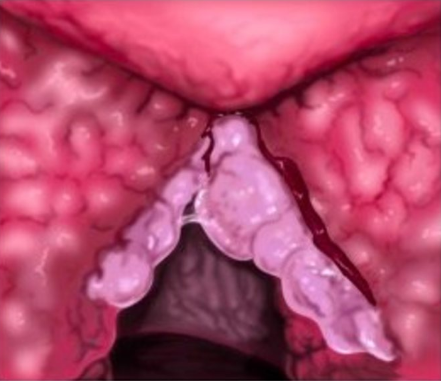
The most common benign tumor of the larynx, appearing as warty or cauliflower-like growths on the vocal cords, is a laryngeal _____
Pure RLN palsy is also known as _____ductor palsy
In complete paralysis, the vocal cords are in _____ position
_____ or Kashima's procedure is carried out for Paramedian position of both vocal cords
_____ laryngocele is confined within the larynx and presents as distension of false cord and aryepiglottic fold
The given lesion of the vocal cords is a laryngeal _____
Type _____ thyroplasty or lateralization is done for adductor spasmodic dysphonia
Laryngeal papillomas are usually _____ lesions in adults
Biphasic stridor is seen in lesions of _____, subglottis and cervical trachea
Risk factors for laryngeal CA is _____ and alcohol
Vocal Cord Paralysis Flashcards for NEET-PG
Study 10 flashcards on Vocal Cord Paralysis for NEET-PG ENT. These active recall cards cover the key concepts, clinical associations, and high-yield facts from this chapter of Diseases of the Larynx. Each card is designed to test your understanding rather than just recognition, building stronger and more durable memories for exam day.
For personalised spaced repetition scheduling and unlimited flashcards, download the Oncourse app.
Frequently Asked Questions
Are Vocal Cord Paralysis flashcards free?
How many flashcards does this chapter have?
How should I use these flashcards for NEET-PG?
Are there more flashcards for Diseases of the Larynx?
Want unlimited flashcards?
Get full access to all flashcards, spaced repetition, and progress tracking.
Scan to download app