
High-Risk Pregnancy Management — Flashcards

Proportion of women receiving antenatal care and supervised delivery is an example of _____
At a child health clinic, the criteria to identify at-risk infants include birth order _____ or more
Under the Anemia Mukt Bharat strategy, Pregnant Women receive a single dose of _____ mg Albendazole, usually in the 2nd trimester.
Under Anemia Mukt Bharat scheme, pregnant women and lactating mothers, should take the _____ tablet daily, starting fourth month of pregnancy continued throughout, containing 60 mg elemental iron + 500 mcg folic acid
Hint: colour
The Maternal Mortality Ratio (MMR) in India as per the SRS 2018-20 report is _____ per 100,000 live births.
The type of screening done in a newborn to rule out metabolic disorders like phenylketonuria is _____ screening.
What are the beneficiaries of JSSK?_____
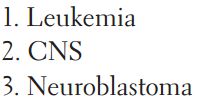
Which of the listed three demographics count the mortality of the following cancers as their top 3 most fatal in the United States? _____
Hint: Men, Women, or Children (age 0-14)?
Under ICDS, a severely malnourished 4-year-old child will get daily supplementary nutrition of _____ g proteins and _____ calories.

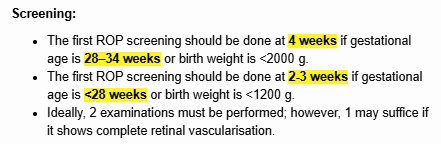
Screening guidelines for ROP (Retinopathy of Prematurity) according to RBSK: - Birth weight: _____ - Gestational age: _____ - Timing of first screening: Within 4 weeks (30 days) of birth
High-Risk Pregnancy Management Flashcards for NEET-PG
Study 10 flashcards on High-Risk Pregnancy Management for NEET-PG Community Medicine. These active recall cards cover the key concepts, clinical associations, and high-yield facts from this chapter of Maternal and Child Health. Each card is designed to test your understanding rather than just recognition, building stronger and more durable memories for exam day.
For personalised spaced repetition scheduling and unlimited flashcards, download the Oncourse app.
Frequently Asked Questions
Are High-Risk Pregnancy Management flashcards free?
How many flashcards does this chapter have?
How should I use these flashcards for NEET-PG?
Are there more flashcards for Maternal and Child Health?
Want unlimited flashcards?
Get full access to all flashcards, spaced repetition, and progress tracking.
Scan to download app