Biostatistics Indian Medical PG Flashcards - Medical Study Cards
Master Biostatistics with OnCourse flashcards. These spaced repetition flashcards are designed for medical students preparing for NEET PG, USMLE Step 1, USMLE Step 2, MBBS exams, and other medical licensing examinations.
Biostatistics Flashcard Deck - 196 Cards
Flashcard 1: What type of distribution is this?
_____
Answer: Normal
Flashcard 2: What type of distribution is this?
_____

Answer: Negative/Left
Flashcard 3: What type of distribution is this?
_____

Answer: Positive/Right
Flashcard 4: What type of bar graph is represented below?
_____
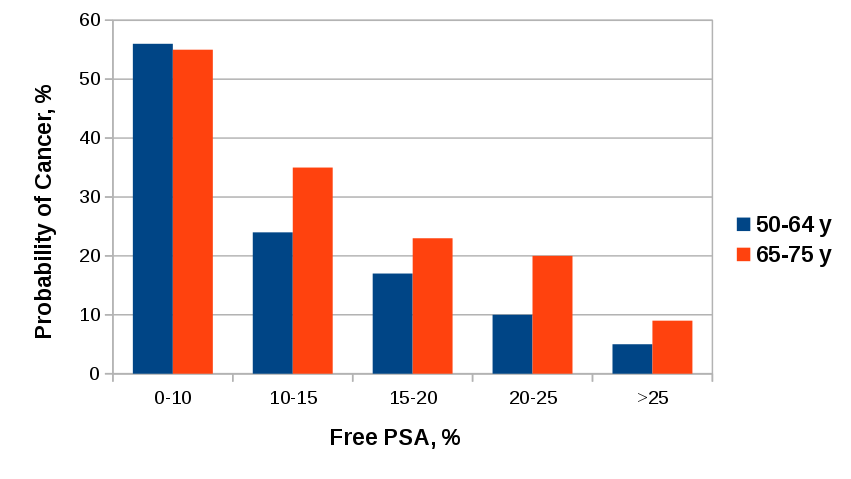
Answer: Compound bar graph
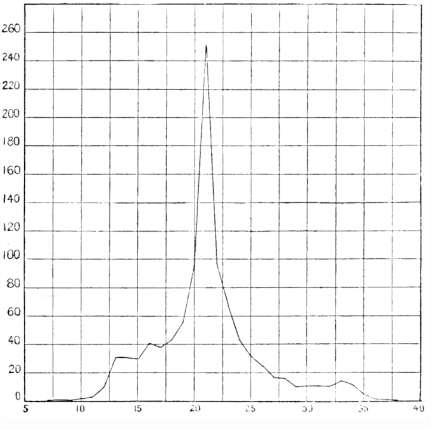
Flashcard 5: The given image is of a _____.
Answer: frequency polygon
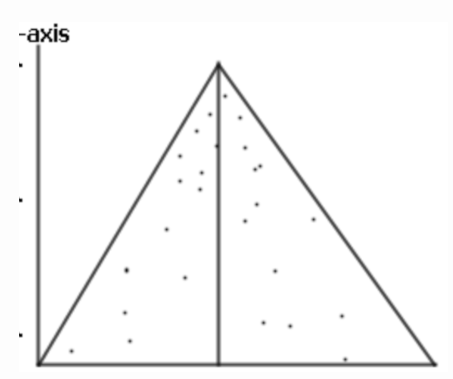
Flashcard 6: The given image shows a _____ plot
Answer: funnel
Flashcard 7: What type of bar graph is represented below?
_____
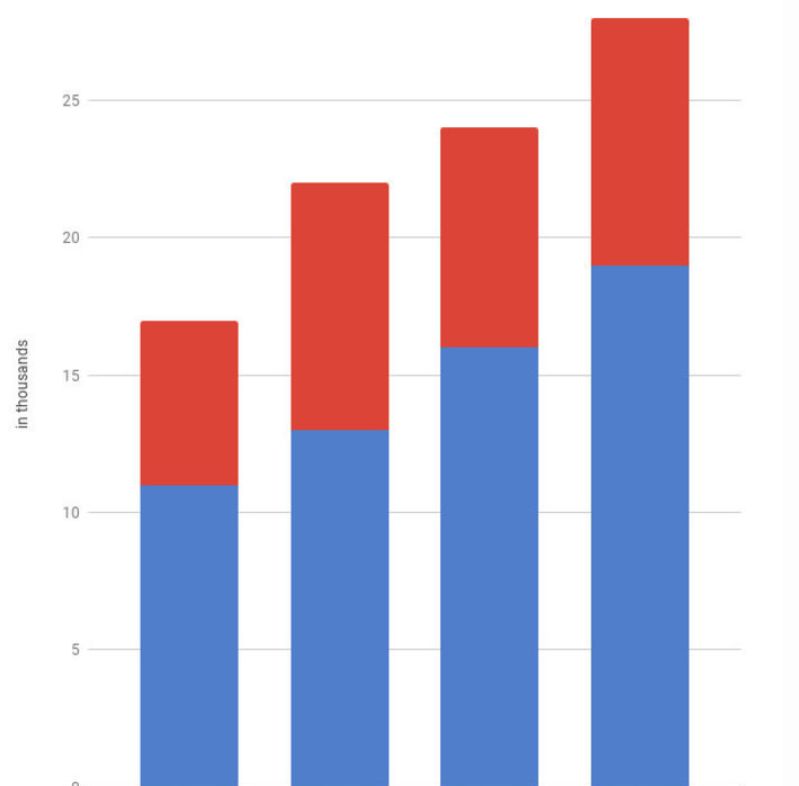
Answer: Component bar graph
Flashcard 8: test of significance for normalcy of data is _____ test
Answer: kolmogorov smirnov
Extra:
Flashcard 9: non-parametric test of significance is done for _____ and _____ data
Answer: qualitative
Extra:
Flashcard 10: sullivan index
Answer: number of years of life lived free from disability
Extra:
Flashcard 11: _____ is the probability that when the test is negative, the disease is absent
Answer: Negative predictive value
Extra:
Flashcard 12: Formula for Mode for Grouped data,
when,
\(f_1 = \) _____
\(f_0 = frequency \ of \ class \ above\ modal\ class\)
\(f_2 = frequency\ of \ class \ after \ modal \ class\)
\(i = group \ interval\)
\(L = lower \ limit\ of\ modal\ class\)
is given by,
_____
Answer: \(Class \ with \ highest \ frequency \ (modal\ class)\)
Extra: y
Flashcard 13: standard error proportions is calculated for _____ data
Answer: qualitative
Extra:
Flashcard 14: c65872b736324b578b20a22eef5c027a-ao-5
Answer: tests of significance
Extra:
Flashcard 15: harmonic mean is calculated in cases of _____
Answer: inverse data and fractional values
Extra:
Flashcard 16: standard error means _____
Answer: means of standard deviation
Extra:
Flashcard 17: Sample size for quantitative data,
when SD of population is known
and allowable error L is given,
_____
Answer: \(n= \frac {4SD^2}{L^2}\)
Extra: y
Flashcard 18: cut off for z score is _____
Answer: 2 SD(standard deviate)
Extra:
Flashcard 19: Formula to calculate Standard Deviation, in Ungrouped data
when,
\(\bar X = Mean\)
\(X - \bar X = difference\ of\ each\ observation\ from\ mean\ (both \ real \ or \ assumed\ mean\ can \ be \ used)\)
\(\sum (X - \bar X)^2 = Sum \ of \ squared \ of \ mean\ deviations\)
is given by,
_____
Another way to calculate is given by,
_____
Answer: \(SD = \sqrt \frac {\sum (X - \bar X)^2}{n-1}\)
Extra: y
Flashcard 20: IDD(iodine def. disorder) survey is done using _____ sampling method
Answer: cluster
Extra:
Flashcard 21: Most commonly used sampling method is _____
Answer: simple random sampling
Extra:
Flashcard 22: 3675d56a2e7b4499a8f95928687a3c92-ao-1
Answer: sensitivity,specificity,PPV,NPV relations-MCQ AIIMS 18
Extra: ?
P for P goes down
Flashcard 23: formula for specificity
Answer:
Extra:
Flashcard 24: _____
Answer: histogram
Extra:
Flashcard 25: yield of a test corresponds to _____
Answer: PPV
Extra:
Flashcard 26: _____ is a test of significance for internal consistency of questionnaire
Answer: cronbach's alpha score
Extra:
Flashcard 27: Mean for Ungrouped series,
when
x = observations given
n = total number of observations given
_____
Answer: \([\overline{x} = \frac{\sum x}{n}]\)
Extra: y
Flashcard 28: standard deviation =3
mean =18
coefficient of variation=_____%
Answer: 16.67
Extra:
Flashcard 29: Sample size calculation for qualitative data,
when proportions are given
\(p = positive \ character\ in \ \%\)
\(q= negative\ character\ in\ \% (100-p) \)
\(L = allowable \ error, \ usually \ 10 \% \ or \ 20\% \ of \ p\)
is given by
_____
Answer: \(n = \frac {4pq}{L^2}\)
Extra: y
Flashcard 30: mid year population is calculated on _____
Answer: 1st july
Extra:
Flashcard 31: global annual growth rate is _____%
Answer: 1.07
Extra:
Flashcard 32: 5ce54378cee641398d486f0bc8c03a91-ao-2
Answer: false negative error rate
Extra:
Flashcard 33: formula for Median,
where n = the total number of observations is an even number,
Median = _____
Answer: \([M = \frac{(\frac{n}{2})^{th}term + (\frac{n}{2}+1)^{th}term}{2}]\)
Extra: y
Flashcard 34: Formular for Mean (assumed mean method), for Ungrouped data
When individual observations are large in size,
we take
\(w\) as assumed mean,
and mean of deviations from assumed mean is denoted by,
_____
and, Mean is calculated by,
_____
Answer: \(\bar x =
\frac{(X_1-w+X_2-w+X_3-+.....X_n-w)}{n}
= \frac{\sum_{i=1}^n (X_i - w)}{n}\)
Extra: y
Flashcard 35: null hypothesis is _____ if p value is >0.05
Answer: accepted
Extra:
Flashcard 36: false _____ error is more serious than false _____ error
Answer: positive
Extra:
Flashcard 37: 5ce54378cee641398d486f0bc8c03a91-ao-4
Answer: false positive error rate
Extra:
Flashcard 38: regression in psm means _____
Answer: prediction
Extra:
Flashcard 39: _____ is used to detect bias publication
Answer: funnel plot
Extra:
Flashcard 40: bar chart is used for plotting _____ data
Answer: qualitative
Extra:
Flashcard 41: odds=0.5
probability=
Answer: 0.33
Extra:
Flashcard 42: HALE(health adjusted life expectancy) means
Answer: number of years lived in full health
which is free from ill health
Extra:
Flashcard 43: _____ type regression is used for quantitative variations
Answer: linear
Extra:
Flashcard 44: current life expectancy in india is _____ years
Answer: 67.5
Extra:
Flashcard 45: statistical power of a test=_____
Answer: 1 - ß
Extra:
Flashcard 46: c65872b736324b578b20a22eef5c027a-ao-3
Answer: tests of significance
Extra:
Flashcard 47: * Total Fertility Rate (TFR) → _____ . It is computed by _____. This measure gives the approximate magnitude of _____. TFR of _____ is equivalent to replacement level
* Total Marital Fertility Rate (TMFR) → Avg. number of children that would be born to a _____ if she experience the current fertility pattern thorughout her reproductive span.
* Gross Reproduction Rate (GRR) → Avg. number of _____ that would be born to a woman if she experiences the current fertility pattern throughout her reproductive span (15-44/49yrs), assuming _____
* Net Reproduction Rate (NRR) → It is defined as the number of daughters a newborn girl will bear during her lifetime assuming fixed _____ and _____ rates. It is a demographic indicator. NRR of _____ is equivalent to attaining the 2-child norm i.e replacement level
Answer: It represents the avg. number of children a woman would have if she were to pass through her reproductive years bearing children at the same rates as the women now in each age group
Extra: y
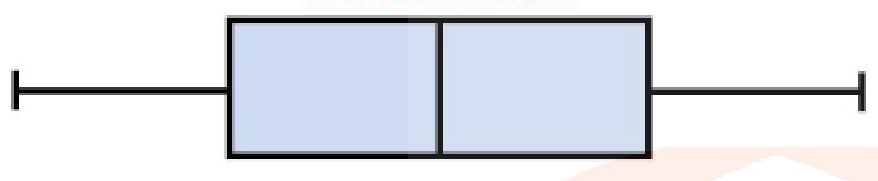
Flashcard 48: constricting type of age pyramid is for _____ countries
Answer: devloped
Extra:
Flashcard 49: _____ is the test of significance for level of agreement bw 2 criteria
Answer: KAPPA test
Extra:
Flashcard 50: regression is _____ type in qualiitative variation
Answer: logistic
Extra:
Flashcard 51: _____ measure is the most affected by extreme values
Answer: mean
Extra:
Flashcard 52: kaplan mier analysis method is for _____
Answer: survival statistics
Extra:
Flashcard 53: _____ is the probability that when the disease is absent, the test is negative
Answer: Specificity
Extra:
Flashcard 54: Standard Error can be calculated by:
_____ ( n-1 in case of small samples <30, for t-test)
_____
_____
or, _____ \( \ where \ combined \ s\ = \) _____
_____
Answer: \(SE_{mean} = \frac {SD}{\sqrt n}\)
Extra: y
Flashcard 55: _____ is the test of significance for to compare a new test with a gold standard test
Answer: Bland altman analysis
Extra:
Flashcard 56: the given graph is called _____
Answer: venn chart
Extra:
Flashcard 57: Formula for Standard Deviation for Grouped data,
when,
\(Xg = Mid-point \ of \ each \ groups \ is \ taken \)
and, any convenient group may be taken as working mean (\(w\))
→ \(f = frequency \ of \ each \ group\)
→ Working units are denoted as,
_____
where, \(i = Group \ interval\)
→ Then, deviation of group in working units is derived by \(f \times x\)
→ Squared deviation of groups is \(= f \times x^2\)
Mean in working units is given by : \(\bar x = \frac {\sum fx}{n}, \) and True Mean is given by \(\bar X = w \ + \ \bar x \times i\)
Standard deviation in working units is
_____
True SD is,
_____
Answer: \(x = \frac {Xg - w}{i}\)
Extra: y
Flashcard 58: de4dcbb8321648c59eb0eb9463b92568-ao-2
Answer: population growth rate
Extra:
Flashcard 59: _____ plots are used to plot correlation
Answer: scatter
Extra:
Flashcard 60: test of significance for outliers is _____ test
Answer: Dixon's Q
Extra:
Flashcard 61: formula for sample size calculation
Answer:
Extra:
Flashcard 62: * Child-woman Ratio → _____ \(\times\) _____
* Pregnancy Rate → _____ \(\times\) _____
* Abortion Rate → _____ \(\times\) _____
* Abortion Ratio → _____ \(\times\) _____
* Crude Marriage Rate → _____ \(\times\) _____
* General Marriage Rate → _____ \(\times\) _____
Answer: \(\frac {No.\ of\ children\ 0-4\ yrs\ of\ age\ }{ Women\ of\ reproductive\ age\ (15-44/49yrs)}\)
Extra: y
Flashcard 63: youden's index gives _____
Answer: utility of a test
Extra:
Flashcard 64: formula for Median,
where n = the total number of observations is an odd number,
Median = _____
Answer: \([M = (\frac{n+1}{2})^{th}\text{ term}]\)
Extra: y
Flashcard 65: _____ plot helps to analyse the overall effect in meta analysis
Answer: forest
Extra:
Flashcard 66: To test significance for non-parametric data i.e. qualitative data for which frequencies are calculated,
_____ is used,
→ First, a 2x2 table is created,
→ Expected Value (E) is determined for each group, where _____
→ Observed value (O) is the observed frequency for that cell
→ Chi-Square value is given by, \( \chi^2 \) = _____
→ If frequency for any cell is less than _____, _____ has to be applied by modifying the formula for \(\chi^2=\) _____
→ \(\chi^2\) value pertaining to highest possible value obtaining by chance alone, for desired degrees of freedom (i.e. _____ is obtained from Table
→ If \(\chi^2_{obtained} \ > \chi^2_{calculated}\), then the difference is statistically _____
Answer: Chi-Square Test
Extra:
y
Flashcard 67: the given graph is _____
Answer: component bar chart
Extra:
Flashcard 68: parametric test of significance is done for _____ data
Answer: quantitative and normal distriibution
Extra:
Flashcard 69: 3675d56a2e7b4499a8f95928687a3c92-ao-3
Answer: sensitivity,specificity,PPV,NPV relations-MCQ AIIMS 18
Extra: ?
P for P goes down
Flashcard 70: zone of normalsy in normal distribution curve is between _____
Answer: +2 and -2 SD(standard deviation)
Extra:
Flashcard 71: test of significance for ordinal data is _____ test
Answer: wilcoxan rank
Extra:
Flashcard 72: Mean for grouped data,
where \(f\) = frequency of each group
\(X\) = value of each group
_____
Answer: \(\frac {\sum fX}{n}\)
Extra: y
Flashcard 73: coefficient of determination formula
Answer: r being correlation value
Extra:
Flashcard 74: false postitive error rate is related to _____ error
Answer: type 1
Extra:
Flashcard 75: national family health survey is used for _____ indicators
Answer: health and morbidity
Extra:
Flashcard 76: What equation is used to calculate positive predictive value (PPV) using the table below?
_____
Answer: PPV = TP / (TP + FP)
Extra:
Flashcard 77: dependency ratio in india is _____
Answer: 50.2%
Extra:
Flashcard 78: p value ranges from _____
Answer: 0 to 1
Extra:
Flashcard 79: _____ is the last affected measure by extreme values
Answer: mode
Extra:
Flashcard 80: To calculate significance of difference in proportions,
\(Z=\) _____ (from universe to sample), where \(SE_{proportion}\) = _____
or, \(Z=\) _____ (from sample to sample), where \(SE_{(p_1 - p_2)} = \) _____
Answer: \(\frac {Observed \ difference}{SE_{proportion} } = \frac {p-P}{SE_{proportion} }\)
Extra:
y
Flashcard 81: _____ plot
Answer: pearson correlation
Extra:
Flashcard 82: normal distribution curve is aka _____
Answer: gaussian distribution curve
Extra:
Flashcard 83: 3675d56a2e7b4499a8f95928687a3c92-ao-2
Answer: sensitivity,specificity,PPV,NPV relations-MCQ AIIMS 18
Extra: ?
P for P goes down
Flashcard 84: blood pressure is _____ type of data
Answer: quantitative
Extra:
Flashcard 85: crude birth rate of india is _____ per 1000 MYP
Answer: 20
Extra:
Flashcard 86: sample registration system(SRS) is conducted every _____ time
Answer: 6 months
Extra:
Flashcard 87: _____ is the best measure of central tendency
Answer: mean
Extra:
Flashcard 88: demographic gap is maximum in _____ of demographic cycle
Answer: late part of stage 2
Extra:
Flashcard 89: What equation is used to calculate sensitivity using the table below?
_____
Answer: Sensitivity = TP / (TP + FN)
Extra:
Flashcard 90: Formula for Mean for grouped data, where the values are given in categories,
where,
\(Xg = mid-point \ of \ each \ group\)
\(f = frequency \ of \ each \ group\)
is,
_____
Answer: \(\bar X = \frac {\sum f \times Xg}{n}\)
Extra: y
Flashcard 91: _____ was the founder of demography
Answer: Achille guillard
Extra:
Flashcard 92: observed Hb=18 g/dl
mean Hb=14 g/dl
standard deviation =2 g/dl
z score=?
Answer: z score=2
Extra:
Flashcard 93: unknown confounder is treated with
Answer: RSSR
randomisation
standardisation
stratification
regression
**
MCQ AIIMS 19
Extra:
Flashcard 94: For small samples, to calculate significance of difference between means,
t-test is applied
→To compare unpaired data i.e independent observations done on individuals of two different or separate groups or samples drawn from two populations, _____ is used
→ t-value can be calculated by,
\(t=\) _____, where s = _____
Answer: unpaired t-test
Extra:
y
Flashcard 95: SE[standard error mean] formula(for quantitative data)
Answer:
Extra:
Flashcard 96: Formula for Median for grouped data,
where Median group is where _____ lies
\(L = \)_____
\(f_1 = \) _____
\(f_0 = \) _____
\(C_{f_0} = \) _____
\(i = group \ interval\)
is given by
_____
Answer: \(\frac {n}{2}^{th}\) observation
Extra: y
Flashcard 97: geometric mean is calculated in cases of _____
Answer: extreme values and exponential data
Extra:
Flashcard 98: Some other measures of variability are:
→Range = _____
→Coefficient of Range = _____
→Quartile Deviation = _____
→Coefficient of Quartile Deviation = _____
where,
\(H\ =\ Highest\ Value\)
\(L\ =\ Lowest\ Value\)
\(Q_3 = 3(\frac {n+1}{4})^{th} observation\)
\(Q_1 = (\frac {n+1}{4})^{th} observation\)
Answer:
\(H-L\)
Extra: y
Flashcard 99: Coeffecient of variation, is given by
_____
Answer: \(CV = \frac {SD}{Mean} \times 100\ \%\)
Extra: y
Flashcard 100: c65872b736324b578b20a22eef5c027a-ao-6
Answer: tests of significance
Extra:
Flashcard 101: formula for negative predictive value(PPV)
Answer:
Extra:
Flashcard 102: c65872b736324b578b20a22eef5c027a-ao-4
Answer: tests of significance
Extra:
Flashcard 103: In any sampling distribution,
→ _____includes 68% of the observations
→ _____ includes 95% of the observations (95% confidence interval)
→_____ includes 99% of the observations (99% confidence interval)
Answer: \(Mean \pm1SE \)
Extra: y
Flashcard 104: type I error[alpha] means _____
Answer: when a true null hypothesis is rejected
Extra:
Flashcard 105: standard deviation formula is
Answer: root mean squared deviation
take whole root
n-1 if <30
Extra:
Flashcard 106: _____ was first to publish a study in field of demography
Answer: John graunt
Extra:
Flashcard 107: the given graph is _____
Answer: multiple bar chart
Extra:
Flashcard 108: world population day is on _____
Answer: 11th july
Extra:
Flashcard 109: Type 2 error[beta] means _____
Answer: when false null hypothesis is accepted
Extra:
Flashcard 110: there is registration of _____ in civil registration system(CRS)
Answer: death and birth
Extra:
Flashcard 111: formula for diagnostic accuracy of a test
Answer: remember---truth(both true values)/speak(everything all 4)
1-beta for ???
Extra:
Flashcard 112: _____ sampling is done in large homogenous population
Answer: cluster
Extra:
Flashcard 113: median=40
mean=20
Mode=
Answer: Mode=80
mode=3 median - 2 mean
Extra:
Flashcard 114: c65872b736324b578b20a22eef5c027a-ao-2
Answer: tests of significance
Extra:
Flashcard 115: _____ analysis method is preferred to interpret RCT
Answer: intention to treat
Extra:
Flashcard 116: probability=0.2
odds=
Answer: 0.25
Extra:
Flashcard 117: annual growth rate of india is _____%
Answer: 1.02
Extra:
Flashcard 118: formula for false negative error rate(FNER)
Answer: Fn/Fn+Tp
Extra:
Flashcard 119: For applying Z-test,
\(Z = \) _____
Now to test significance,
_____
or,
\(Z=\) _____, where s = _____
If _____ at given level of significance, then the observed difference is said to be statistically _____ (_____ is rejected in favor of _____)
Answer: \(\frac {Observed \ difference \ between \ two \ sample \ means}{SE \ of \ difference \ between \ two \ sample \ means}\)
Extra:
y
Flashcard 120: standard error mean is calculated for _____ data
Answer: quantitative
Extra:
Flashcard 121: _____ measure is the least affected by extreme values
Answer: median
Extra:
Flashcard 122: _____ is the most robust measure of central tendancy
Answer: mode
Extra:
Flashcard 123: For small samples, to calculate significance of difference between means,
t-test is applied,
→ To compare paired data i.e. independent observations from one sample only, _____ is used
t-value is given by,
\(t=\) _____
Answer: paired t-test
Extra:
y
Flashcard 124: Formula for Mean for grouped data using the assumed mean method,
where,
→ \(Xg = Mid-point \ of \ each \ groups \ is \ taken \)
and, any convenient group may be taken as working mean (\(w\))
→ \(f = frequency \ of \ each \ group\)
→ Working units are denoted as,
_____
where, \(i = Group \ interval\)
→ Then, Grouped weight is derived by \(f \times X \)
Now, Mean in Working units is,
_____
Real Mean is given by,
_____
Answer: \(X = \frac {Xg - w}{i}\)
Extra: y
Flashcard 125: false negative error rate is related to _____ error
Answer: type 2
Extra:
Flashcard 126: variance=
Answer: (SD)2
Extra:
Flashcard 127: major determinant of age dependancy ratio is _____
Answer: young dependancy ratio
Extra:
Flashcard 128: 1st census was conducted in _____
Answer: 1881
Extra:
Flashcard 129: formula for FPER(False positive error rate)
Answer:
Extra:
Flashcard 130: _____ plot
Answer: spearman correalation
Extra:
Flashcard 131: diagnostic capacity of a test is given by _____
Answer: positive predictive value
Extra:
Flashcard 132: For small samples, to calculate significance of difference between means,
t-test is applied
→ To compare the mean of a single group of observations with a specified value, _____ is done
→ \(t = \) _____
→ Obtained value is compared to t-value given for given degree of freedom (_____) and significance level (corresponding p-value) from table
→ If t-value obtained > given t-value, then the difference is said to be statistically _____
Answer: One sample t-test
Extra:
y
Flashcard 133: Relative or Standard Normal Deviate or Variate (Z)
_____
Answer: \(Z = \frac {Observation - Mean}{SD}\)
Extra: y
Flashcard 134: c65872b736324b578b20a22eef5c027a-ao-1
Answer: tests of significance
Extra:
Flashcard 135: _____ predictive value varies inversely with pretest probability
Answer: Negative
Flashcard 136: When lowering the cutoff point for a disease, the _____ and PPV will decrease
Answer: specificity
Flashcard 137: Bar graphs can be used for representing _____ scale data that forms discrete categories
Answer: ordinal/nominal
Flashcard 138: _____ = (1 - sensitivity) / specificity
Answer: Negative likelihood ratio
Flashcard 139: _____ is least affected by outliers but mean is the most affected out of all the measures of location.
Answer: Mode
Flashcard 140: Below is an example of _____ precision and low accuracy:
Answer: high
Flashcard 141: Histograms can be used for representing _____ scale data that forms continuous categories
Answer: quantitative
Flashcard 142: Randomization can be done in a blocked manner where randomization is done within _____ in order to ensure equal balance in number of treatment and control subjects throughout the study
Answer: blocks of 4-8 subjects
Flashcard 143: A positive likelihood ratio > _____ indicates a highly specific test.
Answer: 10
Flashcard 144: _____ is decreased by systematic error in a test
Answer: Accuracy
Flashcard 145: Publication bias ('the file drawer effect') is a systematic error of _____ that results from only using published studies
Answer: meta-analysis
Flashcard 146: In order to determine a confidence interval of a _____ at a given alpha value, the standard deviation, and sample size are also necessary
Answer: sample mean
Flashcard 147: The _____ rate of a test is equal to 1 - specificity
Answer: false positive
Flashcard 148: Probability is the _____ of having an event where P=Odds/1+Odds
Answer: risk
Flashcard 149: When lowering the cutoff point for a disease, the _____ and NPV will increase
Answer: sensitivity
Flashcard 150: Below is an example of _____ precision and low accuracy:
Answer: low
Flashcard 151: Below is an example of _____ precision and high accuracy:
Answer: low
Flashcard 152: Below is an example of _____ precision and high accuracy:
Answer: high
Flashcard 153: _____ is decreased by random error in a test
Answer: Precision
Flashcard 154: Meta-analyses are limited by:- _____ of individual studies- bias in study selection
Answer: quantity
Flashcard 155: Converting Probability (P) to Odds (O), O = (_____)/(1-P)
Answer: P
Flashcard 156: When raising the cutoff point for a disease, the _____ and NPV will decrease
Answer: sensitivity
Flashcard 157: Exclusion criteria can result in _____ being compromised if too strict, maximizing Internal Validity
Answer: External Validity
Flashcard 158: The chi-square test can be used to evaluate whether the _____ frequency of an occurence is consistent with the observed frequency of that occurence
Answer: expected
Flashcard 159: _____ is also called as post-test probability of a disease/ precision rate
Answer: PPV
Flashcard 160: Bimodality usually indicates that the study material _____ homogenous, and two causative factors might be in effect
Answer: was not (was/was not)
Flashcard 161: The confidence interval is smaller with a _____ sample size.
Answer: larger (larger/smaller)
Flashcard 162: Can histograms be used for making ogive/frequency polygon?_____
Answer: Yes
Flashcard 163: Statistical power of a test is calculated as _____
Answer: 1-(Type II error)
Flashcard 164: Calculating Mode (using mean and median) = _____
Answer: 3 median 2 mean
Flashcard 165: What type of distribution is this?_____
Answer: Positive/Right
Flashcard 166: _____ distribution is the probability distribution that describes the chances of an event in a particular time frame
Answer: Poissons
Flashcard 167: The horizontal line on either side of rectangles in the Forest plot represent _____
Answer: confidence intervals
Flashcard 168: Measurements on the celsius scale represent _____ scale data
Answer: interval
Flashcard 169: _____ is equal to years lived with disability added with the years of life lost due to disability
Answer: Disability adjusted life years (DALY)
Flashcard 170: Which statistical test is useful for evaluating the effectiveness of a healthcare program?_____
Answer: Incidence
Flashcard 171: Calculating one variable using another variable is done using coefficient of _____
Answer: regression
Flashcard 172: _____ is the statistical term used for an observation or value that is very distant from other observations in the distribution.
Answer: Outlier
Flashcard 173: _____ refers to the time when 50% of the population is alive
Answer: Median survival
Flashcard 174: What type of distribution is this?_____
Answer: Normal
Flashcard 175: Interval and ratio scale data represent _____ type of data scales
Answer: quantitative (qualitative/quantitative)
Flashcard 176: Nominal and ordinal scale data represent _____ type of data scales
Answer: qualitative (qualitative/quantitative)
Flashcard 177: In a distribution with outliers, preferred measure of central tendency is the _____.
Answer: median
Flashcard 178: The width of the base of the gaussian curve is directly proportional to the _____
Answer: margin of error
Flashcard 179: What type of distribution is this?_____
Answer: Negative/Left
Flashcard 180: Values such as Male/female; red/green; sub-urban/rural represent _____ scale data
Answer: nominal
Flashcard 181: _____ numbers of observations are a frequent source of bimodality, which makes their interpretation difficult.
Answer: Small (Large/Small)
Flashcard 182: Active life expectancy is also referred to as _____ index
Answer: Sullivan's
Flashcard 183: Values such as rank orders, or mild-moderate-severe represent _____ scale data
Answer: ordinal
Flashcard 184: The size of the rectangles in the Forest plot represent _____
Answer: sample size
Flashcard 185: If the lateral corners of the diamond touches the vertical solid line, the overall result _____ statistically significant
Answer: is not (is/is not)
Flashcard 186: Calculating Mean (using mode and median) = _____
Answer: (3 median mode).
Flashcard 187: The forest plot is also referred to as _____
Answer: blobbogram
Flashcard 188: Calculating survival rate: (Total number of patients alive after 5 yrs /Total number of patients diagnosed or treated) x _____
Answer: 100
Flashcard 189: _____ that involves combining results from multiple studies on a given topic.
Answer: Meta-analysis
Flashcard 190: The _____ is a measure of variability, based on dividing a data set into quartiles
Answer: interquartile range (IQR)
Flashcard 191: Measurements on the kelvin scale or pulse represent _____ scale data
Answer: ratio
Flashcard 192: What is the first step of the Chi-square test?_____
Answer: to test the null hypothesis
Flashcard 193: Method for comparison of a new test with an available gold standard test is _____ test
Answer: Correlation/ Bland Altmann
Flashcard 194: _____ analysis is done to include the dropouts of the trial in RCT
Answer: Intention-to-treat (ITT)
Flashcard 195: _____ t-test is used to compare two groups of patients for a quantitative variable
Answer: Unpaired/student
Flashcard 196: In a negatively skewed distribution, Mean _____ Median _____ Mode
Answer: <; <
Keywords: Biostatistics flashcards, medical flashcards, NEET PG preparation, USMLE Step 1 flashcards, Anki alternative, spaced repetition medical, OnCourse flashcards