Embryology and Development Indian Medical PG Flashcards - Medical Study Cards
Master Embryology and Development with OnCourse flashcards. These spaced repetition flashcards are designed for medical students preparing for NEET PG, USMLE Step 1, USMLE Step 2, MBBS exams, and other medical licensing examinations.
Embryology and Development Flashcard Deck - 348 Cards
Flashcard 1: The cells shown in the image are_____ present adjacent to the neural tube (NT)
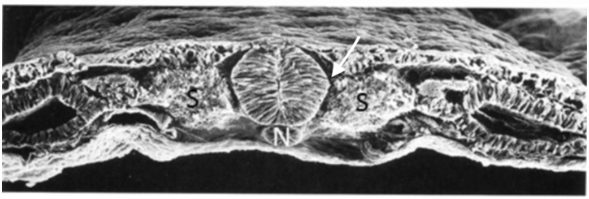
Answer: neural crest cells (NCC)
Flashcard 2: Membranous part of the interventricular septum is derived from _____.
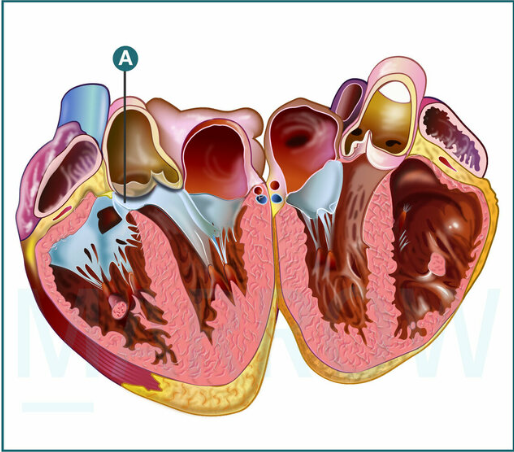
Answer: endocardial cushions
Flashcard 3: VACTERL syndrome is due to _____ defects
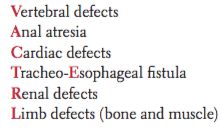
Answer: mesodermal
Flashcard 4: Bones of the _____, facial bones, and clavicle are formed via membranous ossification.
Answer: calvarium
Flashcard 5: The foregut develops into structures from the _____ to the proximal duodenum
Answer: lower esophagus
Flashcard 6: The embryonic _____ gives rise to the ascending aorta and pulmonary trunk
Answer: truncus arteriosus
Flashcard 7: The embryonic lung bud divides into two _____ buds that branch off into bronchi
Answer: bronchial
Flashcard 8: The embryonic _____ gives rise to the trabeculated parts of the left and right atria
Answer: primitive atria
Flashcard 9: Fetal erythropoiesis occurs in the _____ from 3 to 8 weeks
Answer: yolk sac
Flashcard 10: The hindgut develops into structures from the _____ to the anal canal above the pectinate line
Answer: distal 1/3 of the transverse colon
Flashcard 11: Bones of the _____ skeleton, appendicular skeleton, and base of the skull are formed via endochondral ossification.
Answer: axial
Flashcard 12: The _____ visceral efferent column contains neurons innervating muscles developed from the pharyngeal arches
Answer: special
Flashcard 13: The embryonic _____ gives rise to the smooth parts (outflow tracks) of the left and right ventricles
Answer: bulbus cordis
Flashcard 14: _____ cleft palate involves only the secondary palate.
Answer: Incomplete
Flashcard 15: Congenital heart defects arise during embryogenesis, usually in weeks _____ through 8
Answer: 3
Flashcard 16: All the muscles of the tongue are derived from _____ except palatoglossus
Answer: occipital myotomes
Flashcard 17: _____ bones are known as dermal bones.
Answer: Membranous
Flashcard 18: The embryonic _____ gives rise to the coronary sinus
Answer: left horn of sinus venosus
Flashcard 19: The _____ part of the right anterior cardinal vein between the junction with the subclavian vein and the junction with the transverse anastomosis becomes the right brachiocephalic vein
Answer: distal
Flashcard 20: The _____ period of lung development occurs from weeks 5 to 17
Answer: pseudoglandular
Flashcard 21: The _____ duct connects the yolk sac to the midgut lumen
Answer: vitelline
Flashcard 22: The _____ period of lung development occurs from weeks 16 to 25
Answer: canalicular
Flashcard 23: The _____ artery and hyoid artery are derivatives of the 2nd aortic arch
Answer: stapedial
Flashcard 24: Pinna (auricle) develops from _____ mesenchymal proliferations in 1st and 2nd branchial arches.
Answer: six
Flashcard 25: During the _____ period (lung development), the terminal sacs form the adult alveoli
Answer: alveolar
Flashcard 26: _____ part of the tongue (body) is derived from the mesoderm of the 2nd, 3rd, and part of the 4th arch
Answer: Posterior
Flashcard 27: From the umbilical vein, blood is conducted into the _____ via the ductus venosus, which bypasses hepatic circulation
Answer: IVC
Flashcard 28: Y-shaped sutures are formed from the _____, infantile and adult nucleus of the lens
Answer: fetal
Flashcard 29: _____ is the abnormal opening of the penile urethra on the ventral surface of the penis due to failure of urethral folds to fuse
Answer: Hypospadias
Flashcard 30: The formation of the _____ from the epiblast is the indicator that gastrulation has started.
Answer: primitive streak
Flashcard 31: If the developing embryo splits in the 2-cell stage (0-4 days), the twins will be _____ and diamniotic (# of chorions and # of amniotic sacs)
Answer: dichorionic
Flashcard 32: The embryonic _____ differentiates into renal structures from the glomerulus through the DCT
Answer: metanephric mesenchyme (blastema)
Flashcard 33: The _____ bud is derived from the caudal end of the mesonephric duct
Answer: ureteric
Flashcard 34: Fetal erythropoiesis occurs in the _____ from 8 weeks to birth
Answer: liver
Flashcard 35: The embryonic _____ gives rise to the trabeculated parts of the left ventricle ONLY
Answer: primitive ventricle
Flashcard 36: Each otic vesicle divides into a dorsal component called _____ and a ventral component called pars inferior.
Answer: pars superior
Flashcard 37: By the end of the third week, neural _____ grow over the midline and fuse to form the neural tube
Answer: folds
Flashcard 38: The allantois becomes the _____, which is a duct between the fetal bladder and the umbilicus
Answer: urachus
Flashcard 39: Anterior opening of the neural tube (cranial neuropore) closes by day _____ and the posterior opening (caudal neuropore) closes by day 28.
Answer: 25
Flashcard 40: Two common first arch syndromes are _____ syndrome and pierre robin sequence
Answer: treacher-collins
Flashcard 41: The urogenital ridge has 2 parts, the _____ and the nephrogenic cord
Answer: genital ridge
Flashcard 42: The _____ part of the left anterior cardinal vein and the transverse anastomosis becomes the left brachiocephalic vein
Answer: distal
Flashcard 43: In _____ ossification, osteoblasts and osteoclasts replace cartilage with a matrix of woven bone and then remodel to lamellar bone.
Answer: endochondral
Flashcard 44: The _____ thickenings of the neural tube are are called basal plates and dorsal thickenings are called alar plates.
Answer: ventral
Flashcard 45: During the _____ period (lung development), the endodermal tubules form the terminal bronchioles
Answer: pseudoglandular
Flashcard 46: _____ is a congenital renal disease characterized by bifurcation of the ureteric bud before it enters the metanephric mesenchyme
Answer: Duplex collecting system
Flashcard 47: The embryonic _____ gives rise to the smooth part of the left atrium
Answer: primitive pulmonary vein
Flashcard 48: _____ defects arise due to failure of the neuropores to fuse by the 4th week of pregnancy
Answer: Neural tube
Flashcard 49: The zona _____ and zona fasciculata of the adult adrenal cortex are present at birth.
Answer: glomerulosa
Flashcard 50: The _____ artery is a derivative of the 1st aortic arch
Answer: maxillary
Flashcard 51: In the developing ovaries, primordial germ cells produce _____ by mitotic divisions until gestational weeks 20 to 24
Answer: oogonia
Flashcard 52: The embryonic _____ gives rise to the smooth part of the right atrium
Answer: right horn of sinus venosus
Flashcard 53: The _____ - 4th branchial clefts form temporary cervical sinuses, which are obliterated
Answer: 2nd
Flashcard 54: _____ part of the tongue and the epiglottis is derived from the third swelling in the posterior part of the 4th arch
Answer: Posterior-most
Flashcard 55: The _____ (left) and proximal part of the right subclavian artery (right) are derivatives of the 4th aortic arch
Answer: true aortic arch
Flashcard 56: Male _____ cells are the homolog of female theca cells
Answer: leydig
Flashcard 57: The ear ossicles undergo _____ ossification which completes by 25th week of gestation
Answer: enchondral
Flashcard 58: During the _____ period of lung development, airways increase in diameter
Answer: canalicular
Flashcard 59: The _____ on the fetal side of the placenta is also known as Langhan's layer
Answer: cytotrophoblast
Flashcard 60: _____ is the persistence of thyroid tissue at the base of the tongue (due to failure of migration)
Answer: Lingual thyroid
Flashcard 61: In _____ ossification, a hyaline cartilage model is first made by chondrocytes.
Answer: endochondral
Flashcard 62: Congenital _____ cysts are caused by abnormal budding of the foregut and dilation of terminal or large bronchi
Answer: bronchogenic
Flashcard 63: The _____ is a remnant of the obliterated urachus
Answer: median umbilical ligament
Flashcard 64: The neuropores facilitate communication between the _____ and the amniotic cavity.
Answer: neural tube
Flashcard 65: Nephrogenesis continues through _____ to 36 weeks of gestation
Answer: 32
Flashcard 66: Development of notochord:The cells in the primitive knot multiply and pass _____ in the midline between the ectoderm and endoderm, forming the notochordal process
Answer: cranially
Flashcard 67: The _____ is the location where the ectoderm of the pharyngeal cleft meets the endoderm of the pharyngeal pouch
Answer: pharyngeal membrane
Flashcard 68: The _____ and 4th branchial arches form the posterior one-third of the tongue
Answer: 3rd
Flashcard 69: At gestational weeks _____ to 7 in genetic males, the testes begin to develop
Answer: 6
Flashcard 70: The _____ and 2nd branchial arches form the anterior two-thirds of the tongue
Answer: 1st
Flashcard 71: The short arm of the chromosome is known as the _____, and the long is the q arm
Answer: p arm
Flashcard 72: Development in the extremities proceeds from _____ to distal (proximal/distal)
Answer: proximal
Flashcard 73: The _____ and proximal part of pulmonary arteries are derivatives of the 6th aortic arch
Answer: ductus arteriosus
Flashcard 74: The _____ occipital and the last five to seven coccygeal somites later disappear.
Answer: first
Flashcard 75: The _____ induces the overlying ectoderm to form the neural plate (neuroectoderm)
Answer: notochord
Flashcard 76: _____ nucleus is the innermost nucleus formed at around 1-3 months of gestation
Answer: Embryonic
Flashcard 77: The flexure between the _____ and the metencephalon is called as the mesencephalic/cephalic flexure.
Answer: mesencephalon
Flashcard 78: Initially, two thickenings called nasal _____ are formed in the frontonasal prominence
Answer: placodes
Flashcard 79: The adrenal medulla is composed of _____ cells, which are derived from neural crest
Answer: chromaffin
Flashcard 80: Nasal _____ is a nipped off portion of encephalocele at the time of embryonic development
Answer: glioma
Flashcard 81: The face is derived from _____, maxillary and frontonasal prominences of the embryo.
Answer: madibular
Flashcard 82: Development of eye:While the _____ vesicle is forming from the surface ectoderm, the optic vesicle gets converted into a double-layered optic cup.
Answer: lens
Flashcard 83: The _____ period of lung development occurs from weeks 26 to birth
Answer: saccular
Flashcard 84: _____ stimulates the growth and differentiation of the wolffian ducts, which develop into the male internal genital tract
Answer: Testosterone
Flashcard 85: The _____ are remnants of the obliterated umbilical arteries
Answer: medial umbilical folds
Flashcard 86: Congenital _____ hernias occur due a defect in the pleuroperitoneal membrane
Answer: diaphragmatic
Flashcard 87: The _____ period of lung development occurs from weeks 4 to 7
Answer: embryonic
Flashcard 88: The remnant of the umbilical vein is the _____, which is contained in the falciform ligament
Answer: ligamentum teres hepatis
Flashcard 89: In the development of a female, the _____ duct degenerates and the paramesonephric (mullerian) duct develops
Answer: mesonephric (wolffian)
Flashcard 90: The epiglottis develops from the _____ which is a part of the 4th arch.
Answer: hypobranchial eminence
Flashcard 91: What changes occur during the process of spermiogenesis? - Loss of _____ - Gain of an acrosomal cap - Development of flagella
Answer: cytoplasmic contents
Flashcard 92: In the male, the _____ gene on the Y chromosome produces testis-determining factor, which is necessary for testes development
Answer: SRY
Flashcard 93: The _____ is a remnant of the obliterated umbilical vein
Answer: ligamentum teres hepatis (round ligament of the liver)
Flashcard 94: The embryonic _____ and right anterior cardinal vein give rise to the superior vena cava
Answer: right common cardinal vein
Flashcard 95: The _____ palate (premaxilla) develops from the intermaxillary segment that is formed by the fusion of the two medial nasal prominences.
Answer: primary
Flashcard 96: In the first step of ventricular partitioning, the _____ interventricular septum develops and forms the interventricular foramen
Answer: muscular
Flashcard 97: _____ represents the attachment of notochord to the pharyngeal endoderm during embryonic life
Answer: Thornwaldt cyst
Flashcard 98: At the age of nine, we generally have _____ permanent and 12 temporary teeth.
Answer: 12
Flashcard 99: The embryonic brain stem and spinal cord have a _____-located basal plate
Answer: ventrally
Flashcard 100: DiGeorge syndrome is a developmental failure to develop the _____ and 4th pharyngeal pouches
Answer: 3rd
Flashcard 101: _____ nucleus is formed from 3 months of gestation till birth
Answer: Fetal
Flashcard 102: The flexure between the _____ and the spinal cord is called as the cervical flexure.
Answer: myelencephalon
Flashcard 103: _____ is the first germ layer to form and it is formed from epiblast cells.
Answer: Endoderm
Flashcard 104: The _____ fissure allows the hyaloid vessels to reach the inner chamber of the eye.
Answer: choroid
Flashcard 105: The left and right hemispheres usually separate during weeks _____ - 6 of development
Answer: 5
Flashcard 106: During normal development, _____ epithelium from the lower 2/3 of the vagina grows upward to replace columnar epithelium lining the upper 1/3 of the vagina
Answer: squamous
Flashcard 107: In the first step of atrial partitioning, the _____ grows toward the endocardial cushions, forming a narrow ostium primum
Answer: septum primum
Flashcard 108: _____ defects occur due to failure of rostral fold closure of the anterior abdominal wall
Answer: Sternal
Flashcard 109: Somitomeres are _____ in number and form the mesoderm and muscles of the head and jaw.
Answer: 7
Flashcard 110: _____ and omphalocele occur due to failure of lateral fold closure of the anterior abdominal wall
Answer: Gastroschisis
Flashcard 111: Renal agenesis occurs due to failure of the _____ to develop and induce differentiation of metanephric mesenchyme
Answer: ureteric buds
Flashcard 112: The organ of _____, also known as epoophoron, is a remnant of the mesonephric tubule in females.
Answer: Rosenmuller
Flashcard 113: The _____embryonic mesoderm of the connecting stalk develops into a gelatinous substance known as Whartons jelly.
Answer: extra
Flashcard 114: Fetal kidney development begins with the _____, which develops by week 4
Answer: pronephros
Flashcard 115: The cells of the _____ plate give rise to motor nuclei and cells of the alar plate give rise to sensory nuclei.
Answer: basal
Flashcard 116: During the _____ week of gestation, the midgut herniates through the umbilical ring
Answer: 6th
Flashcard 117: _____ cells migrate into the adrenal medulla to form post-ganglionic sympathetic neurons
Answer: Chromaffin
Flashcard 118: Estimating dental age using _____ stages is more accurate than estimating age using emergence stages
Answer: mineralization
Flashcard 119: During the _____ period (lung development), the terminal bronchioles form the respiratory bronchioles, which then form the alveolar ducts
Answer: canalicular
Flashcard 120: The mesoderm in the pharyngeal arches is derived from _____ mesoderm and lateral plate mesoderm.
Answer: paraxial
Flashcard 121: During the _____ week of gestation, the midgut returns to the abdominal cavity and rotates 270 counterclockwise around the superior mesenteric artery
Answer: 10th
Flashcard 122: The canal of _____ arises from Berger's space and courses posteriorly through the central vitreous, which is the former site of the hyaloid artery in the embryonic vitreous.
Answer: Cloquet
Flashcard 123: Most of the pinna is formed from the _____ pharyngeal arch, except for the tragus
Answer: 2nd
Flashcard 124: The male _____ are homologous to the female greater vestibular glands (of Bartholin), which both arise from the urogenital sinus
Answer: bulbourethral glands (of Cowper)
Flashcard 125: Development of notochord:The floor of the notochordal canal gets intercalated with the _____ and gradually breaks down eventually leading to the formation of notochordal plate.
Answer: endoderm
Flashcard 126: The _____ (primary vesicle) matures into the telencephalon and diencephalon (secondary vesicles)
Answer: forebrain/prosencephalon
Flashcard 127: _____ cleft palate involves both the primary and secondary palate.
Answer: Complete
Flashcard 128: Each nasal pit has a ridge of tissue on the outer edge called _____ nasal prominence and on the inner edge called medial nasal prominence.
Answer: lateral
Flashcard 129: The embryonic _____ interacts via reciprocal-inductive signaling with the ureteric bud, inducing differentation of these tissues into their respective parts of the kidney
Answer: metanephric mesenchyme
Flashcard 130: Development of eye:As the optic sulcus deepens, the wall of the _____ overlying the sulcus bulges outwards to form the optic vesicle.
Answer: prosencephalon
Flashcard 131: _____ occurs due to failure of caudal fold closure of the anterior abdominal wall
Answer: Bladder exstrophy
Flashcard 132: The inner layer of _____ on the maternal side of the placenta is also known as Rohr's layer
Answer: syncitiotrophoblast
Flashcard 133: _____derm gives rise to the lens, epithelial lining of conjunctiva and cornea and epithelial lining of lacrimal glands and tarsal glands
Answer: Surface ecto
Flashcard 134: _____ is a condition caused due to insufficient formation of mesoderm in the caudal most region of the embryo.
Answer: Sirenomelia
Flashcard 135: During later part of eye development, the _____ fuses and makes the mouth of the optic cup into the future pupil
Answer: choroid fissure
Flashcard 136: After fertilization, the secondary oocyte completes _____ to form an ovum
Answer: meiosis II
Flashcard 137: The first pair of somites arise in the _____ region of the embryo at approximately the 20th day of development
Answer: occipital
Flashcard 138: _____ is a part of the wall of the neural tube that closes the cranial end of the prosencephalon
Answer: Lamina terminalis
Flashcard 139: What are the adult derivatives of the wall of the diencephalon? _____ and hypothalamus
Answer: thalamus
Flashcard 140: If there is a lack of Sertoli cells or MIF during development of a genotypically XY fetus, there is _____ internal genitalia and male external genitalia
Answer: both male and female
Flashcard 141: The _____ (primary vesicle) matures into the metencephalon and myelencephalon (secondary vesicles)
Answer: hindbrain
Flashcard 142: The male _____ are homologous to the female vestibular bulbs, which both arise from the genital tubercle
Answer: corpus cavernosum and spongiosum
Flashcard 143: The male _____ is homologous to the female labia minora, which both arise from the urogenital folds
Answer: ventral shaft of penis (penile urethra)
Flashcard 144: Development of face:The two _____ prominences grow medially and compress the medial nasal prominence towards the midline
Answer: maxillary
Flashcard 145: The _____ cells of the male gonads synthesize a glycoprotein called antimullerian hormone, which is critical for the development of male genitalia
Answer: Sertoli
Flashcard 146: _____ causes atrophy of the mullerian ducts, which would have developed into the female internal genital tract
Answer: Anti-mullerian hormone (mullerian inhibitory factor)
Flashcard 147: Development of eye:Thickened area in the _____ where the future eye will form gets depressed to form optic sulcus.
Answer: neural plate
Flashcard 148: The male _____ is homologous to the female urethral and paraurethral glands (of Skene), which both arise from the urogenital sinus
Answer: prostate gland
Flashcard 149: _____ is a congenital anomaly of midgut rotation during fetal development
Answer: Malrotation
Flashcard 150: _____ mesoderm is also known as secondary mesoderm
Answer: Intraembryonic
Flashcard 151: _____ valve is the valve of inferior vena cava and is derived from right venous valve
Answer: Eustachian
Flashcard 152: _____ of oogonia generates the primary oocytes (arrested in prophase 1)
Answer: DNA replication (interphase)
Flashcard 153: The subepithelial connective tissue layer of the ovary gives rise to the _____ of the adult ovary and basement membrane beneath the surface epithelium
Answer: tunica albuginea
Flashcard 154: The outer layer of _____ on the maternal side of the placenta is also known as Nitabuch's layer
Answer: syncitiotrophoblast
Flashcard 155: Outflow tracts from the heart are formed by migrations of _____ and endocardial cells, which spiral and fuse to form the aorticopulmonary septum
Answer: neural crest
Flashcard 156: After spermatids have been formed from secondary spermatocytes, they undergo _____ to form spermatozoa
Answer: spermiogenesis
Flashcard 157: The male _____ is homologous to the female labia majora, which both arise from the labioscrotal swelling
Answer: scrotum
Flashcard 158: _____ is the first carpal bone and pisiform is the last carpal bone to ossify.
Answer: Capitate
Flashcard 159: _____ is an incremental line found on the surface of tooth enamel that indicates that an infant was live born
Answer: Neonatal line
Flashcard 160: First pharyngeal arch has 2 prominences - the _____ mandibular prominence and the dorsal maxillary prominence
Answer: ventral
Flashcard 161: The _____ artery and proximal part of the internal carotid artery are derivatives of the 3rd aortic arch
Answer: common carotid
Flashcard 162: _____, which migrates into the metanephric blastema, gives rise to the glomeruli and the vasa recta.
Answer: Angiogenic mesenchyme
Flashcard 163: Mesenchyme of the mandibular prominence of the first arch in the jaw region surrounds the Meckel's cartilage and undergoes _____ ossification to form the mandible.
Answer: membranous
Flashcard 164: The _____ branchial cleft develops into the external auditory meatus
Answer: 1st
Flashcard 165: During the _____ period (lung development), the alveolar ducts form the terminal sacs
Answer: saccular
Flashcard 166: _____ of the undifferentiated gonad proliferates to form the ovary, and the medulla of the undifferentiated gonad proliferates to form the testis
Answer: Cortex
Flashcard 167: There is _____ umbilical vein(s) and two umbilical artery (arteries)
Answer: one
Flashcard 168: _____ cells are the homolog of female granulosa cells
Answer: Sertoli
Flashcard 169: Failure of the _____ to close in proximal part results in a cleft of the retina/choroid/optic nerve
Answer: choroid fissure
Flashcard 170: Fingeprint patterns are determined by the _____ month of gestation, created by the structure of the dermal papillae
Answer: fourth
Flashcard 171: Development of notochord:The cells from the notochordal _____ proliferate to form a solid rod-like structure called a definitive notochord.
Answer: plate
Flashcard 172: The embryonic brain stem and spinal cord have a _____-located alar plate
Answer: dorsally
Flashcard 173: The tubotympanic recess gives rise to the _____ distally, while the proximal part remains narrow and forms the auditory tube (eustachian tube)
Answer: primitive tympanic cavity
Flashcard 174: The umbilical vein drains oxygenated blood into the fetal IVC via the _____ or ductus venosus
Answer: liver
Flashcard 175: The male _____ is homologous to the female glans clitoris, which both arise from the genital tubercle
Answer: glans penis
Flashcard 176: _____ part of the tongue (body) is derived from the 1st pharyngeal arch
Answer: Anterior
Flashcard 177: The _____ period of lung development occurs from weeks 36 to 8 years
Answer: alveolar
Flashcard 178: Dysplastic kidney occurs due to failure of the _____ to induce differentiation of metanephric mesenchyme
Answer: ureteric buds
Flashcard 179: _____ is the first and Pisiform is the last carpal bone to ossify.
Answer: Capitate
Flashcard 180: _____ appear in the head region of the embryo
Answer: Somitomeres
Flashcard 181: Nucleus pulposus in the region of the intervertebral disc is a remanant of _____
Answer: notochord
Flashcard 182: Which structure of the ear develops from all 3 germ layers?_____
Answer: Tympanic membrane
Flashcard 183: What are the muscular derivatives of the first arch?_____
Answer: Tensor tympani,Tensor veli palaitii,Muscles of mastication,Anterior belly of digastric and Mylohyoid (5)
Flashcard 184: The base of all metacarpals appears at 2-3 years of age and fuse at _____ years of age
Answer: 15-17
Flashcard 185: What are the derivatives of the pharyngeal pouch of the sixth arch?_____
Answer: none
Flashcard 186: The 6 permanent molars are called _____ teeth.
Answer: superadded
Flashcard 187: The _____ part of the right anterior cardinal vein along with the right common cardinal vein form the superior vena cava
Answer: proximal
Flashcard 188: Upper part of cheeks, lateral portion of the upper lip are formed by _____ process
Answer: maxillary
Flashcard 189: Membranous part of the interventricular septum is derived from _____.
Answer: endocardial cushions
Flashcard 190: Secondary ossification centres form the _____ of the bone
Answer: epiphyses
Flashcard 191: The inner ear develops from _____ ossification centres.
Answer: 14
Flashcard 192: _____ is defined as the superior part of the crown of the tooth appearing level with the surface of the alveolar bone.
Answer: Emergence (Emergence/Eruption)
Flashcard 193: The fusion of epiphyses acts as a calendar to determine age up to about _____ years.
Answer: 25
Flashcard 194: The seminiferous tubules are derived from the _____
Answer: sex cords
Flashcard 195: The sphincter and dilator pupillae muscles are formed from the _____derm
Answer: neural ecto
Flashcard 196: Pars _____ from the otic vesicle gives rise to saccule and the cochlear duct
Answer: inferior
Flashcard 197: The most cranial part of both the anterior cardinal veins above its junction with the subclavian vein become the _____ vein
Answer: internal jugular
Flashcard 198: Sulcus _____ is due to a developmental defect
Answer: vergetuere
Flashcard 199: The secondary ossification centres of the lesser trochanter of the femur appear at _____ year after birth
Answer: 12th-14th
Flashcard 200: On the right side, the 6th arch artery _____
Answer: disappears
Flashcard 201: Development of eye:The proximal part of the optic vesicle becomes constricted and elongated to form the _____
Answer: optic stalk.
Flashcard 202: The tongue muscles are derived from the myotomes of the _____ somites.
Answer: occipital
Flashcard 203: The lacrimal sac and the nasolacrimal duct are derived from the _____derm of the nasolacrimal groove
Answer: ecto
Flashcard 204: _____ is a continuous process by which a tooth moves from its crypt in the jaw bone to its position of occlusion in the mouth.
Answer: Eruption (Emergence/Eruption)
Flashcard 205: What are the pharyngeal pouch derivatives of the second arch?_____
Answer: palatine tonsil and tonsillar fossa (2)
Flashcard 206: The _____ of the lens contains the oldest fibers.
Answer: nucleus
Flashcard 207: What is the nerve supply of the second arch?_____
Answer: Facial
Flashcard 208: Alae of the nose are formed by _____ process
Answer: lateral nasal
Flashcard 209: Secondary palate is the main part of the palate is formed by the 2 palatine processes that converge from the _____ processes.
Answer: maxillary
Flashcard 210: The connective tissue of capsule and interlobular septa of the thyroid are derived from the _____
Answer: neural crest mesenchyme.
Flashcard 211: Most common type of foregut cyst is _____ cyst
Answer: bronchogenic
Flashcard 212: The _____ is the remnant of the 2nd pharyngeal pouch found in the adult.
Answer: intratonsillar cleft (tonsillar fossa)
Flashcard 213: The ciliary epithelium is formed from the _____derm
Answer: neural ecto
Flashcard 214: Ossification in the lower end of fibula begins at _____ year after birth
Answer: 1
Flashcard 215: Preauricular sinus occurs because of the improper fusion of the _____
Answer: auricular tubercles
Flashcard 216: Remnant of the posterior end of the hyaloid artery is called as _____ and seen in posterior PHPV
Answer: Bergmeister papilla
Flashcard 217: The secondary and tertiary vitreous is formed from the _____derm
Answer: neural ecto
Flashcard 218: _____ are the embryological remnant of the synovial folds.
Answer: Plicae
Flashcard 219: Ossification in the upper end of fibula begins at _____ years after birth
Answer: 3-4
Flashcard 220: Pars _____ from the otic vesicle gives rise utricle, semicircular canals, and endolymphatic ducts.
Answer: superior
Flashcard 221: The musculature of the iris, including the sphincter pupillae and dilator pupillae, are derived from the _____ of the optic cup.
Answer: ectoderm
Flashcard 222: What parts of the trilaminar embryo are devoid of mesoderm?_____
Answer: prechordal plate and cloacal membrane (2)
Flashcard 223: Development of notochord:The cavity of the blastopore then extends into the notochordal process to form a tube-like structure called the _____
Answer: notochordal canal.
Flashcard 224: Sacrococcygeal teratomas occur due to remnants of pluripotent cells from the _____
Answer: primitive streak.
Flashcard 225: _____ nucleus of the lens is formed from birth to puberty
Answer: Infantile
Flashcard 226: _____ is the process of bone formation after the terminal differentiation of osteogenic progenitor cells into mature osteoblasts.
Answer: Osteogenesis
Flashcard 227: Which chorionic villi contain an outer layer of syncytiotrophoblast, an intermediate core of cytotrophoblast and an inner core of EEM?_____
Answer: Secondary
Flashcard 228: Lower part of cheeks, chin and lower lip are formed by _____ process
Answer: mandibular
Flashcard 229: Heuser's membrane (exocoelomic membrane) develops from flattened cells derived from the _____.
Answer: hypoblast
Flashcard 230: The vertebral bodies and the annulus fibrosus (peripheral part of the intervertebral disc) are derived from the mesenchymal cells of the _____.
Answer: sclerotome
Flashcard 231: What is the nerve of the first pharyngeal arch?_____
Answer: Trigeminal
Flashcard 232: Which 2 processes fail to fuse in median (midline) cleft lip?_____
Answer: two medial nasal processes
Flashcard 233: The external auditory meatus develops as an invagination of which embryological structure?_____
Answer: First pharyngeal cleft
Flashcard 234: Which part of middle ear are formed from the second pharyngeal arch?_____
Answer: Stapes suprastructure
Flashcard 235: Primary center of ossification of femur appears in the mid shaft in the _____ week of prenatal period.
Answer: seventh
Flashcard 236: Hip joint centres fuse by the age of _____ years
Answer: 22
Flashcard 237: The location of the posterior neuropore is represented in adults as _____.
Answer: terminal ventricle
Flashcard 238: The _____ sinus is the last sinus to develop.
Answer: sphenoid
Flashcard 239: The lens fibers are produced by mitosis of the epithelial cells in the _____ zone.
Answer: pre-equatorial
Flashcard 240: Which ossicles are formed from the first pharyngeal arch?_____
Answer: Malleus and incus
Flashcard 241: What are the skeletal derivatives of the second arch?_____
Answer: Stapes, Styloid process (temporal), Lesser cornu of upper hyoid, Stylohyoid ligament (4)
Flashcard 242: The choroidal vessels are formed from the _____derm
Answer: meso
Flashcard 243: What are the muscular derivatives of the second arch?_____
Answer: Stapedius, Stylohyoid, Facial Muscles (Buccinator, Platysma, Posterior belly of digastric) (5)
Flashcard 244: The crystalline lens is formed from the _____derm
Answer: surface ecto
Flashcard 245: What are the skeletal derivatives of the sixth arch?_____
Answer: Arytenoid cartilage
Flashcard 246: Primary teeth in the upper jaw erupt _____ than their counterpart in the lower jaw
Answer: earlier (later/earlier)
Flashcard 247: The cochlea is developed sufficiently by _____ weeks of gestation
Answer: 20
Flashcard 248: The optic groove appears by _____ weeks
Answer: 3
Flashcard 249: The primary ossification center of the tibia appears at _____ week of intra-uterine life.
Answer: 7th
Flashcard 250: Dermis of the skin is derived from the _____derm
Answer: meso
Flashcard 251: Which chorionic villi contain an outer layer of syncytiotrophoblast, an intermediate core of cytotrophoblast and an inner core of EEM with fetal capillaries?_____
Answer: Tertiary
Flashcard 252: Cervix:corpus ratio before puberty is _____
Answer: 2:1
Flashcard 253: Fingerprint first develops in _____ weeks of intrauterine life.
Answer: 12-16
Flashcard 254: The sclera (superotemporal part) is formed from the _____derm
Answer: meso
Flashcard 255: Which processes fail to fuse in bilateral complete cleft palate?_____
Answer: Palatine processes with each other and with the premaxilla
Flashcard 256: The pericardial, pleural, and peritoneal cavities are developed from the _____
Answer: intraembryonic coelom
Flashcard 257: The sertoli cells are derived from the _____ of the early gonad.
Answer: surface epithelium
Flashcard 258: The trigone on the posterior wall of the urinary bladder is formed by the incorporation of the lower ends of the _____
Answer: mesonephric ducts.
Flashcard 259: New somites appear in craniocaudal sequence at a rate of approximately _____ pairs per day.
Answer: three
Flashcard 260: The fetal nucleus starts to develop by _____ month
Answer: 3
Flashcard 261: The _____ fontanelle is the last fontanelle to close.
Answer: anterior
Flashcard 262: The urogenital ridge develops from the _____ mesoderm.
Answer: intermediate (lateral plate/intermediate)
Flashcard 263: The pineal gland develops from the _____.
Answer: diencephalon
Flashcard 264: The iris and choroid stroma are formed from the _____derm
Answer: neural crest
Flashcard 265: The conjunctival epithelium is formed from the _____derm
Answer: surface ecto
Flashcard 266: Only the _____ pharyngeal membrane develops while the rest do not develop into any structure and regress.
Answer: first
Flashcard 267: Development of notochord:The cranial end of the primitive streak thickens to form the _____
Answer: primitive knot
Flashcard 268: The long left recurrent laryngeal nerve is due to the persistence of the left _____th arch artery.
Answer: 6
Flashcard 269: The pinna is completely developed and achieves adult configuration at age of _____
Answer: 6 yrs
Flashcard 270: Physiological atrophy can occur during _____ development eg. structures, like the notochord and thyroglossal duct
Answer: embryonic
Flashcard 271: On the basis of function:_____ sulcus - Sulcus that develops along the axis of a rapidly growing/ developing area.
Answer: Axial
Flashcard 272: The lens plate forms and the embryonic fissure develops by _____ weeks
Answer: 4
Flashcard 273: Primary centre of ossification of fibula appears at _____ week of intrauterine life.
Answer: 8
Flashcard 274: Retinal vessels originate from mesenchymal tissue during week _____ of gestation
Answer: 16
Flashcard 275: The corneal epithelium is formed from the _____derm
Answer: surface ecto
Flashcard 276: The urinary and reproductive organs are developed from the _____ mesoderm.
Answer: intermediate
Flashcard 277: Heuser's membrane (exocoelomic membrane) is formed on day _____ of pre-embryonic development
Answer: 9-10
Flashcard 278: The extraocular muscles are formed from the _____derm
Answer: meso
Flashcard 279: On the left side, the 6th arch artery _____
Answer: persists
Flashcard 280: Cervix:corpus ratio at puberty is _____
Answer: 1:2
Flashcard 281: If the regression of left posterior and common cardinal vein is absent, it may lead to the formation of a _____
Answer: left superior vena cava
Flashcard 282: The secondary ossification centres of the head end of the femur appear at _____ month after birth
Answer: 6th
Flashcard 283: Which chorionic villi contain an outer layer of syncytiotrophoblast and a central core of cytotrophoblast?_____
Answer: Primary
Flashcard 284: _____ are congenital cysts that arise from abnormal detachments of primitive foregut
Answer: Foregut cysts
Flashcard 285: What are the pharyngeal pouch derivatives of the first arch?_____
Answer: Auditory tube and middle ear cavity (2)
Flashcard 286: Do ear ossicles attain adult size before or after birth?_____
Answer: Before
Flashcard 287: The lacrimal and tarsal glands is formed from the _____derm
Answer: surface ecto
Flashcard 288: As lens fibers grow anteriorly and posteriorly, a pattern emerges where the ends of the fibers meet known as _____.
Answer: sutures
Flashcard 289: The corneal stroma, keratinocytes and endothelium are formed from the _____ derm
Answer: neural crest
Flashcard 290: What is the first germ layer to form?_____
Answer: Endoderm
Flashcard 291: The vaginal fornices are of _____ origin.
Answer: paramesonephric
Flashcard 292: The secondary ossification center of the lower end of tibia appears at _____ year after birth
Answer: 1st
Flashcard 293: The mastoid develops by _____ years of age.
Answer: 2
Flashcard 294: The iris epithelium is formed from the _____derm
Answer: neural ecto
Flashcard 295: Branchial cyst develops due to the persistence of _____
Answer: cervical sinus.
Flashcard 296: The fibres of the optic nerve is formed from the _____derm
Answer: neural ecto
Flashcard 297: Development of _____ during embryogenesis is carried out by RPE
Answer: photoreceptors
Flashcard 298: The primary vitreous is formed from the _____derm
Answer: meso
Flashcard 299: The eustachian tube in infants is _____ mm
Answer: 18
Flashcard 300: Collaural fistula is due to the persistent opening of the _____
Answer: first branchial cleft.
Flashcard 301: The myelination of optic nerve begins by _____ month
Answer: 7
Flashcard 302: Uveal and conjunctival melanocytes are derived from the _____.
Answer: neural crest
Flashcard 303: Development of the layers of the epidermis starts from below _____wards
Answer: up (up/down)
Flashcard 304: Which embryologic structure gives rise to the membranous labyrinth?_____
Answer: Otic vesicle
Flashcard 305: The retina and RPE is formed from the _____derm
Answer: neural ecto
Flashcard 306: By the end of the 5th week, _____ pairs of somites are present.
Answer: 42 to 44
Flashcard 307: The first cerebral commissure to develop is the _____
Answer: anterior commissure.
Flashcard 308: What bones are formed by membranous ossification from the mesenchyme of the maxillary process of the first arch?_____
Answer: Maxilla, zygomatic bone, and part of the temporal bone (3)
Flashcard 309: Meckel's cartilage of the first pharyngeal arch gives rise to which structures? _____
Answer: Malleus, incus, anterior malleolar ligament, spine of the sphenoid, and the sphenomandibular ligament (5)
Flashcard 310: The lower portion of the vagina is derived from the _____ (from cloaca)
Answer: urogenital sinus
Flashcard 311: The _____derm gives rise to the lacrimal glands.
Answer: ecto
Flashcard 312: _____ years is the age of mixed dentition
Answer: 6-13 (x to y)
Flashcard 313: Philtrum of the upper lip, crest of the nose, and tip of the nose are formed by _____ process
Answer: medial nasal
Flashcard 314: Once the blastocyst cavity is fully lined with Heuser's membrane, it is called as the _____ cavity.
Answer: exocoelomic
Flashcard 315: What are the skeletal derivatives of the fourth arch?_____
Answer: Thyroid cartilage, Corniculate cartilage and Cuneiform cartilage
Flashcard 316: What are the skeletal derivatives of the third arch?_____
Answer: Greater cornu and lower part of hyoid
Flashcard 317: The sclera (except supero-temporally) and ciliary muscles are formed from the _____derm
Answer: neural crest
Flashcard 318: Tympanic cavity is formed from the _____ pharyngeal pouch
Answer: first
Flashcard 319: _____ bones ossify partly from cartilage and partly from mesenchymal condensations
Answer: Membranocartilaginous
Flashcard 320: The cardiac and smooth muscles are derived from the _____ mesoderm.
Answer: splanchnic
Flashcard 321: The liver grows in the _____ mesogastrium
Answer: ventral
Flashcard 322: What are the two derivatives of the mandibular prominence of the first pharyngeal arch?_____
Answer: Meckel's cartilage and mesenchyme
Flashcard 323: Embryologically, Parotid is derived from the _____
Answer: ectoderm
Flashcard 324: Forehead, bridge of the nose, the medial and lateral nasal prominences are formed by _____ prominence
Answer: frontonasal
Flashcard 325: Faulty migration of neural crest cells results in _____ dysgenesis of the eye
Answer: anterior segment
Flashcard 326: _____ is a type of conjoint twin where there is a fusion of the head or cranium.
Answer: Craniopagus
Flashcard 327: The secondary ossification centres of the distal end of the femur appear at _____ month of intrauterine life
Answer: 9th
Flashcard 328: Anatomical closure of the fetal circulatory adjustments occurs in the following sequence: _____
Answer: Ductus venosus > Ductus arteriosus > Foramen ovale
Flashcard 329: The _____ sinus develops until early adulthood.
Answer: frontal
Flashcard 330: Which part of middle ear are formed from the otic capsule?_____
Answer: Stapes footplate and annular ligament
Flashcard 331: Which germ layers of the embryo are derived from the epiblast?_____
Answer: All 3 (ecto,endo,mesoderm)
Flashcard 332: Ciliary epithelium is derived from the optic _____
Answer: cup
Flashcard 333: The secondary ossification centres of the greater trochanter of the femur appear at _____ year after birth
Answer: 4th
Flashcard 334: The proximal part of umbilical artery develops into _____ artery.
Answer: Superior vesical artery
Flashcard 335: Ligamentum teres contains _____ in fetal life.
Answer: Left umbilical vein
Flashcard 336: The septum transversum gives rise to: _____ of diaphragm and _____ of liver.
Answer: Central tendon, Capsule
Flashcard 337: The crista terminalis is present in the _____ atrium and the smooth part behind it is formed by the _____.
Answer: right; right horn of sinus venosus
Flashcard 338: _____ syndrome results from abnormal development of the _____ pharyngeal arch.
Answer: Treacher Collins; 1st
Flashcard 339: The adrenal cortex originates from the _____ mesoderm
Answer: intermediate
Flashcard 340: The embryo is bipotent till _____ weeks of gestation
Answer: seven
Flashcard 341: The proximal part of the umbilical artery develops into the _____ artery
Answer: superior vesical
Flashcard 342: _____ aortic arch persists on both sides and forms:Left side: Part of the _____ between the left common carotid and the left subclavian arteriesRight side: Proximal segment of the _____ subclavian artery
Answer: 4th; arch of aorta; right
Flashcard 343: _____ aortic arch persists on both sides and forms:Left side: Part of the _____ between the left common carotid and the left subclavian arteriesRight side: Proximal segment of the _____ subclavian artery
Answer: 4th; arch of aorta; right
Flashcard 344: Bartholin's glands are homologous to the male _____ glands.
Answer: Cowper
Flashcard 345: The _____ umbilical ligament is the remnant of umbilical artery.
Answer: medial
Flashcard 346: The crista terminalis is present in the _____ atrium and the smooth part behind it is formed by the _____.
Answer: right; right horn of sinus venosus
Flashcard 347: The anatomical closure of the ductus arteriosus occurs at _____ days.
Answer: 10-21
Flashcard 348: Levator veli palatini is a muscle of the _____ arch and innervated by _____ nerve
Answer: 4th; Vagus
Keywords: Embryology and Development flashcards, medical flashcards, NEET PG preparation, USMLE Step 1 flashcards, Anki alternative, spaced repetition medical, OnCourse flashcards