Brain and Neuroanatomy Indian Medical PG Flashcards - Medical Study Cards
Master Brain and Neuroanatomy with OnCourse flashcards. These spaced repetition flashcards are designed for medical students preparing for NEET PG, USMLE Step 1, USMLE Step 2, MBBS exams, and other medical licensing examinations.
Brain and Neuroanatomy Flashcard Deck - 407 Cards
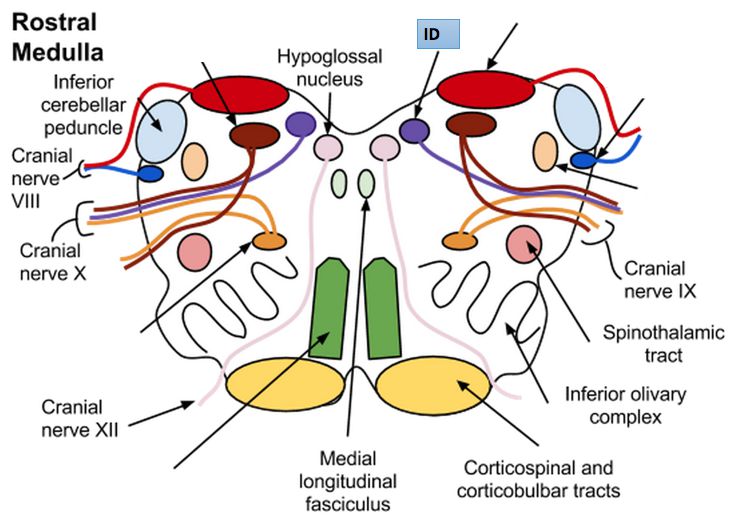
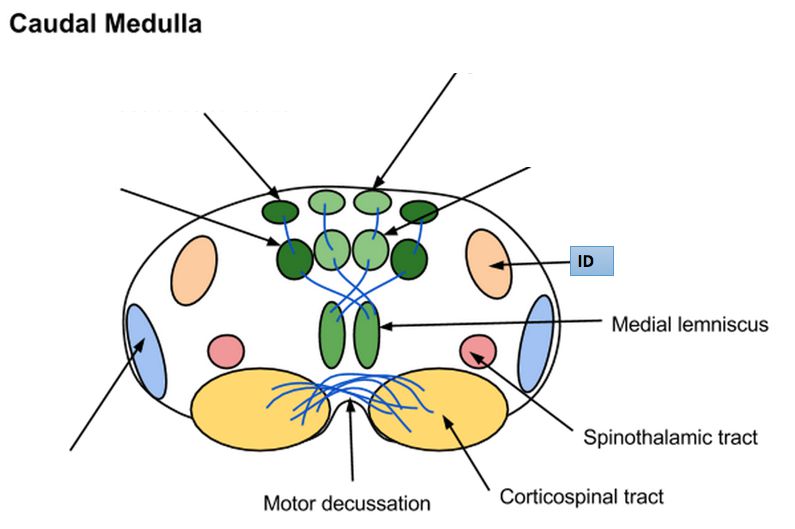
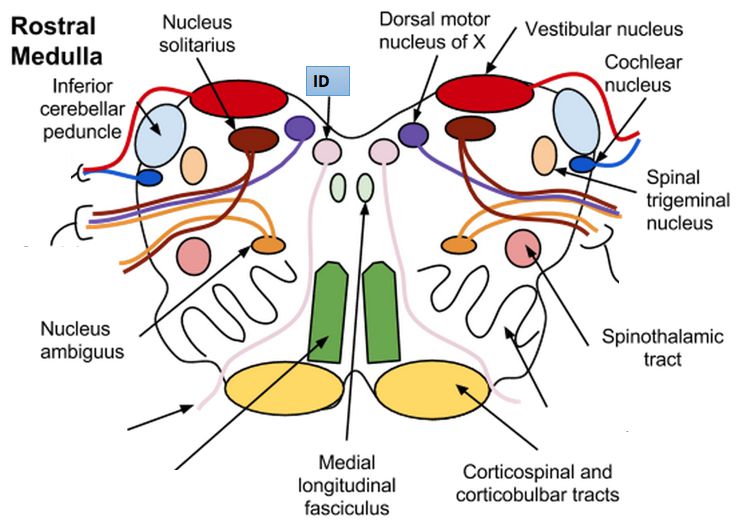
Flashcard 1: ID Nucleus: _____
Answer: Dorsal motor nucleus of X
- Adjacent and lateral to the hypoglossal nucleus
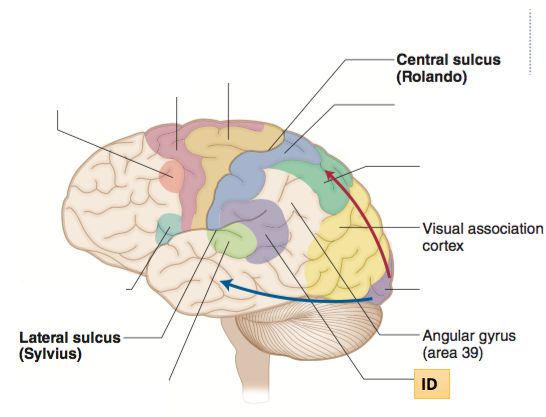
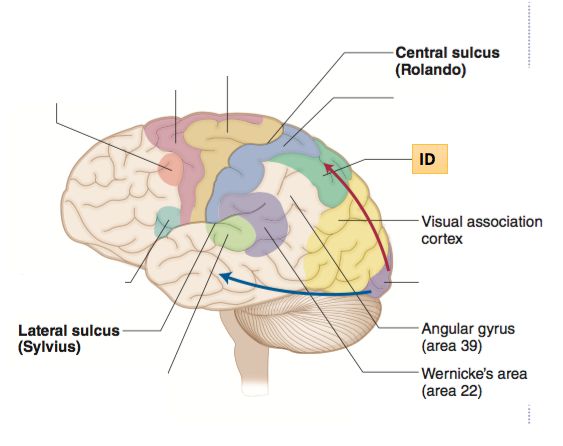
Flashcard 2: ID Cortical Area: _____
Answer: Wernicke's area (Brodmann area 22)
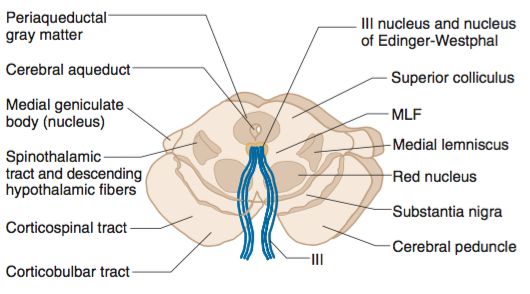
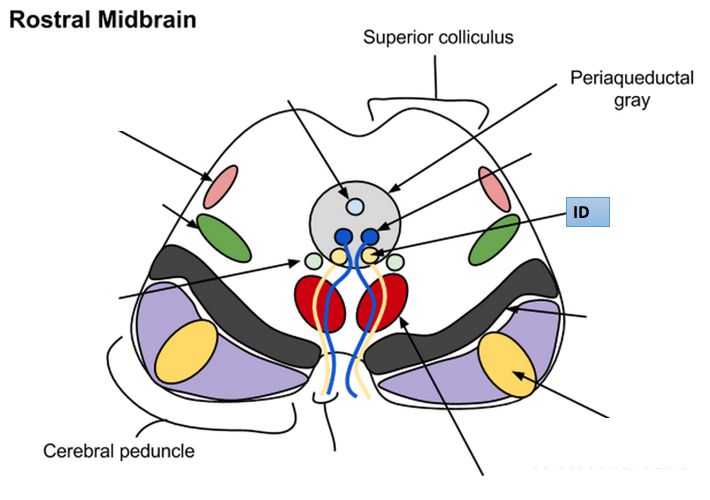
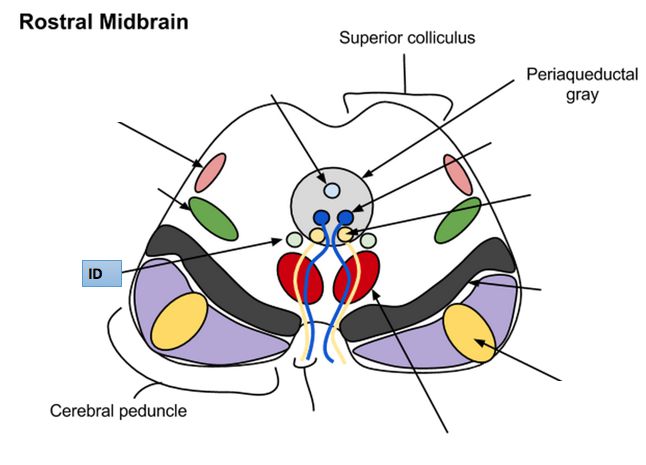
Flashcard 3: ID Brainstem Level: _____
Answer: Rostral midbrain
- Presence of colliculi
- Presence of cerebral aqueduct
- Presence of cerebral peduncles
- Presence of CN III
Flashcard 4: ID Cortical Area: _____
Answer: Somatosensory association cortex
Flashcard 5: ID Nucleus: _____
Answer: Nucleus of CN III
- Located in rostral midbrain
- Anterolateral to cerebral aqueduct
- Anterior to nucleus of Edinger-Westphal
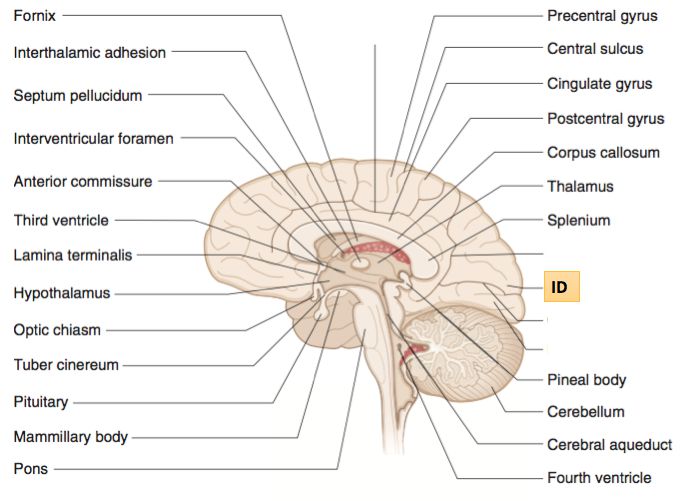
Flashcard 6: ID Gyrus: _____
Answer: Cuneus gyrus
Flashcard 7: ID Nucleus: _____
Answer: Spinal trigeminal nucleus
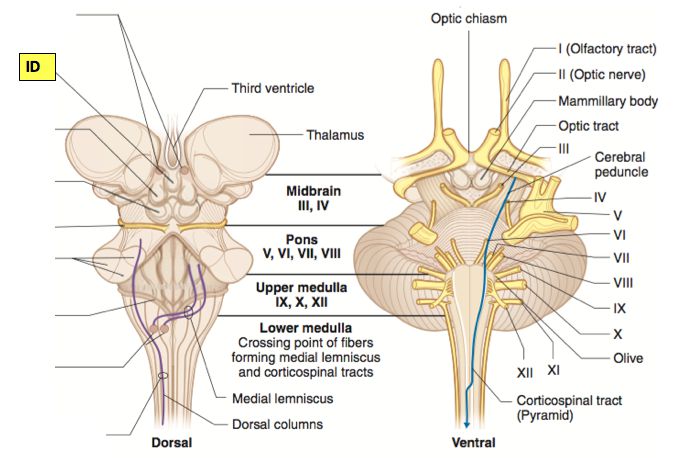
Flashcard 8: ID the structure: _____
Answer: Pineal gland
Flashcard 9: ID Nucleus: _____
Answer: Hypoglossal nucleus
- Situated near the midline just beneath the fourth ventricle
Flashcard 10: ID Structure: _____
Answer: Medial longitudinal fasciculus
Flashcard 11: ID Brainstem Level: _____
Answer: Caudal midbrain
- Presence of colliculi
- Presence of cerebral aqueduct
- Presence of CN IV
Flashcard 12: ID Nucleus: _____
Answer: Cochlear nucleus
- Just lateral to the inferior cerebellar peduncle
Flashcard 13: ID Structure: _____
Answer: Medial lemniscus
Flashcard 14: ID Brainstem Level: _____
Answer: Closed medulla
- Absence of 4th ventricle
- Decussation of medullary pyramids
Flashcard 15: Parts in yellow are supplied by? _____
Answer: Anterior cerebral artery
Flashcard 16: ID Cranial Nerve: _____
Answer: CN IX (Glossopharyngeal)
Flashcard 17: ID Gyrus: _____
Answer: Cingulate gyrus
Flashcard 18: ID Nucleus: _____
Answer: Nucleus ambiguus
Flashcard 19: ID Nucleus: _____
Answer: Spinal trigeminal nucleus
Flashcard 20: ID Nucleus: _____
Answer: Nucleus of Edinger-Westphal
- Located in rostral midbrain
- Anterolateral to cerebral aqueduct
- Posterior to nucleus of CN III
Flashcard 21: ID Spinal Cord Section: _____
Answer: Cervical
Flashcard 22: ID Nucleus: _____
Answer: Nucleus solitarius
Flashcard 23: ID Structure: _____
Answer: Medial lemniscus
Flashcard 24: ID Vessel: _____
Answer: Anterior cerebral artery
Flashcard 25: ID Nucleus: _____
Answer: Inferior olivary nucleus
Flashcard 26: ID Sulcus: _____
Answer: Central sulcus
Flashcard 27: ID Structure: _____
Answer: Medial longitudinal fasciculus
Flashcard 28: ID Brainstem Level: _____
Answer: Rostral pons
- Presence of 4th ventricle
- Ventral enlargement
- Presence of CN V
Flashcard 29: ID the structure: _____
Answer: Mammillary body
Flashcard 30: ID Cortical Area: _____
Answer: Prefrontal cortex
Flashcard 31: ID Cortical Area: _____
Answer: Primary visual cortex
Flashcard 32: ID Sulcus: _____
Answer: Calcarine sulcus
Flashcard 33: ID Brainstem Level: _____
Answer: Caudal pons
- Presence of 4th ventricle
- Ventral enlargement
- Presence of CN VI and VII
Flashcard 34: The structure marked in the image is _____ and its fibers end in the _____ nucleus of the thalamus.
Answer: mamillary body
Flashcard 35: The structure marked A is the splenium of the corpus callosum and it is connected to the _____ cortex.
Answer: striate
Flashcard 36: ID Nucleus: _____
Answer: Abducens nucleus
- Found near the midline in the floor of the fourth ventricle, just lateral to the MLF
Flashcard 37: ID Cortical Area: _____
Answer: Frontal eye field (Brodmann area 8)
Flashcard 38: Structures corresponding to B in the below image is _____
Answer: Choroid plexus
Flashcard 39: ID Structure: _____
Answer: Medial lemniscus
Flashcard 40: ID Brainstem Level: _____
Answer: Open medulla
- Presence of 4th ventricle
- Inferior olivary nucleus
- Presence of CN IX, X and XII
Flashcard 41: ID Red-Curvy Structure: _____
Answer: Arcuate fasciculus
Flashcard 42: ID Cortical Area: _____
Answer: Primary auditory cortex (Brodmann area 41 & 42)
Flashcard 43: ID Gyrus: _____
Answer: Precentral gyrus
Flashcard 44: ID the structure: _____
Answer: Pretectal nuclei (light reflex)
Flashcard 45: ID Structure: _____
Answer: Red nucleus
Flashcard 46: ID Cortical Area: _____
Answer: Premotor cortex (Brodmann area 6)
Flashcard 47: Area marked C is also known as _____ (5,7)
Answer: Sensory Association area
Flashcard 48: ID Cortical Area: _____
Answer: Primary motor cortex (Brodmann area 4)
Flashcard 49: ID Nucleus: _____
Answer: Vestibular nucleus
Flashcard 50: ID Structure: _____
Answer: Main sensory nucleus of V
Flashcard 51: Most likely site of location of Cavernous sinus in the given image is: _____
Answer: B
Flashcard 52: ID Structure: _____
Answer: Spinal trigeminal nucleus
Flashcard 53: ID Gyrus: _____
Answer: Postcentral gyrus
Flashcard 54: ID Vessel: _____
Answer: Middle cerebral artery
Flashcard 55: ID Gyrus: _____
Answer: Lingual gyrus
Flashcard 56: ID Cortical Area: _____
Answer: Broca's area (Brodmann area 44 & 45)
Flashcard 57: ID Nucleus: _____
Answer: Facial nucleus
- Located ventrolateral to the abducens nucleus
Flashcard 58: ID Nucleus: _____
Answer: Spinal trigeminal nucleus
Flashcard 59: Interlaminar pathway gives signals for color vision to layers _____ and 3 of the visual cortex having clusters of cells called blobs
Answer: 2
Flashcard 60: Chiari _____ malformation commonly results in aqueductal stenosis, which causes hydrocephalus
Answer: II
Flashcard 61: Lesions to CN _____ result in deviation of the uvula away from the side of the lesion
Answer: X (vagus)
Flashcard 62: All the fibres of the _____ except the hippocampal comissure are long association fibres
Answer: fornix
Flashcard 63: Rules of 4: Lesions in the brain stem that affect the _____ result in contra-lateral weakness of the arm and leg
Answer: corticospinal tract
Flashcard 64: Foramen of the skull:Neurovascular structures passing through the posterior part of foramen magnum include:_____ nerve and posterior spinal artery
Answer: spinal root of accessory
Flashcard 65: Relations of the lateral ventricle: BodyRoof: _____ of the corpus callosum Floor and lateral wall: Caudate nucleus, stria terminalis, thalamostriate vein, thalamus, choroid plexus, and body of the fornix (lateral to medial)Medial wall: Septum pellucidum
Answer: body
Flashcard 66: The _____ separates the thalamus and the caudate nucleus from the lentiform nucleus
Answer: internal capsule
Flashcard 67: The basal ganglia and cerebellum funnel information for skilled voluntary movement to the _____ and motor cortex by way of the thalamus.
Answer: premotor
Flashcard 68: The auditory input from the superior olivary nucleus travels via the _____ to the inferior colliculus (midbrain)
Answer: lateral lemniscus
Flashcard 69: _____ sinus and superior saggital sinus drains into the confluence of sinuses
Answer: Occipital
Flashcard 70: What is the output of the neocerebellum?To _____ nucleus of the thalamus via the dentate nucleus
Answer: ventrolateral
Flashcard 71: Continuous EEG monitoring in Polysomnography is recorded from _____ and parietal lobe leads attached to the brain
Answer: occipital
Flashcard 72: _____ pupillae is supplied by the parasympathetic fibers of the ciliary ganglion
Answer: Sphincter
Flashcard 73: The innervation of the cranial dura mater is derived mainly from the three divisions of the _____ cranial nerve, the C2 and C3 spinal nerves, and the cervical sympathetic trunk.
Answer: 5th
Flashcard 74: The infraorbital nerve is a continuation of the _____ nerve that runs across the orbital floor
Answer: maxillary
Flashcard 75: The _____ cistern contains the AICArtery, Cranial nerves 5, 7, 8 and superior petrosal veins
Answer: Cerebellopontine
Flashcard 76: Lesion to areas after the optic chiasm result in _____-ocular and homonymous contra-lateral deficits in vision
Answer: bin
Flashcard 77: One component of the basal ganglia is the _____, which consists of the putamen (motor) and caudate (cognitive)
Answer: striatum
Flashcard 78: The dural venous sinuses are present between the _____ and the endosteal layer of the dura mater.
Answer: meningeal
Flashcard 79: Branches of Mandibular nerve:Main trunk of the mandibular nerve gives rise to _____ and Nervous spinosus
Answer: N. to medial pterygoid
Flashcard 80: Purkinje cells in the _____ of the cerebellum project to the fastigial nuclei
Answer: vermis
Flashcard 81: Branches of Mandibular nerve:_____ and lingual nerve of the posterior division are the sensory branches
Answer: Auriculotemporal
Flashcard 82: _____ layer of Dura mater is actually the periosteum of the skull bones.
Answer: Endosteal
Flashcard 83: The CSF in the 4th ventricle may enter the _____ via the lateral foramina (2) of Luschka
Answer: subarachnoid space
Flashcard 84: The afferent pathways of basal ganglia consist of _____ and thalamostriatal pathways
Answer: corticostriatal
Flashcard 85: The _____ nucleus is the portion of the medial longitudinal fasciculus responsible for vertical gaze
Answer: rostral interstitial
Flashcard 86: The length of the intra-_____ part of the optic nerve is 5-9mm
Answer: canalicular
Flashcard 87: The _____-order neuron of the dorsal column-medial lemniscal tract decussates in the caudal medulla
Answer: 2nd
Flashcard 88: _____ gyrus is located in the primary auditory cortex.
Answer: Heschl's
Flashcard 89: The _____ of the reticular formation is located in the posterior rostral pons and is responsible for synthesis of norepinephrine
Answer: locus coeruleus
Flashcard 90: _____ motoneurons are always ipsi-lateral to the muscle they innervate
Answer: Lower
Flashcard 91: Boundaries of the 3rd ventricle:Roof - _____Lateral wall - Thalamus, hypothalamusAnterior wall - Anterior commissure, Lamina terminalisPosterior wall - Pineal gland, Posterior commissure, Aqueduct of SylviusFloor - Optic chiasma, Infundibulum, mamillary bodies, posterior perforating substance, tegmentum of midbrain (anterior to posterior)
Answer: Choroid plexus
Flashcard 92: The dentate nucleus sends axons that decussate in the _____ and then synapse in the contralateral ventral lateral (VL) nucleus of the thalamus
Answer: superior cerebellar peduncle
Flashcard 93: The 1st-order neuron of the hypothalamospinal tract arises from the hypothalamus and synapses in the _____ horn of the spinal cord at the level of T1
Answer: lateral
Flashcard 94: What are the adult derivatives of the wall of the metencephalon? _____ and cerebellum
Answer: pons
Flashcard 95: Within the ventral horn, alpha and gamma motoneurons that innervate _____ are located more ventrally
Answer: extensors
Flashcard 96: The corticobulbar innervation of facial motoneurons to muscles of the _____ face is bi-lateral
Answer: upper
Flashcard 97: _____ fibers that enter the cerebellum originate from the inferior olivary nuclei of the contralateral medulla
Answer: Climbing
Flashcard 98: The flexure between the _____ and the myelencephalon is called as the pontine flexure.
Answer: metencephalon
Flashcard 99: The abducens nucleus sends axons that course within the contralateral _____ to reach the oculomotor nucleus
Answer: MLF
Flashcard 100: The vestibular system communicates directly with the nucleus tractus solitarius via the _____ nerve (CN VIII)
Answer: vestibulocochlear
Flashcard 101: The arrangement of cerebellar nuclei from _____ is dentate, emboliform, globose, and fastigial.
Answer: lateral to medial
Flashcard 102: Layers of the cerebellum:Granular layer: contains _____ cells that receive input from parallel fibers and mossy fibers
Answer: Golgi
Flashcard 103: Output fibres from thalamus project to the _____ and to the basal nuclei and hypothalamus
Answer: cerebral cortex
Flashcard 104: At the superior end of the sulcus limitans, a bluish-gray area is produced by a cluster of nerve cells containing _____ pigment called substantia ferruginea
Answer: melanin
Flashcard 105: Special Visceral Efferent: Nucleus Ambiguus _____ nerve: Innervating stylopharyngeus, pharyngeal, external laryngeal, oesophageal striated muscles, muscles of the soft palate, sternocleidomastoid, and trapezius.
Answer: IX, X, XI
Flashcard 106: At the _____, 60% of the optic fibers from the nasal half of each retina cross and project into the contralateral optic tracts
Answer: optic chiasm
Flashcard 107: Relations of the lateral ventricle: Inferior hornRoof: _____ of the corpus callosum and tail of caudate Floor: collateral eminence and hippocampus
Answer: tapetum
Flashcard 108: The cell bodies of _____-secreting neurons (from the posterior pituitary) originate primarily in the paraventricular nuclei of the hypothalamus
Answer: oxytocin
Flashcard 109: The _____ is a membrane separating the anterior horns of the left and right lateral ventricles of the brain.
Answer: septum pellucidum
Flashcard 110: Wernicke-Korsakoff syndrome is characterized by:- damage _____laterally to the mammillary bodies - periventricular hemorrhagic lesions to the dorsomedial nucleus of the thalamus
Answer: bi
Flashcard 111: Rules of 4: Lesions in the brain stem that affect the _____ result in ipsi-lateral ataxia of the arm and leg
Answer: spinocerebellar pathway
Flashcard 112: _____ hematoma is due to tearing of bridging veins that lie between the dura and arachnoid
Answer: Subdural
Flashcard 113: Components of Papez Circuit are: He-_____ Man-Mamillary body Ate-Anterior thalamus Cat-Cingulate gyrus
Answer: Hippocampus
Flashcard 114: Chorda tympani joins the _____ nerve & relays in submandibular ganglion
Answer: lingual
Flashcard 115: Layers of the cerebellum:Molecular layer - _____ and basket cells recieve excitatory input from parellel fibres and form inhibitory synapses on Purkinje cells
Answer: Stellate
Flashcard 116: The insula forms the base of the _____ cistern and lies between the frontal and temporal lobes.
Answer: Sylvian
Flashcard 117: The _____ of the corpus callosum connects frontal lobes
Answer: rostrum
Flashcard 118: Facial nerve divides into 2 main terminal trunks: _____ and Cervicofacial.
Answer: Temporofacial
Flashcard 119: In accomodation reflex pathway, the afferent fibres from optic tract reach the _____ and finally end at the parastriate cortex
Answer: LGB
Flashcard 120: Rules of 4: Lesions in the brain stem that affect the _____ result in ipsi-lateral internuclear ophthalmoplegia
Answer: MLF
Flashcard 121: The most common site for a _____ aneurysm is at the junction of the anterior communicating and anterior cerebral arteries
Answer: berry (saccular)
Flashcard 122: Medial midbrain (Weber) syndrome is caused by occlusion of the _____ branches of the posterior cerebral artery
Answer: paramedian
Flashcard 123: In addition to CNs, the cavernous sinus also contains portions of the _____ artery and hypothalamospinal tract fibers en route to the orbit
Answer: internal carotid
Flashcard 124: Layers of the cerebellum:Purkinje layer - The axons of Purkinje cells passes through the _____ layer into the white matter and synapses with the cerebellar nuclei.
Answer: granular
Flashcard 125: The flexure between the _____ and the diencephalon is called as the telencephalic flexure.
Answer: telencephalon
Flashcard 126: The two major outputs/ efferents of the basal ganglia are from _____ and substantia nigra pars reticulata
Answer: Globus pallidus interna
Flashcard 127: The _____ nucleus of the thalamus generally receives input from the hypothalamus and sends output to the prefrontal cortex.
Answer: dorsomedial
Flashcard 128: Acoustic neuroma most commonly arises from the _____ division of 8th cranial nerve at the site of transition of central to peripheral myelin i.e. Obersteiner-Redlich zone.
Answer: vestibular
Flashcard 129: Layers of the cerebellum:_____ fibres end on the dendrites of granule cells and form complexes called as glomeruli
Answer: Mossy
Flashcard 130: The _____-order neuron of the dorsal column-medial lemniscal tract ascends contra-laterally in the medial lemnicscus (brainstem and above)
Answer: 2nd
Flashcard 131: The _____ sinus terminates by joining with the great cerebral vein of Galen to form the straight sinus
Answer: inferior sagittal
Flashcard 132: The CSF in the 4th ventricle may enter the _____ via the medial foramen (1) of Magendie
Answer: subarachnoid space
Flashcard 133: The _____ of the internal capsule contains corticospinal, corticorubral and frontopontine fibres
Answer: posterior limb
Flashcard 134: One component of the basal ganglia is the _____, which consists of the putamen and globus pallidus
Answer: lentiform nucleus
Flashcard 135: Layers _____ of the LGB receive the projections of the axons from the temporal retina of the ipsilateral eye (uncrossed fibres)
Answer: 2, 3 and 5
Flashcard 136: The facial nerve exits the facial nucleus and loops around the _____ nucleus, forming the internal genu of the facial nerve
Answer: abducens
Flashcard 137: The posterior perforated substance present in the _____ is pierced by the posterior cerebral arteries.
Answer: interpeduncular fossa
Flashcard 138: The primary visual (striate) cortex is divided into _____ (superior) and lingual (inferior) gyri via the calcarine fissure
Answer: cuneus
Flashcard 139: Frontal eye field (area _____) is located in the middle frontal gyrus
Answer: 8
Flashcard 140: The fibers in the corticospinal tract leave the cerebral cortex in the _____ limb of the internal capsule
Answer: posterior
Flashcard 141: Layers of the cerebellum:Granular layer: _____ cells send inhibitory output to the granule cells
Answer: Golgi
Flashcard 142: Lesions to the somatosensory association cortex in the _____dominant hemisphere result in astereognosia, which is the inability to recognize objects by touch
Answer: non-
Flashcard 143: _____ branch of the vagus (cranial nerve X) is called Arnolds nerve.
Answer: Auricular
Flashcard 144: Rules of 4: Lesions in the brain stem that affect the _____ result in contra-lateral alteration of pain and temperature in the arm and leg
Answer: spinothalamic tract
Flashcard 145: The 2nd-order neurons of the dorsal column-medial lemniscal tract synapse in the _____ nucleus of the thalamus
Answer: ventral posterolateral (VPL)
Flashcard 146: At the level of superior collicus:_____ tegmental decussation is due to the tectospinal tract
Answer: Dorsal
Flashcard 147: In Marcus Gunn jaw-winking phenomenon, a branch of the _____ division of the fifth cranial nerve is misdirected to the levator muscle
Answer: mandibular
Flashcard 148: The output pathways of spinocerebellum consist of 1. to the _____ via the fastigial nucleus (vermis)2. to the brainstem via the nucleus interpositus(globose+emboliform) (lateral parts)
Answer: brainstem
Flashcard 149: In _____, primary CNS tumors are usually supra-tentorial
Answer: adults
Flashcard 150: Unilateral inattention and neglect occurs due to damage to the _____ of the representational hemisphere
Answer: inferior parietal lobule
Flashcard 151: _____ are focal pouches of arachnoid mater and subarachnoid space protruding through the walls of dural venous sinuses.
Answer: Pacchionian bodies
Flashcard 152: The length of the intra-_____ part of the optic nerve is 10-16mm
Answer: cranial
Flashcard 153: Hypothalamic secretion of GnRH is mediated by the _____ nucleus and arcuate nucleus
Answer: preoptic
Flashcard 154: During the _____ week of the development, the Blake's pouch perforates to form Foramen Magendie
Answer: 9th
Flashcard 155: Risk of rupture of Berry aneurysm is higher if it is at the top of the _____ artery or at the origin of posterior communicating artery
Answer: basilar
Flashcard 156: Parasympathetic pathway of the parotid gland:Preganglionic fibres of the otic ganglion originate in the _____ and travel in the glossopharyngeal nerve and its tympanic branch.
Answer: inferior salivatory nucleus
Flashcard 157: Content of cisterna magna includes: _____ arteries, origin of PICArtery and Cranial nerves 9,10,11,12
Answer: Vertebral
Flashcard 158: _____ segment of Facial nerve lies medial to the short process of incus at the level of aditus.
Answer: Vertical
Flashcard 159: Rules of 4: Lesions in the brain stem that affect the _____ result in ipsi-lateral alteration of pain and temperature on the face in the distribution of CN V
Answer: spinal trigeminal nucleus
Flashcard 160: Cranial nerve _____ is responsible for accommodation via innervation of ciliary muscle
Answer: III (oculomotor)
Flashcard 161: _____ cells are interneurons in the retina that transmit signals from rod bipolar cells to ganglionic cells
Answer: Amacrine
Flashcard 162: Relations of the Thalamus:Superiorly, It is covered by a sheet of white matter called _____ above which lies the body of the fornix and the ventricle
Answer: stratum zonale
Flashcard 163: Phylogenetically, the oldest part of the cerebellum is _____ and it is concerned with fastigial nucleus
Answer: archicerebellum/ vestibulocerebellum
Flashcard 164: _____cellular pathway originates form layers 1 and 2 of the lateral geniculate body
Answer: Magno
Flashcard 165: The lateral ventricle drains into the _____ via the foramen of Monro
Answer: 3rd ventricle
Flashcard 166: The corticobulbar innervation of facial motoneurons to muscles of the _____ face is contra-lateral
Answer: lower
Flashcard 167: The cerebellum receives _____-lateral input from the cerebral cortex via the middle cerebellar peduncle
Answer: contra
Flashcard 168: The _____ of the midbrain has the corpora quadrigemina
Answer: tectum
Flashcard 169: The _____ cistern contains the Great cerebral vein of galen
Answer: Quadrigeminal
Flashcard 170: The _____ of the internal capsule contains both corticospinal and corticonuclear fibres
Answer: genu
Flashcard 171: The _____ nucleus receives information about pain and temperature from the ipsilateral face
Answer: spinal trigeminal
Flashcard 172: Contralateral homonymous hemianopia is a visual deficit associated most commonly with an _____ or with a(n) lateral geniculate body lesion
Answer: optic tract
Flashcard 173: Axons of cells in the cochlear nuclei _____-laterally innervate the superior olivary nuclei in the pons
Answer: bi
Flashcard 174: Mucormycosis will penetrate the _____ of the skull, entering the brain
Answer: cribriform plate
Flashcard 175: Relations of the lateral ventricle: Anterior hornAnteriorly: _____ of the corpus callosumRoof: Anterior part of the body of the corpus callosum Floor and lateral wall: Caudate nucleusMedial wall: Septum pellucidum and anterior column of fornix
Answer: Genu and rostrum
Flashcard 176: The globus pallidus is divided into an _____ and external segment
Answer: internal
Flashcard 177: CN _____ provides parasympathetic innervation to the parotid gland for salivation
Answer: IX (glossopharyngeal)
Flashcard 178: Rules of 4: Lesions in the brain stem that affect the _____ result in contra-lateral loss of vibration sense and proprioception in the arm and leg
Answer: medial lemniscus
Flashcard 179: In the _____, the outer band of Baillarger can be seen with the naked eye and is known as the stria of Gennari
Answer: visual cortex
Flashcard 180: _____ spinocerebellar tract enters the cerebellum through the superior cerebellar peduncle
Answer: Anterior
Flashcard 181: _____cellular pathway originates from layers 3, 4, 5, and 6 of the lateral geniculate body
Answer: Parvo
Flashcard 182: _____ are thin myelinated or unmyelinated axons, which are afferents and efferents passing through the striatum.
Answer: Wilson's pencils
Flashcard 183: _____ vein is formed by the union of two internal cerebral veins
Answer: Great cerebral
Flashcard 184: Visual information from the _____ retina travels in the dorsal optic radiation (parietal lobe) before synapsing in the cuneus gyrus
Answer: superior
Flashcard 185: The _____ pituitary is a collection of nerve axons whose cell bodies are located in hypothalamic nuclei
Answer: posterior
Flashcard 186: Relations of the Thalamus:The posterior end is expanded to form the _____, which overhangs above the superior colliculus.
Answer: pulvinar
Flashcard 187: Alzheimer's disease affects the _____ and temporal lobe initially
Answer: parietal
Flashcard 188: The first muscle to be affected in cavernous sinus thrombosis is the _____ because of the involvement of abducens nerve that passes through the sinus
Answer: lateral rectus
Flashcard 189: The _____ lobe of the pituitary gland is primarily composed of endocrine cells
Answer: anterior
Flashcard 190: Two kinds of excitatory input enter the cerebellum in the form of _____ fibers and mossy fibers
Answer: climbing
Flashcard 191: The input pathways to spinocerebellum consist of proprioceptive input from _____ columns of the spinal cord, trigeminal nerve, visual and auditory systems
Answer: dorsal
Flashcard 192: Falx cerebri contains the superior _____, inferior sagittal, and straight sinuses in it.
Answer: sagittal
Flashcard 193: In pupillary light reflex pathway, first neurons (sensory) connects each retina with both _____ nuclei in the midbrain at the level of the superior colliculi.
Answer: pretectal
Flashcard 194: What is the output of the flocculonodular lobe?To _____ nuclei of the brainstem via the fastigial nucleus
Answer: vestibular
Flashcard 195: Each cerebral peduncle of the midbrain is divided into an anterior _____ and posterior tegmentum by the substantia nigra
Answer: crus cerebri
Flashcard 196: The _____ part of the insular cortex is granular and anterior part is agranular.
Answer: posterior
Flashcard 197: Rules of 4: There are four _____ structures that start with "S"1. Spinocerebellar pathway2. Spinothalamic tract 3. Spinal trigeminal nucleus 4. Sympathetic (hypothalamospinal) pathway
Answer: lateral
Flashcard 198: The primary visual cortex( Brodmann area _____) is located in the posterior part of the calcarine sulcus in the occiptal lobe.
Answer: 17
Flashcard 199: _____ syndrome is caused by occlusion of paramedian branches of the anterior spinal artery and/or vertebral arteries
Answer: Medial medullary
Flashcard 200: At the level of superior collicus:_____ tegmental decussation is due to the rubrospinal tract
Answer: Ventral
Flashcard 201: Chiari _____ malformation is characterized by downward displacement of the cerebellar vermis and tonsils and the medulla through the foramen magnum
Answer: II
Flashcard 202: Accessory visual areas are area _____ (secondary) and area 19 (tertiary).
Answer: 18
Flashcard 203: The length of the intra-_____ part of the optic nerve is 1mm
Answer: ocular
Flashcard 204: The _____ commissure is located in the superior lamina of the pineal gland
Answer: habenular
Flashcard 205: The _____ nucleus of V receives proprioceptive input from the face
Answer: mesencephalic
Flashcard 206: The rootlets of CN _____ and X exit between the olive and inferior cerebellar peduncle
Answer: IX
Flashcard 207: Branches of Mandibular nerve:Branches from the _____ division include the muscular branches, deep temporal and buccal nerve
Answer: anterior
Flashcard 208: The T-shaped choroid plexus of the 4th ventricle is formed from the _____ and is supplied by the posterior inferior cerebellar arteries.
Answer: Tela choroidea
Flashcard 209: The length of the intra-_____ part of the optic nerve is 25-30mm
Answer: orbital
Flashcard 210: The _____ fibers of the cerebellum originate from the contralateral inferior olivary nucleus in the medulla oblongata
Answer: climbing
Flashcard 211: Relations of the lateral ventricle: Posterior hornRoof and lateral wall: _____ of the corpus callosum Medial wall: forceps major and calcar avis
Answer: tapetum
Flashcard 212: Visual information from the _____ retina travels in Meyer's loop (temporal lobe) before synapsing in the lingual gyrus
Answer: inferior
Flashcard 213: The _____ band of Baillarger is seen in the ganglionic layer of cerebral cortex.
Answer: inner
Flashcard 214: _____ fibres from the inferior olivary nuclei use glutamate as their neurotransmitter
Answer: Climbing
Flashcard 215: The axons from the lateral geniculate body that project to the _____ cortex are known as optic radiations
Answer: primary visual (striate)
Flashcard 216: Scala _____ is connected with the subarachnoid space through the aqueduct of cochlea.
Answer: tympani
Flashcard 217: The epithalamus consists of: "Please Have Some Pot my G"Anterior and posterior _____ nucleiMedial and lateral habenular nucleiStria medullaris thalamiPosterior commissurePineal gland
Answer: paraventricular
Flashcard 218: The _____ component of CN III is located centrally (centrally or peripherally)
Answer: motor
Flashcard 219: At the level of inferior collicus:There is decussation of the _____ and the trochlear nerve
Answer: superior cerebellar peduncles
Flashcard 220: _____ spinocerebellar tract enters the cerebellum through the inferior cerebellar peduncle*along with? (COVeRT)
Answer: Posterior
Flashcard 221: _____ herniation may cause compression of the posterior cerebral artery, causing infarction of the occipital lobe
Answer: Uncal
Flashcard 222: Major reward centers are located along the course of the _____ bundle, especially in the lateral and ventromedial nuclei of the hypothalamus.
Answer: medial forebrain
Flashcard 223: _____ herniation involves displacement of the cingulate gyrus under the falx cerebri
Answer: Subfalcine (cingulate)
Flashcard 224: The _____ (chemoreceptor trigger zone) is located adjacent to the nucleus tractus solitarius in the 4th ventricle
Answer: area postrema
Flashcard 225: The _____ of the 4th ventricle is formed by the superior and inferior medullary velum
Answer: roof
Flashcard 226: The emboliform and globose nuclei send axons that decussate in the _____ and then synapse in the red nucleus of the midbrain
Answer: superior cerebellar peduncle
Flashcard 227: Cerebellar circuitry begins with Purkinje cells that receive excitatory input from _____ fibers and parallel fibers (of granule cells)
Answer: climbing
Flashcard 228: The fibers from the _____ and the splenium of the corpus callosum which form the lateral wall of the inferior horn of the lateral ventricle constitute the tapetum.
Answer: trunk
Flashcard 229: The _____ cistern contains the Basilar Artery
Answer: Pontine
Flashcard 230: The 3rd ventricle drains into the _____ via the cerebral aqueduct (of Sylvius)
Answer: 4th ventricle
Flashcard 231: Layers of the cerebellum:Purkinje layer: _____ fibers form excitatory synapses with the Purkinje cells, Stellate cell and Basket cells
Answer: Parallel
Flashcard 232: The lowest projection of ligamentum denticulatum lies at the level of _____ - L1 spinal nerves.
Answer: T12
Flashcard 233: The 2nd-order neurons of the spinothalamic tract synapse in the _____ nucleus of the thalamus
Answer: ventral posterolateral (VPL)
Flashcard 234: Purkinje cells in the _____ of the cerebellum project to the globose and emboliform nuclei
Answer: intermediate hemisphere
Flashcard 235: Course of 3rd Nerve:Lies on the anterior surface on midbrain in between the _____ artery and the superior cerebellar artery in the interpeduncular fossa
Answer: posterior cerebral
Flashcard 236: Neurons of the _____ cortex also known as area 6 are involved in planning of motor activities
Answer: premotor
Flashcard 237: Purkinje cells in the _____ of the cerebellum project to the dentate nucleus
Answer: lateral hemisphere
Flashcard 238: The _____ band of Baillarger is seen in the internal granular layer of cerebral cortex.
Answer: outer
Flashcard 239: _____/specialized glial cells in circumventricular organs help with the transport of neurochemicals to CSF.
Answer: Tanycytes
Flashcard 240: _____ visceral efferent columns contain nuclei of parasympathetic cranial nerves:III: Edinger-Westphal nucleusVII: Superior salivatory nucleusIX: Inferior salivatory nucleusX: Dorsal motor nucleus of vagus
Answer: General
Flashcard 241: The _____ is the gelatinous component of the crista ampullaris that extends from the crista to the roof of the ampullae.
Answer: cupula
Flashcard 242: The area between the ACA/MCA, PCA/MCA (_____ Border Zone) and the Deep / Superficial branches of the MCA (Internal Border Zone) represent watershed zones
Answer: Cortical
Flashcard 243: Medial motor pathways:The _____ tract originates in the superior colliculus of the midbrain and projects to the contralateral cervical spinal cord to control head and eye movements.
Answer: tectospinal
Flashcard 244: Relations of the Thalamus:Laterally, it is related to the posterior limb of the _____
Answer: internal capsule
Flashcard 245: The third order neurons of the _____-spinothalamic pathway project to somatosensory cortex
Answer: neo
Flashcard 246: The _____ nerve passing through the jugular foramen has a separate canal.
Answer: glossopharyngeal
Flashcard 247: Each semicircular canal has 2 ends: ampullated & non-ampullated which open into _____.
Answer: vestibule
Flashcard 248: General/Special Visceral Afferent: Cranial Nerves _____
Answer: 7,9,10
Flashcard 249: _____ is a flat fibrous sheet on either side of the spinal cord present between the ventral and dorsal spinal roots
Answer: Ligamentum denticulatum (Modification of Pia mater)
Flashcard 250: Foramen of the skull:What part of the brain passes through the posterior part of foramen magnum?_____
Answer: medulla oblongata and cerebellar tonsils (2)
Flashcard 251: _____ sulcus is superficially situated and does not indent the lateral ventricle.
Answer: Incomplete
Flashcard 252: On the basis of function:_____ sulcus - A sulcus that separates two areas by its lip and contains a third area in its walls
Answer: Operculated
Flashcard 253: The largest division of the thalamus is the _____ thalamic nuclei.
Answer: lateral
Flashcard 254: The _____ input constitutes the largest input to the thalamus
Answer: cerebral cortex
Flashcard 255: Unilateral trigeminal nerve compresion can be due to _____ artery
Answer: superior cerebellar
Flashcard 256: All the muscles of the tongue are supplied by _____ nerve
Answer: hypoglossal
Flashcard 257: The _____ cranial fossa is supplied by all the three branches of the trigeminal nerve.
Answer: anterior
Flashcard 258: _____ artery forms the main supply of the ventral optic chiasma
Answer: Anterior communicating and internal carotid
Flashcard 259: Ependymomas are usually _____-tentorial tumors
Answer: infra
Flashcard 260: In the first 2 decades of life, ependymomas typically occur near the floor of the _____
Answer: fourth ventricle
Flashcard 261: Relations of the Thalamus:Anterior pole of thalamus forms the posterior boundary of the _____
Answer: interventricular foramen
Flashcard 262: The foveola forms the bottom of the fovea and is devoid of _____ cells
Answer: ganglion
Flashcard 263: What part of the internal capsule carry the occipitopontine fibres?_____
Answer: Retrolentiform
Flashcard 264: Stem cells of the brain are located in the subventricular zone and the _____ gyrus
Answer: dentate
Flashcard 265: Dandy-Walker syndrome is characterized by hypoplasia of midcerebellar region and _____, along with agenesis of posterior cerebellar vermis
Answer: corpus callosum
Flashcard 266: _____ are the first-order neurons in the visual pathway.
Answer: Photoreceptors
Flashcard 267: Which condition is characterised by atresia of the median aperture (foramen of Magendie) and lateral aperture (foramen of Luschka) of the 4th ventricle?_____
Answer: Dandy-Walker syndrome
Flashcard 268: What is the only segment of the intratemporal part of facial nerve that is not within the fallopian canal?_____
Answer: Meatal
Flashcard 269: In pupillary light reflex pathway, fourth neurons (postganglionic motor) leaves the ciliary ganglion and passes in the _____ nerves to innervate the sphincter pupillae.
Answer: short ciliary
Flashcard 270: Nomenclature of basal ganglia:Corpus striatum: _____
Answer: Caudate nucleus + putamen+ globus pallidus (3)
Flashcard 271: Great cerebral vein opens into the _____ sinus
Answer: straight
Flashcard 272: Both retrolentiform and sublentiform parts of the internal capsule carry the _____ fibres
Answer: parietopontine
Flashcard 273: Which veins drain the insular region?_____
Answer: Deep middle cerebral veins
Flashcard 274: A _____ sulcus is one that is deep enough to indent the wall of a ventricle
Answer: complete
Flashcard 275: Both internal and external medullary lamina of the thalamus are sheets of _____ matter
Answer: white
Flashcard 276: Most common site of epidermoid cyst in the brain is _____
Answer: CP angle.
Flashcard 277: The splenium of the corpus callosum is connected to the _____ cortex
Answer: striate
Flashcard 278: Nomenclature of basal ganglia:Neostriatum: _____
Answer: Caudate nucleus + putamen (2)
Flashcard 279: Vestibule has a(n) elliptical recess for lodging the _____
Answer: utricle
Flashcard 280: In internuclear ophthalmoplegia, the lesion in MLF is _____lateral to the side of the aDduction deficit
Answer: ipsi
Flashcard 281: What part of the cerebellum is concerned with vestibulo-ocular reflex?_____
Answer: Flocculonodular lobe
Flashcard 282: What is the centre of the stapedial reflex?_____
Answer: Superior olivary complex
Flashcard 283: Parts in yellow are supplied by? _____
Answer: Anterior cerebral artery
Flashcard 284: Types of white matter:_____ fibers: fibers passing to and from the brainstem to the cerebral cortex.
Answer: Projection
Flashcard 285: The labrynthine artery arises from which artery?_____
Answer: AICA>Basilar
Flashcard 286: Auricular branch of Vagus is also known as _____ nerve
Answer: Arnold's
Flashcard 287: The largest subarachnoid cistern is the _____ cistern
Answer: cerebellomedullary
Flashcard 288: Layers of the cerebellum:The _____ cells form the only excitatory neurons in the cerebellar cortex.
Answer: granule
Flashcard 289: Superior cerebral veins open into the _____ sinus
Answer: superior saggital
Flashcard 290: K_____ receives both contralateral and ipsilateral retinal inputs
Answer: 2
Flashcard 291: Which nucleus of the Vth nerve receives the sensations of proprioception from the muscles of mastication and from the facial and extraocular muscles?_____
Answer: Mesencephalic nucleus
Flashcard 292: Thickest part of the corpus callosum is the _____
Answer: splenium
Flashcard 293: How many branches are given of by the ICA in its cavernous part?_____*which are?
Answer: 6
Flashcard 294: The pathologic lesion in one and half syndrome is in the _____
Answer: dorsal pontine tegmentum
Flashcard 295: Relations of the Thalamus:Medially, it forms the lateral wall of the _____
Answer: third ventricle
Flashcard 296: _____ nucleus of the cerebellum controls horizontal ocular saccades
Answer: Floccular
Flashcard 297: _____ branch of trigeminal nerve is involved in Trotter s triad.
Answer: Mandibular
Flashcard 298: Recurrent artey of Heubner is a branch of the _____ cerebral artery
Answer: Anterior
Flashcard 299: _____ tracts transmit Auditory & visual impulses via inferior & superior colliculli, respectively
Answer: Tectocerebellar
Flashcard 300: What is the input of the neocerebellum?_____
Answer: Cortex
Flashcard 301: What part of cerebellum has distinct topographic representation of the body?_____
Answer: Spinocerebellum
Flashcard 302: Relations of the Thalamus:Inferiorly, it is bound by plane connecting the _____
Answer: hypothalamic sulci
Flashcard 303: What parts of the internal capsule are supplied by the recurrent artery of Heubner?_____
Answer: Anterior limb and genu
Flashcard 304: The best plane for measurement of the volume of the hippocampus is the _____ plane
Answer: coronal
Flashcard 305: Congruous homonymous hemianopia, is usually seen with lesions of the _____
Answer: occipital cortex
Flashcard 306: In pupillary light reflex pathway, third neurons (preganglionic motor) connects the Edinger Westphal nucleus to the _____.
Answer: ciliary ganglion
Flashcard 307: The final center for the horizontal movement of the eye is the _____ nucleus.
Answer: abducent
Flashcard 308: _____ are the second-order neurons in the visual pathway.
Answer: Bipolar cells
Flashcard 309: Which cerebellar peduncle contains only afferent fibres?_____
Answer: Middle
Flashcard 310: Which nuclei of the thalamus influence the activity of the motor cortex?_____
Answer: VA and VL
Flashcard 311: Which nucleus of the Vth nerve receives the sensations of touch and pressure from the face?_____
Answer: Principal sensory nucleus
Flashcard 312: The _____ genu of the facial nerve lies at the junction of the 3rd and the 4th intratemporal segments
Answer: 2nd
Flashcard 313: The sensory epithelium of the utricle and saccule is called _____
Answer: macula
Flashcard 314: _____ are the third-order neurons in the visual pathway.
Answer: Ganglion cells
Flashcard 315: Total number of cones in each eye is _____ million
Answer: 6
Flashcard 316: Which artery supplies the facial nerve in the internal auditory canal?_____
Answer: Labyrinthine branch of AICA
Flashcard 317: Which muscles are innervated by the inferior divison of the oculomotor nerve?_____
Answer: Medial rectus, inferior rectus and inferior oblique (3)
Flashcard 318: The location of the anterior neuropore is represented in adults as _____.
Answer: lamina terminalis
Flashcard 319: K3 and K5 receive _____lateral retinal inputs
Answer: ipsi
Flashcard 320: In pupillary light reflex pathway, second neurons (internuncial) connects each pretectal nucleus to both _____ nuclei.
Answer: Edinger Westphal
Flashcard 321: In adults, ependymomas commonly occur in the _____
Answer: spinal cord
Flashcard 322: What part of the thalamus is involved in processing neurotransmission from the paleo-spinothalamic pathway?_____
Answer: Intralaminar nucleus
Flashcard 323: Internal medullary lamina divides the thalamus into _____ parts
Answer: 3
Flashcard 324: Which thalamic nuclei are associated with amnestic memory?_____
Answer: Dorsomedial and midline
Flashcard 325: Incongruous homonymous hemianopia, is usually seen with lesions of the _____
Answer: optic tract
Flashcard 326: Wernicke's area is situated in the _____ gyrus.
Answer: superior temporal
Flashcard 327: What is the site of implanting auditory brainstem implant?_____
Answer: Lateral recess of 4th ventricle
Flashcard 328: Auditory brainstem implant is placed in the lateral recess of _____ ventricle
Answer: 4th
Flashcard 329: Nomenclature of basal ganglia:Lentiform nucleus: _____
Answer: Putamen + globus pallidus (2)
Flashcard 330: Which artery supplies of the fornix of the brain?_____
Answer: Anterior cerebral artery
Flashcard 331: There are _____ openings in the vestibule for the semicircular canals.
Answer: 5
Flashcard 332: Which brainstem tract pathway is a lateral motor pathway?_____
Answer: Rubrospinal and corticospinal pathway (2)
Flashcard 333: _____ layer is the dura mater proper
Answer: Meningeal
Flashcard 334: Types of white matter:_____ fibers: connect corresponding regions of two hemispheres.
Answer: Commissural
Flashcard 335: Regulation of emotion is by the _____
Answer: frontal lobe
Flashcard 336: _____ tracts transmit proprioceptive input from whole body via relay in inferior olive
Answer: Olivocerebellar
Flashcard 337: Tight junctions between adjacent choroid epithelial cells represents the structural basis of the blood-_____ barrier
Answer: CSF
Flashcard 338: A deep furrow called the _____ isthmus separates the mesencephalon from the metencephalon
Answer: rhombencephalic
Flashcard 339: The conjunctiva, lacrimal sac and the caruncle is supplied by the _____ nerve
Answer: infra-trochlear
Flashcard 340: _____ results in a lack of development of gyri and sulci of the brain
Answer: Lissencephaly
Flashcard 341: Occipital sinus is present in Falx _____.
Answer: cerebelli
Flashcard 342: Which artery supplies the facial nerve in the CP angle?_____
Answer: AICA
Flashcard 343: The ventricles of the brain are lined by _____.
Answer: ependymocytes
Flashcard 344: At the _____, the retina is the thickest of all
Answer: foveal rim
Flashcard 345: Dorello's canal contains the _____ nerve.
Answer: abducent
Flashcard 346: _____ nerve is the primary sensory supply of the eye
Answer: Ophthalmic
Flashcard 347: Both anterior and posterior limb of the internal capsule carry the _____ fibres
Answer: frontopontine
Flashcard 348: Prosopagnosia occurs due to the lesions of the inferior _____ lobe.
Answer: temporal
Flashcard 349: Which ocular muscles have crossed projections of their brainstem nuclei?_____
Answer: Superior oblique and Superior rectus
Flashcard 350: How many branches are given of by the ICA in its cerebral part?_____*which are?
Answer: 4
Flashcard 351: Which part of basal ganglia recieves the afferent pathway input?_____
Answer: Striatum
Flashcard 352: Chorda tympani branches off the facial nerve in the _____ segment of the intratemporal part
Answer: mastoid/vertical
Flashcard 353: Anterior thalamic nuclei have 3 subdivisions:_____
Answer: Anteroventral, Anteromedial and Anterodorsal
Flashcard 354: The septum pellucidum extends from the corpus callosum to the _____
Answer: fornix
Flashcard 355: _____ artery forms the main supply of the dorsal optic chiasma
Answer: Anterior cerebral
Flashcard 356: Which nerve runs within the cavernous sinus in close proximity to the internal carotid artery?_____
Answer: Abducent nerve
Flashcard 357: The calcar avis is formed by the white matter of the _____.
Answer: calcarine sulcus
Flashcard 358: Branches of Mandibular nerve:Inferior alveolar nerve of the posterior division supplies the _____
Answer: mylohyoid and anterior belly of digastric (2 motor)
Flashcard 359: The parts of brain devoid of BBB are also known as _____
Answer: circumventricular organs
Flashcard 360: Which lobes of brain are commonly involved in an oligodendroglioma?_____
Answer: frontal or temporal lobe
Flashcard 361: Perilymph drains into CSF via the _____
Answer: cochlear aqueduct
Flashcard 362: _____ sinus forms the left transverse sinus
Answer: Straight
Flashcard 363: Types of white matter:_____ fibers: connect various cortical regions within the same hemisphere
Answer: Association
Flashcard 364: Striate branch of middle cerebral artery is also called as _____ artery
Answer: Charcot's
Flashcard 365: Millard-Gubler syndrome is due to a lesion in the _____
Answer: pons
Flashcard 366: A fall on the temporal region may produce a contrecoup injury in the _____ lobe
Answer: ipsilateral
Flashcard 367: General Somatic Efferent (SE/GSE): Cranial Nerves _____
Answer: 3, 4, 6, 12
Flashcard 368: _____cytes play a critical role in retinal vascularisation
Answer: Astro
Flashcard 369: Which thalamic nuclei does not project to neocortex?_____
Answer: Reticular nucleus
Flashcard 370: The cranial nerve nuclei in the floor of the IV ventricle are _____
Answer: VI, VIII, X and XII (4)
Flashcard 371: Brocas area is situated in the _____ gyrus.
Answer: inferior frontal
Flashcard 372: External medullary lamina separates the thalamus from the _____
Answer: reticular nucleus
Flashcard 373: Sensory root of the facial nerve is also called the nerve of _____
Answer: Wrisberg
Flashcard 374: What part of the brain acts as a gatekeeper to allow motor system to perform only those acts that are goal-directed in OCDs?_____
Answer: Caudate nucleus
Flashcard 375: Branches of Mandibular nerve:Deep temporal nerve of the anterior division supply the _____ muscle
Answer: Temporalis
Flashcard 376: The fibers present in the fornix are _____ fibers except for the hippocampal commissure of fornix which has commissural fibers
Answer: association
Flashcard 377: The pattern of the arrangement of cranial nerve nuclei from the ventral to dorsal aspect is _____
Answer: Somatic Efferent > Visceral Efferent > Visceral Afferent > Somatic Afferent (4(a>b>c>d))
Flashcard 378: The window of the limbic system is the _____
Answer: amygdala
Flashcard 379: Meckel's cave houses the _____ ganglion
Answer: trigeminal
Flashcard 380: In Terson syndrome, the aneurysm most commonly arises from _____ artery
Answer: anterior communicating
Flashcard 381: 80% of the fibers of the optic nerve originate from the _____ region.
Answer: macular
Flashcard 382: Which three mixed cranial nerves apart from the olfactory nerve, contribute to olfaction?_____
Answer: V, IX and X
Flashcard 383: Area marked C is also known as _____ (5,7)
Answer: Sensory Association area
Flashcard 384: Anterior cerebral artery and _____ artery supply the corpus callosum.
Answer: anterior communicating
Flashcard 385: The Papez circuit is a closed neural circuitry that starts and ends in the _____, which forms the basal ganglia.
Answer: hippocampus
Flashcard 386: Layers of the cerebellum:_____ layer - It is the innermost layer.
Answer: Granular
Flashcard 387: _____ sinus may continue as right transverse sinus
Answer: Superior saggital
Flashcard 388: Pachymeninges includes _____
Answer: arachnoid + dura
Flashcard 389: Which veins drain most of the lateral surface of the hemispheres?_____
Answer: Superficial middle cerebral veins
Flashcard 390: The length of the intracranial part of facial nerve is _____ mm
Answer: 15-17
Flashcard 391: The structure marked A is the splenium of the corpus callosum and it is connected to the _____ cortex.
Answer: striate
Flashcard 392: Substantia Nigra pars _____ is the major source of dopaminergic neurons to the striatum.
Answer: compacta
Flashcard 393: Which ganglion supplies the parotid gland?_____
Answer: Otic
Flashcard 394: Fibers passing through the most lateral part of crus cerebri are _____ fibers.
Answer: temporopontine
Flashcard 395: Parasympathetic supply to the nose comes from _____ nerve
Answer: greater superficial petrosal
Flashcard 396: Forceps major is the fibers of the _____ of the corpus callosum.
Answer: splenium
Flashcard 397: CSF flows from the fourth ventricle via the foramen of _____ to the subarachnoid space of the cisterna magna
Answer: magendie
Flashcard 398: At the upper border of the pons, the basilar artery divides into two _____ arteries.
Answer: posterior cerebral
Flashcard 399: The _____ nerve is the smallest (most slender) cranial nerve.
Answer: trochlear
Flashcard 400: Fibers passing through the most medial part of crus cerebri are _____ fibers.
Answer: frontopontine
Flashcard 401: The red nucleus is _____ a usual site of normal intracranial calcification in elderly
Answer: not
Flashcard 402: First synapse of the DCML pathway occurs in the _____
Answer: ipsilateral medulla
Flashcard 403: _____ nerve (V) innervates the dura mater of all three cranial fossae.
Answer: Trigeminal
Flashcard 404: Area 44 and 45 correspond to _____ area and 22 corresponds to _____ area
Answer: Broca's speech; Wernicke's
Flashcard 405: Prosopagnosia, occurs due to the lesions of the _____
Answer: inferior temporal lobe.
Flashcard 406: The cavernous sinus, transverse sinus, and inferior petrosal sinus are _____ dural venous sinuses while the straight sinus is an _____ sinus.(paired/unpaired)
Answer: paired; unpaired
Flashcard 407: Area postrema and Organum vasculosum are _____ organs that have tanycytes and lack blood-brain barrier.
Answer: circumventricular
Keywords: Brain and Neuroanatomy flashcards, medical flashcards, NEET PG preparation, USMLE Step 1 flashcards, Anki alternative, spaced repetition medical, OnCourse flashcards