Back
USMLE Step 3 New Format 2026: What Changed and How to Prepare
Complete guide to USMLE Step 3 format changes in 2026: CCS case reduction, new interface, updated question distribution. Essential prep strategies for residents and IMGs.
USMLE Step 3 New Format 2026: What Changed and How to Prepare
You are probably wondering what exactly changed in the Step 3 new format and whether your study plan needs a complete overhaul. The answer: some changes matter, others dont.
The USMLE Step 3 format underwent significant updates in late 2025, rolling into full implementation by 2026. The biggest shift? CCS cases dropped from 13 to 9, the interface got a complete redesign, and question distribution changed across blocks. For residents taking Step 3 during or after residency and IMGs completing the sequence, these changes affect both strategy and timing.
Here's what actually changed, what it means for your preparation, and how to adapt your study plan to score well under the step 3 new format.
What is USMLE Step 3?
Step 3 is the final USMLE exam, typically taken during the first year of residency or after medical school for IMGs. It tests your ability to apply medical knowledge and understanding of biomedical and clinical science essential for the unsupervised practice of medicine.
The exam consists of two days:
Day 1: 232 multiple-choice questions across 7 blocks (60 minutes each)
Day 2: 180 multiple-choice questions across 6 blocks plus 9 CCS cases (down from 13)
Step 3 emphasizes clinical management, patient care, and diagnostic reasoning. Unlike Steps 1 and 2 CK, Step 3 requires real-world decision-making under time pressure with limited information — exactly what you'll face in practice.
What Actually Changed in the USMLE Step 3 2026 Format
CCS Case Reduction: From 13 to 9 Cases
The most significant change in the step 3 new format is the reduction of Computer-based Case Simulations from 13 to 9 cases. Each CCS case still lasts 10-20 minutes, but the total CCS time decreased from 4 hours to approximately 3 hours.
What this means: Each remaining CCS case carries more weight in your final score. The cases now focus more heavily on:
Emergency department management
Inpatient care transitions
Chronic disease management
Preventive care protocols
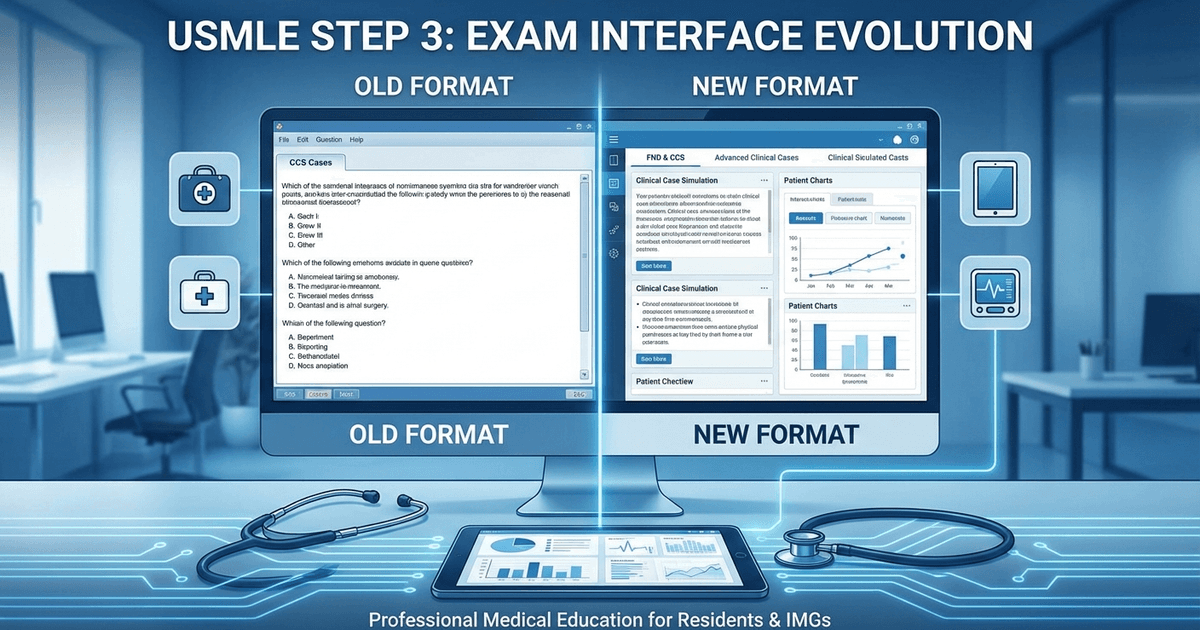
Updated Interface Design
The Step 3 interface received a complete redesign for 2026:
Cleaner navigation: Streamlined toolbar with fewer distracting elements
Improved CCS interface: More intuitive patient management screens
Enhanced readability: Better font sizing and contrast for long question stems
Mobile-responsive elements: Though still desktop-based, interface elements adapt better to different screen sizes
Question Block Distribution Changes
The USMLE Step 3 exam format update modified how questions are distributed:
Day 1 Changes:
Block length remains 60 minutes with 33 questions each
Increased emphasis on outpatient management (approximately 35% vs previous 30%)
More integrated questions combining multiple organ systems
Day 2 Changes:
Shorter overall day due to reduced CCS cases
30 questions per block across 6 blocks
Higher proportion of emergency medicine scenarios
How the New Format Affects Study Strategy
Prioritize CCS Quality Over Quantity
With only 9 CCS cases, each simulation matters significantly more. Focus on mastering core scenarios rather than practicing hundreds of cases.
High-yield CCS categories under the new format:
Chest pain workup and management
Diabetes management across settings
Hypertension and cardiovascular risk
Pneumonia and respiratory complaints
Mental health screening and management
Practice CCS cases with Oncourse adaptive question engine to focus on your weak areas systematically. With fewer cases in the format, every question counts more.
Emphasize Outpatient Management
The step 3 new format increased outpatient scenarios from 30% to 35%. This shift reflects real residency practice where most patient encounters occur in clinic settings.
Focus areas for outpatient questions:
Preventive care guidelines (USPSTF recommendations)
Chronic disease monitoring protocols
Health maintenance and screening
Patient counseling and shared decision-making
Master Time Management for the New Interface
The USMLE Step 3 interface change affects pacing, especially during CCS cases. The streamlined interface is faster to navigate, but questions may feel different due to formatting changes.
New timing strategies:
MCQ blocks: Maintain 1.8 minutes per question average
CCS cases: Allocate 15 minutes per case (vs previous 18 minutes)
Interface navigation: Practice with updated screenshots and layout
Integrate Performance Analytics Into Study
After the format change, knowing which question types you struggle with is critical. Oncourse analytics break down accuracy by question type, organ system, and difficulty to help simulate the new format distribution.
High-Yield Topics to Prioritize Under the New Format
Emergency Medicine (Increased Weight)
With more emergency scenarios in Day 2, prioritize these topics:
Cardiovascular emergencies:
Acute coronary syndrome management
Heart failure exacerbation protocols
Hypertensive emergency vs urgency
Arrhythmia management and cardioversion
Pulmonary emergencies:
Asthma exacerbation treatment
COPD management and NIV criteria
Pneumonia severity assessment (CURB-65, PSI)
Pulmonary embolism workup and treatment
Infectious disease emergencies:
Sepsis recognition and management
Meningitis workup and empiric treatment
Cellulitis vs necrotizing fasciitis
Antibiotic stewardship principles
Preventive Care and Screening
The format change emphasizes USPSTF guidelines more heavily:
Cancer screening protocols:
Breast cancer screening (mammography timing)
Cervical cancer screening (Pap smear intervals)
Colorectal cancer screening options
Lung cancer screening criteria
Cardiovascular risk assessment:
Lipid screening recommendations
Blood pressure measurement techniques
Aspirin for primary prevention
Statin therapy indications
Practice these topics with chronic disease management questions to build pattern recognition.
Pediatric and Geriatric Care
Both populations receive increased emphasis in the step 3 new format:
Pediatric focus areas:
Well-child visit schedules
Vaccination catch-up protocols
Developmental milestone assessment
Common pediatric emergencies
Geriatric focus areas:
Polypharmacy management
Fall risk assessment
Cognitive screening tools
End-of-life care decisions
Common Mistakes in the New Format and How to Avoid Them
Mistake 1: Overthinking CCS Cases
With only 9 cases, many test-takers spend too much time on each simulation, trying to achieve "perfect" management.
Solution: Stick to evidence-based protocols. Order essential tests, start appropriate treatments, and advance time appropriately. Dont chase zebra diagnoses or order excessive tests.
Mistake 2: Ignoring Interface Changes
Some candidates assume the interface update is purely cosmetic and dont practice with updated formats.
Solution: Take full-length timed mocks that mirror the updated block structure. The interface changes affect pacing and workflow.
Mistake 3: Focusing Too Heavily on Inpatient Medicine
The increased outpatient emphasis catches many off-guard, especially residents who spend most time in hospital settings.
Solution: Dedicate 40% of study time to outpatient scenarios. Review USPSTF guidelines, practice shared decision-making questions, and master chronic disease protocols.
Mistake 4: Underestimating Question Integration
The new format features more questions that integrate multiple organ systems or clinical settings.
Solution: Practice questions that combine topics (e.g., diabetes management in a patient with chronic kidney disease). Use screening and prevention flashcards for rapid review.
Final Prep Checklist for Step 3 New Format
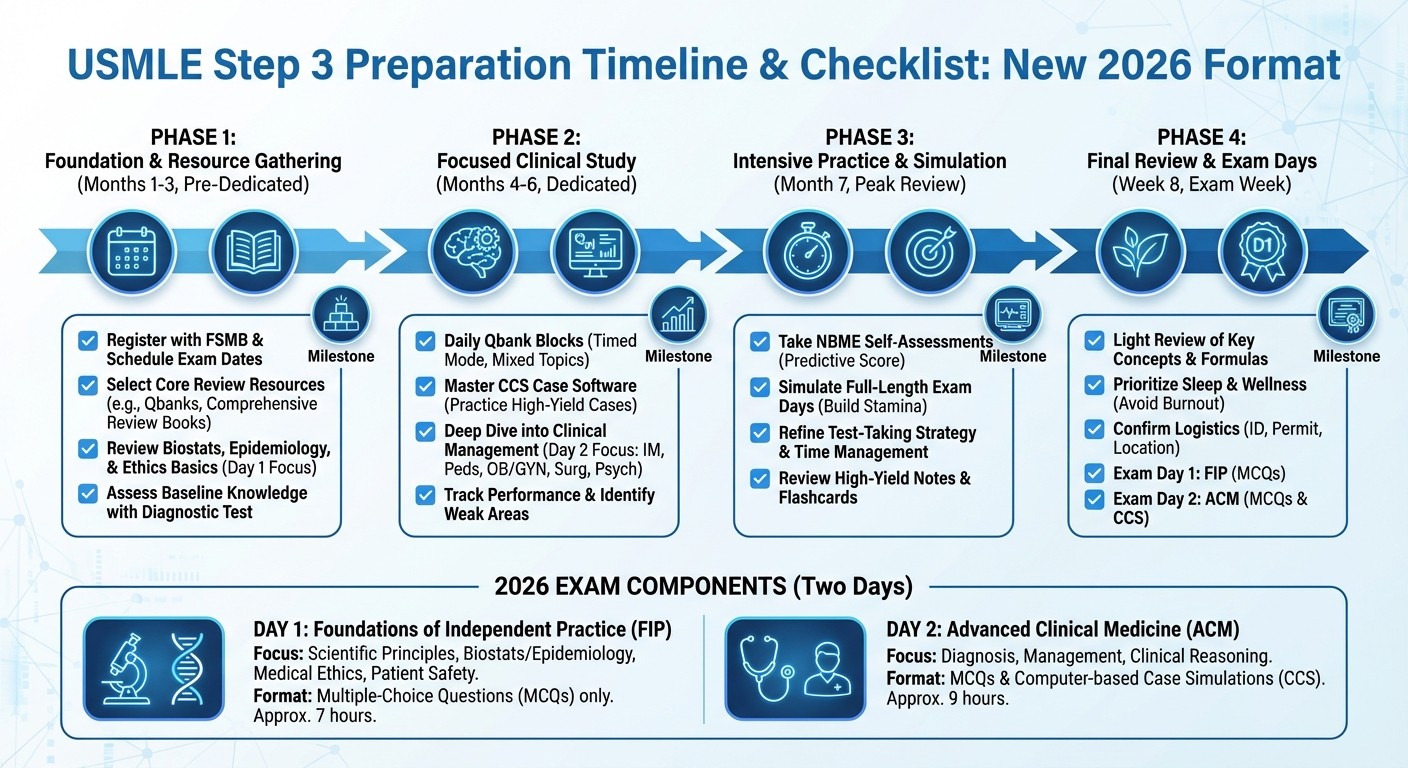
6-8 Weeks Before Exam
Content review phase:
[ ] Complete internal medicine review focusing on outpatient management
[ ] Master USPSTF preventive care guidelines
[ ] Review pediatric and geriatric care protocols
[ ] Practice with undifferentiated symptoms questions
CCS preparation:
[ ] Complete 20-25 CCS cases covering high-yield scenarios
[ ] Focus on time management and standard protocols
[ ] Practice with emergency department cases
3-4 Weeks Before Exam
Question bank phase:
[ ] Complete 2,000+ practice questions emphasizing new format distribution
[ ] Review performance analytics to identify weak areas
[ ] Take 2 full-length practice exams with new interface
[ ] Target 65%+ accuracy on question blocks
1-2 Weeks Before Exam
Final preparation:
[ ] Take final mock exam under timed conditions
[ ] Review high-yield topics from analytics dashboard
[ ] Practice 5-10 CCS cases for timing
[ ] Confirm exam logistics and interface familiarity
Day Before Exam
Last-minute prep:
[ ] Light review of emergency protocols
[ ] Review USPSTF screening guidelines
[ ] Ensure adequate rest (7+ hours sleep)
[ ] Confirm exam center location and timing
Frequently Asked Questions
How many CCS cases are on Step 3 now?
The step 3 new format includes 9 CCS cases on Day 2, reduced from the previous 13 cases. Each case still lasts 10-20 minutes, but the total CCS testing time decreased to approximately 3 hours.
Did the passing score change with the new format?
No, the passing score remains the same. However, with fewer CCS cases, each simulation carries more weight in your final score, making consistent performance more important.
When did the USMLE Step 3 format changes take effect?
The Step 3 exam format update began rolling out in late 2025 and became fully implemented by January 2026. All Step 3 exams taken in 2026 use the new format.
How should I adjust my CCS preparation strategy?
Focus on quality over quantity. Master the 9 most common CCS scenarios: chest pain, diabetes management, hypertension, pneumonia, depression screening, well-child visits, elderly care, emergency presentations, and chronic disease management.
Are there more outpatient questions in the new format?
Yes, outpatient scenarios increased from approximately 30% to 35% of total questions. This reflects the emphasis on primary care and preventive medicine in current medical practice.
Should I retake Step 3 if I failed under the old format?
The core content remains the same, so your previous preparation is still valuable. Focus on the areas where you struggled previously, but incorporate the new format changes into your study plan.
Prepare smarter with Oncourse AI — adaptive MCQs, spaced repetition, and AI explanations built for USMLE Step 3. Download free on Android and iOS.