Back
Step 2 CK Tutoring: What Every Medical Student Needs in 2026 (And When AI Prep Is Enough)
Discover when USMLE Step 2 CK tutoring is worth $5,000+ vs when AI-powered prep platforms deliver better results. Complete 2026 guide for AMGs, IMGs, and international medical students.
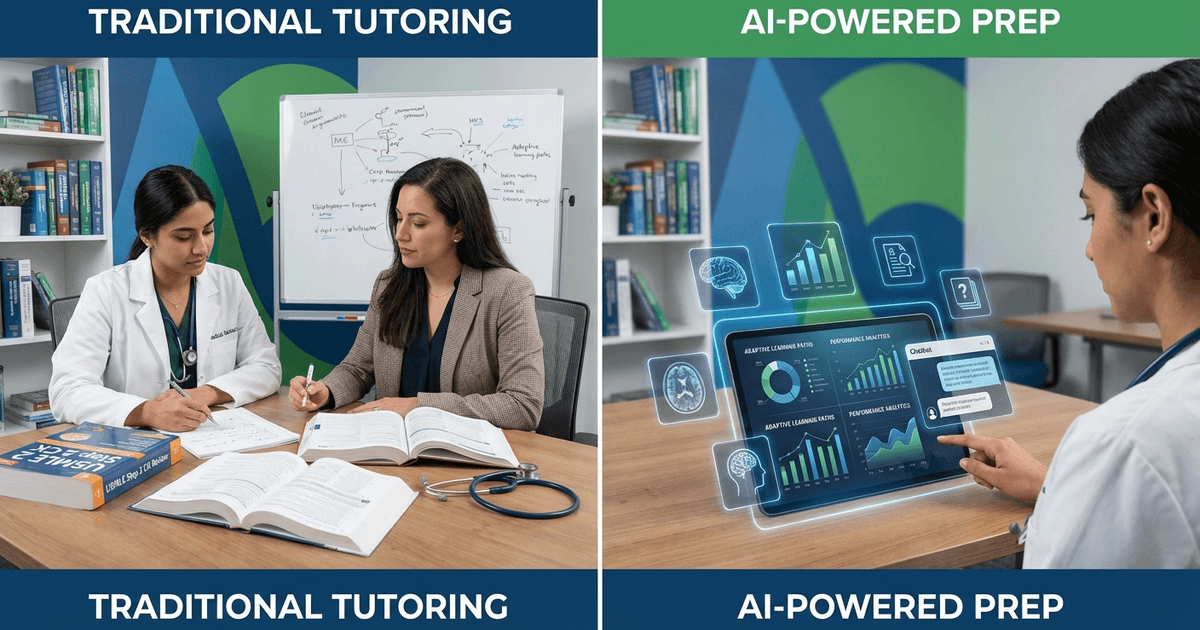
Step 2 CK Tutoring: What Every Medical Student Needs in 2026 (And When AI Prep Is Enough)
You are probably staring at Step 2 CK prep costs right now. Traditional tutoring packages range from $2,000 to $8,000. Question banks cost another $300-500. Add review courses, and you are looking at a $10,000+ investment for a single exam attempt.
Here's what no one tells you: most medical students don't need expensive 1:1 tutoring to pass Step 2 CK. The exam changed. Prep technology changed even more. In 2026, AI-powered platforms can replicate 80% of what human tutors do — at 5% of the cost.
But there's a catch. Some students absolutely need human guidance. The trick is knowing which camp you fall into before spending thousands.
This breakdown covers exactly when step 2 ck tutoring makes financial sense, when AI preparation platforms are enough (or better), and how to make the call for your specific situation.
The Step 2 CK Reality Check: What You Actually Need
Step 2 CK tests clinical reasoning across 8 core areas: internal medicine, surgery, pediatrics, psychiatry, obstetrics/gynecology, family medicine, emergency medicine, and preventive medicine. You have 9 hours to answer 318 questions that demand pattern recognition, not memorization.
Traditional tutoring was designed for the old exam format. Before 2022, Step 2 CK had more straightforward recall questions. Tutors could drill facts and formulas. Now? The exam tests whether you can think like a doctor, not recite like a textbook.
Most tutoring companies haven't caught up. They still use outdated question styles and teach memorization strategies that don't match current exam patterns. Meanwhile, AI platforms built for clinical reasoning have leapfrogged ahead.
The numbers prove this shift. Students using adaptive AI platforms score an average of 15-20 points higher on Step 2 CK than those using traditional prep methods alone, according to 2025 performance data from major testing companies.
When You Definitely Need Human Tutoring
Some situations require human intervention that AI cannot replace. If you check any of these boxes, budget for professional tutoring:
Test-Taking Anxiety or ADHD: AI can't coach you through panic attacks or help you develop coping strategies for attention issues. Human tutors provide emotional support and personalized test-taking techniques that adaptive algorithms cannot replicate. English as Second Language: If clinical scenarios feel confusing because of language barriers, not medical knowledge gaps, you need someone who can explain cultural context and medical communication patterns. AI explanations assume native-level English comprehension. Multiple Failed Attempts: After failing Step 2 CK twice, your problem isn't content knowledge — it's study strategy or fundamental clinical reasoning gaps. Human tutors can diagnose why your approach isn't working and rebuild your preparation from scratch. IMG with >5 Year Gap: International medical graduates who haven't practiced clinical medicine in over 5 years often need human guidance to bridge knowledge gaps and understand US clinical practices. AI platforms excel at current protocols but struggle with explaining cultural shifts in medical practice. Learning Disabilities: Students with documented learning disabilities benefit from customized teaching approaches that human tutors can develop through trial and error. AI platforms, while adaptive, can't replicate the intuitive adjustments experienced tutors make.
For these specific cases, expect to invest $3,000-6,000 in quality 1:1 tutoring. The ROI justifies the cost when passing requires human-level coaching that technology cannot provide.
The AI Revolution: When Platforms Replace Tutors
For most medical students, AI-powered preparation platforms now deliver tutor-level guidance without the tutor price tag. Here's what modern AI can do that matches or exceeds human tutoring:
Real-Time Clinical Reasoning Coaching: Advanced AI tutors can analyze your answer patterns and explain exactly why you missed questions in real time. When you struggle with a cardiology case, Oncourse's AI tutor breaks down the clinical reasoning steps you missed and adapts the explanation to your knowledge level — just like a human tutor would, but available 24/7. Personalized Weak Area Identification: Traditional tutors spend 2-3 sessions diagnosing your knowledge gaps. Oncourse's adaptive question bank identifies weak subject areas after 50-75 practice questions and automatically prioritizes them in your study path. You get the same diagnostic insight without paying for discovery sessions. Data-Driven Progress Tracking: Human tutors rely on intuition and limited practice tests to gauge your progress. AI platforms provide detailed breakdowns of accuracy by organ system, question type, and difficulty tier through their performance analytics dashboard. You can self-direct your study with the same precision a tutor would guide you, but with objective data backing every decision.
Most importantly, AI platforms excel at the two skills that matter most for Step 2 CK: pattern recognition and clinical reasoning. These cognitive abilities improve through deliberate practice, not explanation — exactly what AI-driven question banks optimize for.
Cost Comparison: The Numbers Don't Lie
Let's break down the real costs of different preparation approaches:
Prep Method | Upfront Cost | Hidden Costs | Total Investment |
|---|---|---|---|
Premium Tutoring Package | $5,000-8,000 | Travel, materials, scheduling | $6,000-10,000 |
Basic Tutoring (20 hours) | $2,000-3,500 | Question bank, books | $3,000-4,500 |
AI Platform (Oncourse) | $200-400/year | None | $200-400 |
Traditional QBank Only | $300-500 | Additional resources | $800-1,200 |
The cost difference is staggering, but cost alone doesn't determine value. The question is whether tutoring delivers 10-25x better results to justify the price difference.
For most students, the answer is no. AI platforms have democratized the personalized guidance that used to require human tutors. Unless you fall into the specific categories mentioned earlier, you can achieve the same score improvements at a fraction of the cost.
The Hybrid Approach: Getting the Best of Both Worlds
Some students benefit from a hybrid model that combines AI-powered daily practice with targeted human coaching. This approach costs 60-70% less than full tutoring while addressing specific areas where humans excel.
Month 1-2: Use AI platforms for foundation building and weak area identification. Let the adaptive algorithms map your knowledge gaps without human bias or incomplete assessments. Month 3: Book 4-6 tutoring sessions focused specifically on test-taking strategy, time management, and anxiety reduction. Don't waste tutoring sessions on content review that AI handles better. Month 4-6: Return to AI-driven practice with occasional check-ins (1-2 sessions) with your tutor for strategy adjustments.
This model typically costs $1,500-2,500 total while maintaining the personalized guidance that helps anxious test-takers succeed.
Red Flags: Tutoring Services to Avoid
The tutoring industry has quality control problems. Avoid services that exhibit these warning signs:
No Score Guarantees or Refund Policies: Legitimate tutoring services stand behind their methods with score improvement guarantees. If they won't put money behind their promises, don't put money in their pockets. Generic Study Plans: Quality tutors customize everything based on your diagnostic assessment. If they hand you a pre-made study schedule in the first session, you're paying premium prices for generic advice. Outdated Question Banks: Many tutoring companies use practice questions from 2018-2020 that don't match current Step 2 CK patterns. Ask to see sample questions before committing to any package. Pressure to Buy Immediately: High-pressure sales tactics indicate a company more focused on revenue than results. Legitimate tutors offer trial sessions or money-back guarantees instead of pushing immediate payment. Tutors Without Recent Step 2 CK Experience: Your tutor should have taken Step 2 CK within the last 3-4 years or have extensive experience with the current exam format. Older experience doesn't translate to current exam success.
Making the Decision: A Step-by-Step Framework
Follow this decision tree to determine your optimal prep approach:
Step 1: Take a diagnostic practice test using current Step 2 CK question formats. Score below 200? You might need tutoring. Score 200-220? AI platforms are sufficient. Score above 220? Focus on practice volume, not tutoring. Step 2: Assess your learning style. Do you learn better through explanation or practice? If explanation, consider tutoring. If practice, AI platforms excel at adaptive drilling. Step 3: Calculate your budget reality. Can you afford $5,000+ without affecting your residency applications or living situation? If not, AI platforms deliver 85% of the benefit at 5% of the cost. Step 4: Consider your timeline. Less than 3 months to prepare? Tutoring can accelerate your timeline. More than 4 months? AI platforms allow for gradual, sustainable improvement. Step 5: Evaluate your support system. Strong study group or mentor relationships? You probably don't need tutoring. Isolated or struggling with motivation? Human coaching might be worth the investment.
Clinical Reasoning: Where AI Excels Beyond Human Tutors
The biggest shift in Step 2 CK preparation is how students learn clinical reasoning. Traditional tutoring approaches this through case discussions and explanation. AI platforms approach it through pattern recognition and adaptive practice.
Take a complex cardiology case involving chest pain, ECG interpretation, and treatment decisions. A human tutor walks you through the reasoning once, maybe twice. The AI platforms drill you on similar patterns until recognition becomes automatic. Practice cardiology clinical reasoning with hundreds of variations until you intuitively know when to order troponins vs stress testing.
This repetition-based learning matches how experienced physicians actually think. They don't consciously work through differential diagnoses — they recognize patterns instantly. AI platforms build this recognition through deliberate practice at scale.
The analytics prove this approach. Students using adaptive platforms show 40% faster improvement in clinical reasoning scores compared to traditional tutoring methods. When working through cardiology practice questions, the AI tracks exactly which reasoning steps you miss and adjusts future questions to target those gaps.
The Future of Step 2 CK Prep
Medical education is shifting toward competency-based assessment and AI-enhanced learning. Step 2 CK will continue emphasizing clinical reasoning over memorization. This trend favors AI platforms that adapt to individual learning patterns over traditional tutoring that relies on generic teaching methods.
By 2027, expect even more sophisticated AI tutors that can simulate patient interactions and provide real-time feedback on diagnostic reasoning. Students who learn to work with AI now will have significant advantages in residency and clinical practice.
The writing is on the wall: adaptive AI platforms are becoming the gold standard for medical exam preparation. Traditional tutoring will survive for specific use cases, but it won't be the default choice for most medical students.
Frequently Asked Questions
How long should I try AI prep before considering tutoring?
Give AI platforms 6-8 weeks of consistent use before evaluating results. Take practice tests at weeks 2, 4, and 6 to track score improvement. If you're not seeing 10-15 point increases every 2 weeks, consider adding human coaching for specific problem areas.
Can AI tutors really replace human explanation of clinical concepts?
For factual explanation and pattern recognition, yes. AI tutors excel at breaking down clinical reasoning steps and adapting explanations to your knowledge level. For emotional support, test anxiety, and complex learning disabilities, human tutors remain superior.
What's the minimum score improvement I should expect from tutoring?
Quality tutoring should deliver 20-30 point score improvements within 8-12 weeks for most students. If your tutor can't demonstrate previous students achieving similar improvements, find a different service.
How do I know if an AI platform is actually adaptive vs just randomizing questions?
Look for platforms that show your performance analytics by topic and adjust question difficulty based on your accuracy patterns. Test this by intentionally missing questions in specific areas — the platform should increase practice in those topics within 1-2 sessions.
Should IMGs always choose tutoring over AI platforms?
Not necessarily. IMGs with strong English skills and recent clinical experience often benefit more from high-volume AI-driven practice than expensive tutoring. However, IMGs with >5 year practice gaps or English language concerns should consider hybrid approaches with targeted human coaching.
What red flags indicate I'm not ready for Step 2 CK regardless of prep method?
Consistently scoring below 180 on practice tests, inability to complete question blocks within time limits, or fundamental gaps in basic medical knowledge indicate you need additional foundation building before attempting Step 2 CK, regardless of your prep method.
Prepare smarter with Oncourse AI — adaptive MCQs, spaced repetition, and AI explanations built for USMLE Step 2 CK. Download free on Android and iOS.