Radiology Match 2026: Train Visual Recall with Oncourse Image Rush
Build rapid radiology pattern recognition for 2026 match success. Learn how Image Rush game-based training develops visual recall skills that programs value in residents.
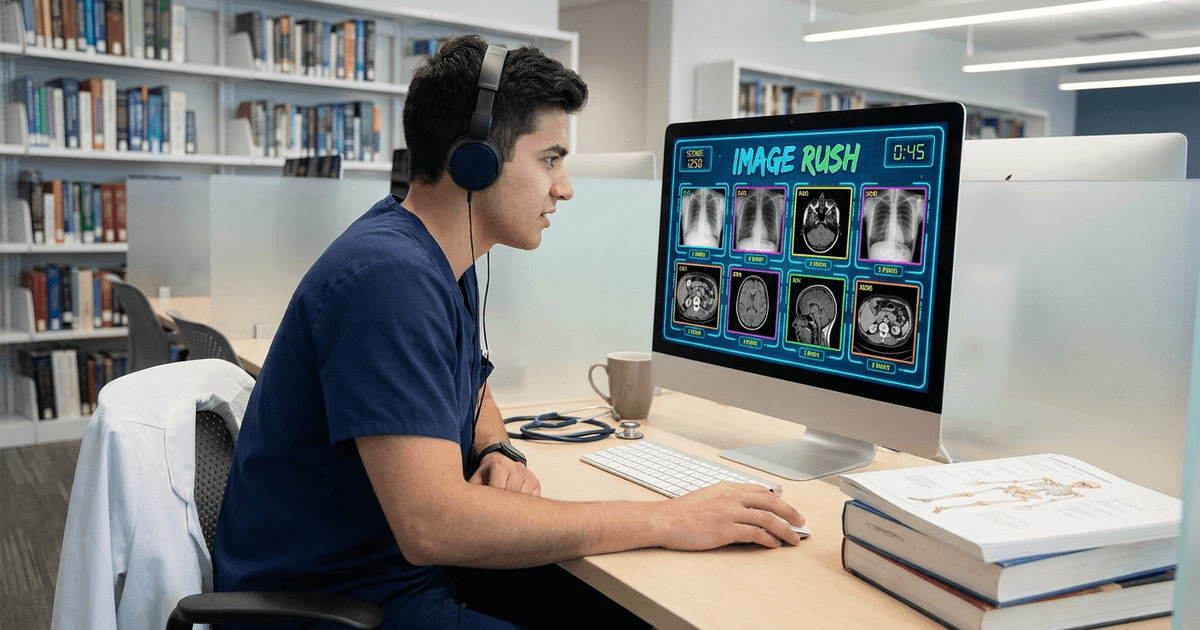
Radiology Match 2026: Train Visual Recall with Oncourse Image Rush
You have 12 seconds to identify this chest X-ray finding. Your cursor hovers over the submit button. Heart rate climbing. This isnt just another practice question — this moment defines whether you can think like a radiologist under pressure.
The 2026 radiology match filled 92.4% of positions, with matched MD seniors averaging Step 2 scores above 245. But behind those numbers lies an often-overlooked truth: radiology residency isnt just about test scores. Programs want residents who can rapidly process visual information, spot patterns within seconds, and maintain accuracy when the timer is ticking.
Traditional radiology study methods — textbook atlases, static image reviews — dont replicate the time pressure and pattern recognition speed youll need as a resident reading 50+ studies per shift. This is where deliberate visual training changes everything.
Why Visual Recall Speed Matters in Radiology
Radiology residents dont get unlimited time to ponder findings. You have minutes per case, with attending physicians expecting rapid, accurate preliminary reads. Research from Cognitive Research: Principles and Implications shows that expert radiologists can identify lung cancer patterns in chest radiographs within 200 milliseconds of viewing. This isnt luck — its trained pattern recognition.
The difference between good and exceptional radiology applicants often comes down to visual processing efficiency. Programs can teach anatomy and pathophysiology. They cant easily teach rapid pattern recognition under pressure.
During your radiology rotation or away rotation, attendings notice students who can quickly spot obvious findings versus those who need extended viewing time. That observation influences your letters of recommendation and program fit assessment.
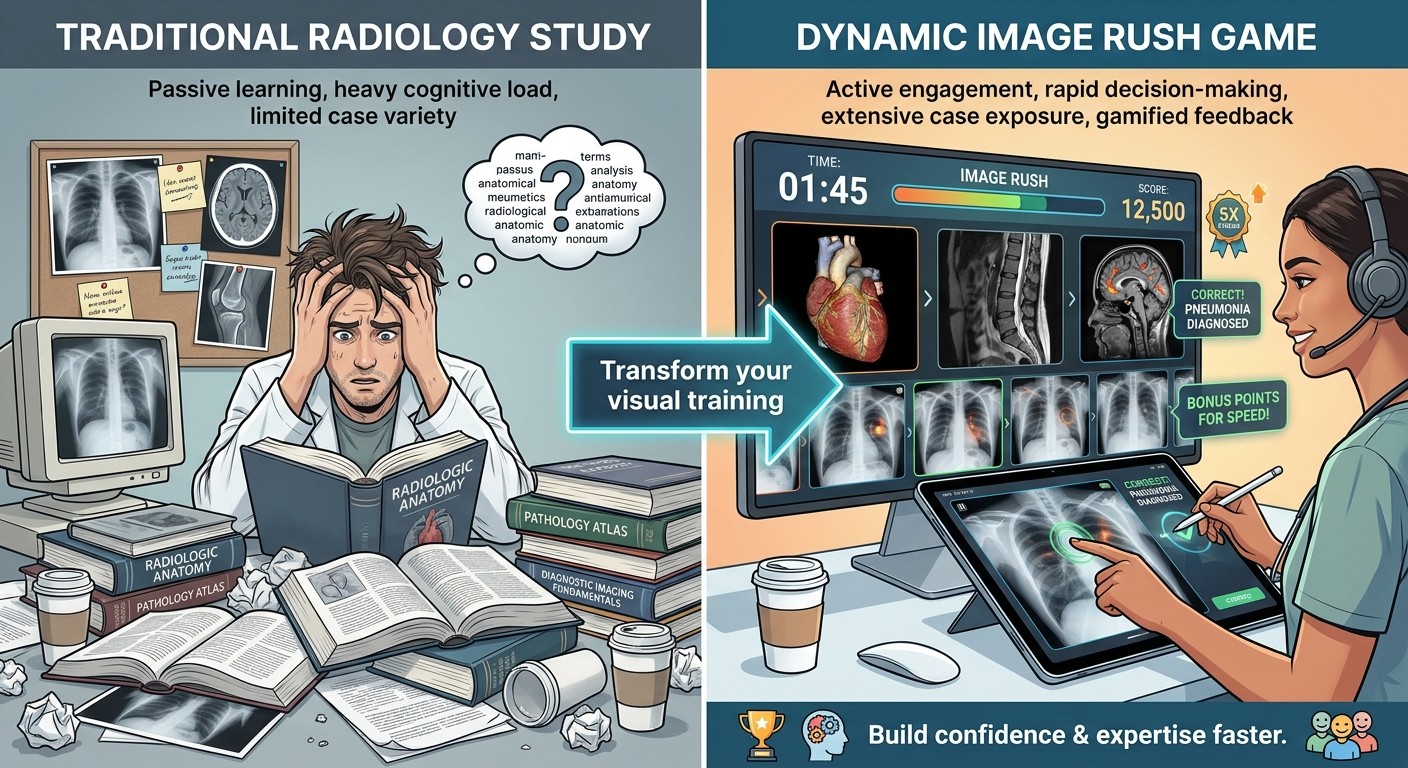
The Image Rush Approach to Visual Training
Image Rush transforms radiology pattern recognition from passive study into active, timed practice. Instead of flipping through static atlases, you train with real exam-style medical images under time pressure — exactly how youll work as a resident.
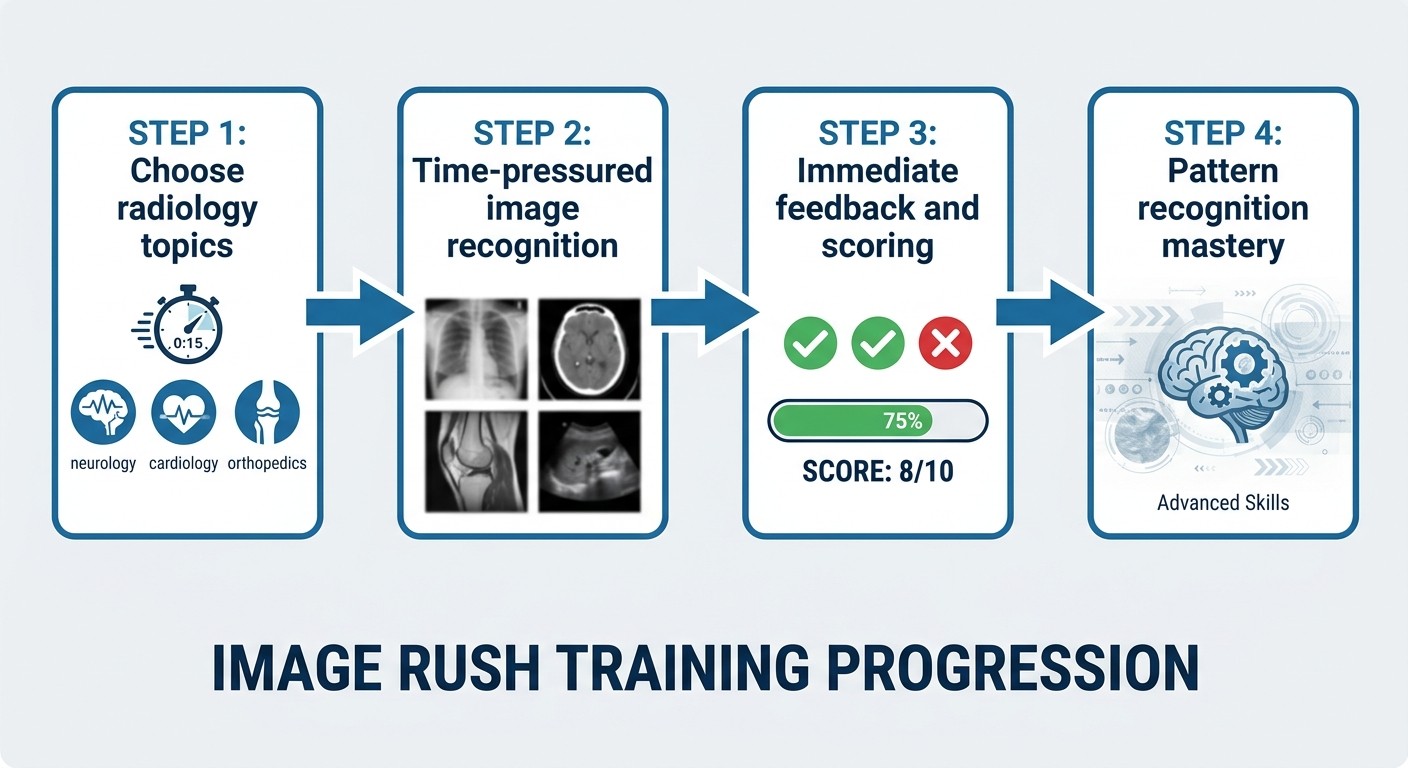
The game presents X-rays, CT scans, MRI images, pathology slides, and clinical photographs. You identify the finding or diagnosis before the timer expires. Correct answers add time to your streak; mistakes reduce it. This scoring system mirrors the reality of radiology practice: accuracy under time constraints determines workflow efficiency.
What makes this training effective for radiology match prep? You practice the specific cognitive skill that separates competent from exceptional residents — rapid visual pattern recognition with maintained accuracy.
Targeted Subject Selection
Image Rush lets you focus practice sessions on specific radiology subspecialties. Working on musculoskeletal imaging before your orthopedic surgery rotation? Select MSK topics. Preparing for your radiology away rotation at a trauma center? Focus on chest and abdominal CT patterns.
This targeted approach helps you demonstrate subspecialty knowledge during radiology interviews. When program directors ask about your interest in neuroradiology, you can discuss specific cases and patterns from your focused training sessions.
Game-Based Learning Science for Medical Imaging
Perceptual learning research demonstrates that repeated exposure to medical images under time pressure improves both speed and accuracy of pattern recognition. A study in PLOS One found that novices reached radiologist-level accuracy in hip fracture identification after just one hour of structured perceptual training.
Image Rush applies these learning science principles:
Spaced recognition practice: Brief, frequent sessions build stronger pattern recall than marathon study blocks. Five-minute daily Image Rush sessions outperform hour-long textbook reviews for visual memory consolidation. Immediate feedback loops: You learn the correct answer within seconds of submitting your response. This rapid feedback helps correct misinterpretations before they become ingrained patterns. Progressive difficulty scaling: The game adapts to your performance level, presenting more challenging cases as your accuracy improves. This prevents the plateau effect common in static study materials.
Building Exam-Relevant Visual Patterns
The 2026 USMLE Step 2 includes substantial visual content — radiographic images, pathology slides, dermatological presentations, and ECGs. Image Rush covers these high-yield visual patterns that appear repeatedly across medical licensing exams.
High-yield radiology patterns for USMLE Step 2:
Chest X-ray: pneumothorax, pleural effusion, pneumonia patterns, cardiomegaly
Abdominal CT: appendicitis, bowel obstruction, pancreatitis, kidney stones
Head CT: epidural hematoma, subdural hematoma, ischemic stroke patterns
MSK imaging: fracture patterns, joint pathology, osteomyelitis
When you encounter these patterns during your Step 2 exam or radiology interviews, your trained visual recall kicks in automatically. The finding recognition happens within seconds, leaving more mental capacity for differential diagnosis and management decisions.
Integrating Image Rush with Traditional Study
Image Rush works best as part of a comprehensive USMLE study plan, not as a standalone tool. Use it to reinforce visual patterns after reading about pathophysiology in textbooks or question banks.
Daily integration strategy:
Morning: 10 minutes of Image Rush focusing on your weakest visual topics
Study block: Traditional reading and question practice
Evening: 5-minute Image Rush session targeting the day's study subjects
This combination builds both conceptual understanding and rapid visual recognition. During your radiology away rotation, you can discuss cases with attending physicians using both pattern recognition skills and underlying pathophysiology knowledge.
Tracking Progress and Weak Areas
Image Rush provides performance analytics that reveal your visual recognition strengths and gaps. Pay attention to categories where your accuracy drops or response times increase — these indicate areas needing focused study.
If you consistently miss musculoskeletal findings, schedule additional MSK imaging review before your orthopedic surgery rotation. If cardiac imaging patterns trip you up, prioritize cardiothoracic radiology study before interviews at programs with strong cardiac imaging.
Use these insights to tailor your away rotation choices and interview conversations. Programs appreciate applicants who demonstrate self-awareness about their learning needs and proactive improvement strategies.
Time-Efficient Practice for Busy Schedules
Medical school schedules dont allow hours of daily radiology study. Image Rush sessions adapt to your available time — productive practice happens in 5-10 minute blocks between clinical duties.
During hospital downtime, pull up Image Rush on your phone. Waiting for rounds to start? Practice chest X-ray patterns. Study break between shelf exam prep? Focus on pathology slides. This distributed practice approach builds visual recall more effectively than cramming weekend study sessions.
The gamification elements — scoring, streaks, leaderboards — maintain engagement during these brief practice windows. You stay motivated to continue daily visual training even during demanding clinical rotations.
Beyond Match Day: Resident Preparation
Visual recall training benefits extend beyond match applications. Radiology residents face enormous image volumes from day one. PGY-1s typically preview overnight studies before attending review, requiring rapid pattern recognition to identify urgent findings.
Image Rush develops the cognitive speed youll need as a resident. You train the same skill set required for overnight call shifts — rapid image analysis, pattern identification, and confident decision-making under time pressure.
Programs recognize applicants who understand the practical demands of radiology training. During interviews, you can discuss how your visual training prepared you for the cognitive demands of residency, demonstrating realistic expectations about the specialty.
Frequently Asked Questions
How much time should I spend daily on visual pattern training?
Start with 10-15 minutes daily using Image Rush, focusing on your weakest visual recognition areas. Consistency matters more than duration — brief daily sessions outperform occasional long study blocks.
Can visual training replace traditional radiology studying?
No. Image Rush builds rapid pattern recognition, but you still need conceptual understanding from textbooks and questions. Use visual training to reinforce and speed up recognition of patterns you understand conceptually.
Which image types are most important for Step 2 and radiology match?
Prioritize chest X-rays, abdominal CT, head CT, and MSK imaging. These appear frequently on Step 2 and represent core competencies that radiology programs expect from incoming residents.
Should I use visual training during clinical rotations?
Yes, especially during radiology, emergency medicine, and surgical rotations where you encounter medical imaging daily. Brief Image Rush sessions help you recognize patterns you see in real clinical cases.
How do I know if my visual recognition skills are improving?
Track your accuracy and response times within Image Rush analytics. More importantly, notice if you identify findings faster during clinical encounters and question practice sessions.
Does visual training help with radiology interviews?
Yes. Programs appreciate applicants who understand the cognitive demands of radiology practice. You can discuss how visual training prepared you for rapid image interpretation, demonstrating realistic specialty expectations.
Prepare smarter with Oncourse AI — adaptive MCQs, spaced repetition, and AI explanations built for USMLE. Download free on Android and iOS.