Back
Dermatology Match Rate 2026: Train Visual Recall with Oncourse AI
Dermatology residency has a 65% match rate for US MDs, making visual pattern recognition crucial. Learn how Oncourse AI's Image Rush and Smart Lens help train the rapid visual skills needed for this competitive specialty.
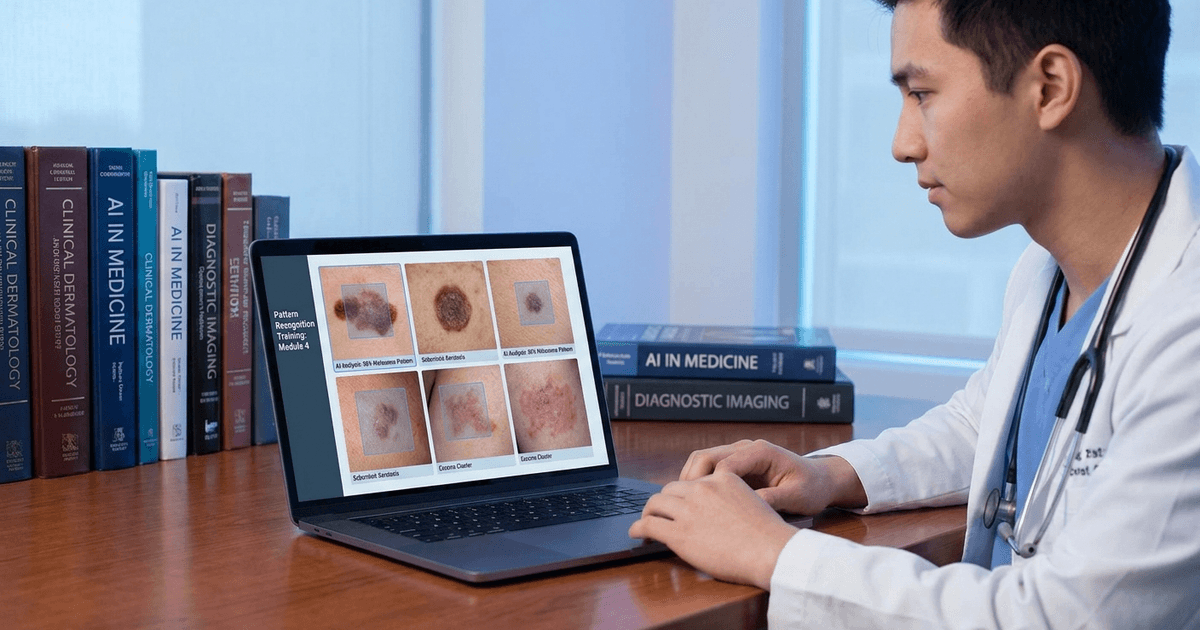
You stare at a dermoscopic image for 30 seconds. The lesion has asymmetric borders, color variation, and that nagging feeling you've seen this pattern before. But the clock is ticking, and second-guessing costs points. Sound familiar?
Dermatology residency demands lightning-fast visual pattern recognition. With only 544 dermatology positions available nationwide and 834 applicants competing for them in 2025, the specialty maintains one of medicine's most brutal match rates. For US MD seniors, the match rate hovers around 65% — meaning one in three qualified applicants gets rejected.
The difference between matching and not often comes down to those split-second visual decisions. Can you distinguish seborrheic keratosis from melanoma at first glance? Recognize the herald patch of pityriasis rosea versus tinea corporis? These aren't just clinical skills — they're survival tools in dermatology residency interviews and board exams.
This is where targeted visual training separates the matched from the unmatched. And why thousands of dermatology hopefuls are turning to AI-powered pattern recognition tools to sharpen their diagnostic eye.
Dermatology Match Rate Reality Check
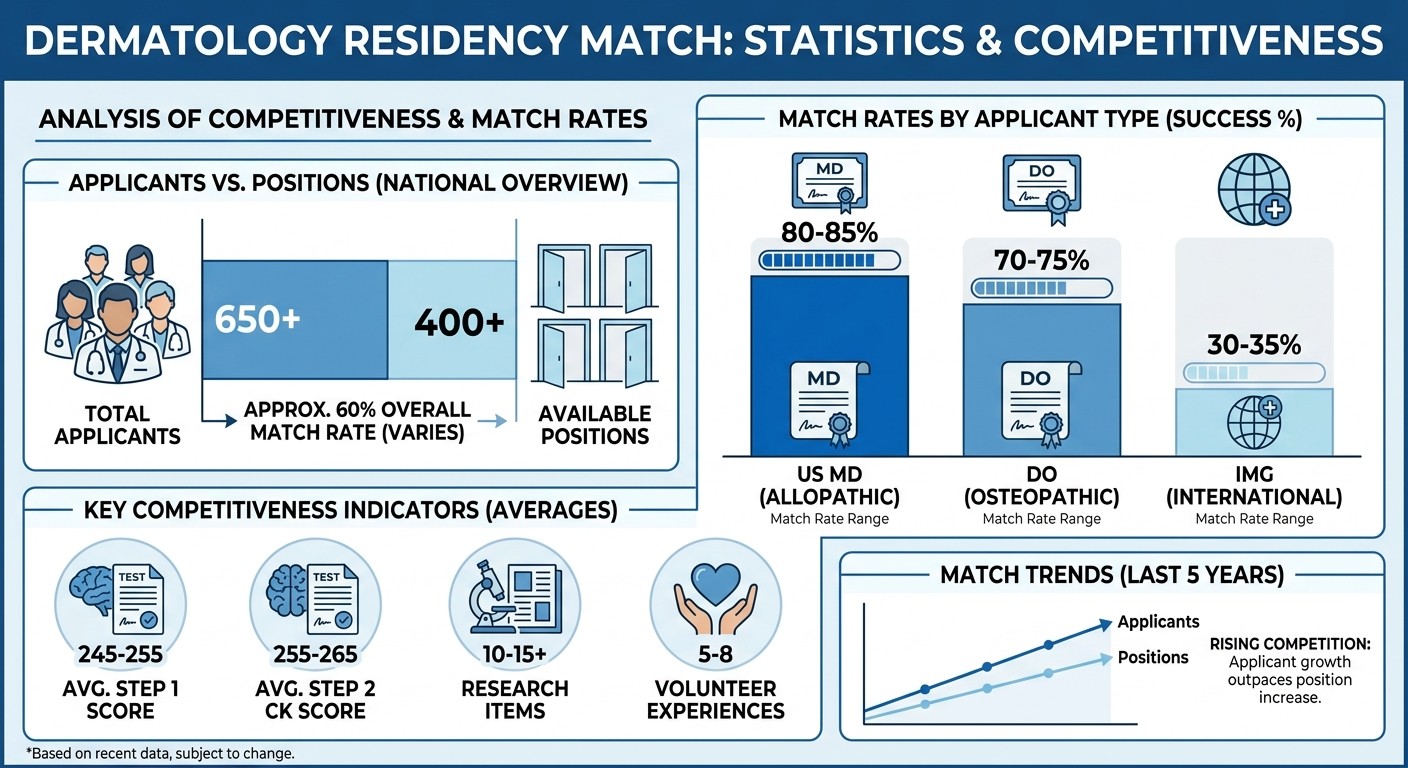
The numbers dont lie. Dermatology consistently ranks among the most competitive medical specialties, with an applicant-to-position ratio of 1.53:1 according to NRMP 2025 data. Here's what that competition looks like:
Match Rates by Applicant Type (2025)
US MD Seniors: 65% match rate (426 matched out of 595 applicants)
US DO Seniors: 50% match rate (38 matched out of 76 applicants)
US IMGs: 28% match rate (significantly lower representation)
Non-US IMGs: Extremely limited positions (classified as "Not IMG-Friendly")
What Matched Applicants Actually Scored
The ProspectiveDoctor analysis reveals matched dermatology residents averaged:
Step 2 CK Score: 257 (well above national average)
Research Output: 19 abstracts/presentations/publications
Volunteer Experiences: 9.4 different activities
Research Experiences: 5.8 distinct projects
These stats paint a clear picture: dermatology rewards the complete package. But among equally qualified applicants, visual diagnostic skills often become the tie-breaker.
Why Visual Pattern Recognition Separates Winners from Waitlists
Dermatology is fundamentally a visual specialty. Unlike internal medicine where you can work through differential diagnoses systematically, dermatology demands immediate pattern recognition. You need to process morphology, distribution, color, texture, and configuration simultaneously — then commit to a diagnosis.
Consider the pressure points:
During Residency Interviews: You'll face rapid-fire image identification rounds. Program directors want to see confident, accurate responses under time pressure. On Shelf Exams: Dermatology questions heavily favor image-based content. The faster you recognize patterns, the more time you have for complex management questions. In Clinical Practice: Real patients dont come with multiple-choice options. Your visual assessment drives everything from biopsy decisions to treatment plans.
This is precisely why traditional studying falls short. Reading about "erythematous, scaling plaques" doesnt train your eye to spot psoriasis variants across different skin tones and anatomic locations. You need repeated visual exposure with immediate feedback.
The Science Behind Visual Medical Training
Recent research validates AI-powered visual training for medical education. A 2025 JMIR Dermatology study examined AI's ability to handle dermatology board-style questions, finding 77.5% accuracy on text-based questions but highlighting current limitations in visual diagnosis.
More importantly, studies on Perceptual and Adaptive Learning Modules (PALMs) show medical students achieve large effect sizes (1.1 to 2.2) in pattern recognition accuracy after structured visual training. The gains persist at one-year follow-up, indicating lasting skill development.
The key principles that make visual training effective:
Spaced Repetition with Images
Seeing the same condition across multiple presentations (different patients, lighting, skin tones) builds robust pattern recognition rather than memorizing single examples.
Immediate Feedback
Knowing why your visual assessment was right or wrong strengthens the neural pathways between image features and diagnostic categories.
Time Pressure Training
Practicing under deadline conditions prepares you for the cognitive load of real clinical decisions and high-stakes exams.
Adaptive Difficulty
Starting with classic presentations and progressing to atypical cases mirrors the learning curve from medical school through residency.
How Oncourse AI Transforms Dermatology Visual Training
Oncourse AI's approach to visual training addresses every aspect of dermatology pattern recognition through two key features designed specifically for image-heavy specialties.
Image Rush: Speed Training Under Pressure
Image Rush operates like a high-intensity interval workout for your diagnostic eye. You identify medical images — including dermatology lesions, slides, and clinical photos — before a countdown timer expires.
The game mechanics mirror real clinical pressure: correct answers add time to your clock, mistakes drain it. This creates the same physiological stress youll face during residency interviews when a program director slides a dermoscopy image across the table and waits for your response.
What makes Image Rush particularly effective for dermatology preparation:
Voice or Text Responses: Practice verbalizing diagnoses, not just clicking answers
Topic Customization: Focus specifically on dermatology images when thats your target specialty
Smart Hints and Skips: Learn when to cut losses and maintain momentum — a crucial clinical skill
Leaderboard Competition: Train alongside other dermatology hopefuls and track your progress
The platform includes common exam visuals youll actually encounter: clinical photos of rashes, dermoscopic images, histopathology slides, and even dermatology instruments. This isnt generic medical imagery — its curated for the patterns dermatology programs expect you to recognize instantly.
AI-Powered Pattern Analysis
Oncourse's AI continuously analyzes your response patterns to identify specific visual recognition gaps. Struggling with inflammatory conditions versus infectious patterns? The system automatically serves more questions in that category until you demonstrate mastery.
The AI also generates memorable visual summaries and flowcharts that connect image patterns to diagnostic criteria. For instance, instead of memorizing that "melanoma shows asymmetry," you see multiple melanoma examples alongside benign lesions, training your eye to spot asymmetric patterns across different contexts.
Integration with Comprehensive Dermatology Content
Visual pattern recognition only works when connected to solid foundational knowledge. Oncourse integrates Image Rush training with comprehensive dermatology lessons covering everything from basic morphology to specialized infections.
The platform's spaced repetition flashcard system ensures you retain both visual patterns and underlying pathophysiology. When you miss a dermatology image in Image Rush, the system automatically schedules related flashcards for review, connecting visual mistakes to knowledge gaps.
For USMLE preparation specifically, Oncourse's dermatology study guide provides the high-yield framework while Image Rush trains the rapid recognition skills.
Building Your Dermatology Visual Training Schedule
Effective visual training requires consistency rather than cramming. Here's how to structure your pattern recognition development:
Foundation Phase (Months 6-4 Before Match)
Goal: Build basic pattern vocabulary
15 minutes daily on Image Rush, focusing on common conditions
Start with unlimited time mode to build confidence
Review missed images immediately using flashcard explanations
Target: Recognize classic presentations of top 20 dermatology conditions
Speed Phase (Months 4-2 Before Match)
Goal: Develop rapid recognition under pressure
20 minutes daily on timed Image Rush challenges
Mix dermatology with other visual specialties (radiology, pathology)
Practice verbalizing diagnoses aloud during training
Target: 80%+ accuracy on timed dermatology image identification
Competition Phase (Final 2 Months)
Goal: Peak performance for interviews and exams
Daily Image Rush competitions against other users
Focus on subtle differentials and atypical presentations
Practice explaining visual reasoning, not just identifying images
Target: Confident, immediate responses to program director image challenges
Sample Daily Training Routine
Morning (10 minutes):
Image Rush warm-up focusing on previous day's missed patterns
Voice responses to practice interview scenarios
Study Breaks (5 minutes):
Quick visual quiz between reading sessions
Reinforces patterns while giving your brain a reading break
Evening Review (10 minutes):
Flashcard review of missed visual diagnoses
Connect image patterns to pathophysiology concepts
This 25-minute daily commitment builds the visual processing speed that separates matched from unmatched dermatology applicants.
Beyond Pattern Recognition: Complete Dermatology Preparation
Visual training forms just one component of competitive dermatology preparation. Successful applicants combine rapid pattern recognition with comprehensive clinical knowledge and research experience.
Research Integration
Use your developing visual expertise to identify interesting cases for research projects. That unusual presentation you struggled with in Image Rush might become your next case report or case series.
Clinical Correlation
During dermatology rotations, consciously practice the rapid assessment skills you've developed in training. Time yourself on initial patient evaluations and compare your immediate impressions to attending diagnoses.
Board Exam Strategy
Visual training directly improves performance on image-heavy board questions. The pattern recognition speed you develop reduces question time, leaving more bandwidth for complex management scenarios.
Interview Preparation
Many dermatology programs include visual diagnosis components in their interview process. The confidence you build through daily visual training translates directly to composed performance under interview pressure.
Common Visual Training Mistakes to Avoid
Mistake 1: Memorizing Single Images
Looking at one example of psoriasis and thinking you understand the pattern. Reality: psoriasis appears differently across body locations, skin tones, and disease severity.
Solution: Seek diverse presentations of each condition. Image Rush's varied image library helps by showing multiple examples rather than textbook classics. Mistake 2: Passive Image Review
Scrolling through dermatology atlases without active engagement. This creates false familiarity rather than recognition skill.
Solution: Force yourself to diagnose before looking at answers. Use timed pressure to simulate real clinical conditions. Mistake 3: Neglecting Verbal Practice
Recognizing images silently without practicing diagnostic verbalization. Interviews require confident spoken responses.
Solution: Use Image Rush's voice response feature. Practice explaining your visual reasoning aloud, not just identifying diagnoses. Mistake 4: Focusing Only on Rare Conditions
Chasing zebras while missing common presentations of frequent conditions.
Solution: Master the common before pursuing the exotic. 80% of dermatology questions focus on 20% of conditions.
The Technology Behind Effective Visual Training
Modern AI-powered platforms like Oncourse leverage several technological advances that make visual training more effective than traditional methods:
Adaptive Question Selection
Instead of random image presentation, AI analyzes your response patterns to identify specific weaknesses. Struggling with inflammatory versus infectious conditions? The system serves more questions in that category.
Performance Analytics
Detailed tracking of response times, accuracy patterns, and improvement trends helps identify your visual processing strengths and weaknesses.
Spaced Repetition Optimization
AI determines the optimal timing for image re-exposure based on your forgetting curve for specific visual patterns.
Multi-Modal Integration
Combining visual training with related flashcards, lessons, and practice questions creates comprehensive learning rather than isolated skill development.
Preparing for the Future of Dermatology
The dermatology match will only become more competitive as medical school enrollment increases while residency positions remain limited. Visual pattern recognition skills become increasingly crucial for distinguishing yourself from equally qualified applicants.
AI-powered training tools represent the future of medical education, offering personalized, efficient skill development that adapts to individual learning patterns. Early adopters gain significant advantages over competitors using traditional study methods.
The investment in visual training skills extends far beyond residency matching. Dermatologists with superior pattern recognition skills provide better patient care, catch diagnoses other physicians miss, and develop reputations for clinical excellence.
Frequently Asked Questions
How competitive is dermatology residency really?
Dermatology maintains a 65% match rate for US MD seniors, making it one of medicine's most competitive specialties. With 834 applicants competing for 544 positions in 2025, excellent scores and research aren't enough — visual diagnostic skills often determine who matches.
Can visual training actually improve match chances?
Yes. Many dermatology programs include rapid image identification in their interview process. Candidates who demonstrate confident, accurate visual diagnosis under pressure stand out from equally qualified applicants. Research shows structured visual training improves pattern recognition with lasting effects.
How long does it take to develop strong visual recognition skills?
Most medical students see significant improvement within 4-6 weeks of daily visual training. However, developing the rapid, confident pattern recognition expected in dermatology residency typically requires 6+ months of consistent practice.
Do IMG applicants have any chance in dermatology?
IMG placement in dermatology is extremely limited. US IMGs achieve roughly 28% match rates while non-US IMGs face even greater challenges. However, exceptional visual diagnostic skills can help IMG candidates stand out in this competitive field.
Should I focus on common or rare dermatology conditions?
Master common conditions first. About 80% of dermatology questions focus on 20% of conditions. Once youve achieved rapid recognition of frequent presentations, then expand to rarer diagnoses that might appear in competitive interviews.
How does AI visual training compare to textbook studying?
AI visual training provides active pattern recognition practice under timed pressure, while textbooks offer passive information absorption. Effective preparation combines both: use textbooks for pathophysiology understanding and AI tools for rapid recognition skill development.
Prepare smarter with Oncourse AI — adaptive MCQs, spaced repetition, and AI explanations built for dermatology residency preparation. Download free on Android and iOS.