Back
Dermatology Match Rate 2026: What You Need to Know to Compete
Complete guide to dermatology match rates, USMLE Step 2 CK score requirements, research strategies, and application tips for 2026. Learn what it takes to match into the most competitive medical specialty.
Dermatology Match Rate 2026: What You Need to Know to Compete
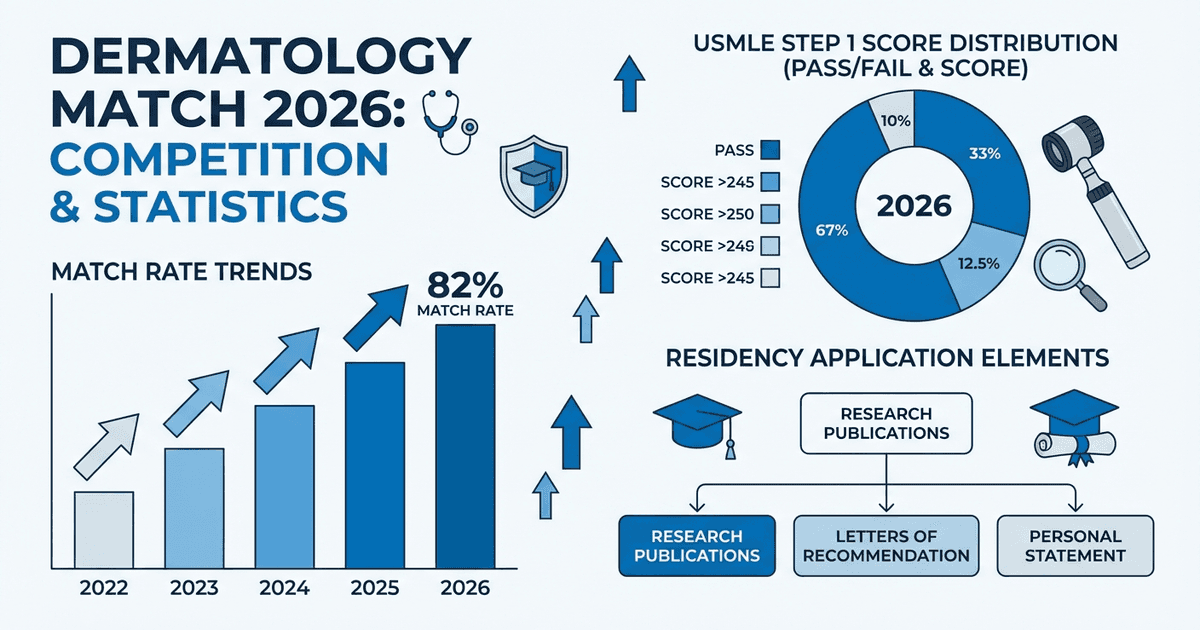
You probably already know dermatology is the most competitive medical specialty. But here's what you might not know: the 2026 match data shows its gotten even tougher. With a match rate hovering around 63% for US medical students and dropping to just 8% for international medical graduates, your strategy needs to be flawless.
The numbers dont lie. Dermatology had 605 positions available in 2025, with over 1,400 applicants competing. That means roughly 800 qualified doctors didnt match. Your USMLE Step 2 CK score needs to be in the 270s, your research portfolio needs 15+ publications, and your application needs to stand out in ways that matter.
This isnt about working harder — its about working smarter. The students who match into dermatology in 2026 will use AI-powered preparation tools, strategic research planning, and data-driven application strategies. Heres exactly what you need to know to compete.
Understanding the 2026 Dermatology Match Landscape
The dermatology match has become increasingly competitive over the past decade. Based on NRMP data trends and early 2026 indicators, here's the current reality:
Match Rates by Applicant Type:
US MD students: 63-65%
US DO students: 45-50%
US IMGs: 8-12%
Non-US IMGs: 3-5%
The average matched dermatology resident in 2026 has impressive credentials: Step 2 CK scores averaging 273, Step 1 Pass with honors distinction, 18+ research publications, and multiple dermatology research experiences.
What makes these numbers particularly challenging is that dermatology programs receive an average of 89 applications per position — the highest ratio of any specialty. Program directors can afford to be extremely selective.
Why Dermatology Remains Ultra-Competitive
Several factors contribute to dermatology's competitiveness:
Limited Residency Positions: Only about 400-450 categorical positions are available annually across all US programs. Compare this to internal medicine's 8,000+ positions. Quality of Life Appeal: Dermatology offers excellent work-life balance, high compensation (average $455,000 annually), and predominantly outpatient practice. Research Requirements: Unlike many specialties, dermatology virtually requires significant research experience, with successful applicants averaging 15-20 publications. Step Score Expectations: With Step 1 now pass/fail, Step 2 CK scores carry enormous weight. The average matched applicant scores 273, with many scoring 280+.
USMLE Step Score Requirements for Dermatology
Your USMLE performance is the first filter programs use. Here's what you need to know about score expectations:
Step 2 CK Score Benchmarks
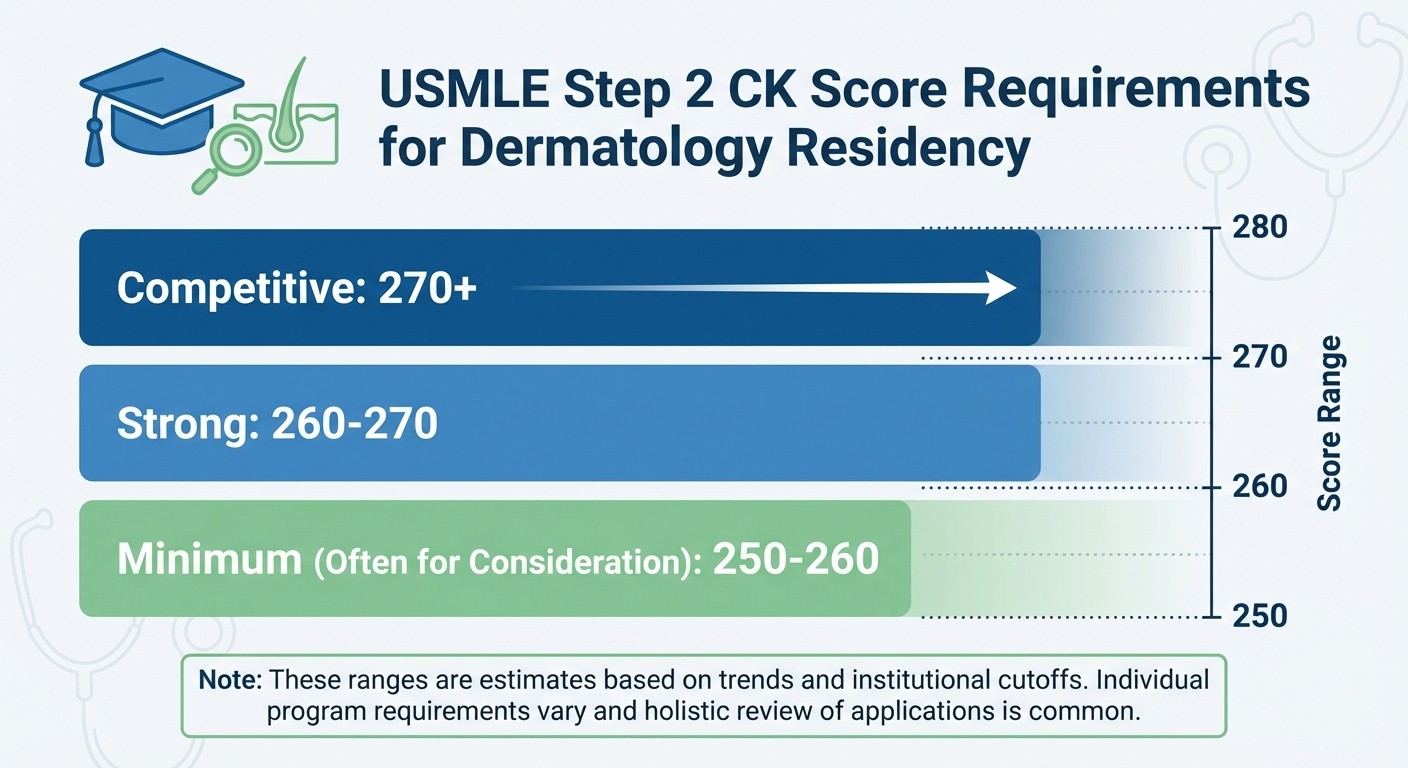
Highly Competitive Range (280+): Top-tier programs (NYU, UCSF, Harvard) typically see average Step 2 CK scores above 280. These scores put you in serious contention. Competitive Range (270-279): Most successful dermatology applicants score in this range. You'll be competitive at most programs with strong research and clinical experiences. Minimum Competitive (260-269): You can still match with scores in this range, but you'll need exceptional research credentials and likely should focus on community programs. Below 260: Extremely difficult to match. Consider taking Step 2 CK again or pursuing a preliminary year to strengthen your application.
Step 1 Pass/Fail Impact
With Step 1 now pass/fail, Step 2 CK carries the entire scoring burden. Some key implications:
No Score Cushion: You cant rely on a high Step 1 score to offset a lower Step 2 CK
Increased Step 2 CK Pressure: Many students are taking Step 2 CK multiple times to achieve 270+ scores
Research Becomes Critical: With less numerical differentiation, research experience becomes even more important
For Step 2 CK preparation targeting these high scores, using AI-powered question banks with adaptive learning can help identify your weak areas faster than traditional methods.
Research Requirements and Publication Strategy
Research is non-negotiable for dermatology. Here's what successful applicants typically have:
Publication Portfolio Breakdown
Peer-Reviewed Articles: 8-15 first or co-first author publications Case Reports: 3-5 dermatology-related case reports Review Articles: 2-4 review articles in dermatology journals Conference Abstracts: 10+ national conference presentations
Strategic Research Planning
Start Early: Begin research in your first or second year. Dermatology research takes time to develop into publications. Focus on Dermatology: At least 60% of your research should be dermatology-related. Dont spread yourself too thin across multiple specialties. Build Relationships: Work with 2-3 dermatology faculty members consistently rather than jumping between projects. Consider Research Years: Many successful applicants take dedicated research years to strengthen their portfolios.
High-Impact Research Areas
These research areas tend to produce publications more quickly:
Dermatopathology studies
Epidemiological studies using large databases
Quality of life studies in dermatologic conditions
Telemedicine in dermatology
AI applications in dermatology
The key is finding mentors who publish frequently and have established research programs. Using spaced repetition for medical research concepts can help you master the methodology needed for quality research.
Building a Competitive Application Timeline
Success in dermatology requires strategic planning across all four years of medical school:
Years 1-2: Foundation Building
Research Initiation: Connect with dermatology faculty and begin research projects Academic Excellence: Maintain top 10% class ranking with honors in preclinical courses Step 1 Preparation: Aim for a solid pass with strong performance indicators Networking: Attend dermatology interest group meetings and local dermatology conferences
Year 3: Clinical Performance and Research Output
Dermatology Rotations: Complete dermatology electives early in third year Research Publications: Aim for 3-5 publications by end of third year Step 2 CK Preparation: Target 270+ score with dedicated preparation Letters of Recommendation: Secure commitments from dermatology faculty
Year 4: Application and Interview Season
Away Rotations: Complete 2-3 away rotations at target programs Application Submission: Submit applications by early September Interview Preparation: Prepare for behavioral and clinical scenario questions Research Continuation: Continue research through application year
When preparing for Step 2 CK during this intensive period, AI tutoring systems like Rezzy can provide personalized study plans that adapt to your schedule and weak areas, making your preparation more efficient.
How AI-Powered Prep Tools Give You an Edge
Traditional USMLE preparation methods arent sufficient for the ultra-competitive scores dermatology requires. Here's how AI-enhanced study tools can help:
Adaptive Learning for High Score Targets
Instead of linear question progression, AI-powered platforms identify your specific knowledge gaps and focus your study time accordingly. For example, if you're consistently missing dermatology-related questions on infectious diseases, the system will serve more targeted practice in that intersection.
Personalized Weak Area Identification
When targeting 270+ on Step 2 CK, you cant afford blind spots. AI analysis of your practice patterns can identify subtle weak areas that traditional score reports miss. Active recall combined with AI feedback helps optimize retention for high-yield topics.
Efficient Review Systems
With thousands of topics to master, mnemonic tools and memory palaces become essential for rapid recall during high-pressure exams. AI can track which memory techniques work best for your learning style.
Real-Time Performance Analytics
Understanding your progress toward 270+ requires more than practice test scores. AI platforms provide granular analytics showing improvement rates, time per question optimization, and confidence calibration — all critical for peak performance.
Program Selection Strategy for 2026
With limited spots available, your program selection strategy is crucial:
Tier 1 Programs (Top Academic Centers)
Average Step 2 CK: 280+
Research: 20+ publications preferred
Away rotations: Essential
Applications: Apply to 5-8 maximum
Tier 2 Programs (Strong Academic/Community Hybrid)
Average Step 2 CK: 275+
Research: 15+ publications
Geographic ties: Can be helpful
Applications: Apply to 8-12 programs
Tier 3 Programs (Community-Based)
Average Step 2 CK: 270+
Research: 10+ publications minimum
Local connections: Very important
Applications: Apply to 10-15 programs
Application Volume Strategy
Most successful dermatology applicants apply to 50-80 programs. This seems excessive, but the match rate data supports a broad approach. Budget $4,000-6,000 for application fees and interview travel.
Alternative Pathways and Backup Plans
Given dermatology's competitiveness, smart applicants prepare alternatives:
Preliminary Year Strategy
If you dont match dermatology initially, a strong preliminary year in internal medicine or transitional year can strengthen your application for the following year. During this year:
Continue dermatology research
Maintain relationships with dermatology faculty
Improve Step scores if needed
Gain additional clinical experience
Related Specialties
Consider these dermatology-adjacent specialties:
Pathology with Dermatopathology Fellowship: Less competitive entry with similar intellectual rewards
Plastic Surgery: Different surgical focus but aesthetic overlap
Rheumatology: Medical specialty with significant dermatologic overlap
International Options
Some students pursue dermatology training abroad and return for fellowship or practice opportunities in the US.
Application Optimization Tips
Personal Statement Excellence
Your personal statement should tell a compelling story about your journey to dermatology. Avoid clichés about "helping people" and instead focus on specific experiences that demonstrate genuine interest and aptitude.
Strong Opening Example: "During my dermatopathology research, I discovered that melanoma misdiagnosis rates drop by 23% when pathologists use digital dermoscopy correlation. This finding sparked my passion for the diagnostic precision that defines dermatology."
Letters of Recommendation Strategy
You need at least 2-3 letters from dermatology faculty. Here's how to secure strong letters:
Work closely with faculty on research projects
Demonstrate clinical excellence during rotations
Show genuine interest in their work and specialty
Maintain relationships over time
Interview Preparation
Dermatology interviews often include:
Clinical scenario discussions
Research presentation questions
Behavioral interview questions
Questions about long-term career goals
Practice describing your research in 2-3 minute summaries and prepare thoughtful questions about each program.
Frequently Asked Questions
What Step 2 CK score do I need for dermatology?
Most matched applicants score 270+, with many top programs seeing averages above 280. Scores below 260 make matching extremely difficult unless you have exceptional research credentials.
How many research publications do I need?
Successful applicants typically have 15-20+ publications, with at least 8-10 being first or co-first author. Quality matters more than quantity, but dermatology expects substantial research output.
Should I take a research year?
A dedicated research year can significantly strengthen your application, especially if you're behind on publications. Many successful applicants take research years between their third and fourth years.
How important are away rotations?
Away rotations are essential for dermatology. Plan to complete 2-3 away rotations at programs where you genuinely want to match. These rotations often determine who receives interview invitations.
What if I dont match dermatology?
Consider a preliminary year to strengthen your application for the next cycle. Alternatively, explore related specialties like pathology with dermatopathology fellowship or plastic surgery.
Is dermatology worth the extreme competitiveness?
Dermatology offers excellent work-life balance, high compensation, and intellectual satisfaction. However, the path is challenging and not guaranteed. Have realistic backup plans and consider whether the competition aligns with your personal goals.
The 2026 dermatology match will be highly competitive, but with strategic preparation, strong research credentials, and excellent USMLE performance, you can position yourself for success. The key is starting early, working efficiently, and using every available advantage — including AI-powered preparation tools that can help you achieve the high scores dermatology demands.
Prepare smarter with Oncourse AI — adaptive MCQs, spaced repetition, and AI explanations built for USMLE success. Download free on Android and iOS.