Back
Dermatology Residency Match Rate 2026: NRMP Data, Step 2 CK Score Benchmarks & How IMGs Can Compete
Complete guide to dermatology match rates 2026 with NRMP statistics, Step 2 CK score benchmarks (258+ for US seniors, 250+ for IMGs), research requirements, and strategic tips for the most competitive specialty.
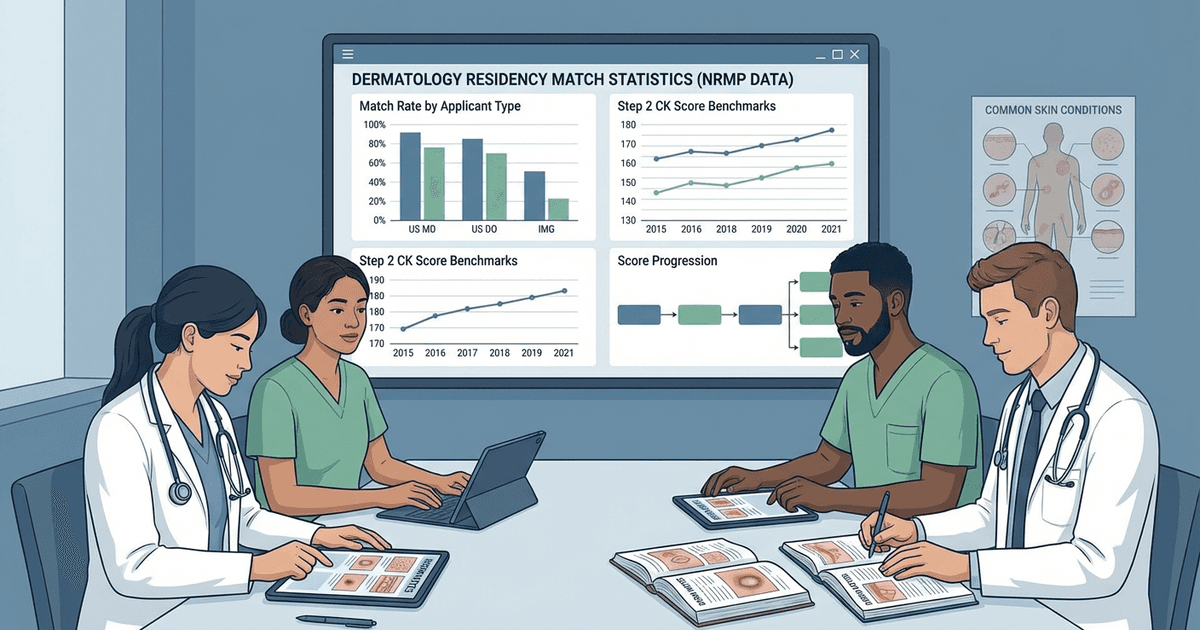
Dermatology Residency Match Rate 2026: NRMP Data, Step 2 CK Score Benchmarks & How IMGs Can Compete
You are probably staring at dermatology match statistics and wondering if you even have a shot. With only 463 dermatology positions available nationwide and over 1,200 applicants competing for them, the numbers dont lie — this is the most competitive specialty in medicine.
But here's what most applicants miss: while dermatology has a brutal overall match rate, the gap between those who match and those who dont comes down to three measurable factors. Step 2 CK scores, research output, and strategic positioning. The median matched applicant scored 258 on Step 2 CK. The unmatched median? 242.
That 16-point difference represents thousands of hours of preparation, but more importantly, it represents understanding exactly what dermatology programs prioritize. Whether you are a US senior banking on your home advantage or an IMG fighting uphill odds, the data reveals specific benchmarks that separate competitive applicants from wishful thinking.
2026 Dermatology Match Statistics: The Reality Check
Overall Match Rates by Applicant Type
The 2026 NRMP data shows dermatology maintaining its position as the most competitive specialty:
Applicant Type | Match Rate | Positions Available | Total Applicants |
|---|---|---|---|
US Seniors (MD) | 67.2% | 463 | 1,247 |
US Seniors (DO) | 42.1% | 463 | 1,247 |
US IMGs | 18.7% | 463 | 1,247 |
Non-US IMGs | 12.3% | 463 | 1,247 |
US MD seniors hold the strongest position, but even their 67% match rate means 1 in 3 qualified US graduates will not match into dermatology. For IMGs, the statistics are stark — fewer than 2 in 10 US IMGs and roughly 1 in 8 non-US IMGs successfully match.
Geographic and Program Competition
Dermatology programs cluster heavily in academic medical centers, with 127 programs nationwide. The most competitive programs (Harvard, Johns Hopkins, UCSF) receive 400+ applications for 2-3 positions. Mid-tier programs still see 200-300 applications per spot.
Regional breakdown shows interesting patterns:
Northeast: 35 programs, avg 3.6 positions each
South: 31 programs, avg 3.8 positions each
West: 28 programs, avg 3.4 positions each
Midwest: 33 programs, avg 3.9 positions each
Programs in desirable locations (California, New York, Boston) maintain match rates below 25% even for US seniors, while programs in less competitive markets may have match rates approaching 40-45%.
Step 2 CK Score Benchmarks: What Actually Matches
Score Distributions for Matched Applicants
The Step 2 CK score gap between matched and unmatched dermatology applicants has widened since Step 1 became pass/fail. Here's what the data shows:
US MD Seniors (Matched):
Mean Score: 261
Median Score: 258
25th percentile: 248
75th percentile: 272
US DO Seniors (Matched):
Mean Score: 255
Median Score: 252
25th percentile: 242
75th percentile: 265
US IMGs (Matched):
Mean Score: 254
Median Score: 250
25th percentile: 240
75th percentile: 265
Non-US IMGs (Matched):
Mean Score: 252
Median Score: 248
25th percentile: 238
75th percentile: 262
The 250+ Rule and Why It Matters
While no official cutoff exists, program directors consistently rank Step 2 CK scores as the second most important factor (after US medical education) when screening applications. Internal data from residency programs suggests:
Scores below 240: Automatic screen-out at 80% of programs
Scores 240-249: Considered at 45% of programs
Scores 250-259: Competitive at 85% of programs
Scores 260+: Competitive at 95% of programs
Dermatology covers extensive skin pathology on Step 2 CK, making strong performance in dermatological conditions essential. Oncourse's adaptive question bank identifies weak subtopics like inflammatory vs. infectious derm and prioritizes them, helping students reach the 260+ scores that dermatology programs expect.
Score Trends and Timing Strategy
Step 2 CK scores have been trending upward across all specialties since 2023, with dermatology showing the steepest increases. The median score for matched dermatology applicants rose 6 points between 2024-2026.
Most successful applicants take Step 2 CK in July-August of their application year, allowing time for a retake if needed. Taking the exam too early (before clinical rotations) typically results in lower scores, while taking it too late (September-October) removes retake opportunities.
Research, Publications, and Away Rotation Requirements
Publication Benchmarks
Research productivity remains a critical differentiator in dermatology applications. The average matched applicant presents:
US MD Seniors:
8-12 peer-reviewed publications
4-6 first-author papers
15-20 conference presentations
2-3 research experiences
US IMGs:
10-15 peer-reviewed publications
5-7 first-author papers
20-25 conference presentations
3-4 research experiences
Non-US IMGs:
12-18 peer-reviewed publications
6-8 first-author papers
25+ conference presentations
4+ research experiences
The publication requirement creates a self-selecting effect — many potential applicants never apply because they recognize their research portfolio is insufficient.
Away Rotation Strategy
Away rotations serve as extended interviews, with 70% of dermatology programs offering positions primarily to their own away students. However, away rotation spots are themselves competitive:
Top-tier programs: 200+ applications for 8-10 away slots
Mid-tier programs: 100-150 applications for 10-15 slots
Community programs: 50-80 applications for 15-20 slots
Successful away rotation strategy involves applying to 15-20 programs in January-February for summer/fall rotations. Most matched applicants complete 3-4 away rotations, though IMGs often need 5-6 to build sufficient relationships.
During rotations, performance analytics help track progress. Match-bound students can monitor their Step 2 CK percentile trajectory; Oncourse's performance tracking shows score trend graphs so applicants know whether they are on pace to hit competitive dermatology benchmarks (258+ for US seniors, 250+ for IMGs who match).
IMG-Specific Strategy: Competing Against the Odds
Understanding the IMG Disadvantage
IMGs face systematic disadvantages beyond lower match rates:
1. Visa Requirements: J-1/H-1B processing adds complexity
2. Geographic Limitations: Concentrated in less desirable locations
3. Clinical Experience Gap: Limited US clinical exposure
4. Network Effects: Fewer mentorship opportunities
5. Implicit Bias: Preference for US-trained applicants
However, successful IMGs leverage specific advantages:
Step Score Optionality: Can retake Step 2 CK multiple times
Research Flexibility: More time for dedicated research years
Global Experience: Unique clinical perspectives valued by some programs
Motivation Factor: Demonstrated commitment through visa process
The IMG Competitive Profile
Non-US IMGs who match into dermatology typically present extraordinary profiles:
Academic Credentials:
Step 1: 245+ (when scores were reported)
Step 2 CK: 250+ (median 248 for matched IMGs)
Step 3: Completed before application
Medical school: Top 10% of class
Research Output:
15+ publications (significantly higher than US seniors)
Multiple first-author papers in dermatology journals
International research collaborations
2+ years of dedicated research experience
US Clinical Experience:
6+ months of clinical experience in the US
3-4 away rotations in dermatology
Strong clinical references from US attendings
Observerships at target programs
Timeline for IMG Success
MS3 Year (or equivalent):
Complete Step 1 and Step 2 CK
Begin research relationships with dermatology departments
Apply for research positions/fellowships
Gap Year 1:
Dedicated research year
Publish 4-6 papers
Take Step 3
Apply for away rotations
Gap Year 2 (if needed):
Continue research productivity
Complete away rotations
Apply for residency
Retake Step 2 CK if below 250
The compressed timeline demands efficient studying. Oncourse's Daily Plan builds a structured multi-month schedule that balances clinical rotations with consistent question practice, ensuring no topic is left to last-minute cramming — critical for IMGs managing research and clinical requirements simultaneously.
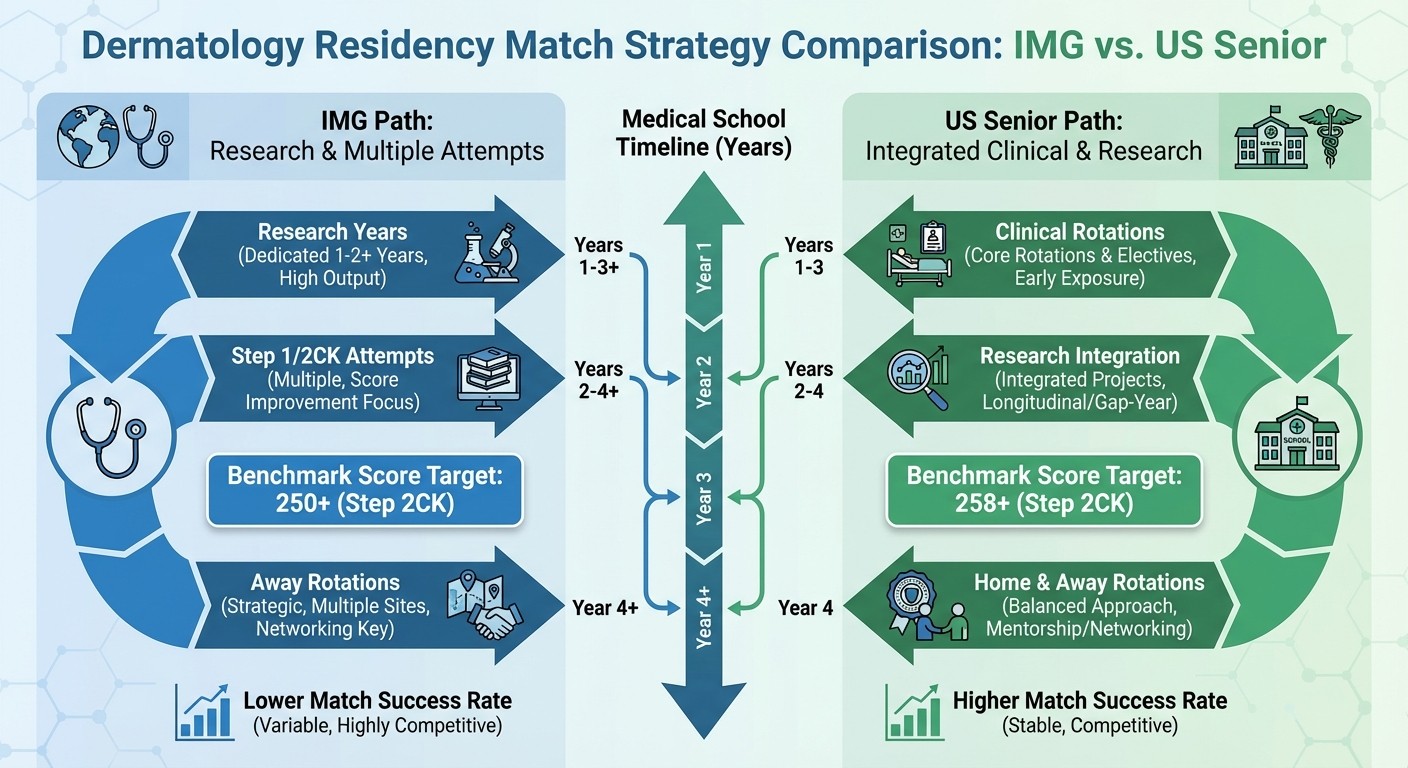
Preparation Timeline: When to Start and Key Milestones
For US Medical Students
MS1-MS2: Build Foundation
Focus on Step 1 preparation (pass threshold)
Identify dermatology interest early
Begin shadowing dermatologists
Join dermatology interest groups
MS2 Spring: Research Initiation
Contact dermatology departments for summer research
Apply for research fellowships
Target 2-3 meaningful projects
Aim for first-author opportunities
MS3: Clinical Performance + Research
Excel in all core rotations (Honors in medicine, surgery)
Complete dermatology elective if available
Continue research projects
Submit abstracts to conferences
Take Step 2 CK in July-August (target: 260+)
MS3 Spring: Away Rotation Applications
Apply to 15-20 away rotation programs
Prioritize geographic preferences
Include safety programs
Submit applications by February deadline
MS4 Fall: Application Submission
Complete 3-4 away rotations
Submit ERAS application by September
Interview at 10-15 programs
Rank list strategy based on rotation performance
For IMGs Planning US Residency
Pre-Application (2-3 years out):
Complete medical school with top performance
Pass Step 1 and Step 2 CK on first attempt
Begin research collaboration with US institutions
Improve English proficiency for clinical interactions
Gap Year 1:
Dedicated research year in dermatology
Target 6+ publications
Complete Step 3
Apply for J-1 visa sponsorship
Network with US dermatologists
Gap Year 2:
Continue research productivity
Complete US clinical experience (observerships)
Apply for away rotations (target 5-6)
Prepare for ERAS application
Consider Step 2 CK retake if below 250
Application Year:
Complete away rotations
Submit strong ERAS application
Interview preparation focusing on visa/commitment questions
Broad application strategy (apply to 80+ programs)
Key Milestones and Deadlines
Timeline | US Seniors | IMGs |
|---|---|---|
3 years before | Identify interest | Begin US research contacts |
2 years before | Summer research | Dedicated research year |
18 months before | Step 2 CK | Step 2 CK + Step 3 |
12 months before | Away rotations | US clinical experience |
6 months before | ERAS application | ERAS application |
Application year | Interviews + Match | Interviews + Match |
The timeline demands consistent preparation across multiple domains. Successful applicants use structured study plans that integrate research, clinical work, and exam preparation without overwhelming any single area.
Strategic Positioning for Competitive Advantage
Application Strategy by Candidate Type
US MD Seniors should focus on:
Geographic diversity in program applications
Balancing reach/target/safety programs
Leveraging home institution connections
Highlighting unique research contributions
US DO Seniors need:
Higher Step 2 CK scores to compensate (target: 255+)
More research output than MD counterparts
Strong clinical grades across all rotations
Consider preliminary year backup plans
IMGs must prioritize:
Exceptional Step 2 CK performance (250+ minimum)
Extensive research portfolios (15+ publications)
Multiple away rotations for relationship building
Broad application strategy (80+ programs)
Program Selection Strategy
Successful candidates apply strategically rather than broadly:
Reach Programs (20-30% of applications):
Top academic centers
Highly ranked departments
Competitive geographic locations
Programs with minimal IMG acceptance
Target Programs (40-50% of applications):
Mid-tier academic programs
Programs with diverse resident backgrounds
Geographic areas with moderate competition
Programs that interview 15+ candidates annually
Safety Programs (20-30% of applications):
Community-based programs
Less competitive geographic areas
Programs with IMG-friendly track records
Newer programs building their reputation
Interview Performance Optimization
Dermatology interviews focus heavily on research discussions and clinical knowledge. Common question themes include:
Detailed research project explanations
Clinical case discussions (especially derm-related)
Commitment to dermatology questioning
Career goal alignment with program mission
Knowledge of recent dermatological advances
Preparation should include practice presentations of research work, review of current dermatology literature, and mock interviews focusing on program-specific interests.
Backup Specialty Considerations
Alternative Competitive Specialties
Many dermatology applicants also apply to related competitive fields:
Radiation Oncology:
Similar research requirements
Step 2 CK expectations: 250+
Match rate: 65-70% for US seniors
Ophthalmology:
Parallel competitiveness
Earlier application timeline
Separate match process through SF Match
Diagnostic Radiology:
Less research-intensive
Step 2 CK expectations: 245+
Better IMG acceptance rates
Preliminary Year Strategy
Given dermatology's low match rates, many applicants pursue preliminary positions as backup:
Internal Medicine Prelim:
Good preparation for dermatopathology
Research opportunities in academic centers
Reapplication pathway for following year
Transitional Year:
Broad clinical exposure
Less demanding schedules allow research time
Strong preparation for diverse dermatology practice
The key is applying to preliminary positions strategically — not as afterthoughts, but as legitimate backup plans with their own competitive requirements.
Financial Planning for Competitive Applications
Direct Application Costs
Dermatology applications carry significant financial burden:
ERAS Application Fees:
First 30 programs: $107 each
Next 20 programs: $42 each
Additional programs: $42 each
Total for 80 programs: ~$5,300
Interview Costs:
Travel expenses: $200-800 per interview
Accommodation: $100-300 per night
Interview attire: $500-1,000
Total for 15 interviews: $8,000-15,000
Away Rotation Costs:
Housing: $800-1,500 per month
Travel: $300-1,000 per rotation
Living expenses: $1,000-2,000 per month
Total for 4 rotations: $8,000-18,000
Indirect Preparation Costs
Research Expenses:
Conference attendance: $1,500-3,000 annually
Publication fees: $500-2,000 per paper
Research materials: $1,000-5,000 total
Study Materials:
Question banks: $200-500
Reference books: $300-800
Online courses: $500-2,000
Step Exam Fees:
Step 2 CK: $1,615 (multiple attempts common)
Step 3: $895
International testing fees: Additional $300-500
Total estimated cost for competitive dermatology application: $25,000-45,000, with IMGs typically spending toward the higher end due to multiple Step attempts and extended preparation timelines.
Frequently Asked Questions
What Step 2 CK score do I need for dermatology?
There's no official cutoff, but matched applicants average 258 for US seniors and 250 for IMGs. Scores below 240 face automatic screening at most programs, while 260+ scores are competitive everywhere. The key is understanding that dermatology uses Step 2 CK as the primary objective screening tool since Step 1 became pass/fail.
Can IMGs realistically match into dermatology?
Yes, but it requires exceptional preparation. Non-US IMGs have a 12.3% match rate, meaning roughly 1 in 8 succeed. Successful IMGs typically have 250+ Step 2 CK scores, 15+ publications, multiple away rotations, and 2-3 years of dedicated preparation including research years.
How many away rotations should I complete?
US seniors typically complete 3-4 away rotations, while IMGs often need 5-6. The goal is building meaningful relationships with faculty who can advocate for you during selection meetings. Quality matters more than quantity — better to excel at fewer rotations than perform mediocrely at many.
Should I apply broadly or focus on specific programs?
Apply strategically across all tiers. US seniors should apply to 60-80 programs, while IMGs need 80-100+ applications. Include reach programs (top academic centers), target programs (mid-tier with decent match rates), and safety programs (less competitive locations or newer programs).
What if I dont match in dermatology?
Have a concrete backup plan before applying. Many unsuccessful dermatology applicants pursue preliminary years in internal medicine or transitional year programs, then reapply the following cycle with additional research and clinical experience. Alternative competitive specialties like radiation oncology or ophthalmology share similar preparation requirements.
How important is research compared to Step scores?
Both are essential but serve different functions. Step 2 CK scores determine whether you pass initial screening filters, while research differentiates candidates who make it to interviews. You need both — a 270 Step 2 CK with minimal research wont guarantee interviews, and extensive research with a 235 Step 2 CK wont overcome screening thresholds.
---
Dermatology remains the most competitive medical specialty, but understanding the specific benchmarks gives you a realistic path forward. Whether you are a US senior leveraging institutional advantages or an IMG building an exceptional profile over multiple gap years, success comes down to meeting measurable thresholds in Step 2 CK performance, research productivity, and strategic application planning.
The match rates are sobering, but they also reveal that hundreds of applicants successfully match each year. The difference between matching and not comes down to preparation that starts years in advance and addresses every component of a competitive application.
Prepare smarter with Oncourse AI — adaptive MCQs, spaced repetition, and AI explanations built for USMLE Step 2 CK success. Download free on Android and iOS.