Back
Cardiothoracic Surgery Residency: Minimum Step 2 Score & How to Compete in 2026
Master the 2-stage pathway to cardiothoracic surgery: Step 2 score requirements for general surgery (270+ target), fellowship match statistics, and competition strategy for 2026.
Cardiothoracic Surgery Residency: Minimum Step 2 Score & How to Compete in 2026
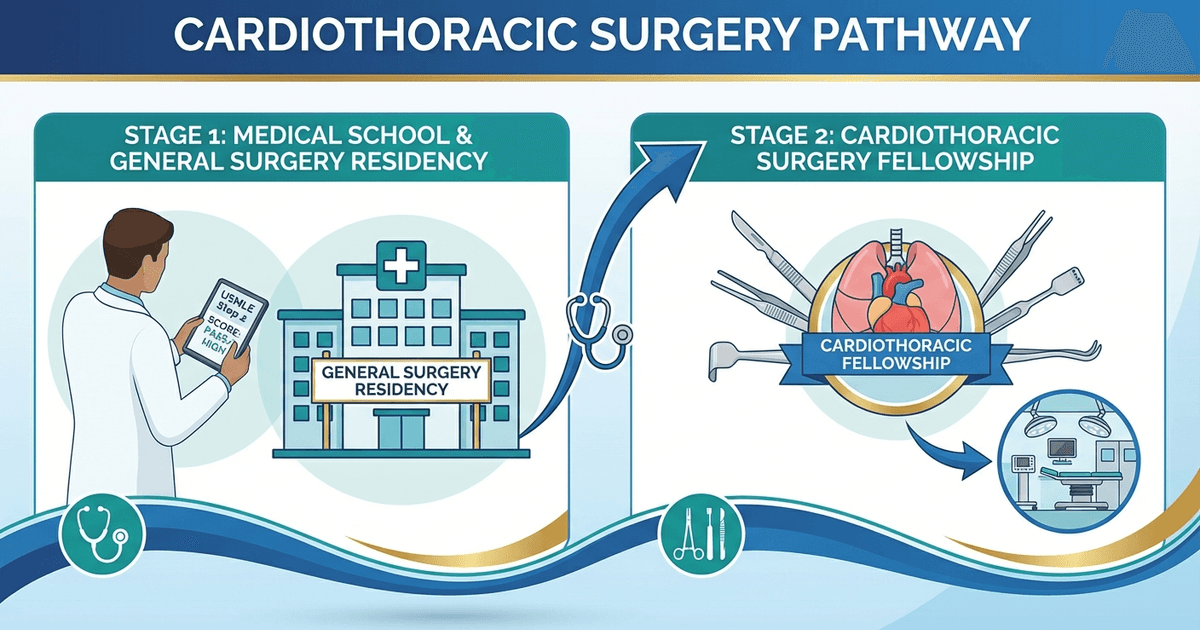
You're probably searching for cardiothoracic surgery residency requirements because you want to operate on hearts and lungs. Here's what most students dont realize: there is no direct cardiothoracic surgery residency match in the US. CT surgery is a fellowship that requires completing general surgery residency first.
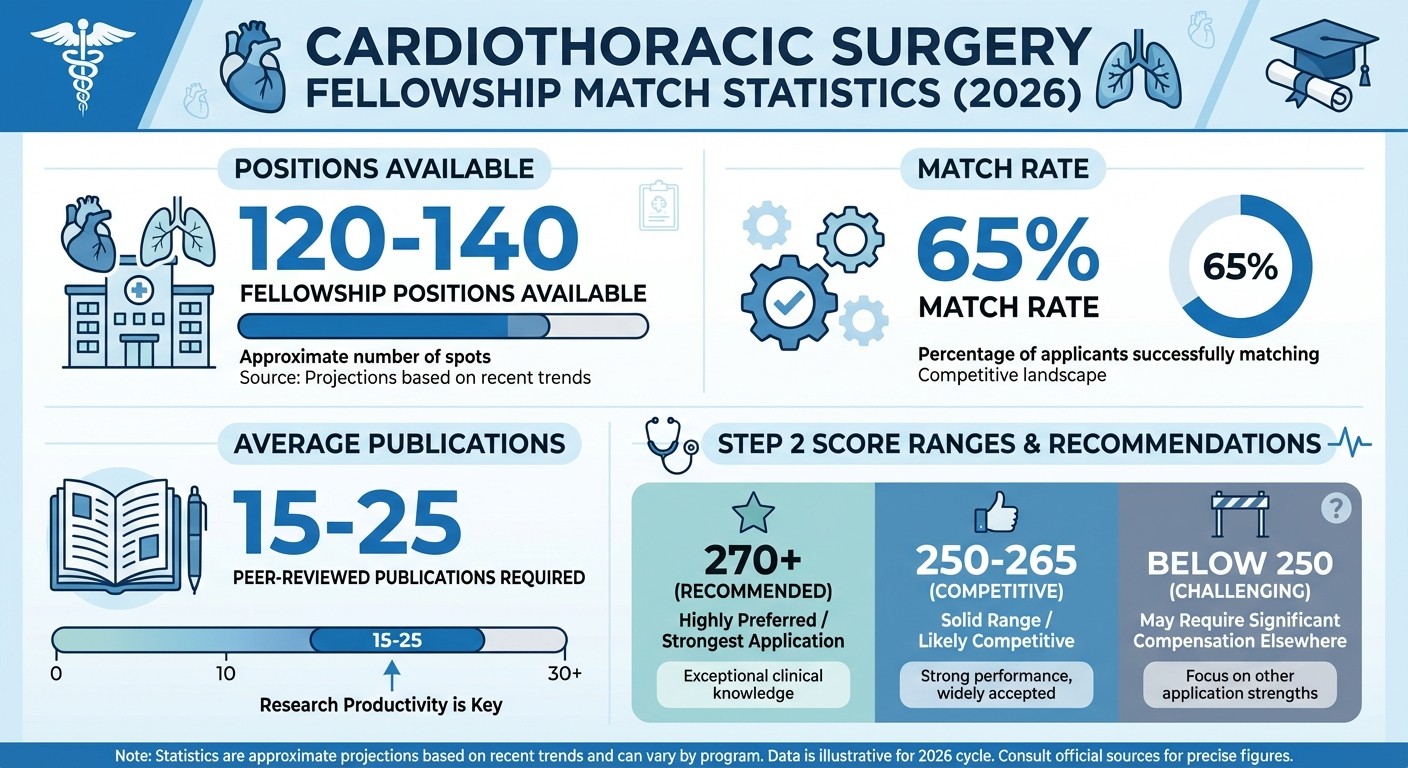
This two-stage pathway means your Step 2 CK score needs to be competitive enough for general surgery programs that produce strong cardiothoracic fellowship candidates. The numbers are stark: only 120-140 cardiothoracic surgery fellowship positions are available nationwide each year, with match rates hovering around 65%.
Your journey starts with conquering general surgery match statistics. The median Step 2 CK score for matched US medical graduates in general surgery was 252 in 2025, but candidates targeting cardiothoracic surgery typically need scores well above 260 to position themselves at top-tier programs.
The Real Cardiothoracic Surgery Pathway
Cardiothoracic surgery follows a specific training sequence that takes 8-9 years after medical school:
Stage 1: General Surgery Residency (5-7 years)
Complete 5-year categorical general surgery program
Some programs offer 7-year integrated tracks
Build surgical foundation across all specialties
Research cardiothoracic cases during electives
Stage 2: Cardiothoracic Surgery Fellowship (2-3 years)
Apply during PGY-4 or PGY-5 of general surgery
Choose between cardiac surgery, thoracic surgery, or combined tracks
Some programs offer pediatric cardiac surgery subspecialization
The fellowship application happens through a separate match process run by the Society of Thoracic Surgeons, not NRMP.
Step 2 Score Requirements for CT Surgery Track
General Surgery Minimum Scores
Your Step 2 CK score determines which general surgery programs will consider you. Here's the realistic breakdown:
Program Tier | Step 2 CK Score Range | CT Surgery Fellowship Placement |
|---|---|---|
Top 20 Programs | 265-280+ | 85-95% match rate |
Mid-Tier Programs | 250-265 | 40-60% match rate |
Community Programs | 240-250 | 10-25% match rate |
Target Score: 270+ if you're serious about cardiothoracic surgery. This positions you at programs with strong CT surgery fellowship track records.
Why Higher Scores Matter
Programs that consistently place residents into competitive fellowships attract the strongest candidates. Massachusetts General Hospital, Mayo Clinic, and Johns Hopkins general surgery programs routinely send 2-3 residents per year to cardiothoracic fellowships. Their average Step 2 scores reflect this selectivity.
Research during general surgery residency becomes crucial for fellowship applications. You need dedicated time and mentorship that only well-funded, academic programs can provide. When practicing cardiac pathophysiology cases, the complex hemodynamics and surgical anatomy concepts reinforce why strong Step 2 preparation builds your foundation for both residency success and fellowship competitiveness.
Building Your Cardiothoracic Surgery Profile
Research Requirements
Start research early – ideally during medical school. Successful cardiothoracic fellowship applicants average 15-25 publications, including:
Basic science cardiac/thoracic research
Clinical outcomes studies
Case reports from interesting surgical cases
Quality improvement projects
Most competitive candidates have 2-3 years of dedicated research time, either before medical school or during residency research years.
Essential Clinical Rotations
During medical school and general surgery residency, prioritize these experiences:
Cardiothoracic surgery electives (minimum 2-month exposure)
Cardiac anesthesiology rotations
Interventional cardiology observerships
Pediatric cardiac surgery (if interested in congenital)
Transplant surgery rotations
USMLE Step 3 Considerations
While Step 3 scores matter less than Step 2 for initial residency match, some cardiothoracic fellowship programs review all board scores. Target 240+ to avoid any screening cutoffs.
CT Surgery Match 2026: Timeline & Strategy
Medical School Years (M1-M4)
M1-M2: Foundation Building
Excel in cardiology and pulmonology coursework
Master cardiac pathophysiology and anatomy
Begin research with cardiothoracic faculty
Target 260+ on Step 1 (or Pass with high Step 2)
M3: Clinical Exposure
Rotate through cardiothoracic surgery
Impress attendings with preparedness and interest
Document cases and procedures observed
Connect with program research coordinators
M4: Application Strategy
Apply to 40-50 general surgery programs
Prioritize programs with strong CT fellowship placement
Secure strong letters from cardiothoracic surgeons
Continue research productivity
General Surgery Residency Strategy
PGY-1 to PGY-3:
Excel in all rotations, especially cardiac surgery
Maintain research productivity (aim for 3-5 publications yearly)
Build relationships with CT surgery faculty
Consider additional cardiac surgery electives
Long-form study plans become essential during residency preparation, designed specifically for the 2-stage pathway from Step 2 through general surgery training and into CT surgery fellowship applications.
PGY-4 to PGY-5:
Apply for CT surgery fellowship
Complete dedicated research years if available
Secure chief resident positions
High-Yield Study Topics for CT Surgery Preparation
Cardiac Pathophysiology Essentials
Master these concepts that appear repeatedly on Step 2 and in cardiothoracic practice:
Hemodynamics & Physiology:
Frank-Starling mechanism and cardiac output
Coronary circulation and ischemic cascade
Valvular disease pathophysiology
Congenital heart disease shunt physiology
Surgical Anatomy:
Coronary artery anatomy and dominance patterns
Cardiac conduction system
Thoracic inlet and mediastinal anatomy
Pulmonary vascular anatomy
Cardiothoracic vignettes spanning cardiac surgery emergencies and perioperative care help bridge the gap between Step 2 knowledge and surgical decision-making. Questions covering tamponade recognition, aortic dissection management, and post-operative complications mirror real scenarios you'll encounter.
Critical Emergency Scenarios
Step 2 CK frequently tests cardiothoracic emergencies that every general surgery resident must recognize:
Cardiac tamponade: Beck's triad and pericardiocentesis
Aortic dissection: Type A vs Type B management
Tension pneumothorax: immediate decompression
Massive hemothorax: surgical vs conservative management
Post-operative bleeding: when to re-explore
Perioperative Management
Understanding pre and post-operative cardiac surgery care distinguishes strong candidates:
Preoperative cardiac risk stratification
Cardiopulmonary bypass physiology
Post-operative arrhythmia management
Anticoagulation protocols
Ventilator weaning strategies
Alternative Pathways and International Considerations
Integrated 6-Year Programs
A few programs offer integrated cardiothoracic surgery residencies that combine general surgery and CT training:
Currently only 4-5 programs nationwide
Even more competitive than traditional pathway
Require exceptional credentials from the start
International Medical Graduates
IMG candidates face additional challenges:
Need exceptional Step scores (275+ recommended)
Strong USCE in cardiothoracic surgery essential
Consider research fellowships to build relationships
May need additional years of research to compete
Making Yourself Competitive
Letters of Recommendation
Secure letters from:
Cardiothoracic surgeons who know your work
General surgery program directors
Research mentors with national recognition
Chiefs of surgery from your rotations
Conference Presentations
Present at major meetings:
American College of Surgeons Clinical Congress
Regional surgical society meetings
Leadership Experience
Demonstrate leadership through:
Medical student surgery interest groups
Research lab management roles
Quality improvement project leadership
Teaching and mentoring junior students
Backup Plans and Realistic Expectations
Fellowship Alternatives
If cardiothoracic surgery doesn't work out:
Vascular surgery (also highly competitive)
Transplant surgery fellowships
Trauma/critical care fellowships
Cardiac anesthesiology after anesthesia residency
Geographic Flexibility
Be prepared to match anywhere for both general surgery and CT fellowship. The most competitive candidates apply broadly and relocate as needed.
High-yield cardiac pathophysiology cases become crucial during this extended preparation period, reinforcing the Step 2 knowledge base while building surgical reasoning skills essential for CT surgery fellowship success.
Frequently Asked Questions
Can you do cardiothoracic surgery without general surgery residency?
No, cardiothoracic surgery requires completing general surgery residency first (except for extremely rare integrated programs). There are only 4-5 integrated CT surgery programs nationwide.
What Step 2 score do I need for cardiothoracic surgery?
Target 270+ on Step 2 CK. This positions you competitively for top-tier general surgery programs that consistently place residents into cardiothoracic fellowships. Scores below 260 make the pathway significantly more challenging.
How competitive is cardiothoracic surgery in 2026?
Extremely competitive. Only 120-140 fellowship positions available nationally with approximately 65% match rate. Most successful candidates have 15-25+ publications and come from top general surgery programs.
How many years does cardiothoracic surgery training take?
8-9 years total: 5-7 years of general surgery residency plus 2-3 years of cardiothoracic fellowship. Some integrated programs compress this to 6 years but are exceedingly rare.
Do I need research experience for CT surgery?
Yes, research is essential. Successful candidates average 15-25 publications including basic science, clinical outcomes studies, and case reports. Most take 1-2 dedicated research years during general surgery residency.
What's the salary for cardiothoracic surgeons?
Cardiothoracic surgeons earn among the highest physician salaries, typically $400,000-$800,000+ annually depending on practice setting, geography, and subspecialty focus.
The path to cardiothoracic surgery demands exceptional preparation, starting with your Step 2 CK score. Master the cardiac pathophysiology concepts that will serve you from medical licensing exams through fellowship applications and into surgical practice.
Prepare smarter with Oncourse AI — adaptive MCQs, spaced repetition, and AI explanations built for USMLE. Download free on Android and iOS.