Back
The 5 A's of Schizophrenia: Negative Symptoms Explained for NEET PG & INICET 2026
Master the 5 A's of schizophrenia negative symptoms for NEET PG & INICET 2026: Affective Flattening, Alogia, Avolition, Anhedonia, and Attention deficits with clinical examples.
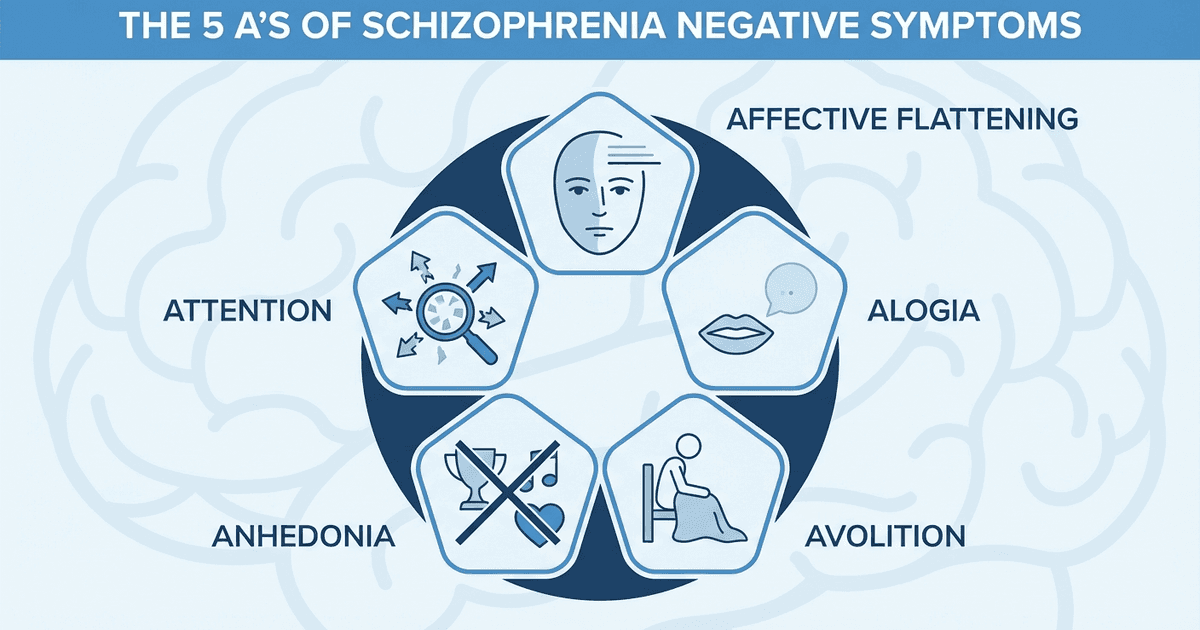
The 5 A's of Schizophrenia: Negative Symptoms Explained for NEET PG & INICET 2026
Schizophrenia affects approximately 1% of the global population, making it one of the most significant psychiatric disorders you'll encounter in your medical practice. While positive symptoms like delusions and hallucinations often grab attention in clinical scenarios, negative symptoms represent the core pathology of schizophrenia and are crucial for NEET PG and INICET 2026 examinations.
The 5 A's of schizophrenia - Affective Flattening, Alogia, Avolition, Anhedonia, and Attention deficits - form the cornerstone of negative symptom assessment. These symptoms often appear before positive symptoms, persist longer, and significantly impact patient functionality and prognosis. Understanding them thoroughly will help you excel in psychiatry sections and clinical postings.
In this comprehensive guide, we'll explore each of the 5 A's with clinical examples, assessment techniques, and high-yield facts essential for your PG entrance exams.
What Are Negative Symptoms in Schizophrenia?
Negative symptoms represent the absence or reduction of normal psychological functions, contrasting with positive symptoms that involve the presence of abnormal experiences. These symptoms typically emerge during the prodromal phase and often persist throughout the illness course, making them critical diagnostic and prognostic indicators.
Key characteristics of negative symptoms:
Primary vs Secondary: Primary negative symptoms arise directly from the disease process, while secondary symptoms result from medication side effects, depression, or environmental factors
Duration: Must persist for at least 6 months for schizophrenia diagnosis (DSM-5-TR criteria)
Functional impact: Strongly correlate with occupational and social disability
Treatment resistance: Generally less responsive to antipsychotic medications compared to positive symptoms
Clinical Significance for NEET PG & INICET
Negative symptoms questions frequently appear in psychiatry sections, often testing:
Recognition of specific symptoms from clinical vignettes
Differentiation between primary and secondary negative symptoms
Assessment scales and diagnostic criteria
Treatment approaches and prognosis
1. Affective Flattening (Blunted Affect)
Definition: Severe reduction in the intensity of emotional expression, both verbal and non-verbal.
Clinical Features
Facial Expression:
Immobile, mask-like face
Reduced spontaneous facial movements
Diminished eye contact
Absence of appropriate emotional responses
Vocal Expression:
Monotonous speech tone
Reduced vocal inflections
Absent prosody (rhythm and melody of speech)
Limited voice volume variations
Gestural Expression:
Decreased spontaneous movements
Reduced expressive gestures
Minimal body language
Rigid posture
Assessment Techniques
Clinical Observation:
Monitor patient's facial expressions during emotional topics
Assess voice modulation when discussing personal matters
Observe gestural responses to various stimuli
Note appropriateness of emotional expression to context
Standardized Scales:
Scale for Assessment of Negative Symptoms (SANS)
Positive and Negative Syndrome Scale (PANSS)
Brief Negative Symptom Scale (BNSS)
High-Yield Exam Points
Differential diagnosis: Rule out depression, medication-induced parkinsonism, and catatonia
Neurobiological basis: Associated with frontal cortex hypofunction and reduced dopaminergic activity
Prognosis: Early presence indicates poor functional outcomes
Treatment: Atypical antipsychotics may provide modest improvement
Practice recognizing affective flattening with our comprehensive schizophrenia clinical features lessons and test your knowledge with targeted psychiatry MCQs.
2. Alogia (Poverty of Speech)
Definition: Significant reduction in the amount and content of speech, reflecting underlying thought poverty.
Types of Alogia
Poverty of Speech (Type 1):
Marked reduction in speech quantity
Brief, monosyllabic responses
Long response latencies
Minimal spontaneous speech
Poverty of Content (Type 2):
Normal speech quantity but reduced informational content
Vague, repetitive, or empty responses
Increased use of indefinite words ("thing," "stuff")
Tangential or circumstantial speech patterns
Clinical Assessment
Quantitative Measures:
Word count per minute
Response latency (time to respond to questions)
Duration of spontaneous speech episodes
Frequency of speech initiation
Qualitative Analysis:
Information density of speech content
Coherence and goal-directedness
Semantic complexity
Abstract vs concrete thinking patterns
Exam-Relevant Clinical Scenarios
Typical Vignette Format:
"A 25-year-old patient responds to 'How are you feeling?' with 'Fine.' When asked about his daily activities, he says 'I do things.' Further questioning yields minimal additional information."
Key Assessment Questions:
Can you tell me about your typical day?
What do you enjoy doing in your free time?
How do you feel about your current situation?
Neurobiological Correlates
Brain regions: Left superior temporal gyrus, Broca's area dysfunction
Neurotransmitters: Reduced dopaminergic and glutamatergic activity
Cognitive mechanisms: Executive dysfunction, working memory deficits
Enhance your understanding of speech abnormalities in psychiatry through our detailed psychotic disorders lessons and reinforce learning with schizophrenia flashcards.
3. Avolition (Lack of Motivation)
Definition: Severe reduction in motivated, goal-directed behavior and activities.
Clinical Manifestations
Self-Care Deterioration:
Poor personal hygiene
Inappropriate or unchanged clothing
Neglected grooming habits
Irregular eating patterns
Social Withdrawal:
Avoiding interpersonal interactions
Declining social invitations
Minimal communication with family/friends
Loss of previous social relationships
Work/Academic Impairment:
Inability to maintain employment
Poor academic performance
Missed appointments or commitments
Lack of goal-oriented behavior
Recreational Anhedonia:
Abandonment of previously enjoyed activities
No interest in hobbies or entertainment
Passive behavior patterns
Lack of initiative for pleasurable activities
Assessment Strategies
Functional Assessment:
Activities of Daily Living (ADL) evaluation
Social and Occupational Functioning Assessment Scale (SOFAS)
Global Assessment of Functioning (GAF)
Quality of Life scales
Behavioral Observations:
Initiation vs response to activities
Sustained vs brief engagement
Independent vs prompted behavior
Goal-directed vs aimless activities
Differential Diagnosis
Conditions to Rule Out:
Major depressive episode
Medication-induced akinesia
Cognitive impairment/dementia
Substance use disorders
Medical conditions (hypothyroidism, chronic fatigue)
Clinical Pearls:
Avolition in schizophrenia typically lacks the mood symptoms of depression
Unlike depression, patients may not express distress about their lack of motivation
Often accompanied by other negative symptoms
Explore comprehensive assessment techniques and treatment approaches in our schizophrenia treatment modules.
4. Anhedonia (Inability to Experience Pleasure)
Definition: Markedly diminished capacity to experience pleasure from activities that were previously enjoyable.
Types of Anhedonia
Social Anhedonia:
Reduced interest in social interactions
Diminished pleasure from relationships
Avoidance of social gatherings
Preference for solitary activities
Physical Anhedonia:
Decreased enjoyment of sensory experiences
Reduced appetite or taste appreciation
Diminished sexual interest
Lack of pleasure from physical activities
Consummatory vs Anticipatory Anhedonia:
Consummatory: Reduced pleasure during activities
Anticipatory: Inability to anticipate future pleasure
Neurobiological Mechanisms
Reward Pathway Dysfunction:
Mesolimbic dopamine system abnormalities
Ventral striatum hypoactivation
Prefrontal cortex-limbic connectivity disruption
Altered opioid system functioning
Neurotransmitter Imbalances:
Dopamine dysfunction in reward circuits
GABA-glutamate imbalance
Serotonin system alterations
Acetylcholine abnormalities
Clinical Assessment Tools
Standardized Instruments:
Temporal Experience of Pleasure Scale (TEPS)
Snaith-Hamilton Pleasure Scale (SHAPS)
Chapman Physical and Social Anhedonia Scales
Anticipatory and Consummatory Interpersonal Pleasure Scale (ACIPS)
Interview Techniques:
Assess historical vs current pleasure capacity
Explore specific domains (social, physical, intellectual)
Compare pre-illness vs current functioning
Evaluate motivation vs enjoyment separately
High-Yield Examination Facts
NEET PG/INICET Pearls:
Anhedonia often precedes other symptoms by months or years
Strong predictor of functional outcome and quality of life
May persist despite resolution of positive symptoms
Associated with increased suicide risk
Test your knowledge of anhedonia assessment and management with our schizophrenia epidemiology and etiology questions.
5. Attention Deficits (Cognitive Impairment)
Definition: Impaired ability to focus, sustain, or shift attention appropriately.
Components of Attention Dysfunction
Sustained Attention (Vigilance):
Difficulty maintaining focus over time
Increased distractibility
Poor performance on continuous tasks
Fatigue during mental activities
Selective Attention:
Inability to filter relevant from irrelevant information
Sensory gating deficits
Hypervigilance to environmental stimuli
Difficulty focusing in noisy environments
Divided Attention:
Problems multitasking
Reduced cognitive flexibility
Impaired task-switching abilities
Executive function deficits
Working Memory:
Difficulty holding information temporarily
Poor manipulation of stored information
Reduced cognitive processing capacity
Impaired problem-solving abilities
Cognitive Assessment Battery
Standardized Neuropsychological Tests:
Continuous Performance Test (CPT)
Trail Making Test A and B
Stroop Color-Word Test
Wisconsin Card Sorting Test
Digit Span Test
Symbol Digit Modalities Test
Brief Cognitive Screening:
Montreal Cognitive Assessment (MoCA)
Mini-Mental State Examination (MMSE)
Brief Assessment of Cognition in Schizophrenia (BACS)
MATRICS Consensus Cognitive Battery (MCCB)
Clinical Impact and Significance
Functional Implications:
Major determinant of vocational outcome
Predictor of independent living capacity
Correlates with treatment adherence
Influences social relationship quality
Treatment Considerations:
Cognitive remediation therapy
Antipsychotic selection (cognitive side effects)
Environmental modifications
Vocational rehabilitation approaches
Deepen your understanding of cognitive assessments and interventions through our comprehensive psychiatry assessment and diagnosis lessons.
Assessment Scales and Diagnostic Tools
Scale for Assessment of Negative Symptoms (SANS)
Five Domains Evaluated:
1. Affective flattening or blunting (8 items)
2. Alogia (5 items)
3. Avolition-apathy (4 items)
4. Anhedonia-asociality (5 items)
5. Attention (2 items)
Scoring:
Each item rated 0-5 (0 = absent, 5 = severe)
Global ratings for each domain
Total scores and domain-specific analysis
Positive and Negative Syndrome Scale (PANSS)
Negative Symptom Subscale (7 items):
Blunted affect
Emotional withdrawal
Poor rapport
Passive/apathetic social withdrawal
Difficulty in abstract thinking
Lack of spontaneity and flow of conversation
Stereotyped thinking
Clinical Utility:
Widely used in research and clinical practice
Good inter-rater reliability
Sensitive to treatment changes
Correlates with functional outcomes
Brief Negative Symptom Scale (BNSS)
Six Domains (13 items):
Anhedonia (3 items)
Distress (1 item)
Asociality (2 items)
Avolition (2 items)
Blunted affect (3 items)
Alogia (2 items)
Advantages:
Separates motivation from pleasure
Includes distress assessment
Good psychometric properties
Shorter administration time
Treatment Approaches and Management
Pharmacological Interventions
Antipsychotic Medications: First-Generation (Typical) Antipsychotics:
Limited efficacy for negative symptoms
May worsen negative symptoms via extrapyramidal side effects
Risk of secondary negative symptoms
Second-Generation (Atypical) Antipsychotics:
Modest improvement in negative symptoms
Better tolerability profile
Preferred first-line treatment
Specific Medications:
Clozapine: Best evidence for negative symptom improvement
Aripiprazole: Partial dopamine agonism may help
Cariprazine: Preferential D3 receptor binding
Amisulpride: Low-dose selective for negative symptoms
Non-Pharmacological Interventions
Cognitive Behavioral Therapy (CBT):
Addresses dysfunctional thoughts and behaviors
Improves coping strategies
Enhances treatment adherence
Reduces negative symptom severity
Cognitive Remediation Therapy:
Computer-based cognitive training
Targets specific cognitive deficits
Improves attention, memory, and executive function
Enhances functional outcomes
Social Skills Training:
Structured behavioral interventions
Role-playing and modeling techniques
Improves social functioning
Reduces social withdrawal
Family Therapy and Psychoeducation:
Reduces expressed emotion in families
Improves treatment adherence
Enhances social support
Prevents relapse
Rehabilitation and Support Services
Vocational Rehabilitation:
Supported employment programs
Skills training and job coaching
Gradual return to work
Long-term follow-up
Psychosocial Rehabilitation:
Independent living skills training
Social relationship building
Community integration
Peer support programs
Master treatment approaches and rehabilitation strategies with our detailed schizophrenia treatment lessons and practice cases.
Clinical Vignettes for NEET PG & INICET Practice
Vignette 1: Affective Flattening
A 28-year-old male presents with 8 months of gradually declining function. During interview, he maintains minimal eye contact, shows no facial expressions even when discussing personal losses, and speaks in a monotone voice. His family reports he no longer laughs at jokes and seems "emotionally flat." Key Learning Points:
Duration > 6 months supports schizophrenia diagnosis
Assess multiple domains of emotional expression
Rule out depression and medication effects
Vignette 2: Alogia
A 22-year-old female patient gives monosyllabic responses to questions. When asked "How do you spend your day?" she responds "I do things." Further questioning yields minimal information despite normal cognitive testing. Assessment Focus:
Differentiate poverty of speech from poverty of content
Evaluate cognitive function separately
Consider cultural and educational factors
Vignette 3: Avolition
A 26-year-old male has not showered in weeks, rarely leaves his room, and quit his job 6 months ago. He shows no distress about these changes and requires family prompting for basic activities. Clinical Considerations:
Absence of mood symptoms distinguishes from depression
Assess premorbid functioning level
Evaluate capacity for goal-directed behavior
Prognosis and Long-Term Outcomes
Factors Influencing Prognosis
Poor Prognostic Indicators:
Early onset of negative symptoms
Predominant negative symptom profile
Severe cognitive impairment
Poor premorbid adjustment
Family history of schizophrenia
Better Prognostic Factors:
Later age of onset
Acute onset with clear precipitants
Good premorbid functioning
Strong family support
Early treatment intervention
Functional Outcomes
Employment and Education:
Only 15-20% maintain competitive employment
Cognitive deficits major barrier to vocational success
Supported employment improves outcomes
Educational attainment often interrupted
Social Functioning:
Majority experience persistent social difficulties
Reduced marriage rates and family formation
Social skills training beneficial
Peer support programs important
Independent Living:
Many require ongoing support services
Housing instability common
Life skills training essential
Community mental health services crucial
Key Takeaways for NEET PG & INICET 2026
High-Yield Facts
1. The 5 A's represent core negative symptoms: Affective flattening, Alogia, Avolition, Anhedonia, and Attention deficits 2. Duration criteria: Must persist ≥6 months for schizophrenia diagnosis 3. Assessment tools: SANS, PANSS, and BNSS are gold standards 4. Treatment: Atypical antipsychotics + psychosocial interventions 5. Prognosis: Negative symptoms strongly predict functional outcomes
Common Exam Patterns
Clinical vignettes testing symptom recognition
Differentiation between primary and secondary negative symptoms
Assessment scale knowledge
Treatment approach questions
Prognosis and outcome factors
Study Strategy
Focus on clinical presentations and assessment
Practice distinguishing from depression and other conditions
Memorize key assessment tools and their components
Understand neurobiological mechanisms
Review treatment algorithms and rehabilitation approaches
Consolidate your learning with our comprehensive schizophrenia flashcard sets covering all aspects of negative symptoms assessment and management.
Conclusion
The 5 A's of schizophrenia represent fundamental negative symptoms that significantly impact patient functioning and prognosis. For NEET PG and INICET 2026 success, focus on recognizing these symptoms in clinical vignettes, understanding their assessment methods, and knowing evidence-based treatment approaches.
Remember that negative symptoms often precede positive symptoms, persist longer, and are crucial determinants of functional outcomes. Early recognition and appropriate intervention can significantly improve patient quality of life and long-term prognosis.
Ready to master schizophrenia and other psychiatric disorders? Explore Oncourse's comprehensive psychiatry learning modules with high-yield content, practice questions, and interactive flashcards designed specifically for Indian medical PG aspirants. Join over 10,000 successful candidates who've achieved their PG dreams with our evidence-based learning platform.