
Neuropathology
Complete Neuropathology study resources for USMLE. Part of Pathology.
Study Resources
Choose how you want to study Neuropathology
Lessons
13 lessons in Neuropathology

Cerebrovascular diseases

CNS trauma

CNS infections

Demyelinating diseases

Neurodegenerative diseases

Alzheimer's disease pathology

Parkinson's disease pathology

Amyotrophic lateral sclerosis

Primary CNS tumors

Metastatic CNS tumors

Peripheral nerve disorders

Skeletal muscle diseases

Congenital CNS malformations
Practice Questions
10 MCQs for Neuropathology
Sample Questions: Neuropathology
Test your understanding with these related questions
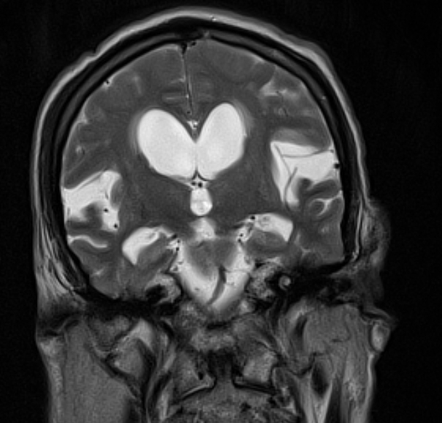
A 73-year-old man is brought in by his wife with a history of progressive personality changes. The patient’s wife says that, over the past 3 years, he has become increasingly aggressive and easily agitated, which is extremely out of character for him. His wife also says that he has had several episodes of urinary incontinence in the past month. He has no significant past medical history. The patient denies any history of smoking, alcohol use, or recreational drug use. The patient is afebrile, and his vital signs are within normal limits. A physical examination is unremarkable. The patient takes the mini-mental status examination (MMSE) and scores 28/30. A T2 magnetic resonance image (MRI) of the head is performed and the results are shown in the exhibit (see image). Which of the following is the next best diagnostic step in the management of this patient?
Neuropathology US Medical PG Practice Questions and MCQs
Practice US Medical PG questions for Neuropathology. These multiple choice questions (MCQs) cover important concepts and help you prepare for your exams.
Neuropathology US Medical PG Question 1: A 73-year-old man is brought in by his wife with a history of progressive personality changes. The patient’s wife says that, over the past 3 years, he has become increasingly aggressive and easily agitated, which is extremely out of character for him. His wife also says that he has had several episodes of urinary incontinence in the past month. He has no significant past medical history. The patient denies any history of smoking, alcohol use, or recreational drug use. The patient is afebrile, and his vital signs are within normal limits. A physical examination is unremarkable. The patient takes the mini-mental status examination (MMSE) and scores 28/30. A T2 magnetic resonance image (MRI) of the head is performed and the results are shown in the exhibit (see image). Which of the following is the next best diagnostic step in the management of this patient?
- A. Contrast MRI of the head
- B. Lumbar puncture (Correct Answer)
- C. Noncontrast CT of the head
- D. Brain biopsy
- E. Serum ceruloplasmin level
Neuropathology Explanation: ***Lumbar puncture*** - The MRI shows **ventriculomegaly** with **transependymal CSF flow**, indicating **normal pressure hydrocephalus (NPH)**. A high-volume lumbar puncture serves as both a diagnostic and therapeutic test for NPH, as improvement in symptoms after CSF removal (typically 30-50 mL) strongly supports the diagnosis. - This patient presents with **progressive cognitive decline** (personality changes, aggression, agitation) and **urinary incontinence**, two components of the classic NPH triad. While gait disturbance is the third component and most common presenting feature, NPH can present with incomplete triads, and the imaging findings strongly support this diagnosis. *Contrast MRI of the head* - Contrast-enhanced MRI is used to visualize specific lesions such as **tumors, infections, or inflammatory processes**, which are not suggested by this patient's presentation. - The T2 MRI has already demonstrated findings consistent with NPH (ventriculomegaly with transependymal flow), making additional contrast imaging unnecessary for diagnosis at this stage. *Noncontrast CT of the head* - While noncontrast CT can demonstrate ventriculomegaly, **MRI provides superior resolution** for evaluating brain parenchyma and detecting **transependymal CSF flow**, a key indicator of NPH. - Since MRI has already been performed and revealed findings diagnostic of NPH, repeating imaging with a less detailed modality would not add diagnostic value. *Brain biopsy* - Brain biopsy is an **invasive procedure** reserved for cases where **neoplastic, infectious, or demyelinating** conditions are strongly suspected and cannot be diagnosed by less invasive means. - There is no indication of a mass lesion, infection, or focal abnormality requiring tissue diagnosis in this patient's clinical presentation or imaging findings. *Serum ceruloplasmin level* - Serum ceruloplasmin is used to diagnose **Wilson's disease**, a rare genetic disorder of copper metabolism presenting with neuropsychiatric symptoms and movement disorders, typically in patients **under 40 years of age**. - Given this patient's age (73 years) and clear radiological evidence of NPH, Wilson's disease is not a consideration in the differential diagnosis.
Neuropathology US Medical PG Question 2: A group of neurologists develop a new blood test for Alzheimer's. They are optimistic about the test, as they have found that for any given patient, the test repeatedly produces very similar results. However, they find that the new test results are not necessarily consistent with the gold standard of diagnosis. How would this new test most accurately be described?
- A. Valid and reliable
- B. Reliable (Correct Answer)
- C. Valid
- D. Biased
- E. Neither valid nor reliable
Neuropathology Explanation: ***Reliable*** - The test produces **similar results repeatedly** upon repeated measures, indicating high **reliability** or **precision**. - Reliability refers to the **consistency** of a measure, even if it is not accurate. *Valid and reliable* - While the test is **reliable**, it is explicitly stated that the results are **not consistent with the gold standard**, meaning it lacks **validity**. - A test must be both **consistent** (reliable) and **accurate** (valid) to be described as valid and reliable. *Valid* - **Validity** refers to the **accuracy** of a test, or how well it measures what it is supposed to measure. - The test is explicitly stated to **not be consistent with the gold standard**, indicating a lack of agreement with the true measure of Alzheimer's. *Biased* - **Bias** refers to a **systematic error** in measurement that can lead to consistently high or low results compared to the true value. - While the test might be biased due to its lack of consistency with the gold standard, "biased" is not the most accurate single descriptor of its measurement properties given the information provided. *Neither valid nor reliable* - The test is described as producing **very similar results repeatedly**, which directly indicates it has **high reliability**. - Therefore, stating it is neither valid nor reliable is incorrect, as it possesses reliability.
Neuropathology US Medical PG Question 3: A 72-year-old man is brought to the physician by his wife for memory issues over the last 7 months. The patient's wife feels that he has gradually become more forgetful. He commonly misplaces his car keys and forgets his children's names. He seems to have forgotten how to make dinner and sometimes serves uncooked noodles or raw meat. One night he parked his car in a neighbor's bushes and was found wandering the street. He has a history of hypertension, hyperlipidemia, and COPD. Current medications include atorvastatin, metoprolol, ipratropium, and fluticasone. Vital signs are within normal limits. He is alert and oriented to person and place only. Neurologic examination shows no focal findings. His Mini-Mental State Examination score is 19/30. A complete blood count and serum concentrations of electrolytes, urea nitrogen, creatinine, thyroid-stimulating hormone, liver function tests, vitamin B12 (cobalamin), and folate are within the reference range. Which of the following is the most appropriate next step in diagnosis?
- A. Electroencephalography
- B. PET scan
- C. MRI of the brain (Correct Answer)
- D. Lumbar puncture
- E. Neuropsychologic testing
Neuropathology Explanation: ***MRI of the brain*** - An **MRI of the brain** is crucial for evaluating **structural causes of cognitive impairment**, such as tumors, strokes, hydrocephalus, or significant atrophy that might explain the patient's rapidly progressing memory loss and functional decline. - Given the patient's age, rapidly worsening dementia symptoms, and normal initial lab work, imaging is essential to rule out **reversible or treatable causes** and to characterize the extent of neurodegeneration. *Electroencephalography* - **EEG** is primarily used to detect **seizure activity** or to evaluate for rapidly progressive encephalopathies like Creutzfeldt-Jakob disease, which is not indicated by the patient's presentation. - The patient's symptoms are consistent with a dementia syndrome, not acute encephalopathy or seizures. *PET scan* - A **PET scan** (e.g., FDG-PET or amyloid-PET) can provide information about metabolic activity or amyloid plaques, useful for **differentiating types of dementia** (e.g., Alzheimer's disease). - However, it is an advanced test typically considered after structural imaging has ruled out other causes and when the diagnosis remains unclear. *Lumbar puncture* - **Lumbar puncture** is performed to analyze **cerebrospinal fluid (CSF)** for biomarkers (e.g., tau, Aβ42 levels) to help diagnose specific neurodegenerative diseases like Alzheimer's or to rule out infectious/inflammatory causes. - It's usually reserved for cases where other investigations are inconclusive or specific conditions are strongly suspected, and structural imaging has been performed. *Neuropsychologic testing* - **Neuropsychologic testing** provides a detailed assessment of various cognitive domains and can help to **characterize the pattern and severity of cognitive impairment**. - While valuable, it is usually performed after initial medical workup and structural imaging to understand the functional impact of any identified brain changes or to further delineate the type of cognitive disorder.
Neuropathology US Medical PG Question 4: A 57-year-old man is brought to the emergency department by his wife 20 minutes after having had a seizure. He has had recurrent headaches and dizziness for the past 2 weeks. An MRI of the brain shows multiple, round, well-demarcated lesions in the brain parenchyma at the junction between gray and white matter. This patient's brain lesions are most likely comprised of cells that originate from which of the following organs?
- A. Kidney
- B. Skin
- C. Lung (Correct Answer)
- D. Thyroid
- E. Prostate
Neuropathology Explanation: ***Lung (Correct Answer)*** - **Lung cancer** is the most common cause of **brain metastases** in adults, accounting for approximately **50% of all cases** - The clinical presentation—seizure, headaches, dizziness, and **multiple, round, well-demarcated lesions at the gray-white matter junction**—is classic for metastatic lung cancer - Both **small cell and non-small cell lung cancers** have high propensity for hematogenous spread to the brain - The watershed areas at the gray-white junction are common sites due to lodging of tumor emboli in terminal arterioles *Kidney (Incorrect)* - **Renal cell carcinoma (RCC)** can metastasize to the brain but accounts for only **5-10% of brain metastases** - While RCC metastases can appear similar on imaging, lung cancer is statistically more likely given its higher prevalence - RCC metastases are often **highly vascular and may hemorrhage**, which is not mentioned in this case *Skin (Incorrect)* - **Melanoma** has the **highest propensity per case** to metastasize to the brain among all cancers - However, the **overall incidence of melanoma is much lower** than lung cancer, making it a less probable primary source - Melanoma brain metastases often present as **hemorrhagic lesions** and would typically have skin findings or history *Thyroid (Incorrect)* - **Thyroid cancer** rarely metastasizes to the brain (accounts for <1% of brain metastases) - Brain metastases from thyroid cancer typically occur in **advanced papillary or follicular carcinoma** or in **anaplastic thyroid cancer** - More common metastatic sites for thyroid cancer are lung and bone *Prostate (Incorrect)* - **Prostate cancer very rarely metastasizes to the brain** (<1% of cases) - Prostate cancer preferentially metastasizes to **bone (especially axial skeleton), lymph nodes, and liver** - Brain metastases from prostate cancer suggest extremely advanced, aggressive disease and are exceptionally uncommon
Neuropathology US Medical PG Question 5: A 70-year-old woman is brought to the office after her nurse noticed her being apathetic, easily distracted, and starting to urinate in bed. Her medical history is relevant for hypertension, under control with medication. Physical examination reveals a blood pressure of 138/76 mm Hg, a heart rate of 70/min, and a respiratory rate 14/min and regular. On neurological examination, she has a broad-based shuffling gait, and increased muscle tone in her limbs that is reduced by distracting the patient. There is decreased coordination with exaggerated deep tendon reflexes, decreased attention and concentration, and postural tremor. Which of the following additional features would be expected to find in this patient?
- A. Degeneration of the substantia nigra pars compacta
- B. Caudate head atrophy
- C. Accumulation of Lewy bodies in cortical cells
- D. Dilation of the ventricular system (Correct Answer)
- E. Accumulation of amyloid plaques and neurofibrillary tangles in the cerebral cortex
Neuropathology Explanation: ***Dilation of the ventricular system*** - The patient presents with a classic triad of **gait apraxia** (broad-based, shuffling gait), **dementia** (apathy, distractibility, decreased attention and concentration), and **urinary incontinence**, which are the hallmark symptoms of **Normal Pressure Hydrocephalus (NPH)**. NPH is characterized by **ventricular dilation without increased intracranial pressure**. - Other features like **increased muscle tone that reduces with distraction** (frontal release sign), **exaggerated deep tendon reflexes**, and **postural tremor** further support the diagnosis of NPH, as these are often seen due to involvement of frontal lobe pathways secondary to ventricular enlargement. *Degeneration of the substantia nigra pars compacta* - This is characteristic of **Parkinson's disease**, which typically presents with a rest tremor, bradykinesia, rigidity, and postural instability, but not typically with prominent early dementia and urinary incontinence in this combined clinical picture. - While Parkinson's can cause gait disturbance, the specific combination of symptoms (dementia, incontinence, and gait apraxia) points away from primary Parkinson's as the most likely diagnosis. *Caudate head atrophy* - **Caudate head atrophy** is a hallmark finding in **Huntington's disease**, which is characterized by chorea, psychiatric symptoms, and progressive cognitive decline. - The patient's symptoms, particularly the broad-based shuffling gait and urinary incontinence, are inconsistent with the typical presentation of Huntington's disease. *Accumulation of Lewy bodies in cortical cells* - This is a pathological feature of **Lewy body dementia (LBD)**. While LBD presents with dementia and Parkinsonian features, it also typically includes **recurrent visual hallucinations** and **fluctuations in attention and alertness**, which are not specified in this patient's presentation. - The patient's dominant features of gait apraxia and urinary incontinence along with dementia are more indicative of NPH. *Accumulation of amyloid plaques and neurofibrillary tangles in the cerebral cortex* - These are the pathological hallmarks of **Alzheimer's disease**, which primarily presents with progressive memory loss, executive dysfunction, and other cognitive deficits. - While dementia is a feature in this patient, the prominent gait disturbance and urinary incontinence are not typical early or dominant features of Alzheimer's disease.
More Neuropathology US Medical PG questions available in the OnCourse app. Practice MCQs, flashcards, and get detailed explanations.
Flashcards
10 cards for Neuropathology
Sample Flashcards: Neuropathology
Alzheimer disease is characterized by widespread cortical _____
Alzheimer disease is characterized by widespread cortical _____
atrophy
Neuropathology Flashcards - Medical Study Cards by OnCourse
Master Neuropathology with OnCourse flashcards. These spaced repetition flashcards are designed for medical students preparing for NEET PG, USMLE Step 1, USMLE Step 2, MBBS exams, and other medical licensing examinations.
OnCourse flashcards use active recall and spaced repetition techniques similar to Anki to help you memorize and retain medical concepts effectively. Each card is crafted by medical experts to cover high-yield topics.
Why use OnCourse Flashcards for Neuropathology?
- Spaced repetition algorithm for optimal retention
- Anki-style cloze deletions for active recall
- Created by medical professionals and educators
- Covers NEET PG, USMLE, PLAB, and MBBS curricula
- Mobile app available for studying on the go
Neuropathology Flashcard Deck - 5 Cards
Neuropathology Flashcard 1 of 5
Question: Alzheimer disease is characterized by widespread cortical _____
Answer: atrophy
Neuropathology Flashcard 2 of 5
Question: Amyloid may be visualized using _____ staining
Answer: Congo red
Neuropathology Flashcard 3 of 5
Question: Spongiform encephalopathy is characterized histologically by intracellular _____ due to damage to neurons and glial cells
Answer: vacuoles
Neuropathology Flashcard 4 of 5
Question: Frontotemporal dementia (Pick disease) may have ubiquitinated _____ inclusions seen on histology
Answer: TDP-43
Neuropathology Flashcard 5 of 5
Question: Lewy body dementia is characterized by intracellular lewy bodies primarily in the _____
Answer: cortex (location in the brain)
Download the OnCourse app to access all 5 flashcards for Neuropathology, plus thousands more covering Anatomy, Physiology, Pathology, Pharmacology, Microbiology, Biochemistry, and all medical subjects. Better than Anki for medical students!
Keywords: Neuropathology flashcards, medical flashcards, NEET PG preparation, USMLE Step 1 flashcards, Anki alternative, spaced repetition medical, OnCourse flashcards, medical exam preparation, MBBS study material, active recall medical education

Have doubts about this lesson?
Ask Rezzy, your AI Study Mate, to explain anything you didn't understand
About Neuropathology for USMLE
Neuropathology is a key topic within Pathology for USMLE preparation. OnCourse provides 13 comprehensive lessons, 10 practice MCQs, and 10 flashcards to help you master this topic.
Lessons in Neuropathology
- Cerebrovascular diseases
- CNS trauma
- CNS infections
- Demyelinating diseases
- Neurodegenerative diseases
- Alzheimer's disease pathology
- Parkinson's disease pathology
- Amyotrophic lateral sclerosis
- Primary CNS tumors
- Metastatic CNS tumors
- Peripheral nerve disorders
- Skeletal muscle diseases
- Congenital CNS malformations
Part of Pathology for USMLE preparation on OnCourse.
Master Neuropathology
Get full access to all 13 lessons, 10 questions, and AI-powered study tools.
START FOR FREE