Subfertility: causes, investigation pathway and when to refer
 Rezzy
RezzySubfertility is a major topic for the UKMLA AKT, and the key is knowing that it's a "team sport"—we always investigate both partners. Generally, we define it as the failure to conceive after 12 months of regular unprotected sexual intercourse.
Let's start by looking at the common causes. It's roughly a three-way split between male factors, female factors, and unexplained causes.
| Category | Common Causes | Key Details |
|---|---|---|
| Male Factor (30%) | Semen abnormalities | Low count (oligozoospermia), poor motility, or abnormal morphology. |
| Ovulatory (25%) | PCOS, POI | Polycystic Ovary Syndrome (PCOS) is the most common cause. |
| Tubal Factor (20%) | PID, Endometriosis | Pelvic Inflammatory Disease (PID) often leads to scarring/blockage. |
| Other/Unexplained (25%) | Hostile mucus, etc. | Often no clear cause is found despite full investigation. |
The investigation pathway is very systematic. We start with the basics for both partners, including lifestyle advice (BMI, smoking, alcohol, folic acid) and then move on to specific tests.
The timing of referral is where students often lose marks. While the standard is 12 months, there are several "fast-track" scenarios you need to know.
Referral Criteria:
- Standard Referral: After 12 months of regular unprotected intercourse.
- Early Referral (6 months): If the woman is >35 years old or has a history of risk factors (e.g., PCOS, PID, previous abdominal surgery).
- Immediate Referral: If there is a known cause (e.g., previous tubal surgery, undescended testes in the male, or known genetic conditions).
Let me find a visual of the female reproductive system to help you visualize where these issues (like tubal factors or PCOS) occur.
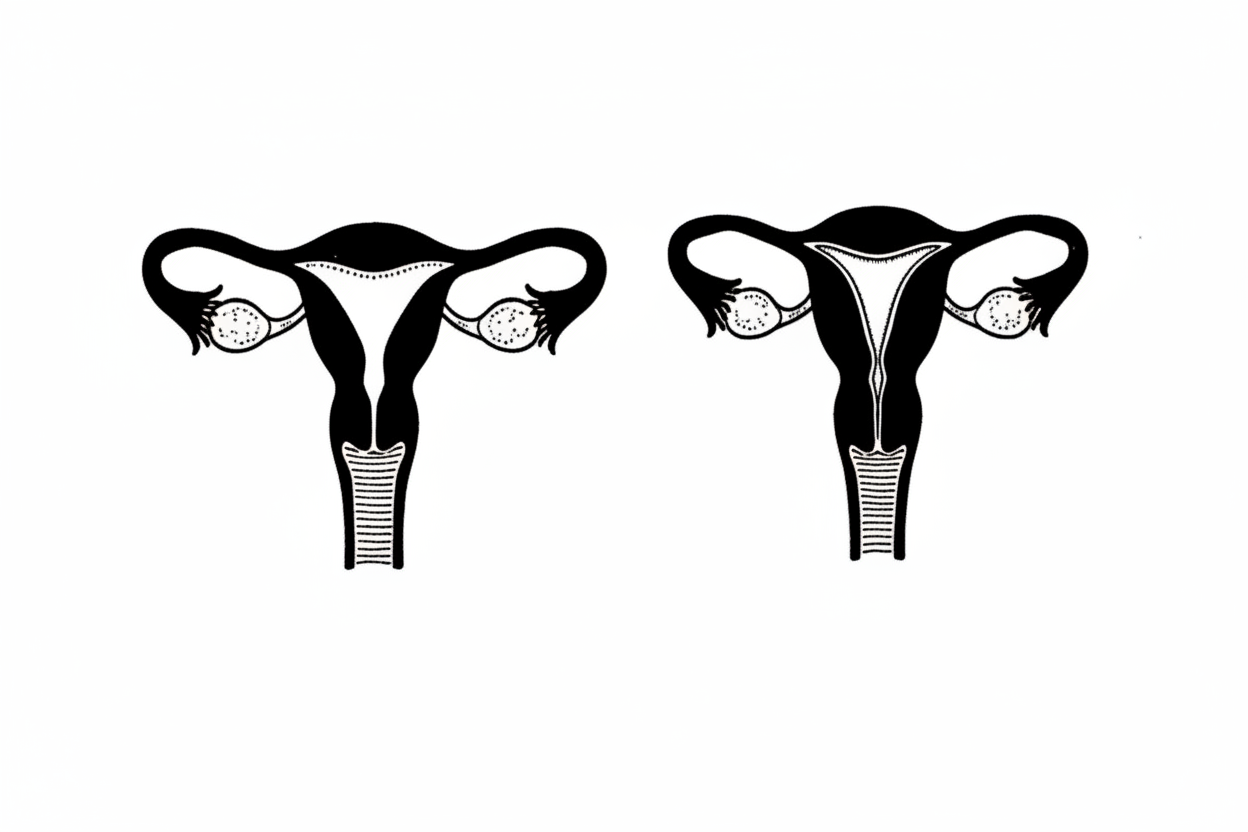
This diagram highlights the key areas where subfertility can occur: the ovaries (ovulatory factors), the fallopian tubes (tubal factors), and the uterine cavity.
I'll pull up some high-yield lessons that cover the NICE guidelines in detail so you can dive deeper into the specifics of semen analysis and tubal patency tests.
📚 Subfertility Lessons
Finally, let's see how well you can apply this to clinical scenarios with a quick quiz.
✍️ Subfertility Quiz
Tap to practice questions in the Oncourse app
I hope this breakdown helps you master the subfertility topic for your AKT! Remember, the "1-year rule" is the baseline, but always keep an eye out for those "early referral" scenarios like age >35 or a history of PID. Good luck with your studies!
Setting up chat...