Red flag symptoms: when to suspect serious pathology in common presentations
 Rezzy
RezzyIn medicine, "red flags" are those specific clinical findings that should make your internal alarm bells go off. They suggest that a seemingly common presentation might actually be a life- or limb-threatening condition hiding in plain sight.
Let me find some visual guides to help you categorize these critical warning signs.
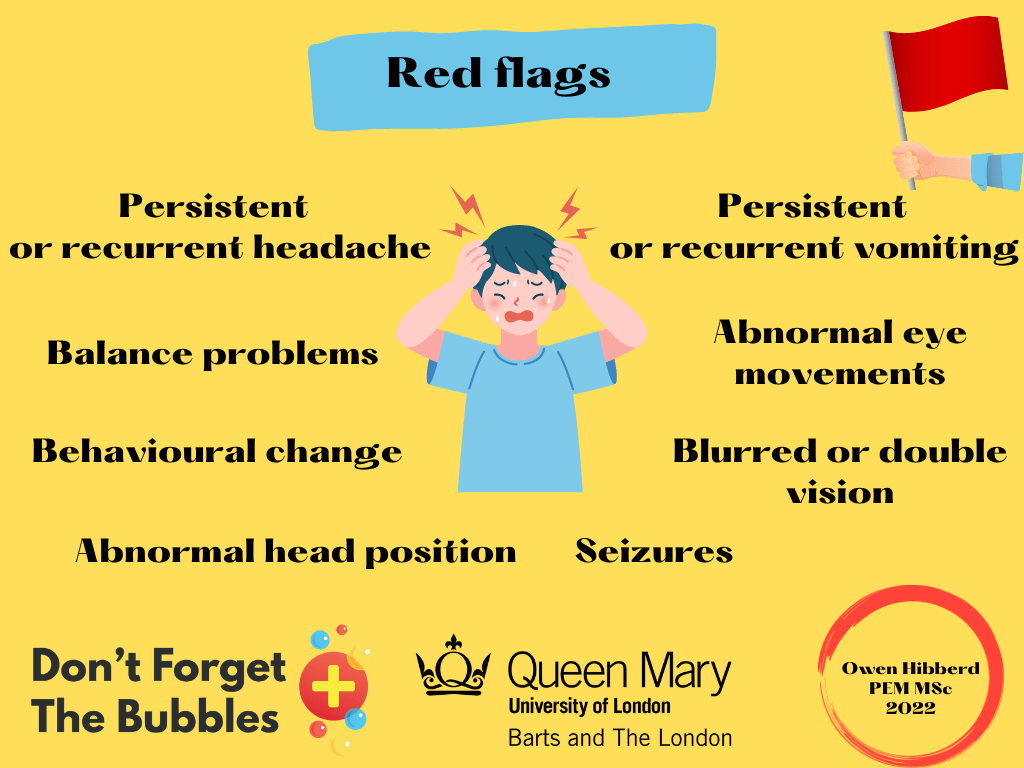
That's a great visual for neurological red flags. Beyond headaches, we need to be equally vigilant with other common complaints like back pain or chest pain.
I've put together a comprehensive summary table of the most high-yield red flags you'll encounter on the wards and in your exams.
Red Flags in Common Presentations
| Presentation | Red Flag Symptoms | Suspected Serious Pathology |
|---|---|---|
| Low Back Pain | Saddle anesthesia, urinary retention, fecal incontinence, bilateral sciatica | Cauda Equina Syndrome |
| Fever, IV drug use, recent infection | Spinal Epidural Abscess / Osteomyelitis | |
| History of malignancy, weight loss, pain worse at night/supine | Spinal Metastasis | |
| Headache | "Thunderclap" (sudden onset, maximal intensity), fever, neck stiffness | Subarachnoid Hemorrhage / Meningitis |
| New onset >50 years, jaw claudication, scalp tenderness | Giant Cell Arteritis | |
| Papilledema, focal neuro deficits, worse with Valsalva | Intracranial Mass / Increased ICP | |
| Chest Pain | Tearing pain radiating to back, unequal BP in arms | Aortic Dissection |
| Pleuritic pain, tachycardia, calf swelling, immobilization | Pulmonary Embolism | |
| Diaphoresis, nausea, radiation to jaw/left arm | Acute Coronary Syndrome (ACS) | |
| Abdominal Pain | Rigid abdomen, rebound tenderness, guarding | Perforation / Peritonitis |
| Pulsatile abdominal mass, hypotension | Abdominal Aortic Aneurysm (AAA) | |
| Pain out of proportion to exam, history of AFib | Mesenteric Ischemia |
That table covers the "must-know" scenarios for your rotations and the USMLE. Remember, the presence of even one of these should prompt immediate further investigation or stabilization.
To help you dive deeper into the management of these emergencies, I'll pull up some relevant lessons and flashcards.
📚 Emergency Medicine Lessons
Those lessons are perfect for mastering the clinical reasoning behind these red flags. Now, let's grab some flashcards so you can test your recall on these critical symptoms.
🗂️ Red Flags Flashcards
Tap to study 34 flashcards in the Oncourse app
Those flashcards are a great way to drill down on the specifics, like the difference between Cauda Equina and Conus Medullaris—a classic exam trap!
To summarize, always keep these "Big Four" categories in mind when evaluating a patient:
- Neurological deficits: Weakness, numbness, or bowel/bladder changes.
- Systemic symptoms: Fever, weight loss, or night sweats.
- Vascular clues: Asymmetric pulses or "tearing" pain.
- Trauma/History: Recent falls, malignancy, or IV drug use.
Would you like to try a quick game of Synapses to see if you can group these red flags with their corresponding serious pathologies? It's a fun way to make sure these connections are locked in!
Setting up chat...