Infertility: causes, investigations, IVF and assisted reproductive techniques
 Rezzy
RezzyInfertility is a journey that many couples face, and for medical exams, it's a high-yield topic that requires a systematic approach. By definition, we're looking at the inability to conceive after 12 months of regular, unprotected intercourse (or 6 months if the woman is over 35).
Let's break this down into the "who, why, and how" of management.
1. The Causes: It's a Team Effort
Infertility factors are generally split between female factors (40-50%), male factors (30-40%), and unexplained or combined factors (20%).
Female Factors:
- Ovulatory Dysfunction (40%): Think PCOS (most common), premature ovarian failure, or hyperprolactinemia.
- Tubal/Pelvic Factors (40%): Pelvic Inflammatory Disease (PID), endometriosis, or previous tubal surgeries.
- Uterine/Cervical Factors: Fibroids (especially submucosal), uterine synechiae (Asherman syndrome), or congenital anomalies.
Male Factors:
- Pre-testicular: Hypogonadotropic hypogonadism.
- Testicular: Varicocele (most common reversible cause), cryptorchidism, or genetic issues like Klinefelter syndrome.
- Post-testicular: Obstructive azoospermia (e.g., post-vasectomy or CF-related absence of vas deferens).
2. Investigations: The Workup
We always start with the least invasive tests first.
For the Male:
- Semen Analysis: This is the cornerstone. We look at count, motility, and morphology. If abnormal, we repeat it in 4-6 weeks.
For the Female:
- Ovulation Confirmation: Mid-luteal (Day 21) progesterone levels. A level
> 3 ng/mLsuggests ovulation. - Ovarian Reserve: Anti-Müllerian Hormone (AMH) or Antral Follicle Count (AFC) via ultrasound.
- Tubal Patency: Hysterosalpingography (HSG) is the standard first-line imaging. If we need a closer look, we go for Laparoscopy + Chromopertubation (the "gold standard").
3. Assisted Reproductive Technology (ART)
When lifestyle changes or ovulation induction (like Clomiphene or Letrozole) don't work, we move to ART.
- Intrauterine Insemination (IUI): Prepared sperm is placed directly into the uterus. Best for mild male factor or cervical issues.
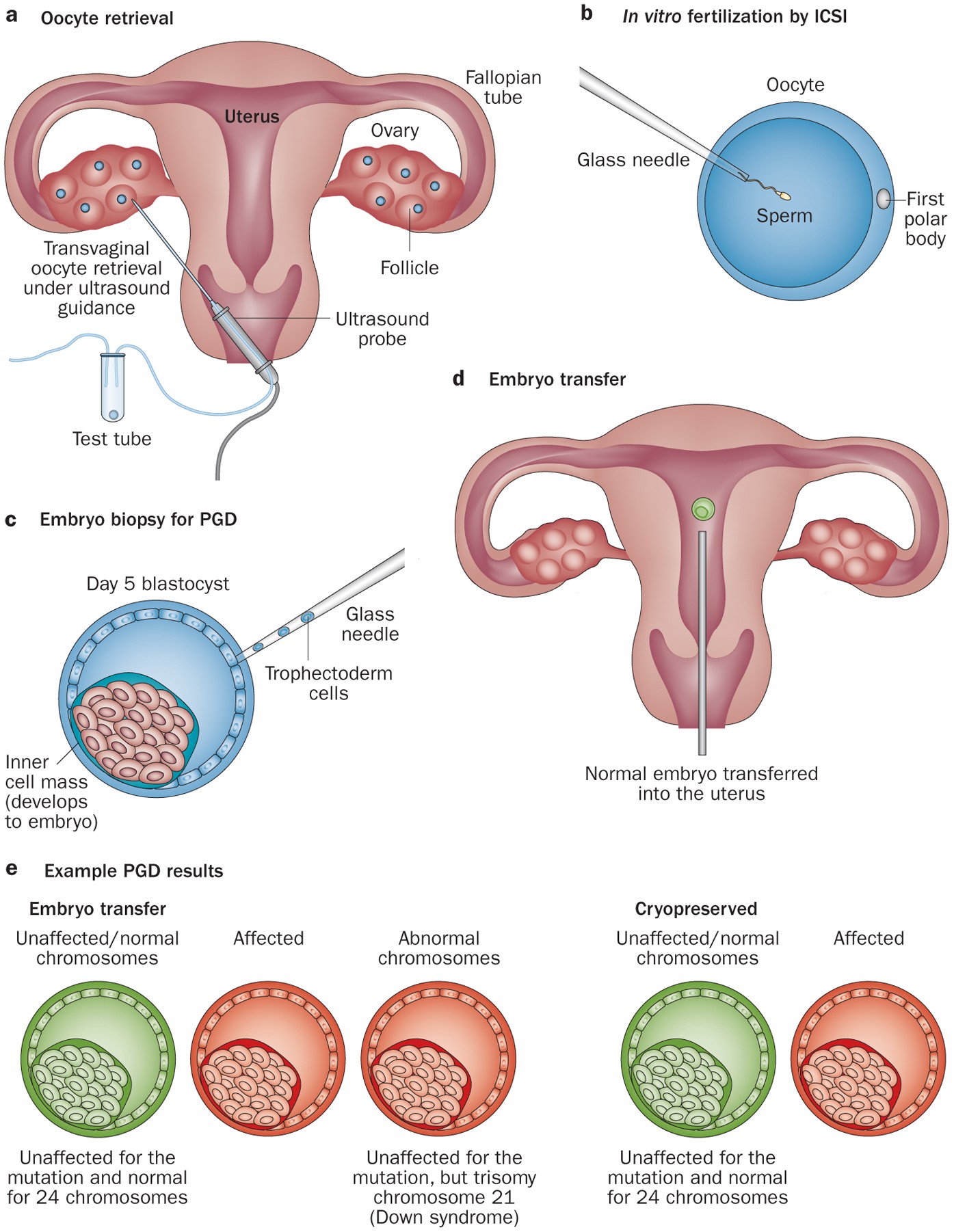
- In Vitro Fertilization (IVF): Eggs are harvested, fertilized in a lab, and the resulting embryo is transferred back to the uterus.
- Intracytoplasmic Sperm Injection (ICSI): A single sperm is injected directly into an egg. This is the "go-to" for severe male factor infertility.
I've got some great resources to help you dive deeper into these protocols and the specific diagnostic algorithms.
📚 Infertility Lessons
Visualizing the steps of IVF can really help you remember the sequence of events, from ovarian stimulation to embryo transfer. Let me find a clear diagram for you.
This diagram provides a comprehensive look at the IVF process, from the initial egg retrieval to the final embryo transfer. It even includes the option for Preimplantation Genetic Diagnosis (PGD), which is often used to screen for genetic conditions before the embryo is transferred.
To wrap things up, let's test your knowledge with a quick quiz on infertility and ART. This will help you identify any areas that might need a bit more review.
✍️ Infertility & ART Quiz
Tap to practice questions in the Oncourse app
That's a solid overview of infertility and ART! Remember, the workup is always a team effort, and the choice of ART depends heavily on the specific cause identified.
High-Yield Tip: For your exams, keep in mind that Varicocele is the most common reversible cause of male infertility, while PCOS is the most common cause of ovulatory dysfunction in women.
Good luck with the quiz! Let me know if you have any more questions.
Setting up chat...