Total hip and knee arthroplasty: indications and complications
 Rezzy
RezzyArthroplasty is a total game-changer for patients with end-stage joint disease. Whether it's the hip or the knee, the goal is the same: get rid of the pain and get the patient moving again!
Indications for Arthroplasty
The primary reason we do these surgeries is chronic, debilitating pain that hasn't responded to conservative management (like NSAIDs, physical therapy, or injections).
- Osteoarthritis (OA): By far the most common reason.
- Rheumatoid Arthritis (RA): And other inflammatory arthritides.
- Post-traumatic Arthritis: Following a fracture or ligament injury.
- Avascular Necrosis (AVN): Especially common in the hip.
- Congenital Deformities: Like developmental dysplasia of the hip (DDH).
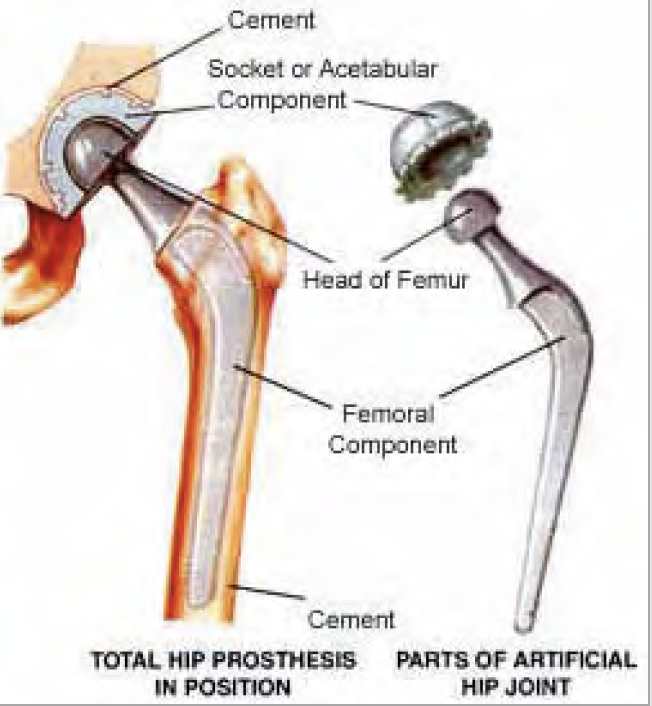
Let me pull up some diagrams to show you exactly what these replacements look like.
Here is a look at the components of a total hip replacement. You can see the acetabular cup, the femoral head, and the stem that goes into the femur.
Complications of Arthroplasty
While these surgeries are generally very successful, they do come with risks. We can divide them into general surgical risks and joint-specific ones.
General Complications:
- Venous Thromboembolism (VTE): DVT and PE are huge concerns, which is why we use prophylaxis (like aspirin or LMWH).
- Infection: Periprosthetic joint infection (PJI) is a nightmare scenario that often requires revision surgery.
Specific to Hip (THA):
- Dislocation: Most common in the first few months.
- Leg Length Discrepancy: A common patient complaint.
- Nerve Injury: Specifically the sciatic nerve.
Specific to Knee (TKA):
- Arthrofibrosis: Excessive scarring leading to a stiff knee.
- Peroneal Nerve Palsy: Can lead to foot drop.
- Patellar Maltracking: Issues with how the kneecap moves.
Let's find some lessons that go deeper into the surgical techniques and management.
📚 Arthroplasty Lessons
Those lessons will give you a deep dive into the surgical steps and specific management protocols. To help you lock in the key facts about complications and indications, I've pulled some flashcards for you to review.
🗂️ Arthroplasty Flashcards
Tap to study 15 flashcards in the Oncourse app
Those flashcards cover the high-yield points you'll likely see on exams. Remember, the key to arthroplasty questions is often identifying the right patient (failed conservative management) and recognizing the early signs of complications like infection or dislocation.
If you want to test your knowledge with some practice questions, just let me know!
Setting up chat...