High-risk pregnancy: risk factors, monitoring and management
 Rezzy
RezzyHigh-risk pregnancy is a huge topic for the USMLE, especially Step 2 CK! Essentially, we’re talking about any pregnancy where the health of the mom, the baby, or both is at higher risk than usual. It requires a lot of "eyes-on" management and often a multidisciplinary team.
To get us started, I've put together a breakdown of the major risk factors we look out for during the initial prenatal visit.
| Category | Risk Factors |
|---|---|
| Maternal Characteristics | Age <17 or >35 (Advanced Maternal Age), BMI <18.5 or >30, low socioeconomic status. |
| Pre-existing Medical Conditions | Chronic HTN, Diabetes (Type 1 or 2), SLE, Antiphospholipid syndrome, Chronic Kidney Disease, HIV/AIDS. |
| Previous Pregnancy History | Prior preterm birth, recurrent miscarriages, prior stillbirth, or history of Preeclampsia/Eclampsia. |
| Current Pregnancy Issues | Multiple gestations (twins+), Gestational Diabetes (GDM), Preeclampsia, Placenta Previa, or IUGR. |
| Lifestyle/Environmental | Smoking, alcohol use, illicit drug use (especially cocaine/opioids), or exposure to teratogens. |
Monitoring these pregnancies is all about checking the fetal well-being and the maternal status. For the fetus, we use a few key tools:
- Non-Stress Test (NST): We look for a "reactive" result (2+ accelerations in 20 mins). If it's non-reactive, we move to a BPP.
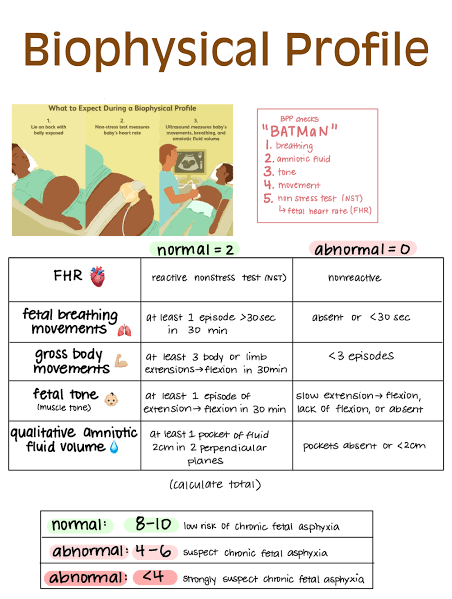
- Biophysical Profile (BPP): This is the "gold standard" ultrasound assessment. It scores 5 parameters: NST, Fetal Breathing, Fetal Movement, Fetal Tone, and Amniotic Fluid Volume (AFV). A score of 8-10 is normal; 4 or less usually means delivery is imminent.
- Umbilical Artery Doppler: Used specifically in cases of Intrauterine Growth Restriction (IUGR) to check for "absent or reversed end-diastolic flow," which is a major red flag.
Let me find a diagram that breaks down the BPP components for you—it's a classic exam topic.
The BPP is a critical tool for assessing fetal well-being. Here's a breakdown of the components and how we score them:
Management of a high-risk pregnancy is all about proactive prevention and timing the delivery to balance the risks of staying in (fetal distress) versus coming out (prematurity).
- Preeclampsia Prevention: If a patient has high-risk factors (like prior preeclampsia or chronic HTN), we start low-dose Aspirin (81 mg) daily between 12 and 28 weeks.
- Gestational Diabetes (GDM): We start with diet and exercise, but if glucose isn't controlled, Insulin is the first-line medication (Metformin is also used).
- Preterm Labor Risk: If delivery is likely before 34 weeks, we give Antenatal Corticosteroids (like Betamethasone) to speed up fetal lung maturity.
- Delivery Timing: This is the big one! For example, we deliver at 34 weeks for severe preeclampsia, but we might wait until 37-39 weeks for well-controlled GDM.
I'll pull up some specific lessons on these high-risk conditions so you can dive deeper into the management of each one.
📚 High-Risk OB Lessons
Those lessons are perfect for getting into the nitty-gritty of each condition. Remember, for the USMLE, the BPP score and the timing of delivery are the most frequently tested management points.
If you're feeling confident about the risk factors and monitoring, we could try a quick game to see if you can group the BPP components or identify the high-risk management steps. Or, if you're ready to test your knowledge with some practice questions, I can pull up a quiz for you!
What sounds better—a game or some practice questions?
Setting up chat...