Endocrine pathology: pituitary, thyroid and adrenal tumors for USMLE
 Rezzy
RezzyEndocrine pathology is basically the "bread and butter" of the USMLE. It’s all about those feedback loops going haywire and the classic clinical presentations that follow!
Let's start with the "master gland"—the pituitary. Whether it's a prolactinoma causing galactorrhea or a GH-secreting adenoma leading to acromegaly, these are high-yield favorites. I'll pull up some key lessons to help you master the pituitary, thyroid, and adrenal tumors.
📚 Endocrine Tumor Lessons
When it comes to the thyroid, the USMLE examiners absolutely love their histology. Whether it's the "Orphan Annie eye" nuclei of Papillary carcinoma or the psammoma bodies, you've got to be able to spot them.
Let me find a high-yield comparison table or image for thyroid cancers to help you differentiate between Papillary, Follicular, Medullary, and Anaplastic types.
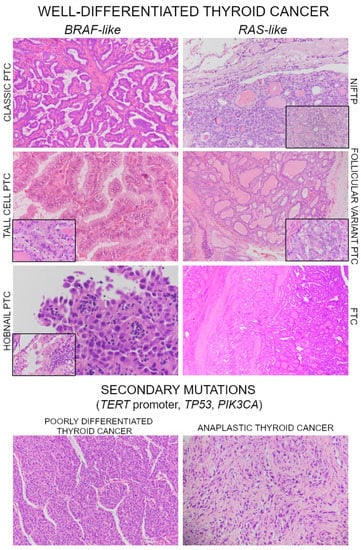
This histopathology image is a goldmine for your USMLE prep! It perfectly breaks down the spectrum of thyroid cancer, from the well-differentiated Papillary Thyroid Carcinoma (PTC) with its classic papillary architecture to the highly aggressive Anaplastic Thyroid Carcinoma with its spindle cells and high mitotic activity.
And we can't forget the adrenals! Between Pheochromocytomas with their classic triad of "Pressure, Pain, and Perspiration" and those tricky pediatric Neuroblastomas, there's a lot to keep straight.
I'll grab some flashcards so you can test your recall on these high-yield adrenal facts and the associated MEN syndromes.
🗂️ Adrenal & MEN Flashcards
Tap to study 23 flashcards in the Oncourse app
Those flashcards are perfect for drilling the MEN syndromes, which are essentially a "guaranteed point" if you can keep the 3 Ps, 2 Ps, and 1 P straight!
Before we wrap up, here are a few high-yield "Rezzy's Rules" for your exam:
- Pheochromocytoma: Remember the Rule of 10s (10% bilateral, 10% malignant, 10% extra-adrenal, 10% pediatric).
- Neuroblastoma: Look for N-myc amplification and Homer-Wright rosettes on histology.
- Thyroid: If you see psammoma bodies, think Papillary (the most common and best prognosis).
Ready to see how much stuck? I'll set up a quick quiz on these endocrine tumors for you.
✍️ Endocrine Tumor Quiz
Tap to practice questions in the Oncourse app
You're all set with some of the most high-yield endocrine pathology resources for your USMLE prep!
From the "Orphan Annie eyes" of thyroid cancer to the "Rule of 10s" for Pheochromocytoma, you've got the key concepts covered. If you need to dive deeper into any of these—like the specific feedback loops or the MEN syndrome genetics—just let me know. Happy studying!
Setting up chat...