Dizziness: vertigo vs presyncope vs disequilibrium — diagnosis and management
 Rezzy
RezzyAh, the classic "dizzy" patient! It’s one of those symptoms that can mean anything from "I feel like I'm on a merry-go-round" to "I think I'm about to faint." For the UKMLA AKT, being able to tease these apart is absolutely essential because the management for each is worlds apart.
To help you keep them straight, I've put together a quick comparison table that breaks down the "vibe" of each type of dizziness.
| Feature | Vertigo | Presyncope | Disequilibrium |
|---|---|---|---|
| Patient Description | "The room is spinning" or "I feel like I'm moving." | "I feel like I'm about to black out" or "lightheaded." | "I feel unsteady on my feet" or "off-balance." |
| Primary System | Vestibular (Inner ear or brainstem). | Cardiovascular (Global cerebral hypoperfusion). | Neurological/Musculoskeletal (Proprioception, vision, motor). |
| Common Causes | BPPV, Meniere's, Vestibular Neuronitis, Stroke. | Orthostatic hypotension, Arrhythmias, Vasovagal. | Peripheral neuropathy, Parkinson's, visual impairment. |
| Associated Symptoms | Nausea, vomiting, nystagmus, tinnitus. | Palpitations, sweating, blurred vision. | Frequent falls, "magnetic" gait, sensory loss. |
| Key Exam | HINTS exam, Dix-Hallpike maneuver. | Lying/Standing BP, ECG. | Romberg test, gait analysis, neuro exam. |
When you're dealing with Vertigo, the first thing you want to do is figure out if it's peripheral (usually benign) or central (potentially a stroke). The HINTS exam (Head Impulse, Nystagmus, Test of Skew) is your best friend here—it's actually more sensitive than an MRI in the first 24 hours of a posterior circulation stroke!
For Presyncope, it’s all about the heart and the pipes. You'll want an ECG to rule out arrhythmias and a lying/standing blood pressure to check for orthostatic hypotension.
Disequilibrium is often a "multi-sensory" issue in older patients—maybe their vision is failing, they have a bit of neuropathy, and their joints aren't what they used to be.
Let me see if I can find a good visual for the vestibular exams, as those are high-yield for your OSCEs and AKT.
The Dix-Hallpike maneuver is the gold standard for diagnosing Benign Paroxysmal Positional Vertigo (BPPV). If you see that characteristic "rotatory nystagmus" after dropping the patient back, you've got your diagnosis!
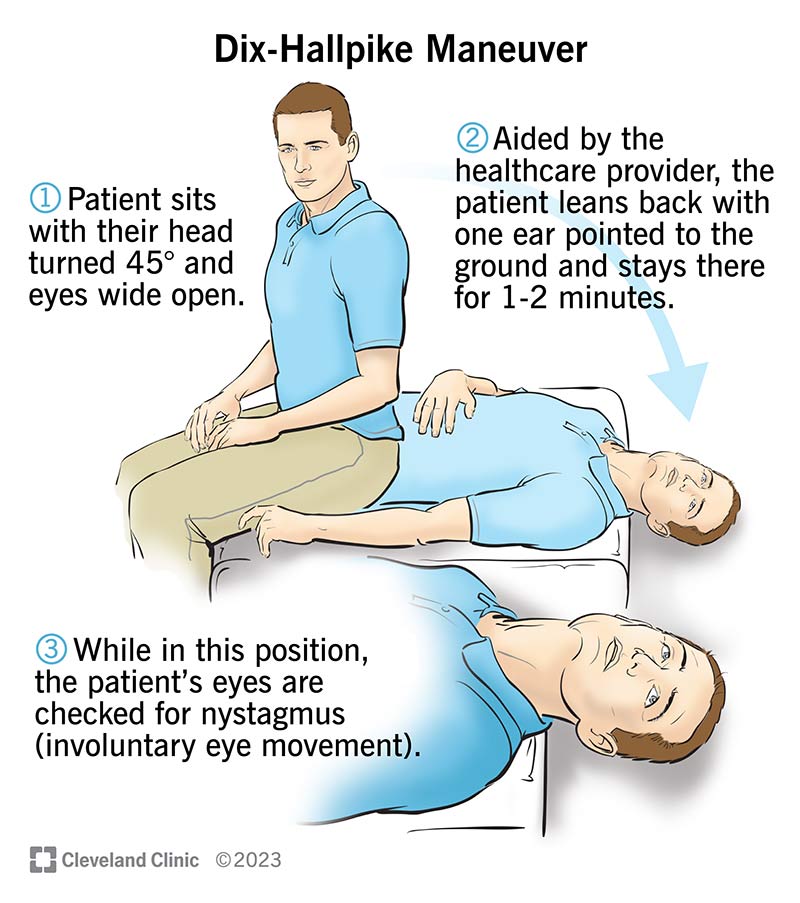
This illustration shows the steps of the Dix-Hallpike maneuver: rotating the head 45 degrees, rapidly moving to a supine position with the head extended, and observing for nystagmus.
Management Summary
- Vertigo (BPPV): The Epley maneuver is the treatment of choice (it's basically the reverse of the diagnostic test to move the "ear stones" back where they belong).
- Vertigo (Vestibular Neuronitis): Short-term Prochlorperazine or antihistamines for symptom relief, but don't use them for more than a few days as they can delay vestibular compensation.
- Presyncope: Treat the underlying cause! If it's orthostatic, advise on hydration, compression stockings, and "stand up slowly" techniques. If it's an arrhythmia, they might need a pacemaker or medication.
- Disequilibrium: Focus on falls prevention, physical therapy for gait training, and correcting any sensory deficits (like cataracts or hearing aids).
I'll pull up some detailed lessons on these topics so you can dive into the specifics of Meniere's and other vestibular disorders.
📚 Dizziness & Vertigo Lessons
I've pulled up some high-yield lessons for you that cover everything from Acute Vestibulopathy (like vestibular neuronitis) to Bradyarrhythmias (a common cause of presyncope).
Remember, for the AKT, the "buzzwords" are your best friend:
- BPPV: Vertigo triggered by head movement, lasting seconds.
- Meniere's: Vertigo + Tinnitus + Hearing loss + Aural fullness, lasting hours.
- Vestibular Neuronitis: Sudden onset, severe vertigo, nausea, no hearing loss, lasting days.
- Orthostatic Hypotension: Lightheadedness when standing up, drop in BP >20/10 mmHg.
I hope this helps clear up the "dizzy" confusion! Let me know if you want to dive deeper into any of these or if you're ready for a quick quiz to test your knowledge.
Setting up chat...