COPD annual review: MRC dyspnoea scale, inhaler technique and exacerbation plan
 Rezzy
RezzyThe COPD annual review is a cornerstone of primary care management in the UK. It's our chance to make sure patients aren't just "getting by," but are actually optimized to stay out of the hospital.
The MRC (Medical Research Council) Dyspnoea Scale is the standard tool we use to grade how much breathlessness is impacting a patient's daily life. It's a simple 1-5 scale that helps us decide when it's time to step up treatment.
I've put together the MRC scale for you here so you can see exactly how we grade it during a review.
| Grade | Degree of Breathlessness |
|---|---|
| 1 | Not troubled by breathlessness except on strenuous exercise. |
| 2 | Short of breath when hurrying on the level or walking up a slight hill. |
| 3 | Walks slower than most people of the same age on the level because of breathlessness or has to stop for breath when walking at own pace. |
| 4 | Stops for breath after walking about 100 yards or after a few minutes on the level. |
| 5 | Too breathless to leave the house, or breathless when dressing or undressing. |
Beyond the MRC score, the annual review focuses heavily on two practical areas:
1. Inhaler Technique
It sounds basic, but poor technique is one of the biggest reasons for treatment failure. During the review, we:
- Observe the patient using their device.
- Check for coordination: Many patients struggle with Metered Dose Inhalers (MDIs); if they do, we switch to a Dry Powder Inhaler (DPI) or add a spacer.
- Check Inspiratory Flow: DPIs need a "fast and deep" breath, while MDIs need "slow and steady."
2. Exacerbation Plan (Self-Management)
We want patients to feel empowered to act early. A standard plan includes:
- Recognizing a "flare-up": Increased breathlessness, change in sputum color, or increased cough.
- Rescue Packs: Providing a standby supply of Prednisolone (usually 30mg for 5 days) and an antibiotic (like Amoxicillin or Doxycycline) to start if symptoms worsen.
- Safety Netting: Clear instructions on when to call the GP or 999 (e.g., if they feel confused, have chest pain, or aren't improving with rescue meds).
Let me find some high-yield lessons on COPD management and a visual to help you visualize the diagnostic pathway.
📚 COPD Management Lessons
I've found a great management algorithm that aligns with the NICE guidelines we use in the UK. It covers everything from initial diagnosis to the step-up therapy we consider during these annual reviews.
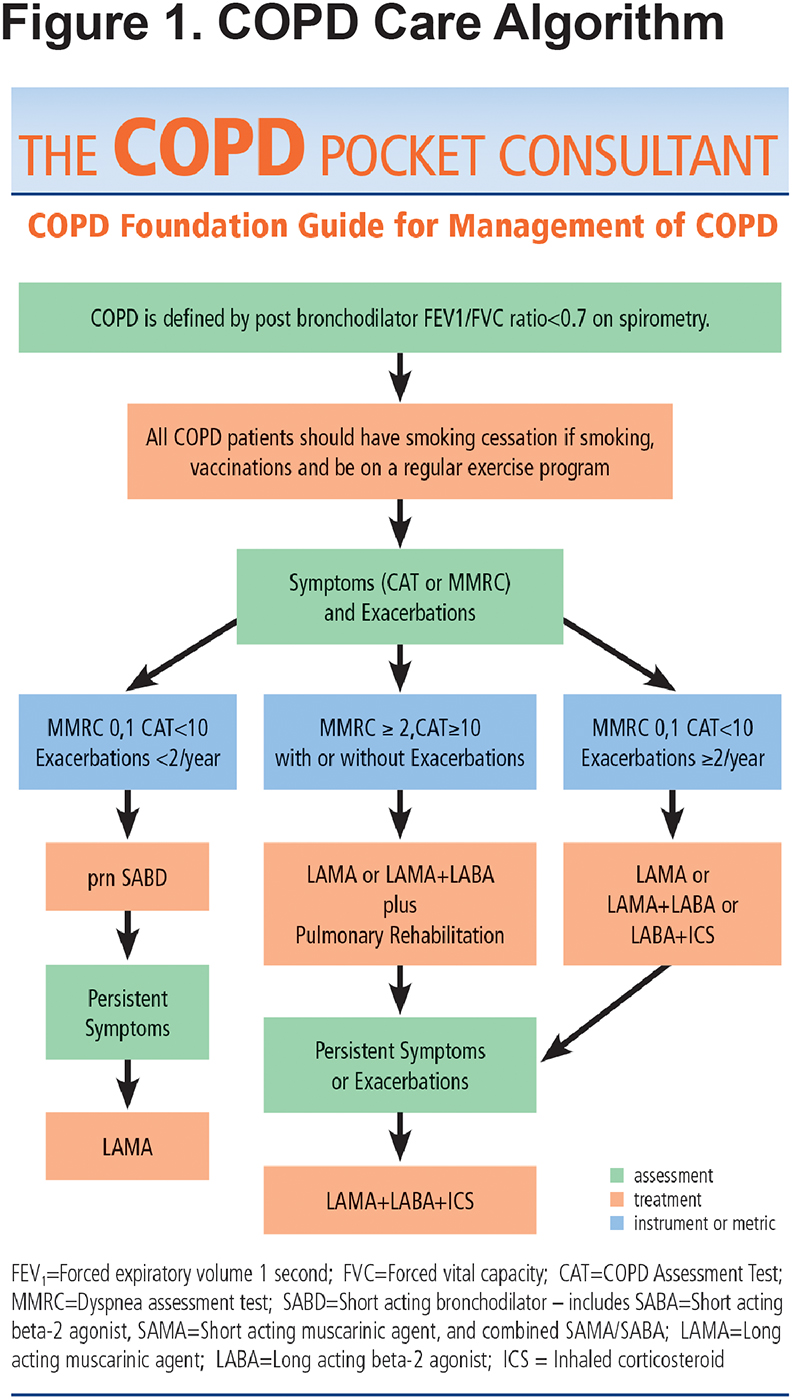
This algorithm is a great reference for your AKT prep, as it clearly shows the step-up from LAMA/LABA monotherapy to dual and triple therapy based on those MRC scores and exacerbation history.
If you're feeling confident with the theory, we could try a quick clinical case to see how you'd handle a patient presenting for their review! Just let me know.
Setting up chat...