Brain neuroanatomy: cerebral cortex lobes, blood supply and stroke syndromes
 Rezzy
RezzyOh, neuroanatomy! This is the "command center" stuff that's absolutely high-yield for your exams. Let's start by mapping out the four main lobes of the cerebral cortex and what they actually do.
I'll pull up a clear diagram of the brain's lobes so you can visualize where everything sits before we dive into the blood supply.
Here is a great overview of the lateral surface of the brain. Notice how the Central Sulcus separates the motor functions (Frontal) from the sensory functions (Parietal).
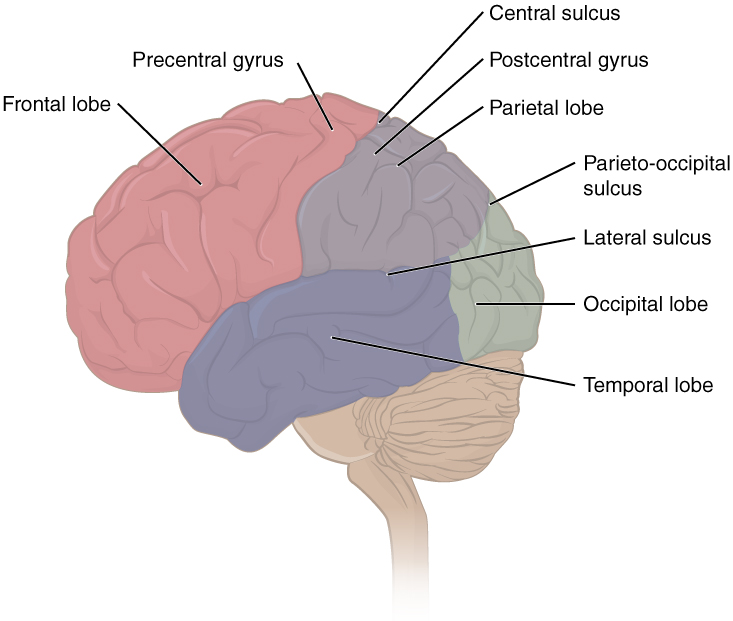
Now that we've got the "geography" down, let's talk about the "plumbing"—the blood supply. The brain is fed by the Internal Carotid Arteries (anterior circulation) and the Vertebral Arteries (posterior circulation), which meet at the base of the brain to form the Circle of Willis.
The three main cerebral arteries are:
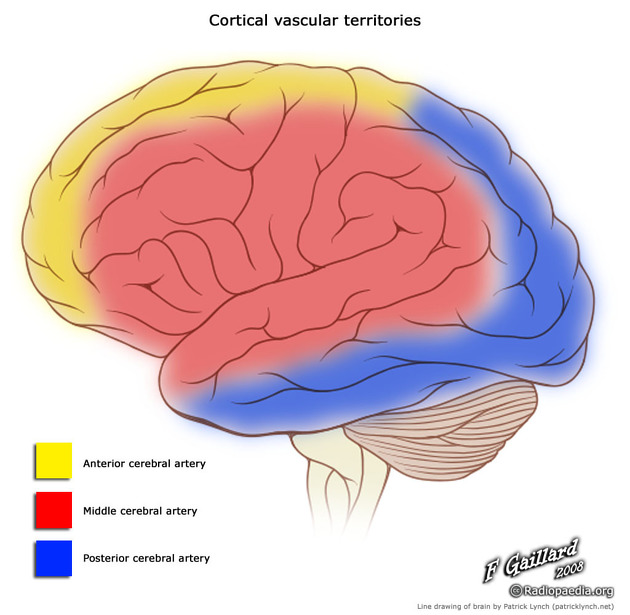
- Anterior Cerebral Artery (ACA): Supplies the medial surface of the frontal and parietal lobes (the "leg" area of the motor/sensory homunculus).
- Middle Cerebral Artery (MCA): Supplies the lateral surface of the frontal, parietal, and temporal lobes (the "face and arm" area, plus Broca's and Wernicke's areas).
- Posterior Cerebral Artery (PCA): Supplies the occipital lobe (vision) and the inferior part of the temporal lobe.
Let me find a diagram showing these specific vascular territories—it's the best way to understand why certain strokes cause specific symptoms.
This diagram is a lifesaver for exams. It shows exactly which artery supplies which part of the brain.
Now, let's connect the anatomy to the clinical picture. When one of these arteries is blocked, we get specific Stroke Syndromes.
1. Middle Cerebral Artery (MCA) Stroke
This is the most common stroke. Since the MCA covers the lateral surface (face and arm areas), you'll see:
- Contralateral hemiparesis and hemisensory loss (Face and Arm > Leg).
- Aphasia (if the dominant hemisphere, usually left, is involved):
- Broca's Aphasia: Non-fluent speech, but comprehension is intact.
- Wernicke's Aphasia: Fluent but nonsensical speech ("word salad"), comprehension is impaired.
- Hemineglect (if the non-dominant hemisphere, usually right, is involved).
2. Anterior Cerebral Artery (ACA) Stroke
The ACA supplies the medial surface (leg area), so you'll see:
- Contralateral hemiparesis and hemisensory loss (Leg > Face and Arm).
- Urinary incontinence (due to involvement of the micturition center in the frontal lobe).
- Personality changes or cognitive deficits (frontal lobe involvement).
3. Posterior Cerebral Artery (PCA) Stroke
The PCA supplies the occipital lobe, so the main symptom is:
- Contralateral homonymous hemianopia with macular sparing.
- Thalamic Syndrome: Contralateral sensory loss (if the thalamus is involved).
Rezzy's Tip: Remember the "Homunculus"! MCA = Face & Arm (lateral) ACA = Leg (medial)
I'll pull up some high-yield lessons and flashcards so you can lock this in.
📚 Stroke Syndromes Lessons
Those lessons cover the details of the Circle of Willis and the specific Stroke Syndromes in depth. To help you memorize the key differences between MCA, ACA, and PCA strokes, let's pull up some flashcards.
🗂️ Stroke Syndromes Flashcards
Tap to study 28 flashcards in the Oncourse app
Those flashcards are perfect for quick recall. Remember, the key to neuro is visualizing the Homunculus—the "map" of the body on the brain.
- ACA = Medial = Legs
- MCA = Lateral = Face & Arms
- PCA = Posterior = Vision
If you're feeling confident, we could try a quick game of Synapses to see if you can group these symptoms with their correct arteries. Or, if you'd rather keep reading, just let me know!
Setting up chat...