Atypical bacteria: Mycoplasma, Chlamydia, Legionella comparison
 Rezzy
RezzyAh, the "atypical" squad! These guys are called atypical because they don't show up on a standard Gram stain (they either lack a cell wall or live inside your cells) and they don't respond to the usual beta-lactam antibiotics like penicillins.
They all cause "walking pneumonia," but they each have their own unique personality and clinical clues that show up on exams. Let's break down how to tell them apart.
The Atypical Comparison
| Feature | Mycoplasma pneumoniae | Chlamydia pneumoniae/psittaci | Legionella pneumophila |
|---|---|---|---|
| Patient Profile | Young adults, military recruits, dorm residents | C. psittaci: Bird owners/vets | Older smokers, chronic lung disease, organ transplant |
| Transmission | Respiratory droplets | Respiratory droplets (psittaci via bird droppings) | Aerosolized water (AC units, cooling towers) |
| Unique Symptoms | Bullous myringitis (ear pain), dry cough | C. psittaci: High fever, splenomegaly | GI symptoms (diarrhea), CNS symptoms (confusion) |
| Lab Findings | Cold agglutinins (IgM) | Inclusion bodies on Giemsa stain | Hyponatremia (low sodium) |
| Diagnosis | PCR or Serology | PCR or Serology | Urinary antigen test |
| Treatment | Macrolides or Doxycycline | Macrolides or Doxycycline | Fluoroquinolones or Macrolides |
High-Yield "Atypical" Pearls
- Mycoplasma: Think of the "young person with a nagging cough." It can cause a patchy infiltrate on X-ray that looks way worse than the patient actually feels. Watch out for Stevens-Johnson Syndrome or Erythema Multiforme as rare complications!
- Chlamydia: C. psittaci is the classic "parrot fever." If the question mentions a pet shop worker or someone who just bought a bird, that's your answer.
- Legionella: This is the "heavy hitter" of the group. It causes a very high fever and is the only one that consistently gives you diarrhea and low sodium. It also doesn't spread person-to-person!
I'll pull up some lessons so you can dive deeper into the specific pathophysiology of each one.
📚 Atypical Pneumonia Lessons
Those lessons cover the high-yield microbiology and clinical features of each one. Since Mycoplasma is the most common cause of atypical pneumonia, I'll find a diagram of its unique structure and how it attaches to the respiratory epithelium.
The image below shows the respiratory epithelium where Mycoplasma likes to hang out. It uses a specialized attachment organelle to bind to the base of the cilia, which eventually leads to ciliostasis (the cilia stop moving) and that classic dry, persistent cough.
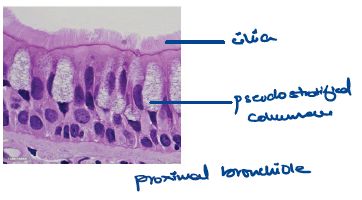
This micrograph shows the ciliated pseudostratified columnar epithelium of the respiratory tract. Mycoplasma pneumoniae attaches to the base of these cilia, causing damage and inhibiting mucociliary clearance.
Since these atypical bugs are so high-yield for exams, would you like to try a quick Synapses game to see if you can group their unique features correctly? It's a great way to make sure you don't mix up the "bird owner" with the "AC unit" patient!
Setting up chat...