ATLS protocols: primary and secondary survey for trauma
 Rezzy
RezzyAh, the ATLS protocols! This is the bread and butter of trauma management. Whether you're in the ER or prepping for the USMLE, mastering the Primary and Secondary Surveys is all about bringing order to the chaos of a trauma bay.
The Primary Survey is designed to identify and treat life-threatening injuries in a specific order of priority. We use the classic ABCDE mnemonic, and the golden rule here is: treat as you find. If you find an airway issue, you fix it before moving to breathing.
Here is a quick breakdown of the Primary Survey:
- A - Airway & C-spine protection: Is the airway patent? If they can talk, it's likely okay. Always assume a cervical spine injury in blunt trauma.
- B - Breathing & Ventilation: Look for tension pneumothorax, open pneumothorax, or massive hemothorax.
- C - Circulation & Hemorrhage Control: Check pulses, skin color, and level of consciousness. Control external bleeding and start fluid resuscitation if needed.
- D - Disability (Neurologic evaluation): Use the Glasgow Coma Scale (GCS) and check pupil size/reaction.
- E - Exposure & Environmental Control: Undress the patient completely to find hidden injuries, but keep them warm to prevent the "lethal triad" (acidosis, coagulopathy, hypothermia).
To help you visualize the flow, I've put together this algorithm for the Primary Survey.
Once the primary survey is done and the patient is stabilized, we move to the Secondary Survey. This is a thorough, head-to-toe evaluation where we look for injuries that weren't immediately life-threatening but still need attention (like fractures or minor lacerations).
A key part of this stage is getting the AMPLE history:
- A: Allergies
- M: Medications currently used
- P: Past medical history/Pregnancy
- L: Last meal (important for anesthesia risk!)
- E: Events/Environment related to the injury
During the physical exam, you'll perform a detailed check of the head, maxillofacial area, cervical spine, chest, abdomen, pelvis, and musculoskeletal system. Don't forget to log-roll the patient to check the back and spine!
Let me find a visual guide to help you remember the key areas of assessment in a trauma patient.
This diagram provides a great visual summary of the ABCDE approach we just discussed. It's a systematic way to ensure nothing is missed during those high-pressure first few minutes.
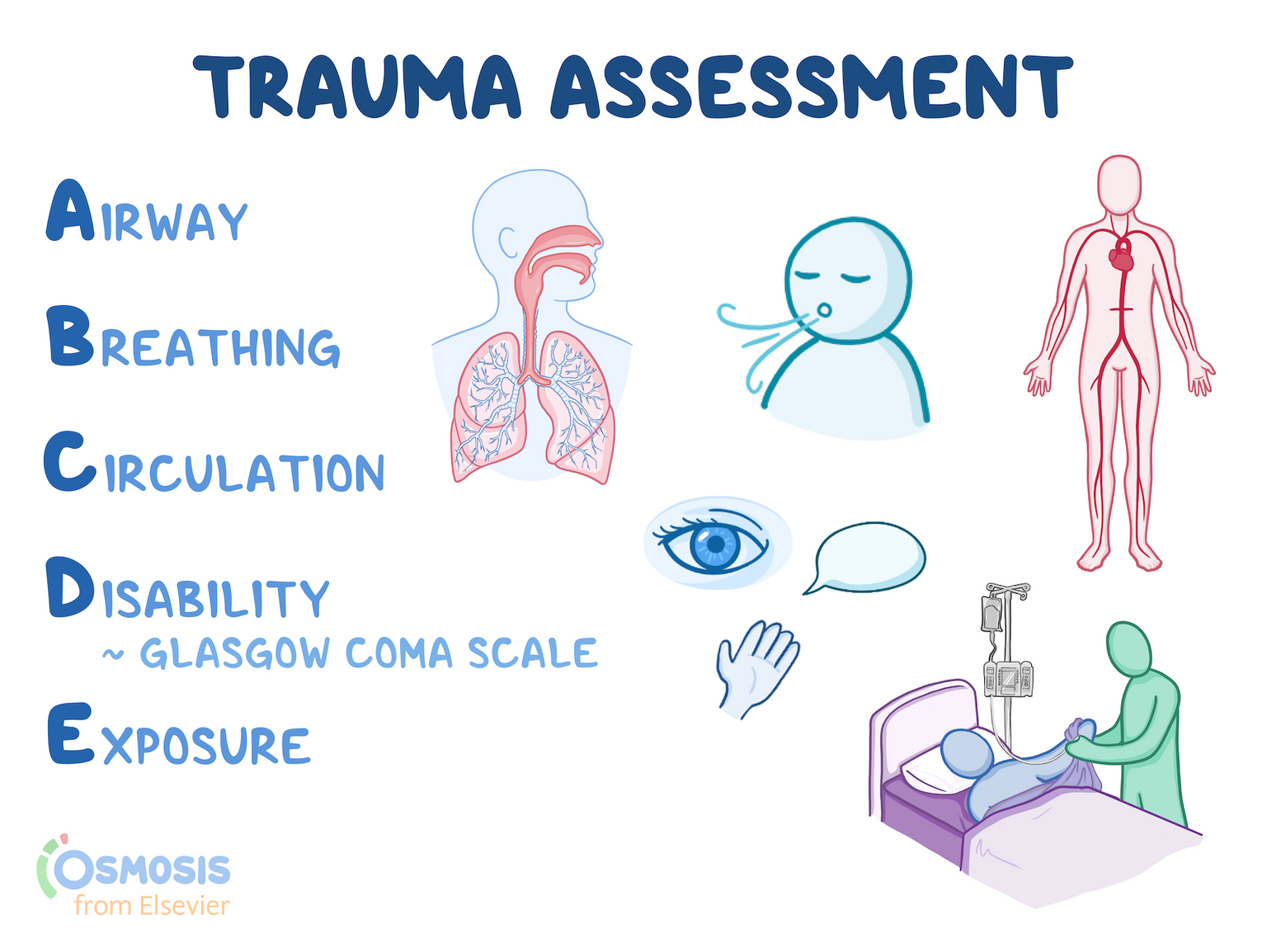
This diagram illustrates the systematic primary survey (ABCDE) for trauma assessment, including airway, breathing, circulation, disability (GCS), and exposure.
To dive deeper into the specifics of trauma management—like how to manage a tension pneumothorax or when to use a pelvic binder—I've pulled up some high-yield lessons for you.
📚 ATLS & Trauma Lessons
I've pulled up those lessons for you to explore. They'll give you a deeper look into the specific interventions for each stage of the survey.
Trauma management is all about muscle memory and staying calm under pressure. Do you feel ready to test your knowledge with a quick game, or would you like to dive into some practice questions?
Setting up chat...