Anaphylaxis: recognition, adrenaline dosing and post-reaction management
 Rezzy
RezzyAnaphylaxis is a true medical emergency, and for the UKMLA AKT, you really need to know the Resus Council UK guidelines inside out. It's all about rapid recognition and even faster action!
1. Recognition: The "ABC" Criteria
Anaphylaxis is likely when all three of the following are met:
- Sudden onset and rapid progression of symptoms.
- Life-threatening Airway, Breathing, or Circulation problems:
- Airway: Pharyngeal/laryngeal edema (hoarseness, stridor).
- Breathing: Bronchospasm (wheeze), tachypnea, cyanosis.
- Circulation: Hypotension, tachycardia, collapse.
- Skin/Mucosal changes: Flushing, urticaria (hives), or angioedema. ==Note: Skin changes are present in 80-90% of cases but can be absent in rapidly progressing anaphylaxis!==
2. Adrenaline Dosing (Intramuscular)
Adrenaline is the first-line treatment. For the AKT, you must memorize the IM doses (1:1000). The dose depends on the age of the patient:
| Age | Dose of Adrenaline (IM 1:1000) |
|---|---|
| Adults (>12 years) | 500 micrograms (0.5 mL) |
| Children 6-12 years | 300 micrograms (0.3 mL) |
| Children <6 years | 150 micrograms (0.15 mL) |
Key Point: If there is no improvement, repeat the IM dose every 5 minutes.
3. Post-Reaction Management
Once the patient is stable, the job isn't over. You need to prevent a "biphasic reaction" (a second peak of symptoms).
- Observation: Patients should be monitored for 6–12 hours from the onset of symptoms.
- Investigations: The gold standard is a Serial Mast Cell Tryptase test.
- Take the first sample as soon as possible.
- Second sample at 1-2 hours post-symptoms.
- Third sample at 24 hours (or at follow-up) to establish baseline.
- Discharge:
- Prescribe two Adrenaline Auto-injectors (AAIs) (e.g., EpiPen or Jext).
- Provide training on how to use them.
- Refer to a specialist Allergy Clinic.
I've got a great flowchart that breaks down the emergency algorithm and some lessons to help you lock this in. Let me pull those up for you!
📚 Anaphylaxis Lessons
I've found some excellent resources to help you master this topic for the AKT.
First, here is a clinical algorithm that shows the step-by-step management of hypersensitivity and anaphylaxis. While this specific chart mentions iron infusions, the Severe/Life-threatening pathway is the standard emergency protocol you'll use for any anaphylactic trigger.
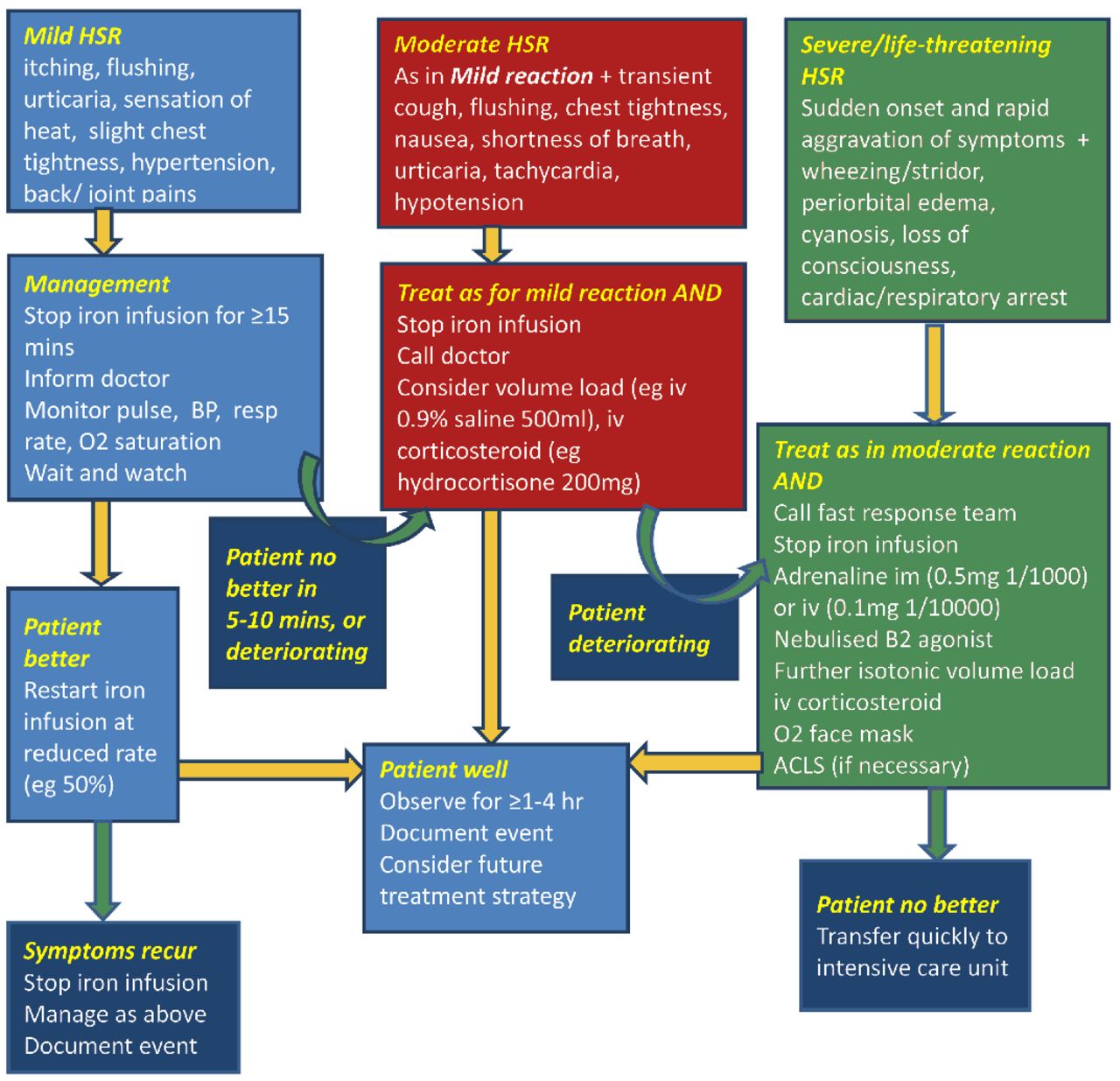
This algorithm highlights the critical transition from moderate symptoms to a life-threatening emergency where IM Adrenaline becomes the priority.
To help you memorize those specific doses and the post-reaction steps like tryptase testing, I've pulled up some high-yield flashcards. These are perfect for quick-fire revision!
🗂️ Anaphylaxis Flashcards
Tap to study 10 flashcards in the Oncourse app
Those flashcards cover the most common exam questions on adrenaline concentrations and age-specific doses.
One final tip for the AKT: if you're asked about the concentration of adrenaline for IM use, it's always 1:1,000. If you see 1:10,000, that's for IV use in cardiac arrest, so don't let them catch you out!
Do you feel confident with these doses, or would you like to try a quick quiz to test your knowledge?
Setting up chat...