A 34-year-old woman is brought into the emergency department by emergency medical services after an electrical fire in her apartment. She is coughing with an O2 saturation of 98%, on 2L of nasal cannula. The patient's physical exam is significant for a burn on her right forearm that appears to be dry, white, and leathery in texture. Her pulses and sensations are intact in all extremities. The patient's vitals are HR 110, BP 110/80, T 99.2, RR 20. She has no evidence of soot in her mouth and admits to leaving the room as soon as the fire started. Which of the following is the best treatment for this patient?
Q22
A 45-year-old gentleman comes to his primary care physician complaining of redness and foul-smelling discharge from his penis. The patient is not married and denies sexual activity. Upon further questioning, he denies trauma or any associated fevers or chills. After the initial work-up was found to be negative for sexually-transmitted diseases, a biopsy and imaging were ordered. The biopsy shows squamous cell carcinoma (SCC). Which of the following is associated with a reduced risk of developing penile SCC?
Q23
A 27-year-old woman is brought to the emergency department after sustaining a fall from her bicycle 1 hour ago. The patient was on her way to work as she lost her balance, hitting her head on the sidewalk. She had an initial loss of consciousness for a couple of minutes following the accident. She currently has nausea and a headache. She has vomited twice during the last 30 minutes. She has no history of a serious illness. The patient does not smoke or drink alcohol. She has never used illicit drugs. She takes no medications. Her temperature is 37°C (98.6°F), pulse is 50/min, respirations are 10/min, and blood pressure is 160/90 mm Hg. She is oriented to person, place, and time. Her lungs are clear to auscultation. Cardiac examination shows bradycardia but no murmurs, rubs, or gallops. The abdomen is soft and nontender. There is a bruise on the right temporal side of the head. While performing the remainder of the physical examination the patient starts having a seizure. Intravenous lorazepam is administered and she is admitted to the intensive care unit. Which of the following is the most likely diagnosis in this patient?
Q24
Ultrasonography of the scrotum shows a 2-cm hypoechoic, homogeneous testicular mass with sharp margins. A CT scan of the abdomen shows a single enlarged para-aortic lymph node. Which of the following is the most appropriate next step in management?
Q25
A 25-year-old man presents to the emergency department after a motor vehicle collision. He was an unrestrained driver in a head on collision. The patient has a Glasgow coma scale of 9 and is responding to questions inappropriately. His temperature is 96.0°F (35.6°C), blood pressure is 64/44 mmHg, pulse is 192/min, respirations are 32/min, and oxygen saturation is 94% on room air. Which of the following interventions is the best treatment for this patient’s hypotension?
Q26
A 55-year-old woman comes to the physician 10 days after noticing a mass in her left breast while bathing. She is concerned that it is breast cancer because her sister was diagnosed with breast cancer 3 years ago at 61 years of age. Menopause occurred 6 months ago. She has smoked 2 packs of cigarettes daily for 30 years. She took an oral contraceptive for 20 years. Current medications include hormone replacement therapy and a calcium supplement. Examination shows a 2.5-cm, palpable, hard, nontender, mass in the upper outer quadrant of the left breast; there is tethering of the skin over the lump. Examination of the right breast and axillae shows no abnormalities. Mammography shows an irregular mass with microcalcifications and oil cysts. A core biopsy shows foam cells and multinucleated giant cells. Which of the following is the most appropriate next step in management?
Q27
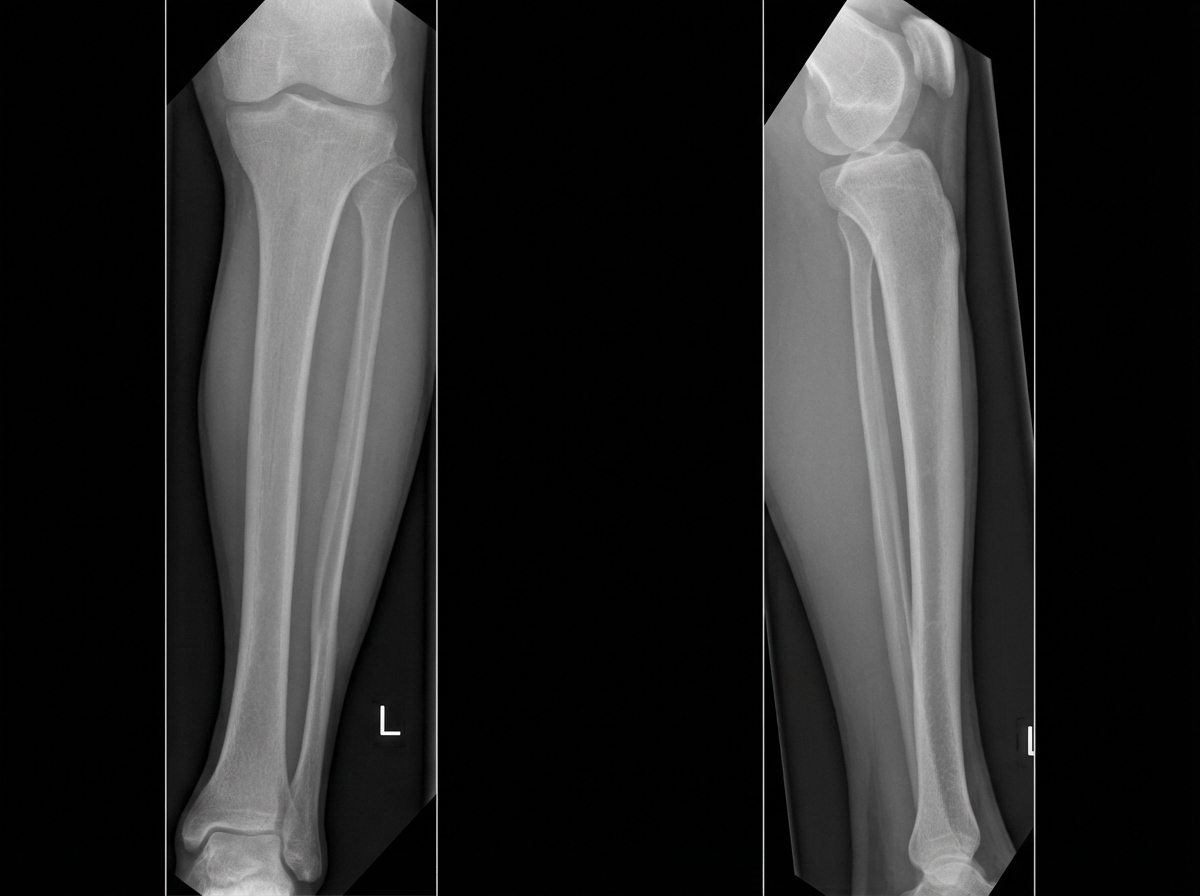
A 36-year-old man comes to the emergency department 4 hours after a bike accident for severe pain and swelling in his right leg. He has not had a headache, nausea, vomiting, abdominal pain, or blood in his urine. He has a history of gastroesophageal reflux disease and allergic rhinitis. He has smoked one pack of cigarettes daily for 17 years and drinks an average of one alcoholic beverage daily. His medications include levocetirizine and pantoprazole. He is in moderate distress. His temperature is 37°C (98.6°F), pulse is 112/min, and blood pressure is 140/80 mm Hg. Examination shows multiple bruises over both lower extremities and the face. There is swelling surrounding a 2 cm laceration 13 cm below the right knee. The lower two-thirds of the tibia is tender to palpation and the skin is pale and cool to the touch. The anterior tibial, posterior tibial, and dorsalis pedis pulses are weak. Capillary refill time of the right big toe is 4 seconds. Dorsiflexion of his right foot causes severe pain in his calf. Cardiopulmonary examination is normal. An x-ray is ordered, which is shown below. Which of the following is the most appropriate next step in management?
Q28
A 6-year-old girl is brought to the emergency department because of right elbow swelling and pain 30 minutes after falling onto her outstretched right arm. She has been unable to move her right elbow since the fall. Physical examination shows bruising, swelling, and tenderness of the right elbow; range of motion is limited by pain. An x-ray of the right arm shows a supracondylar fracture of the humerus with posterior displacement of the distal fragment. Further evaluation is most likely to show which of the following findings?
Q29
A 56-year-old man is brought to the emergency department 25 minutes after he was involved in a high-speed motor vehicle collision where he was the unrestrained passenger. He has severe lower abdominal and pelvic pain. On arrival, he is alert and oriented. His pulse is 95/min, respirations are 22/min, and blood pressure is 106/62 mm Hg. Examination shows severe tenderness to palpation over the lower abdomen and over the left anterior superior iliac spine. There is no limb length discrepancy. Application of downward pressure over the pelvis shows no springy resistance or instability. Rectal examination is unremarkable. A focused assessment with sonography shows no free fluid in the abdomen. There is no blood at the urethral meatus. Placement of a Foley catheter shows gross hematuria. An x-ray of the pelvis shows a fracture of the left pelvic edge. Which of the following is the most appropriate next step in management?
Q30
A 38-year-old man is brought to the emergency department 35 minutes after he sustained a gunshot wound to the right thigh. He has type 1 diabetes mellitus. On arrival, his pulse is 112/min, respirations are 20/min, and blood pressure is 115/69 mm Hg. Pulse oximetry on room air shows an oxygen saturation of 98%. There is an entrance wound on the anteromedial surface of the right thigh 2 cm below the inguinal ligament. There is no bruit or thrill. There is no exit wound. The pedal pulse is diminished on the right side compared to the left. The abdomen is soft and nontender. The remainder of the examination shows no abnormalities. Laboratory studies show:
Hematocrit 46%
Serum
Urea nitrogen 24 mg/dL
Glucose 160 mg/dL
Creatinine 3.1 mg/dL
Which of the following is the most appropriate next step in management?
Trauma/Emergencies US Medical PG Practice Questions and MCQs
Question 21: A 34-year-old woman is brought into the emergency department by emergency medical services after an electrical fire in her apartment. She is coughing with an O2 saturation of 98%, on 2L of nasal cannula. The patient's physical exam is significant for a burn on her right forearm that appears to be dry, white, and leathery in texture. Her pulses and sensations are intact in all extremities. The patient's vitals are HR 110, BP 110/80, T 99.2, RR 20. She has no evidence of soot in her mouth and admits to leaving the room as soon as the fire started. Which of the following is the best treatment for this patient?
A. Excision and grafting (Correct Answer)
B. Bacitracin
C. Amputation
D. Mafenide acetate
E. Pain relievers
Explanation: ***Excision and grafting***
* The burn is described as **dry, white, and leathery**, which are classic features of a **full-thickness (third-degree) burn**.
* Full-thickness burns destroy all skin layers including the dermis, and typically have **loss of sensation** at the burn site due to nerve ending destruction.
* **Excision and grafting** is the definitive treatment for full-thickness burns, involving removal of necrotic tissue and skin grafting to promote healing and prevent infection.
* The patient has intact pulses and sensations in all extremities (indicating no compartment syndrome or vascular compromise), making her a good candidate for this procedure.
*Bacitracin*
* **Bacitracin** is an antibiotic ointment used for **superficial (first-degree) or minor partial-thickness burns**.
* It is insufficient for a **full-thickness burn**, which requires surgical debridement and grafting for proper healing.
*Amputation*
* **Amputation** is reserved for cases of **irreversible tissue damage** with compromised vascularity, extensive non-viable tissue, or severe crush injuries.
* This patient has **intact pulses and sensations in all extremities**, indicating the limb is viable and perfused, making amputation inappropriate.
*Mafenide acetate*
* **Mafenide acetate** is a topical antimicrobial agent that penetrates eschar and can be used for deep burns to prevent infection.
* While useful as adjunctive therapy, it does **not replace the need for surgical excision and grafting**, which is the definitive treatment for full-thickness burns.
*Pain relievers*
* **Pain relievers** are important supportive care for burn patients but are **not definitive treatment**.
* They manage symptoms but do not address the underlying need for debridement and wound closure through grafting.
Question 22: A 45-year-old gentleman comes to his primary care physician complaining of redness and foul-smelling discharge from his penis. The patient is not married and denies sexual activity. Upon further questioning, he denies trauma or any associated fevers or chills. After the initial work-up was found to be negative for sexually-transmitted diseases, a biopsy and imaging were ordered. The biopsy shows squamous cell carcinoma (SCC). Which of the following is associated with a reduced risk of developing penile SCC?
A. Circumcision (Correct Answer)
B. Smoking
C. Having frequent intercourse
D. UV light treatments for psoriasis
E. Testing positive for HPV 16 or 18
Explanation: ***Circumcision***
- **Circumcision**, especially when performed in infancy, is strongly associated with a **reduced risk** of penile squamous cell carcinoma (SCC).
- This protective effect is thought to be due to improved penile hygiene, which prevents chronic inflammation and the accumulation of smegma, both risk factors for SCC.
- Circumcision also reduces the risk of phimosis and HPV infection.
*Smoking*
- **Smoking** is a well-established **risk factor** for many cancers, including penile SCC.
- Carcinogens in tobacco smoke can directly damage DNA and contribute to the development of malignant cells.
*Having frequent intercourse*
- While frequent intercourse itself is not directly protective, certain sexual practices increase the risk of sexually transmitted infections (STIs), particularly **HPV**.
- The risk is more closely tied to exposure to **high-risk HPV types**, rather than the frequency of intercourse.
*UV light treatments for psoriasis*
- **PUVA therapy** (psoralen plus ultraviolet A light) used to treat psoriasis is a **known risk factor** for genital squamous cell carcinoma, not a protective factor.
- Chronic UV exposure from PUVA can cause DNA damage and increase malignancy risk in genital skin.
*Testing positive for HPV 16 or 18*
- Infection with high-risk human papillomavirus (HPV) types, particularly **HPV 16 and 18**, is a **major risk factor** for penile SCC, not a reduced risk.
- HPV 16 and 18 are responsible for a significant percentage of penile SCC cases.
Question 23: A 27-year-old woman is brought to the emergency department after sustaining a fall from her bicycle 1 hour ago. The patient was on her way to work as she lost her balance, hitting her head on the sidewalk. She had an initial loss of consciousness for a couple of minutes following the accident. She currently has nausea and a headache. She has vomited twice during the last 30 minutes. She has no history of a serious illness. The patient does not smoke or drink alcohol. She has never used illicit drugs. She takes no medications. Her temperature is 37°C (98.6°F), pulse is 50/min, respirations are 10/min, and blood pressure is 160/90 mm Hg. She is oriented to person, place, and time. Her lungs are clear to auscultation. Cardiac examination shows bradycardia but no murmurs, rubs, or gallops. The abdomen is soft and nontender. There is a bruise on the right temporal side of the head. While performing the remainder of the physical examination the patient starts having a seizure. Intravenous lorazepam is administered and she is admitted to the intensive care unit. Which of the following is the most likely diagnosis in this patient?
A. Idiopathic intracranial hypertension
B. Subarachnoid hemorrhage
C. Intracerebral hemorrhage
D. Epidural hematoma (Correct Answer)
E. Ischemic stroke
Explanation: ***Epidural hematoma***
- The initial **loss of consciousness** followed by a lucid interval, and then subsequent neurological deterioration (vomiting, headache, seizure, bradycardia, hypertension), is classic for an **epidural hematoma**.
- This condition typically occurs after head trauma, often involving the **middle meningeal artery**, and presents with a characteristic biconvex shape on imaging.
*Idiopathic intracranial hypertension*
- This condition presents with symptoms of increased intracranial pressure, but it is not typically associated with **acute head trauma** or a rapid decline in neurological status.
- It is more common in **obese women** of childbearing age and often presents with chronic headaches and visual disturbances.
*Subarachnoid hemorrhage*
- While a subarachnoid hemorrhage can cause sudden severe headache and can be precipitated by trauma, the classic presentation is a **"thunderclap headache"** and often involves meningeal irritation.
- It typically does not demonstrate the classic **lucid interval** seen in this patient's presentation.
*Intracerebral hemorrhage*
- An intracerebral hemorrhage can lead to neurological deficits and seizures, but it would not typically present with a **lucid interval** after initial loss of consciousness if it were the primary injury from trauma.
- Traumatic intracerebral hemorrhages are usually **deeper parenchymal bleeds** without the characteristic temporal bone fracture association seen in epidural hematomas.
*Ischemic stroke*
- An ischemic stroke is caused by a **blockage of blood flow** to the brain, leading to tissue death.
- It is highly unlikely to result from **acute head trauma** in a young, healthy individual with no risk factors for stroke.
Question 24: Ultrasonography of the scrotum shows a 2-cm hypoechoic, homogeneous testicular mass with sharp margins. A CT scan of the abdomen shows a single enlarged para-aortic lymph node. Which of the following is the most appropriate next step in management?
A. Radiation therapy
B. Open testicular biopsy
C. Systemic polychemotherapy
D. Radical inguinal orchiectomy (Correct Answer)
E. Scrotal orchiectomy
Explanation: ***Radical inguinal orchiectomy***
- This is the appropriate initial management for suspected testicular cancer, allowing for **pathological confirmation** while preventing tumor cell spread via testicular lymphatic drainage.
- The suspected nature of the mass (hypoechoic, homogeneous, sharp margins, and lymph node involvement) points towards a **malignant tumor**, making surgical removal via an inguinal approach critical.
*Radiation therapy*
- This is typically used for **adjuvant treatment** in certain types of testicular cancer, especially seminomas, after the primary tumor has been removed.
- It is not the initial treatment for an unconfirmed testicular mass and would not provide the necessary **histological diagnosis**.
*Open testicular biopsy*
- An open testicular biopsy is generally avoided due to the risk of **tumor seeding** into the scrotum or inguinal region, which can alter lymphatic drainage patterns and complicate staging.
- **Radical inguinal orchiectomy** allows for complete tumor removal and pathological diagnosis without these risks.
*Systemic polychemotherapy*
- Chemotherapy is indicated for **metastatic testicular cancer** or as adjuvant therapy for high-risk tumors, not as the primary treatment for the initial testicular mass.
- It is usually administered after the primary tumor has been removed and the **histology and stage** are known.
*Scrotal orchiectomy*
- Similar to an open testicular biopsy, a scrotal orchiectomy is contraindicated for suspected testicular cancer due to the high risk of **scrotal contamination** and altered lymphatic drainage.
- This approach can increase the chances of local recurrence and **poor prognosis**.
Question 25: A 25-year-old man presents to the emergency department after a motor vehicle collision. He was an unrestrained driver in a head on collision. The patient has a Glasgow coma scale of 9 and is responding to questions inappropriately. His temperature is 96.0°F (35.6°C), blood pressure is 64/44 mmHg, pulse is 192/min, respirations are 32/min, and oxygen saturation is 94% on room air. Which of the following interventions is the best treatment for this patient’s hypotension?
A. Whole blood
B. Steroids and neurosurgical intervention
C. Normal saline (Correct Answer)
D. Dobutamine
E. Norepinephrine
Explanation: ***Normal saline***
- The patient is in **hypovolemic shock** due to **hemorrhage** from trauma, as indicated by profound **hypotension**, **tachycardia**, and **altered mental status** after a significant mechanism of injury.
- **Rapid intravenous infusion of isotonic crystalloids** like **normal saline** is the initial and best treatment to expand intravascular volume and restore perfusion in hypovolemic shock.
*Whole blood*
- While ultimately necessary for significant hemorrhage, **whole blood** or **packed red blood cells** are not the immediate first-line intervention for initial volume resuscitation in the emergency setting due to the time required for cross-matching and administration.
- **Crystalloids** are faster to administer and effective for initial stabilization before blood products are ready.
*Steroids and neurosurgical intervention*
- **Steroids** are generally not indicated for traumatic brain injury and can worsen outcomes.
- While a **head injury** is present, **neurosurgical intervention** is not the initial treatment for **hypotension**; addressing shock is paramount before definitive neurological interventions.
*Dobutamine*
- **Dobutamine** is a positive inotrope primarily used for **cardiogenic shock** or heart failure to improve contractility, not for volume resuscitation in **hypovolemic shock**.
- Administering it to a hypovolemic patient would only worsen their condition by increasing myocardial oxygen demand without addressing the underlying volume deficit.
*Norepinephrine*
- **Norepinephrine** is a **vasopressor** used to increase peripheral vascular resistance and blood pressure, often used in **distributive shock** (e.g., septic shock) or when fluid resuscitation alone is insufficient.
- In **hypovolemic shock**, administering norepinephrine without adequate volume resuscitation can be detrimental as it constricts already depleted vessels, further compromising organ perfusion.
Question 26: A 55-year-old woman comes to the physician 10 days after noticing a mass in her left breast while bathing. She is concerned that it is breast cancer because her sister was diagnosed with breast cancer 3 years ago at 61 years of age. Menopause occurred 6 months ago. She has smoked 2 packs of cigarettes daily for 30 years. She took an oral contraceptive for 20 years. Current medications include hormone replacement therapy and a calcium supplement. Examination shows a 2.5-cm, palpable, hard, nontender, mass in the upper outer quadrant of the left breast; there is tethering of the skin over the lump. Examination of the right breast and axillae shows no abnormalities. Mammography shows an irregular mass with microcalcifications and oil cysts. A core biopsy shows foam cells and multinucleated giant cells. Which of the following is the most appropriate next step in management?
A. Reassurance (Correct Answer)
B. Lumpectomy with axillary staging
C. Wide excision of the lump
D. Neoadjuvant chemotherapy
E. Modified radical mastectomy
Explanation: ***Reassurance***
- The core biopsy showing **foam cells and multinucleated giant cells** is **pathognomonic for fat necrosis**, providing a definitive benign histological diagnosis.
- While fat necrosis can mimic breast cancer clinically (hard mass, skin tethering) and radiologically (irregular mass with microcalcifications), **histological confirmation of fat necrosis excludes malignancy**.
- Once the diagnosis is confirmed by core biopsy, **no further surgical intervention is necessary** - reassurance and clinical follow-up are appropriate.
- Fat necrosis is a benign condition often related to trauma, prior surgery, or radiation, and does not require treatment unless symptomatic.
*Wide excision of the lump*
- Wide excision would be indicated if the biopsy showed **malignancy** or if the biopsy was **non-diagnostic**.
- Since the core biopsy has already provided a definitive benign diagnosis (fat necrosis), surgical excision is unnecessary and would represent overtreatment.
- The biopsy has already "definitively excluded malignancy" through histological examination.
*Lumpectomy with axillary staging*
- This is appropriate management for **confirmed invasive breast cancer**, not for biopsy-proven benign conditions.
- The pathology showing foam cells and giant cells rules out malignancy, making this extensive surgical procedure inappropriate.
*Neoadjuvant chemotherapy*
- **Neoadjuvant chemotherapy** is used for **confirmed breast cancer** to downstage tumors before surgery.
- Since the biopsy confirms a benign process (fat necrosis), chemotherapy has no role in management.
*Modified radical mastectomy*
- This extensive surgery is reserved for **invasive breast cancer**, particularly multicentric disease or cases where breast conservation is not feasible.
- It is completely inappropriate for biopsy-proven benign disease.
Question 27: A 36-year-old man comes to the emergency department 4 hours after a bike accident for severe pain and swelling in his right leg. He has not had a headache, nausea, vomiting, abdominal pain, or blood in his urine. He has a history of gastroesophageal reflux disease and allergic rhinitis. He has smoked one pack of cigarettes daily for 17 years and drinks an average of one alcoholic beverage daily. His medications include levocetirizine and pantoprazole. He is in moderate distress. His temperature is 37°C (98.6°F), pulse is 112/min, and blood pressure is 140/80 mm Hg. Examination shows multiple bruises over both lower extremities and the face. There is swelling surrounding a 2 cm laceration 13 cm below the right knee. The lower two-thirds of the tibia is tender to palpation and the skin is pale and cool to the touch. The anterior tibial, posterior tibial, and dorsalis pedis pulses are weak. Capillary refill time of the right big toe is 4 seconds. Dorsiflexion of his right foot causes severe pain in his calf. Cardiopulmonary examination is normal. An x-ray is ordered, which is shown below. Which of the following is the most appropriate next step in management?
A. Above knee cast
B. IVC filter placement
C. Fasciotomy (Correct Answer)
D. Low molecular weight heparin
E. Open reduction and internal fixation
Explanation: ***Fasciotomy***
- The patient's symptoms (severe pain, swelling, pain with passive dorsiflexion, weak pulses, pale/cool skin, and prolonged capillary refill) after a traumatic injury are highly suggestive of **acute compartment syndrome**.
- **Fasciotomy** is the definitive treatment for acute compartment syndrome to relieve pressure and prevent irreversible tissue damage.
*Above knee cast*
- While a cast is used for immobilization of fractures, it would worsen **compartment syndrome** by externally compressing an already swollen limb.
- This patient has signs of compartment syndrome which requires urgent surgical decompression, not just immobilization.
*IVC filter placement*
- **IVC filter placement** is indicated for preventing pulmonary embolism in patients with deep vein thrombosis (DVT) who have contraindications to anticoagulation.
- There is no clinical evidence to suggest DVT in this patient, and the primary concern is acute compartment syndrome.
*Low molecular weight heparin*
- **Low molecular weight heparin (LMWH)** is an anticoagulant used for DVT prophylaxis or treatment.
- It is not indicated for the immediate management of acute compartment syndrome and could increase the risk of bleeding in a patient who likely needs urgent surgery.
*Open reduction and internal fixation*
- **Open reduction and internal fixation (ORIF)** is a surgical procedure to stabilize complex fractures, which may be needed later for a tibial fracture if present.
- However, the immediate priority is to address the limb-threatening acute compartment syndrome before performing definitive fracture repair.
Question 28: A 6-year-old girl is brought to the emergency department because of right elbow swelling and pain 30 minutes after falling onto her outstretched right arm. She has been unable to move her right elbow since the fall. Physical examination shows bruising, swelling, and tenderness of the right elbow; range of motion is limited by pain. An x-ray of the right arm shows a supracondylar fracture of the humerus with posterior displacement of the distal fragment. Further evaluation is most likely to show which of the following findings?
A. Radial deviation of the wrist
B. Atrophy of the thenar eminence
C. Inability to abduct shoulder
D. Absent distal radial pulse (Correct Answer)
E. Inability to flex the elbow
Explanation: **_Absent distal radial pulse_**
- A **supracondylar humerus fracture** with **anterior displacement of the proximal fragment** specifically puts the **brachial artery** at high risk of injury, as it courses anterior to the humerus in the antecubital fossa.
- Injury to the brachial artery can lead to **vascular compromise** distally, manifesting as an **absent distal radial pulse**, which is a critical finding requiring immediate attention to prevent limb ischemia.
*Radial deviation of the wrist*
- **Radial deviation of the wrist** is often associated with problems involving the **ulnar nerve** or muscle imbalance, but not directly with supracondylar humerus fractures unless there is significant secondary nerve damage, which is not the primary expected complication.
- While nerve damage can occur, direct radial deviation is not the most common or immediate finding following acute supracondylar fractures.
*Atrophy of the thenar eminence*
- **Atrophy of the thenar eminence** indicates **chronic median nerve compression** or injury.
- This is a long-term neurological deficit and is highly unlikely to be an acute finding 30 minutes after a fall and fracture.
*Inability to abduct shoulder*
- **Inability to abduct the shoulder** suggests injury to the **deltoid muscle** or its innervation by the **axillary nerve**.
- A supracondylar humerus fracture is located distally at the elbow and does not directly affect shoulder abduction mechanics or innervation.
*Inability to flex the elbow*
- **Inability to flex the elbow** would suggest injury to the **biceps muscle** or its innervation by the **musculocutaneous nerve**.
- While nerve injury can occur, the primary concern with a displaced supracondylar fracture is often **vascular compromise**, and the ability to flex the elbow may be limited by pain and swelling, but not necessarily by nerve transection or severe muscle damage acutely.
Question 29: A 56-year-old man is brought to the emergency department 25 minutes after he was involved in a high-speed motor vehicle collision where he was the unrestrained passenger. He has severe lower abdominal and pelvic pain. On arrival, he is alert and oriented. His pulse is 95/min, respirations are 22/min, and blood pressure is 106/62 mm Hg. Examination shows severe tenderness to palpation over the lower abdomen and over the left anterior superior iliac spine. There is no limb length discrepancy. Application of downward pressure over the pelvis shows no springy resistance or instability. Rectal examination is unremarkable. A focused assessment with sonography shows no free fluid in the abdomen. There is no blood at the urethral meatus. Placement of a Foley catheter shows gross hematuria. An x-ray of the pelvis shows a fracture of the left pelvic edge. Which of the following is the most appropriate next step in management?
A. Intravenous pyelography
B. External fixation of the pelvis
C. Cystoscopy
D. Retrograde urethrography
E. Retrograde cystography (Correct Answer)
Explanation: ***Retrograde cystography***
- The presence of **gross hematuria** in a patient with a **pelvic fracture** necessitates ruling out **bladder injury**. A retrograde cystography directly visualizes the bladder and can detect extravasation of contrast if a bladder rupture is present.
- This imaging study specifically investigates the bladder using retrograde contrast filling, which is crucial for diagnosing **intraperitoneal** or **extraperitoneal bladder rupture**.
*Intravenous pyelography*
- This study evaluates the **kidneys** and **ureters** for injury, but the primary concern with gross hematuria and pelvic fracture is the bladder.
- An IV pyelogram provides less detailed imaging of the bladder compared to a retrograde cystogram and is less effective for detecting bladder rupture.
*External fixation of the pelvis*
- While the patient has a pelvic fracture, the immediate priority in a hemodynamically stable patient with gross hematuria is to identify and manage potential **life-threatening urologic injuries** before definitive orthopedic repair.
- **Pelvic external fixation** is primarily indicated for **unstable pelvic fractures** or those causing significant hemorrhage, neither of which is explicitly described as an immediate concern requiring intervention before urologic evaluation.
*Cystoscopy*
- **Cystoscopy** is an endoscopic procedure that allows direct visualization of the bladder's interior. While it can identify bladder injuries, it is generally considered after imaging studies like **retrograde cystography** to confirm findings or address specific issues like clot evacuation or stent placement.
- The initial diagnostic step should focus on assessing for rupture via contrast study, which is often less invasive than a direct endoscopic procedure in the acute trauma setting.
*Retrograde urethrography*
- **Retrograde urethrography (RUG)** is used to evaluate for **urethral injury**, especially when there is blood at the urethral meatus, a high-riding prostate, or an inability to pass a Foley catheter.
- The patient's Foley catheter was successfully placed, and there was **no blood at the urethral meatus**, making urethral injury less likely and thus RUG a lower priority as the initial step compared to assessing for bladder injury.
Question 30: A 38-year-old man is brought to the emergency department 35 minutes after he sustained a gunshot wound to the right thigh. He has type 1 diabetes mellitus. On arrival, his pulse is 112/min, respirations are 20/min, and blood pressure is 115/69 mm Hg. Pulse oximetry on room air shows an oxygen saturation of 98%. There is an entrance wound on the anteromedial surface of the right thigh 2 cm below the inguinal ligament. There is no bruit or thrill. There is no exit wound. The pedal pulse is diminished on the right side compared to the left. The abdomen is soft and nontender. The remainder of the examination shows no abnormalities. Laboratory studies show:
Hematocrit 46%
Serum
Urea nitrogen 24 mg/dL
Glucose 160 mg/dL
Creatinine 3.1 mg/dL
Which of the following is the most appropriate next step in management?
A. Digital subtraction angiography
B. Wound cleaning and tetanus toxoid
C. CT angiography
D. Duplex ultrasonography (Correct Answer)
E. Fasciotomy
Explanation: ***Duplex ultrasonography***
- The patient has suffered a **gunshot wound** to the thigh with a **diminished pedal pulse**, indicating potential **vascular injury** (a "soft sign" requiring imaging).
- Given his **significantly elevated creatinine (3.1 mg/dL)** and **type 1 diabetes mellitus**, imaging studies requiring **IV iodinated contrast** carry substantial risk for **contrast-induced nephropathy** and further renal deterioration.
- **Duplex ultrasonography** is a **non-invasive, contrast-free method** to assess vascular flow and identify injuries like **arterial dissection**, **thrombosis**, or **pseudoaneurysm**. While operator-dependent, it is the most appropriate initial diagnostic step in this hemodynamically stable patient with significant renal impairment.
- This allows vascular assessment while **minimizing nephrotoxic risk** in a patient with pre-existing renal dysfunction.
*CT angiography*
- **CT angiography** is the **gold standard** for evaluating penetrating extremity trauma with soft signs of vascular injury in most cases, offering rapid and highly accurate vascular imaging.
- However, it requires administration of **intravenous iodinated contrast**, which poses significant risk for **contrast-induced nephropathy** in this patient with **baseline creatinine of 3.1 mg/dL** and **diabetes mellitus**.
- While CTA would typically be preferred in trauma settings, the severe renal impairment makes duplex ultrasonography the safer initial choice in this stable patient.
*Digital subtraction angiography*
- This is an **invasive angiographic technique** that uses **iodinated contrast** and carries even higher contrast load than CTA, posing substantial risk for **contrast-induced nephropathy** given the patient's **elevated creatinine**.
- While it offers high resolution and therapeutic capability, the risks associated with contrast and invasive arterial access outweigh its benefits for initial assessment in this scenario.
- Reserved for cases where intervention is anticipated or non-invasive imaging is inconclusive.
*Wound cleaning and tetanus toxoid*
- These are essential components of wound care for any penetrating injury but do not address the immediate concern of **potential vascular injury** causing the diminished pedal pulse.
- Prioritizing definitive diagnosis of vascular compromise is critical before focusing solely on local wound management, as a missed arterial injury could lead to limb loss.
*Fasciotomy*
- **Fasciotomy** is a surgical procedure to relieve **compartment syndrome**, which can develop secondary to vascular injury, reperfusion, or significant soft tissue trauma.
- While compartment syndrome is a risk with this injury, there is no immediate clinical evidence of it (no severe pain out of proportion to exam, no tense compartments documented).
- Diagnosis of the vascular injury should be established first, as fasciotomy may be needed later if ischemia is prolonged or after revascularization.