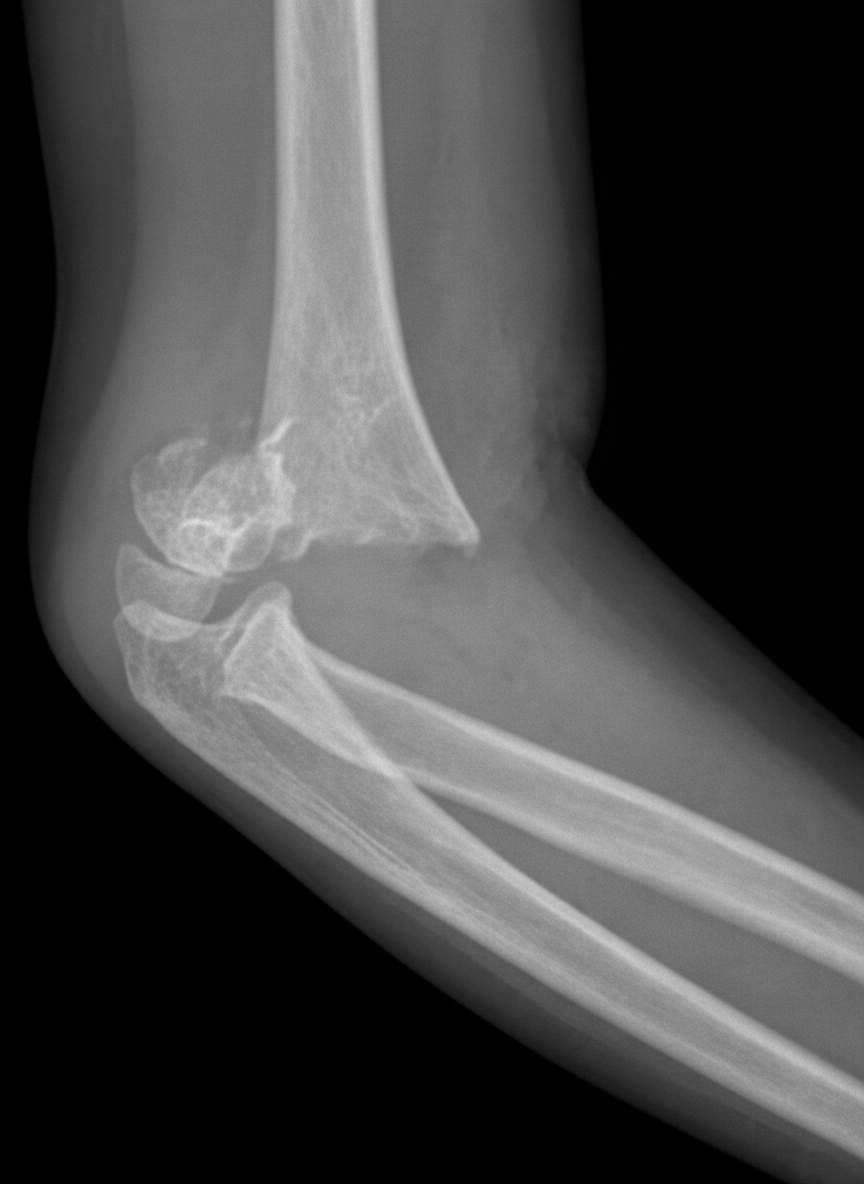
A 25-year-old woman is brought to the emergency department after being involved in a rear-end collision, in which she was the restrained driver of the back car. On arrival, she is alert and active. She reports pain in both knees and severe pain over the right groin. Temperature is 37°C (98.6°F), pulse is 116/min, respirations are 19/min, and blood pressure is 132/79 mm Hg. Physical examination shows tenderness over both knee caps. The right groin is tender to palpation. The right leg is slightly shortened, flexed, adducted, and internally rotated. The remainder of the examination shows no abnormalities. Which of the following is the most likely diagnosis?
Q222
A 76-year-old man is brought to the emergency room because of one episode of epistaxis. His pulse is 110/min. Physical examination shows pallor; there is blood in the oral cavity. Examination of the nasal cavity with a nasal speculum shows active bleeding from the posterior nasal cavity. Tamponade with a balloon catheter is attempted without success. The most appropriate next step in the management is ligation of a branch of a vessel of which of the following arteries?
Q223
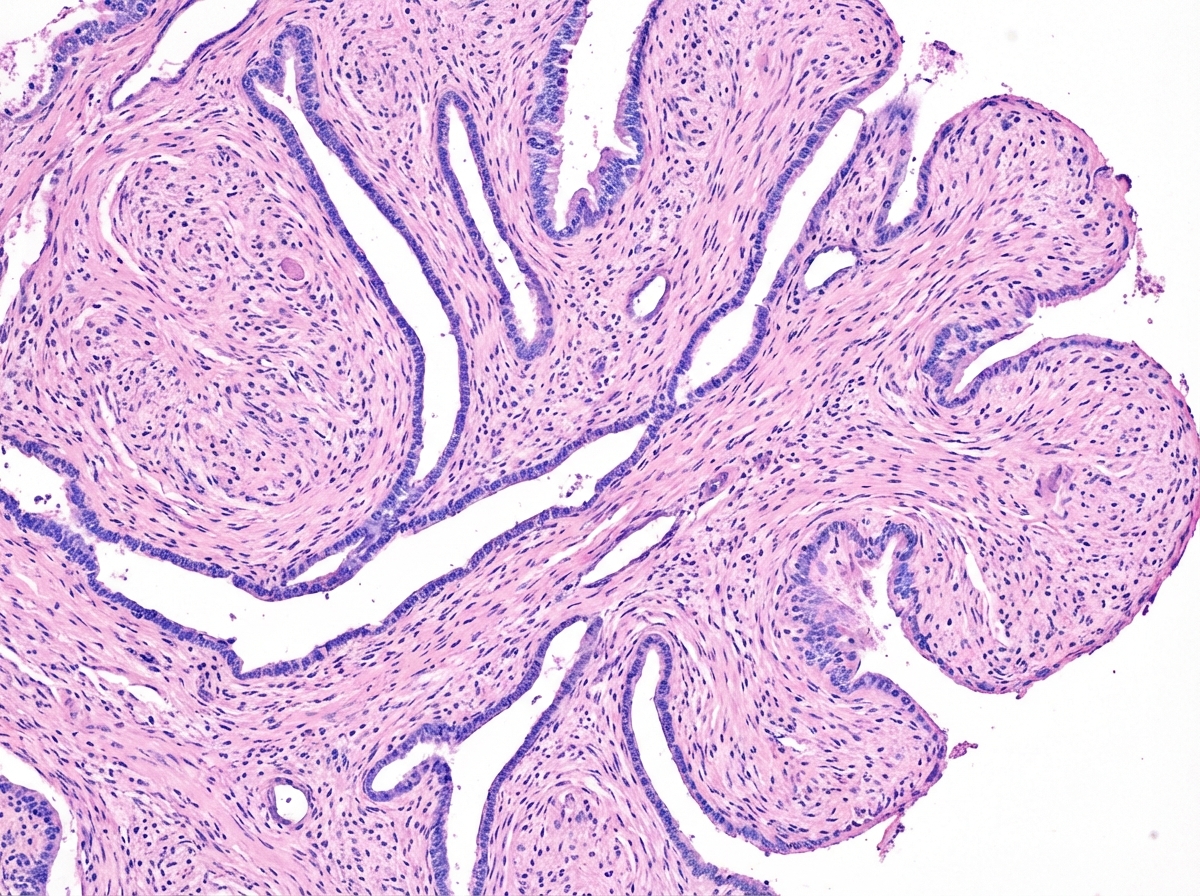
A 48-year-old woman comes to the physician for the evaluation of a left breast mass that she noticed 4 weeks ago. It has rapidly increased in size during this period. Vital signs are within normal limits. Examination shows large dense breasts; a 6-cm, nontender, multinodular mass is palpated in the upper outer quadrant of the left breast. There are no changes in the skin or nipple. There is no palpable cervical or axillary adenopathy. Mammography shows a smooth polylobulated mass. An image of a biopsy specimen is shown. Which of the following is the most likely diagnosis?
Q224
A 22-year-old man is rushed to the emergency department after a motor vehicle accident. The patient states that he feels weakness and numbness in both of his legs. He also reports pain in his lower back. His airway, breathing, and circulation is intact, and he is conversational. Neurologic exam is significant for bilateral lower extremity flaccid paralysis and impaired pain and temperature sensation up to T10-T11 with normal vibration sense. A computerized tomography scan of the spine is performed which shows a vertebral burst fracture of the vertebral body at the level of T11. Which of the following findings is most likely present in this patient?
Q225
A 61-year-old woman presents to her physician with a persistent cough. She has been unable to control her cough and also is finding it increasingly difficult to breathe. The cough has been persistent for about 2 months now, but 2 weeks ago she started noticing streaks of blood in the sputum regularly after coughing. Over the course of 4 months, she has also observed an unusual loss of 10 kg (22 lb) in her weight. She has an unchanged appetite and remains fairly active, which makes her suspicious as to the cause of her weight loss. Another troublesome concern for her is that on a couple occasions over the past few weeks, she has observed herself drenched in sweat when she wakes up in the morning. Other than having a 35 pack-year smoking history, her medical history is insignificant. She is sent for a chest X-ray which shows a central nodule of about 13 mm located in the hilar region. Which of the following would be the next best step in the management of this patient?
Q226
A 67-year-old woman has fallen from the second story level of her home while hanging laundry. She was brought to the emergency department immediately and presented with severe abdominal pain. The patient is anxious, and her hands and feet feel very cold to the touch. There is no evidence of bone fractures, superficial skin wounds, or a foreign body penetration. Her blood pressure is 102/67 mm Hg, respirations are 19/min, pulse is 87/min, and temperature is 36.7°C (98.0°F). Her abdominal exam reveals rigidity and severe tenderness. A Foley catheter and nasogastric tube are inserted. The central venous pressure (CVP) is 5 cm H2O. The medical history is significant for hypertension. Which of the following is best indicated for the evaluation of this patient?
Q227
A 20-year-old male comes into your office two days after falling during a pick up basketball game. The patient states that the lateral aspect of his knee collided with another player's knee. On exam, the patient's right knee appears the same size as his left knee without any swelling or effusion. The patient has intact sensation and strength in both lower extremities. The patient's right knee has no laxity upon varus stress test, but is more lax upon valgus stress test when compared to his left knee. Lachman's test and posterior drawer test both have firm endpoints without laxity. Which of the following structures has this patient injured?
Q228
A 68-year-old man presents to the emergency department with leg pain. He states that the pain started suddenly while he was walking outside. The patient has a past medical history of diabetes, hypertension, obesity, and atrial fibrillation. His temperature is 99.3°F (37.4°C), blood pressure is 152/98 mmHg, pulse is 97/min, respirations are 15/min, and oxygen saturation is 99% on room air. Physical exam is notable for a cold and pale left leg. The patient’s sensation is markedly diminished in the left leg when compared to the right, and his muscle strength is 1/5 in his left leg. Which of the following is the best next step in management?
Trauma/Emergencies US Medical PG Practice Questions and MCQs
Question 221: A 25-year-old woman is brought to the emergency department after being involved in a rear-end collision, in which she was the restrained driver of the back car. On arrival, she is alert and active. She reports pain in both knees and severe pain over the right groin. Temperature is 37°C (98.6°F), pulse is 116/min, respirations are 19/min, and blood pressure is 132/79 mm Hg. Physical examination shows tenderness over both knee caps. The right groin is tender to palpation. The right leg is slightly shortened, flexed, adducted, and internally rotated. The remainder of the examination shows no abnormalities. Which of the following is the most likely diagnosis?
A. Anterior hip dislocation
B. Posterior hip dislocation (Correct Answer)
C. Femoral neck fracture
D. Pelvic fracture
E. Femoral shaft fracture
Explanation: ***Posterior hip dislocation***
- The classic presentation of **posterior hip dislocation** involves the affected leg being **shortened, flexed, adducted, and internally rotated**, as described in the patient.
- This type of injury commonly occurs in **motor vehicle collisions** where the knee strikes the dashboard (dashboard injury), transmitting force up the femur to the hip joint, often causing the femoral head to dislocate posteriorly.
*Anterior hip dislocation*
- This typically presents with the affected leg in a position of **hip flexion, abduction, and external rotation**, which is contrary to the findings in this patient.
- Anterior dislocations are less common than posterior dislocations and usually result from a traumatic force applied to the hip while it is in **abduction and external rotation**.
*Femoral neck fracture*
- While a **femoral neck fracture** can cause pain and shortening of the leg, the typical presentation is usually one of **external rotation**, not internal rotation.
- The distinct **flexion, adduction, and internal rotation** triad is highly suggestive of hip dislocation, not a fracture of the femoral neck.
*Pelvic fracture*
- A **pelvic fracture** would likely present with more diffuse pelvic pain, potentially instability upon palpation of the pelvis, and possibly lower extremity neurological deficits or genitourinary symptoms depending on the fracture type.
- The specific limb positioning observed (shortened, flexed, adducted, internally rotated) is not a hallmark of an isolated pelvic fracture.
*Femoral shaft fracture*
- A **femoral shaft fracture** would cause severe pain along the shaft of the femur, significant swelling, and obvious deformity of the thigh.
- While the leg might be shortened, the specific combination of **flexion, adduction, and internal rotation** primarily points towards a hip joint issue rather than a mid-shaft fracture.
Question 222: A 76-year-old man is brought to the emergency room because of one episode of epistaxis. His pulse is 110/min. Physical examination shows pallor; there is blood in the oral cavity. Examination of the nasal cavity with a nasal speculum shows active bleeding from the posterior nasal cavity. Tamponade with a balloon catheter is attempted without success. The most appropriate next step in the management is ligation of a branch of a vessel of which of the following arteries?
A. Ophthalmic artery
B. Anterior cerebral artery
C. Maxillary artery (Correct Answer)
D. Occipital artery
E. Facial artery
Explanation: ***Maxillary artery***
- Posterior epistaxis, often severe and difficult to manage with local measures, typically arises from branches of the **sphenopalatine artery**, which is a terminal branch of the maxillary artery.
- When initial attempts like balloon tamponade fail, **ligation or embolization** of the maxillary artery or its sphenopalatine branch is the most effective surgical intervention to control the bleeding.
*Ophthalmic artery*
- The ophthalmic artery primarily supplies structures within the orbit, such as the eye and orbital contents.
- It is not a common source of posterior epistaxis, which typically originates from the nasopharynx.
*Anterior cerebral artery*
- The anterior cerebral artery is a major vessel supplying parts of the cerebrum and is located intracranially.
- It does not supply the nasal cavity and is therefore not involved in epistaxis.
*Occipital artery*
- The occipital artery is a branch of the external carotid artery that supplies the posterior scalp and sternocleidomastoid muscle.
- It does not supply the nasal cavity and has no role in epistaxis.
*Facial artery*
- The facial artery primarily supplies the face and some anterior nasal structures, particularly through its septal branch (Kiesselbach's plexus).
- While it can contribute to anterior epistaxis, it is not the main source for severe posterior epistaxis that failed balloon tamponade.
Question 223: A 48-year-old woman comes to the physician for the evaluation of a left breast mass that she noticed 4 weeks ago. It has rapidly increased in size during this period. Vital signs are within normal limits. Examination shows large dense breasts; a 6-cm, nontender, multinodular mass is palpated in the upper outer quadrant of the left breast. There are no changes in the skin or nipple. There is no palpable cervical or axillary adenopathy. Mammography shows a smooth polylobulated mass. An image of a biopsy specimen is shown. Which of the following is the most likely diagnosis?
A. Phyllodes tumor (Correct Answer)
B. Invasive ductal carcinoma
C. Fibroadenoma
D. Invasive lobular carcinoma
E. Comedocarcinoma
Explanation: ***Phyllodes tumor***
- Presents as a rapidly growing, often large, **multinodular breast mass** in a middle-aged woman, consistent with the clinical scenario.
- Histologically, they show a **biphasic appearance** with stromal and epithelial components, often exhibiting stromal overgrowth and cellularity.
*Invasive ductal carcinoma*
- Typically presents with a **fixed, irregular mass** and may have associated skin or nipple changes, which are absent here.
- Mammographically, it often appears as a **spiculated or ill-defined mass**, not smoothly polylobulated.
*Fibroadenoma*
- While also a benign lesion with a smooth, movable nature, fibroadenomas are more common in **younger women** (ages 15-35) and usually do not grow as rapidly or attain such a large size (6 cm is large for fibroadenomas) as described.
- Although it is also biphasic, the stromal component is typically less cellular and shows less overgrowth than a phyllodes tumor.
*Invasive lobular carcinoma*
- Often presents as a **diffuse thickening** or induration rather than a well-defined mass due to its infiltrative growth pattern.
- Histologically characterized by cells invading in single-file lines, lacking the prominent stromal component seen in the image.
*Comedocarcinoma*
- This is a subtype of **ductal carcinoma in situ (DCIS)** characterized by prominent central necrosis, often presenting with microcalcifications on mammography.
- It does not typically present as a large, rapidly growing multinodular mass, nor does it fit the given histological description.
Question 224: A 22-year-old man is rushed to the emergency department after a motor vehicle accident. The patient states that he feels weakness and numbness in both of his legs. He also reports pain in his lower back. His airway, breathing, and circulation is intact, and he is conversational. Neurologic exam is significant for bilateral lower extremity flaccid paralysis and impaired pain and temperature sensation up to T10-T11 with normal vibration sense. A computerized tomography scan of the spine is performed which shows a vertebral burst fracture of the vertebral body at the level of T11. Which of the following findings is most likely present in this patient?
A. Intact vibration sense
B. Bowel incontinence (Correct Answer)
C. Flaccid paralysis at the level of the lesion
D. Spasticity below the lesion
E. Impaired proprioception sense
Explanation: ***Bowel incontinence***
- The presented symptoms of acute **bilateral lower extremity flaccid paralysis**, **impaired pain and temperature sensation**, and a T11 **vertebral burst fracture** are highly indicative of **anterior cord syndrome**.
- **Anterior cord syndrome** characteristically involves damage to the **anterior two-thirds of the spinal cord**, affecting the **corticospinal tracts** (motor control), **spinothalamic tracts** (pain and temperature sensation), and the **autonomic fibers** that control bladder and bowel function, leading to **bowel and bladder dysfunction**.
*Intact vibration sense*
- The sensation of **vibration** and **proprioception** is carried by the **dorsal columns** (posterior part of the spinal cord), which are typically **spared** in **anterior cord syndrome**.
- Therefore, **intact vibration sense** is an expected finding, but the question asks for the **most likely finding** that represents a significant complication of the syndrome.
*Flaccid paralysis at the level of the lesion*
- While **flaccid paralysis** is present in the lower extremities, it occurs **below the level of the lesion** due to damage to the descending motor tracts (corticospinal tracts).
- Flaccid paralysis *at* the level of the lesion would typically involve damage to the **lower motor neurons** at that specific segment, which is not the primary feature described for a burst fracture causing **anterior cord syndrome**.
*Spasticity below the lesion*
- **Spasticity** typically develops much **later** in spinal cord injuries, after the initial phase of **spinal shock** resolves (usually weeks to months).
- In the acute phase following a significant spinal cord injury, **flaccid paralysis** is the more common finding below the lesion, reflecting spinal shock.
*Impaired proprioception sense*
- Similar to vibration sense, **proprioception** is primarily mediated by the **dorsal columns**, which are generally **spared** in **anterior cord syndrome**.
- Therefore, **proprioception** would likely be **intact**, not impaired, in this specific type of spinal cord injury.
Question 225: A 61-year-old woman presents to her physician with a persistent cough. She has been unable to control her cough and also is finding it increasingly difficult to breathe. The cough has been persistent for about 2 months now, but 2 weeks ago she started noticing streaks of blood in the sputum regularly after coughing. Over the course of 4 months, she has also observed an unusual loss of 10 kg (22 lb) in her weight. She has an unchanged appetite and remains fairly active, which makes her suspicious as to the cause of her weight loss. Another troublesome concern for her is that on a couple occasions over the past few weeks, she has observed herself drenched in sweat when she wakes up in the morning. Other than having a 35 pack-year smoking history, her medical history is insignificant. She is sent for a chest X-ray which shows a central nodule of about 13 mm located in the hilar region. Which of the following would be the next best step in the management of this patient?
A. Chemotherapy
B. Mediastinoscopy
C. Repeat surveillance after 6 months
D. Radiotherapy
E. Bronchoscopy (Correct Answer)
Explanation: ***Bronchoscopy***
- The patient's **smoking history**, persistent cough, hemoptysis, weight loss, and night sweats are highly suggestive of **lung cancer**. A **central nodule (13 mm)** in the hilar region on chest X-ray requires tissue diagnosis.
- **Bronchoscopy** is the next best step for a central/hilar lung lesion as it allows **direct visualization** of the airways, **endobronchial biopsy** of the mass, and assessment of airway involvement.
- This provides both **histologic diagnosis** and initial staging information, which are essential before determining treatment options.
*Chemotherapy*
- **Chemotherapy** is a treatment modality that should only be initiated after a definitive diagnosis and staging of lung cancer have been established through tissue biopsy.
- Starting chemotherapy without confirming the diagnosis could lead to inappropriate and ineffective treatment.
*Repeat surveillance after 6 months*
- Given the patient's strong risk factors, alarming symptoms (hemoptysis, weight loss, night sweats), and a **suspicious 13 mm nodule**, a watchful waiting approach is **inappropriate and dangerous**.
- This approach would delay diagnosis and treatment of a potentially aggressive cancer, significantly worsening the prognosis.
*Radiotherapy*
- **Radiotherapy** is a treatment option for lung cancer, but a definitive diagnosis and staging through tissue biopsy are necessary first to determine if it is the most appropriate treatment.
- Initiating radiotherapy without histologic confirmation could result in suboptimal management.
*Mediastinoscopy*
- **Mediastinoscopy** is used for **staging mediastinal lymph nodes** (N2/N3 disease) after the diagnosis of lung cancer has been established.
- It is not the first-line procedure for diagnosing a central lung mass, as bronchoscopy provides more direct access to the lesion and is less invasive for initial tissue diagnosis.
Question 226: A 67-year-old woman has fallen from the second story level of her home while hanging laundry. She was brought to the emergency department immediately and presented with severe abdominal pain. The patient is anxious, and her hands and feet feel very cold to the touch. There is no evidence of bone fractures, superficial skin wounds, or a foreign body penetration. Her blood pressure is 102/67 mm Hg, respirations are 19/min, pulse is 87/min, and temperature is 36.7°C (98.0°F). Her abdominal exam reveals rigidity and severe tenderness. A Foley catheter and nasogastric tube are inserted. The central venous pressure (CVP) is 5 cm H2O. The medical history is significant for hypertension. Which of the following is best indicated for the evaluation of this patient?
A. X-Ray
B. Ultrasound
C. Peritoneal lavage
D. CT scan (Correct Answer)
E. Diagnostic laparotomy
Explanation: ***CT scan***
- A **CT scan of the abdomen and pelvis** is the most indicated imaging modality for evaluating blunt abdominal trauma due to its high sensitivity and specificity in detecting solid organ injuries, free fluid, and active bleeding.
- Given the patient's severe abdominal pain, rigidity, and tenderness after a significant fall, a CT scan will provide detailed anatomical information crucial for guiding further management.
*X-Ray*
- An **X-ray** is useful for detecting bone fractures, but it has limited utility in assessing soft tissue and organ injuries within the abdomen.
- It would not effectively visualize internal bleeding or organ damage, which are primary concerns in this patient given the mechanism of injury and symptoms.
*Ultrasound*
- An **ultrasound (FAST exam)** is effective for rapid detection of free fluid in the abdomen (indicating bleeding or fluid leakage) and can be done at the bedside.
- However, it is operator-dependent and less sensitive than CT for identifying specific organ injuries, retroperitoneal hematomas, or the source of bleeding.
*Peritoneal lavage*
- **Diagnostic peritoneal lavage (DPL)** is an invasive procedure primarily used to detect intra-abdominal bleeding in hemodynamically unstable patients, but it has largely been replaced by ultrasound and CT in stable patients.
- While it can detect blood, it is less specific for identifying the source of bleeding and does not provide anatomical detail, and carries risks of complications like bowel perforation.
*Diagnostic laparotomy*
- **Diagnostic laparotomy** is a surgical procedure to directly visualize abdominal contents and is indicated in cases of clear signs of peritonitis, hemodynamic instability with confirmed intra-abdominal bleeding, or evisceration.
- It is an invasive intervention and would not be the initial diagnostic step in a hemodynamically stable patient without clear indication for immediate surgery.
Question 227: A 20-year-old male comes into your office two days after falling during a pick up basketball game. The patient states that the lateral aspect of his knee collided with another player's knee. On exam, the patient's right knee appears the same size as his left knee without any swelling or effusion. The patient has intact sensation and strength in both lower extremities. The patient's right knee has no laxity upon varus stress test, but is more lax upon valgus stress test when compared to his left knee. Lachman's test and posterior drawer test both have firm endpoints without laxity. Which of the following structures has this patient injured?
A. Anterior cruciate ligament
B. Medial collateral ligament (Correct Answer)
C. Lateral collateral ligament
D. Posterior cruciate ligament
E. Medial meniscus
Explanation: ***Medial collateral ligament***
- A **valgus stress test** assesses the integrity of the MCL, and increased laxity indicates an injury to this ligament.
- The impact to the lateral aspect of the knee against another player would create a **valgus force** on the knee, stressing the MCL.
*Anterior cruciate ligament*
- The **Lachman's test** assesses the ACL, and a firm endpoint suggests the ACL is intact.
- ACL injuries usually present with significant **acute swelling** due to hemarthrosis, which is not noted here.
*Lateral collateral ligament*
- A **varus stress test** assesses the LCL, and the exam shows no laxity, indicating the LCL is intact.
- An injury to the LCL would typically result from a **medial impact** to the knee, creating a varus force.
*Posterior cruciate ligament*
- The **posterior drawer test** evaluates the PCL, and a firm endpoint indicates no PCL laxity.
- PCL injuries often occur from a direct blow to the **anterior tibia**, which is not described.
*Medial meniscus*
- Meniscus injuries frequently present with **clicking, locking, or catching** sensations in the knee, with pain often localized to the joint line, none of which are mentioned.
- While a **valgus force** could damage the medial meniscus, the primary finding of valgus laxity points more directly to an MCL tear.
Question 228: A 68-year-old man presents to the emergency department with leg pain. He states that the pain started suddenly while he was walking outside. The patient has a past medical history of diabetes, hypertension, obesity, and atrial fibrillation. His temperature is 99.3°F (37.4°C), blood pressure is 152/98 mmHg, pulse is 97/min, respirations are 15/min, and oxygen saturation is 99% on room air. Physical exam is notable for a cold and pale left leg. The patient’s sensation is markedly diminished in the left leg when compared to the right, and his muscle strength is 1/5 in his left leg. Which of the following is the best next step in management?
A. Graded exercise and aspirin
B. Surgical thrombectomy
C. CT angiogram
D. Heparin drip (Correct Answer)
E. Tissue plasminogen activator
Explanation: ***Heparin drip***
- This patient presents with signs and symptoms of **acute limb ischemia** (sudden onset leg pain, cold and pale limb, diminished sensation, and motor weakness) in the setting of **atrial fibrillation**.
- Immediate initiation of an **anticoagulant**, such as a heparin drip, is crucial to prevent further clot propagation while definitive treatment is being arranged.
*Graded exercise and aspirin*
- This management strategy is typically reserved for **chronic peripheral artery disease** (PAD) with intermittent claudication, not acute limb ischemia.
- In acute limb ischemia, immediate reperfusion is critical to preserve limb viability, which cannot be achieved with exercise or aspirin alone.
*Surgical thrombectomy*
- While **surgical thrombectomy** may be the definitive treatment for acute limb ischemia, it is not the *immediate* next step in management.
- Anticoagulation should be initiated *before* surgical intervention to stabilize the patient and prevent further thrombosis.
*CT angiogram*
- A **CT angiogram** is a valuable diagnostic tool to pinpoint the location and extent of the occlusion.
- However, in a patient with clear signs of acute limb ischemia, **anticoagulation should not be delayed** for imaging alone. Heparin should be started immediately, and imaging can be performed concurrently if feasible or shortly thereafter.
*Tissue plasminogen activator*
- **Tissue plasminogen activator (tPA)** is a thrombolytic agent that can be used in some cases of acute limb ischemia, particularly for smaller, more distal thrombi or when surgical options are difficult.
- However, its use carries a higher risk of bleeding complications and is generally considered after initial anticoagulation and a thorough assessment, sometimes guided by angiography. It's not typically the *first* step in an emergency presentation like this.