A 27-year-old man is brought to the emergency department by ambulance following a motor vehicle accident 1 hour prior. He appears agitated. His blood pressure is 85/60 mm Hg, the pulse is 110/min, and the respiratory rate is 19/min. Physical examination shows bruising of the left flank and fracture of the left lower thoracic bones. Strict bed rest and monitoring with intravenous fluids is initiated. Urinalysis shows numerous RBCs. A contrast-enhanced CT scan shows normal enhancement of the right kidney. The left renal artery is only visible in the proximal section with a small amount of extravasated blood around the left kidney. The left kidney shows no enhancement. Imaging of the spleen shows no abnormalities. Which of the following is the most appropriate next step in management?
Q12
A 25-year-old man comes to the physician because of left-sided knee pain for 2 weeks. The pain started while playing basketball after suddenly hearing a popping sound. He has been unable to run since this incident. He has asthma, allergic rhinitis, and had a progressive bilateral sensorineural hearing impairment at birth treated with cochlear implants. His only medication is a salbutamol inhaler. The patient appears healthy and well-nourished. His temperature is 37°C (98.6°F), pulse is 67/min, and blood pressure is 120/80 mm Hg. Examination of the left knee shows medial joint line tenderness. Total knee extension is not possible and a clicking sound is heard when the knee is extended. An x-ray of the left knee shows no abnormalities. Which of the following is the most appropriate next step in the management of this patient?
Q13
An 81-year-old woman presents to her physician complaining of occasional right-sided weakness in her arm and leg. She reports 3 such episodes over the last 6 months, each lasting only 1 hour and not significantly affecting her daily functioning. The patient denies numbness and tingling, pain, weakness in her left side, and changes in her speech. She has a past medical history of hypertension and coronary artery disease with stable angina, and her medications include 81 mg aspirin, 20 mg lisinopril, 5 mg amlodipine, and 20 mg atorvastatin daily. The patient reports a 40-pack-year smoking history and occasional alcohol intake. At this visit, her temperature is 98.5°F (36.9°C), blood pressure is 142/87 mmHg, pulse is 70/min, and respirations are 14/min. She has a grade II systolic ejection murmur best heard at the right upper sternal border, and there is a carotid bruit on the left side. Her lungs are clear. Neurologic exam reveals intact cranial nerve function, 1+ deep tendon reflexes in bilateral patellae and biceps, as well as 5/5 strength and intact pinprick sensation in all extremities. Carotid ultrasound is performed and identifies 52% stenosis on the right side and 88% on the left. Which of the following is the best next step in management?
Q14
A 65-year-old woman comes to the physician because of a 2-month history of persistent pain in her right shoulder. The pain is localized to the top of the shoulder and is worse with movement. She has stiffness in the right shoulder that is worse in the morning and usually lasts 20 minutes. The patient reports that she is unable to brush her hair and has stopped going to her regular tennis lessons because of the pain. She does not recall any fall or trauma. When her right arm is passively abducted in an arc, there is pain between 60 and 120 degrees of abduction. When asked to lower the right arm slowly from 90 degrees of abduction, she is unable to hold her arm up and it drops to her side. Passive range of motion is normal. Injection of 5 mL of 1% lidocaine into the right subacromial space does not relieve the pain or improve active range of motion of the right arm. Which of the following is the most likely diagnosis?
Q15
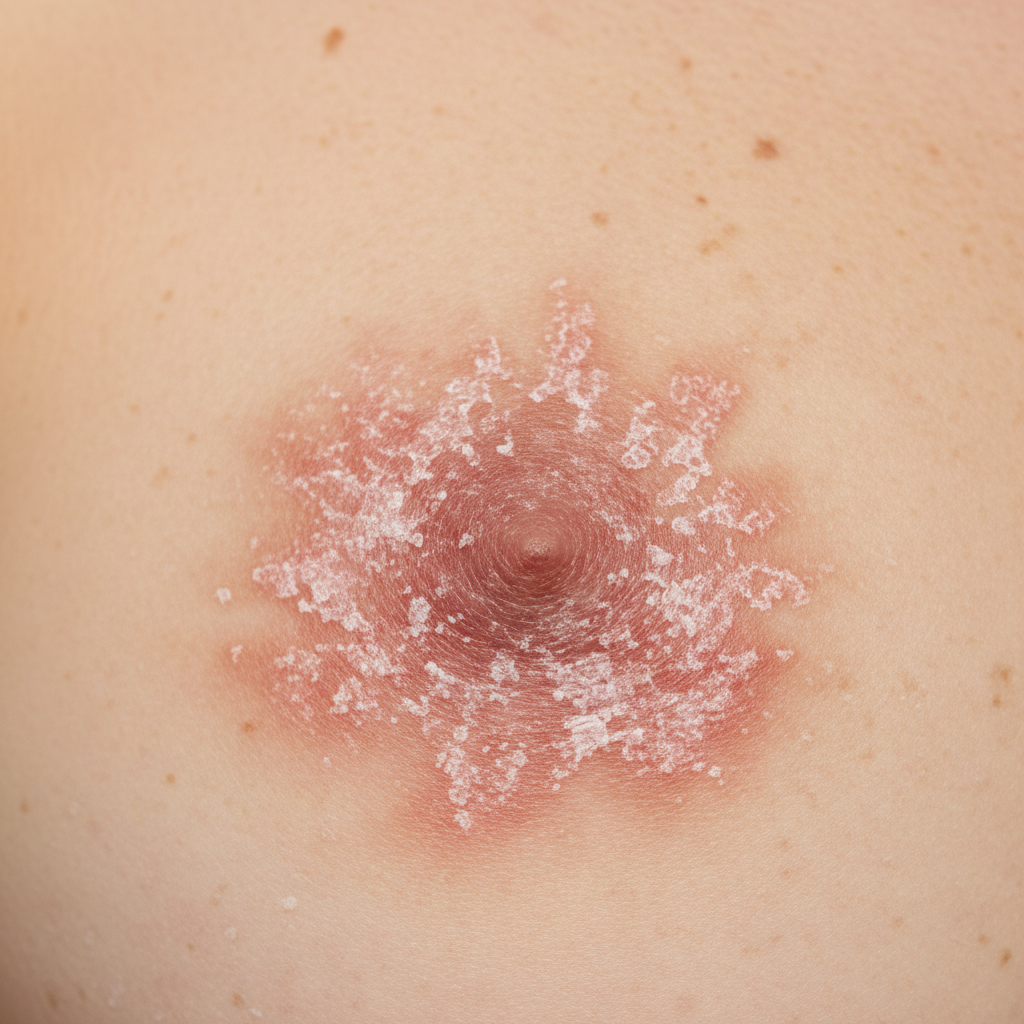
A 43-year-old woman presents to the physician because of a persistent rash on her right nipple for 1 month. The rash has persisted despite topical medication. She has no personal or family history of any serious illnesses. Other medications include oral contraceptive pills. She is single and has never had any children. Vital signs are within normal limits. An image of the right breast and nipple is shown. Palpation of the right breast shows a 2 x 2 cm mass under the areola. Lymphadenopathy is palpated in the right axilla. The remainder of the physical examination shows no abnormalities. A mammogram shows subareolar microcalcifications. Which of the following types of breast cancer is most likely to be found in this patient?
Q16
A 22-year-old man is brought to the emergency department 30 minutes after being involved in a high-speed motor vehicle collision in which he was the unrestrained driver. After extrication, he had severe neck pain and was unable to move his arms and legs. On arrival, he is lethargic and cannot provide a history. Hospital records show that eight months ago, he underwent an open reduction and internal fixation of the right humerus. His neck is immobilized in a cervical collar. Intravenous fluids are being administered. His pulse is 64/min, respirations are 8/min and irregular, and blood pressure is 104/64 mm Hg. Examination shows multiple bruises over the chest, abdomen, and extremities. There is flaccid paralysis and absent reflexes in all extremities. Sensory examination shows decreased sensation below the shoulders. Cardiopulmonary examination shows no abnormalities. The abdomen is soft. There is swelling of the right ankle and right knee. Squeezing of the glans penis does not produce anal sphincter contraction. A focused assessment with sonography for trauma shows no abnormalities. He is intubated and mechanically ventilated. Which of the following is the most appropriate next step in management?
Q17
A 49-year-old woman presents with a mass in her left breast. She says she discovered the mass during a monthly self-examination 3 months ago and has been 'watching it' since that time. She believes the mass has enlarged since she first discovered it. The patient denies any ulceration, weight loss, fatigue, night sweats, or nipple discharge. Her past medical history is significant for mild osteoporosis, managed with alendronate. The patient is afebrile, and her vital signs are within normal limits. On physical examination, there is a 4-cm-diameter left breast mass that is firm and non-tender on palpation. A mammogram of the left breast is performed but fails to display the mass. Which of the following is the best next step in the management of this patient?
Q18
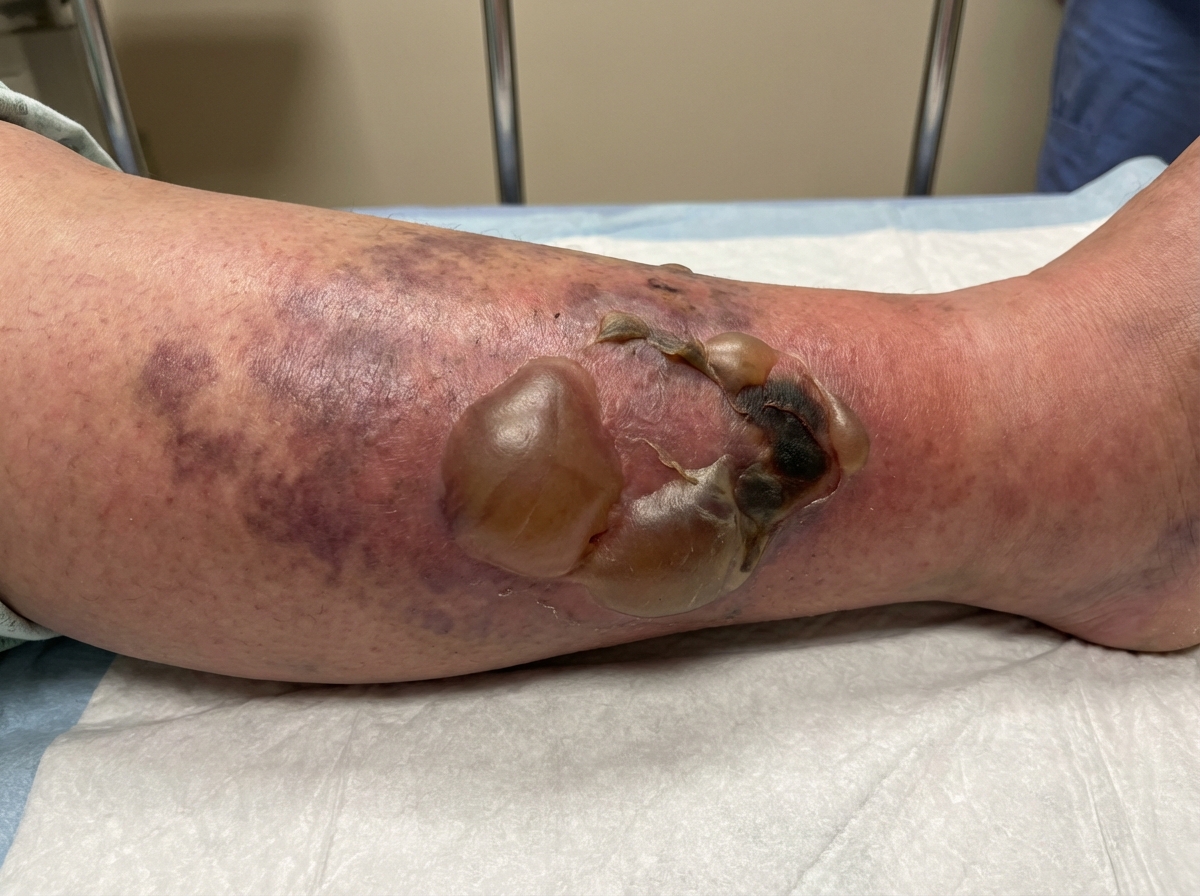
A 43-year-old man is brought to the emergency department with skin changes on his leg as shown in the image that manifested over the past 24 hours. He accidentally stabbed himself in the leg 4 days earlier with a knife that was in his pocket. He has a 10-year history of diabetes mellitus. His medications include metformin. He appears confused. His blood pressure is 90/70 mm Hg, the pulse is 115/min, the respirations are 21/min, and his temperature is 39.5℃ (103.1℉). The cardiopulmonary examination shows no other abnormalities. The serum creatinine level is 2.5 mg/dL. Which of the following is the most appropriate step in establishing a definitive diagnosis?
Q19
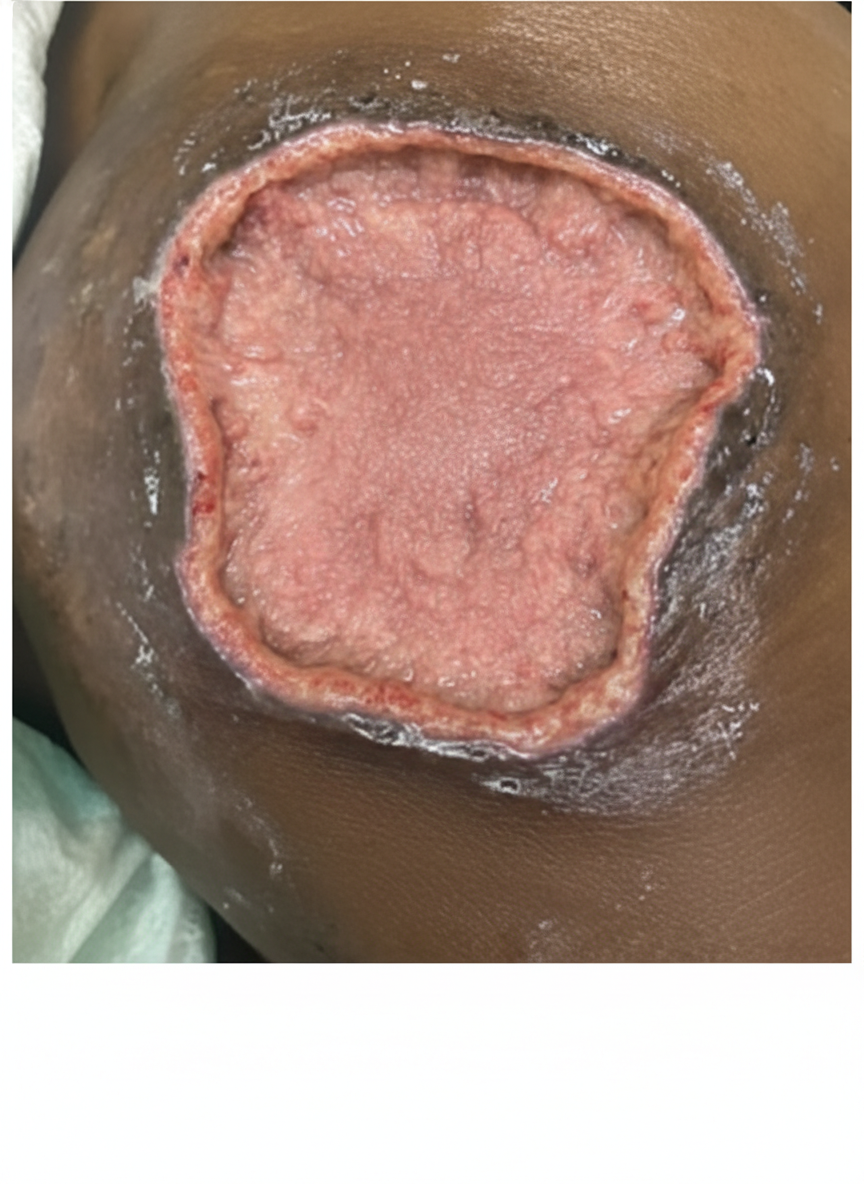
A 16-year-old boy is brought to the physician for a follow-up of a wound on his ankle. He had a pedestrian accident 3 days ago which caused a skin defect on the dorsal side of his left ankle. The lesion was cleaned, debrided, and observed over the past 3 days. He has no history of serious illness and takes no medications. His vital signs are within normal limits. Physical examination shows no signs of local infection. A photograph of the lesion is shown. Which of the following is the most appropriate surgical management?
Q20
A 67-year-old man is brought to the emergency room after being involved in a traffic accident. He currently complains of bilateral hip pain. His vital signs are within the normal range, and he is hemodynamically stable. The pelvic compression test is positive. External genitalia appears normal, except there is blood at the urethral meatus and a contusion at the base of the scrotum. Digital rectal examination (DRE) shows a high-riding ballotable prostate. An X-ray reveals the presence of a pelvic fracture. Which of the following initial actions is the most appropriate for this patient?
Trauma/Emergencies US Medical PG Practice Questions and MCQs
Question 11: A 27-year-old man is brought to the emergency department by ambulance following a motor vehicle accident 1 hour prior. He appears agitated. His blood pressure is 85/60 mm Hg, the pulse is 110/min, and the respiratory rate is 19/min. Physical examination shows bruising of the left flank and fracture of the left lower thoracic bones. Strict bed rest and monitoring with intravenous fluids is initiated. Urinalysis shows numerous RBCs. A contrast-enhanced CT scan shows normal enhancement of the right kidney. The left renal artery is only visible in the proximal section with a small amount of extravasated blood around the left kidney. The left kidney shows no enhancement. Imaging of the spleen shows no abnormalities. Which of the following is the most appropriate next step in management?
A. Immediate surgical exploration (Correct Answer)
B. Observation with delayed repair
C. Conservative management
D. Renal artery embolization
E. Renal artery embolization with delayed nephrectomy
Explanation: ***Immediate surgical exploration***
- The patient presents with signs of **hemodynamic instability** (BP 85/60, pulse 110/min, agitation) and imaging findings consistent with **left renal artery avulsion** and devascularization (no enhancement of the left kidney, visible only proximally, extravasated blood). These findings necessitate immediate surgical intervention to control hemorrhage and assess kidney viability.
- The goal is to revascularize the kidney if possible, perform a nephrectomy if the kidney is unsalvageable, and manage hemorrhage to stabilize the patient.
*Observation with delayed repair*
- This approach is typically reserved for **hemodynamically stable** patients with renal injuries, especially lower-grade injuries that do not involve complete vessel avulsion or ongoing significant hemorrhage.
- Delaying intervention in a hemodynamically unstable patient with a presumed renal artery avulsion can lead to further decompensation, irreversible kidney damage, and increased mortality.
*Conservative management*
- **Conservative management** is appropriate for hemodynamically stable patients with minor renal injuries, such as contusions or small lacerations, or for very selected cases of more severe injuries that have spontaneously tamponaded and are not causing significant clinical compromise.
- The patient's **hemodynamic instability** and direct evidence of renal artery injury preclude conservative management in this case.
*Renal artery embolization*
- **Renal artery embolization** is a highly effective, minimally invasive technique for controlling bleeding from renal injuries. However, it is primarily indicated for **hemodynamically stable patients** with contained hemorrhage or specific pseudoaneurysms/AV fistulas.
- In a hemodynamically unstable patient with a complete renal artery avulsion and non-perfused kidney, embolization is unlikely to revascularize the kidney and may even hinder subsequent surgical repair if revascularization is deemed possible. Furthermore, it might not be sufficient to control diffuse or extensive bleeding associated with avulsion.
*Renal artery embolization with delayed nephrectomy*
- While embolization can precede nephrectomy in certain scenarios for better hemorrhage control, it is not the primary immediate step in a **hemodynamically unstable** patient with renal artery avulsion and a non-enhancing kidney.
- The primary concern is the patient's instability, which requires immediate surgical control, and delaying nephrectomy after embolization often isn't feasible if the kidney is completely devascularized and the patient is unstable. The decision for nephrectomy typically occurs during the initial surgical exploration.
Question 12: A 25-year-old man comes to the physician because of left-sided knee pain for 2 weeks. The pain started while playing basketball after suddenly hearing a popping sound. He has been unable to run since this incident. He has asthma, allergic rhinitis, and had a progressive bilateral sensorineural hearing impairment at birth treated with cochlear implants. His only medication is a salbutamol inhaler. The patient appears healthy and well-nourished. His temperature is 37°C (98.6°F), pulse is 67/min, and blood pressure is 120/80 mm Hg. Examination of the left knee shows medial joint line tenderness. Total knee extension is not possible and a clicking sound is heard when the knee is extended. An x-ray of the left knee shows no abnormalities. Which of the following is the most appropriate next step in the management of this patient?
A. Reassurance and follow-up
B. Arthrocentesis of the left knee
C. Open meniscal repair
D. Arthroscopy of the left knee
E. MRI scan of the left knee (Correct Answer)
Explanation: ***MRI scan of the left knee***
- The patient's presentation with a **popping sound**, inability to run, **medial joint line tenderness**, limited extension, and a clicking sound suggests a **meniscal tear**, which is not visible on X-ray.
- An **MRI scan** is the *most appropriate* next step as it is the **gold standard** for diagnosing meniscal tears and other soft tissue injuries of the knee.
*Reassurance and follow-up*
- This option is *inappropriate* given the clear signs and symptoms of a **significant knee injury** that warrants further investigation.
- Delaying diagnosis and treatment could lead to **worsening of the injury** and chronic pain.
*Arthrocentesis of the left knee*
- Arthrocentesis involves aspirating joint fluid, which is primarily indicated for diagnosing **septic arthritis** or **gout**, neither of which is suggested by this patient's acute trauma history.
- While a meniscal tear can cause an effusion, the primary diagnostic goal here is imaging the soft tissue injury, not analyzing synovial fluid.
*Open meniscal repair*
- **Open meniscal repair** is a surgical intervention, and it is *premature* to consider surgery before a definitive diagnosis is established.
- The *most appropriate* initial step after physical exam and X-ray is often an MRI to confirm the pathology.
*Arthroscopy of the left knee*
- **Arthroscopy** is both a **diagnostic and therapeutic procedure**, but it is generally reserved after non-invasive imaging like MRI has been performed.
- Although it can confirm a meniscal tear, an MRI is less invasive and can provide comparable if not superior detail for surgical planning.
Question 13: An 81-year-old woman presents to her physician complaining of occasional right-sided weakness in her arm and leg. She reports 3 such episodes over the last 6 months, each lasting only 1 hour and not significantly affecting her daily functioning. The patient denies numbness and tingling, pain, weakness in her left side, and changes in her speech. She has a past medical history of hypertension and coronary artery disease with stable angina, and her medications include 81 mg aspirin, 20 mg lisinopril, 5 mg amlodipine, and 20 mg atorvastatin daily. The patient reports a 40-pack-year smoking history and occasional alcohol intake. At this visit, her temperature is 98.5°F (36.9°C), blood pressure is 142/87 mmHg, pulse is 70/min, and respirations are 14/min. She has a grade II systolic ejection murmur best heard at the right upper sternal border, and there is a carotid bruit on the left side. Her lungs are clear. Neurologic exam reveals intact cranial nerve function, 1+ deep tendon reflexes in bilateral patellae and biceps, as well as 5/5 strength and intact pinprick sensation in all extremities. Carotid ultrasound is performed and identifies 52% stenosis on the right side and 88% on the left. Which of the following is the best next step in management?
A. Perform carotid endarterectomy on left side only (Correct Answer)
B. Repeat carotid ultrasound in 6 months
C. Perform carotid endarterectomy on both sides
D. Increase atorvastatin to 80 mg daily
E. Perform carotid artery angioplasty with stenting (CAS)
Explanation: ***Perform carotid endarterectomy on left side only***
- The patient's symptoms (right-sided weakness) are consistent with **transient ischemic attacks (TIAs)** affecting the left cerebral hemisphere, fed by the **left carotid artery**.
- Her left carotid artery shows **88% stenosis**, which is a high-grade stenosis in a symptomatic patient, warranting intervention like **carotid endarterectomy (CEA)** to prevent stroke.
*Repeat carotid ultrasound in 6 months*
- This approach is appropriate for **asymptomatic patients** with moderate stenosis (e.g., 50-79%) or for those with low-grade stenosis.
- Given the patient's **symptomatic TIAs** and **high-grade stenosis (88%)** on the left, waiting 6 months would significantly increase her risk of stroke.
*Perform carotid endarterectomy on both sides*
- The patient's symptoms are localized to the right side, implicating the **left carotid artery**.
- While the right carotid artery has 52% stenosis, it is currently **asymptomatic** and does not meet current guidelines for immediate surgical intervention.
*Increase atorvastatin to 80 mg daily*
- While **high-intensity statin therapy (atorvastatin 80 mg)** is crucial for **atherosclerosis management** and stroke prevention, it is not the primary next step for a symptomatic patient with high-grade carotid stenosis.
- Medical therapy alone is insufficient to address the immediate stroke risk posed by the **88% left carotid stenosis**.
*Perform carotid artery angioplasty with stenting (CAS)*
- **Carotid artery stenting (CAS)** is an alternative to CEA, but it generally carries a **higher stroke risk** in older patients (over 70-75 years) and those without specific indications (e.g., high surgical risk for CEA, previous neck radiation, recurrent stenosis after CEA).
- For an 81-year-old, **CEA is generally preferred over CAS** for symptomatic high-grade stenosis due to a lower risk of periprocedural stroke.
Question 14: A 65-year-old woman comes to the physician because of a 2-month history of persistent pain in her right shoulder. The pain is localized to the top of the shoulder and is worse with movement. She has stiffness in the right shoulder that is worse in the morning and usually lasts 20 minutes. The patient reports that she is unable to brush her hair and has stopped going to her regular tennis lessons because of the pain. She does not recall any fall or trauma. When her right arm is passively abducted in an arc, there is pain between 60 and 120 degrees of abduction. When asked to lower the right arm slowly from 90 degrees of abduction, she is unable to hold her arm up and it drops to her side. Passive range of motion is normal. Injection of 5 mL of 1% lidocaine into the right subacromial space does not relieve the pain or improve active range of motion of the right arm. Which of the following is the most likely diagnosis?
A. Biceps tendinitis
B. Rotator cuff tear (Correct Answer)
C. Calcific tendinitis
D. Cervical radiculopathy
E. Subacromial bursitis
Explanation: ***Rotator cuff tear***
- The patient's inability to hold her arm up when asked to lower it slowly from 90 degrees of abduction (the **drop arm test**) is a classic sign of a significant **rotator cuff tear**.
- **Weakness** and pain during active abduction, especially between 60 and 120 degrees, along with normal passive range of motion, further support this diagnosis.
*Biceps tendinitis*
- This condition typically presents with localized pain in the **anterior shoulder** or bicipital groove, often exacerbated by resisted forearm supination or shoulder flexion.
- While it can cause pain with movement, it typically does not result in the marked **weakness** and inability to sustain abduction seen in this patient.
*Calcific tendinitis*
- Characterized by the deposition of **calcium crystals** within the rotator cuff tendons, leading to acute, severe pain, often worse at night.
- While it causes pain with movement, it generally does not present with the specific weakness or positive drop arm test indicative of a **structural tear**.
*Cervical radiculopathy*
- Pain from cervical radiculopathy typically radiates down the arm, often accompanied by **neurological deficits** such as numbness, tingling, or weakness in specific dermatomes and myotomes.
- The patient's pain is localized to the top of the shoulder, and her passive range of motion is normal, making **nerve root compression** less likely.
*Subacromial bursitis*
- This condition causes pain that is often reproduced with active and passive abduction, and a **lidocaine injection** into the subacromial space would typically provide at least temporary pain relief and improved range of motion.
- The failure of the lidocaine injection to relieve pain and the positive **drop arm test** make isolated bursitis less likely, as these point to a more significant underlying structural issue.
Question 15: A 43-year-old woman presents to the physician because of a persistent rash on her right nipple for 1 month. The rash has persisted despite topical medication. She has no personal or family history of any serious illnesses. Other medications include oral contraceptive pills. She is single and has never had any children. Vital signs are within normal limits. An image of the right breast and nipple is shown. Palpation of the right breast shows a 2 x 2 cm mass under the areola. Lymphadenopathy is palpated in the right axilla. The remainder of the physical examination shows no abnormalities. A mammogram shows subareolar microcalcifications. Which of the following types of breast cancer is most likely to be found in this patient?
A. Medullary carcinoma
B. Lobular carcinoma in situ
C. Invasive ductal carcinoma (Correct Answer)
D. Ductal carcinoma in situ
E. Invasive lobular carcinoma
Explanation: ***Invasive ductal carcinoma***
- The presentation of a persistent **nipple rash** and a subareolar mass with **axillary lymphadenopathy** is highly suggestive of **Paget's disease of the nipple**, which is almost always associated with an underlying invasive or non-invasive ductal carcinoma.
- The mammogram showing **subareolar microcalcifications** further supports the presence of a ductal carcinoma, as these are common findings in ductal carcinoma.
*Medullary carcinoma*
- This is a rare type of breast cancer characterized by a relatively **good prognosis** and often seen in younger women, but it typically presents as a well-circumscribed mass and is less commonly associated with Paget's disease.
- It often lacks the typical signs of Paget's disease and microcalcifications are less prominent.
*Lobular carcinoma in situ*
- This is a **non-invasive condition** that increases the risk of developing invasive cancer in either breast.
- It does not typically present with a nipple rash, palpable mass, or axillary lymphadenopathy, as it is confined to the lobules and does not form a distinct mass or spread.
*Ductal carcinoma in situ*
- While **ductal carcinoma in situ (DCIS)** can be associated with Paget's disease and microcalcifications, the presence of a **palpable mass** and **axillary lymphadenopathy** strongly indicates an **invasive component** rather than just an in situ lesion.
- Lymph node involvement signifies invasion beyond the basement membrane.
*Invasive lobular carcinoma*
- This type of cancer is characterized by its **diffuse growth pattern** and often presents as a subtle thickening or change in breast contour rather than a discrete palpable mass.
- It is **less commonly associated with Paget's disease** and microcalcifications compared to ductal carcinomas.
Question 16: A 22-year-old man is brought to the emergency department 30 minutes after being involved in a high-speed motor vehicle collision in which he was the unrestrained driver. After extrication, he had severe neck pain and was unable to move his arms and legs. On arrival, he is lethargic and cannot provide a history. Hospital records show that eight months ago, he underwent an open reduction and internal fixation of the right humerus. His neck is immobilized in a cervical collar. Intravenous fluids are being administered. His pulse is 64/min, respirations are 8/min and irregular, and blood pressure is 104/64 mm Hg. Examination shows multiple bruises over the chest, abdomen, and extremities. There is flaccid paralysis and absent reflexes in all extremities. Sensory examination shows decreased sensation below the shoulders. Cardiopulmonary examination shows no abnormalities. The abdomen is soft. There is swelling of the right ankle and right knee. Squeezing of the glans penis does not produce anal sphincter contraction. A focused assessment with sonography for trauma shows no abnormalities. He is intubated and mechanically ventilated. Which of the following is the most appropriate next step in management?
A. Cervical x-ray
B. CT of the head
C. Intravenous dexamethasone therapy
D. MRI of the spine (Correct Answer)
E. Placement of Foley catheter
Explanation: **MRI of the spine**
- The patient presents with clear signs of a **spinal cord injury** (flaccid paralysis, absent reflexes, decreased sensation below the shoulders, severe neck pain after trauma). **MRI** is the most sensitive and specific imaging modality to visualize soft tissue injuries, including the spinal cord, ligaments, and disc herniations, which are crucial for diagnosing and guiding treatment for a spinal cord injury.
- Given the patient's **hemodynamic stability** after initial resuscitation and intubation, and the suspicion of spinal cord injury, a thorough evaluation with MRI is the next appropriate step to delineate the extent and location of the injury.
*Cervical x-ray*
- While cervical X-rays are often performed in trauma cases, they have **limited sensitivity** for detecting all spinal injuries, especially soft tissue damage, ligamentous injuries, or non-displaced fractures.
- In a patient with clear neurological deficits suggesting spinal cord involvement, X-rays alone are **insufficient** for a definitive diagnosis and treatment planning.
*CT of the head*
- A CT scan of the head would be appropriate if there were signs of a **head injury**, such as focal neurological deficits suggestive of intracranial pathology, or a change in mental status not fully explained by other injuries.
- In this case, the predominant neurological signs point to a **spinal cord injury** rather than a primary head injury, making head CT a lower priority at this stage.
*Intravenous dexamethasone therapy*
- The use of high-dose corticosteroids like dexamethasone for acute spinal cord injury is **controversial** and its routine use is **not recommended** by current guidelines due to a lack of clear benefit and potential for harm.
- Imaging to characterize the injury is a more urgent and appropriate step before considering any pharmacological interventions for spinal cord protection.
*Placement of Foley catheter*
- While a **Foley catheter** will likely be needed for this patient to manage neurogenic bladder dysfunction that often accompanies spinal cord injury, it is a supportive measure.
- It does not address the immediate diagnostic need to characterize the spinal cord injury, which is paramount for guiding surgical or medical management and preventing further damage.
Question 17: A 49-year-old woman presents with a mass in her left breast. She says she discovered the mass during a monthly self-examination 3 months ago and has been 'watching it' since that time. She believes the mass has enlarged since she first discovered it. The patient denies any ulceration, weight loss, fatigue, night sweats, or nipple discharge. Her past medical history is significant for mild osteoporosis, managed with alendronate. The patient is afebrile, and her vital signs are within normal limits. On physical examination, there is a 4-cm-diameter left breast mass that is firm and non-tender on palpation. A mammogram of the left breast is performed but fails to display the mass. Which of the following is the best next step in the management of this patient?
A. Repeat a mammogram in 6 months
B. Observe for 6 months and biopsy the mass if it persists
C. Perform an ultrasound of the left breast (Correct Answer)
D. Reassurance
E. Begin tamoxifen therapy
Explanation: ***Perform an ultrasound of the left breast***
- A palpable breast mass that is not visualized on a **mammogram**, especially in a woman with **dense breast tissue** or a small mass, warrants further imaging with **ultrasound**.
- **Ultrasound** can differentiate between solid and cystic masses and guide biopsy if necessary, providing a clearer picture of the mass characteristics.
*Repeat a mammogram in 6 months*
- Delaying further evaluation for 6 months after a palpable and growing mass is inappropriate and could allow a potential malignancy to progress.
- A repeated mammogram is unlikely to visualize a mass that was missed initially, especially if the issue is **breast density** or mass size.
*Observe for 6 months and biopsy the mass if it persists*
- Observing a **palpable and enlarging mass** for 6 months without further diagnostic imaging is medically negligent.
- Biopsy should be considered based on initial imaging findings, not solely after prolonged observation, particularly for a growing mass.
*Reassurance*
- Reassurance is inappropriate given the presence of a **palpable, growing breast mass** which requires thorough investigation to rule out malignancy.
- While many breast masses are benign, a new or changing mass cannot be simply dismissed without proper diagnostic workup.
*Begin tamoxifen therapy*
- **Tamoxifen** is used for **breast cancer treatment** or prevention, but it should only be initiated after a definitive diagnosis of cancer, which is currently lacking.
- Starting empirical treatment without a confirmed diagnosis is not the correct approach as it delays diagnosis and potentially correct treatment.
Question 18: A 43-year-old man is brought to the emergency department with skin changes on his leg as shown in the image that manifested over the past 24 hours. He accidentally stabbed himself in the leg 4 days earlier with a knife that was in his pocket. He has a 10-year history of diabetes mellitus. His medications include metformin. He appears confused. His blood pressure is 90/70 mm Hg, the pulse is 115/min, the respirations are 21/min, and his temperature is 39.5℃ (103.1℉). The cardiopulmonary examination shows no other abnormalities. The serum creatinine level is 2.5 mg/dL. Which of the following is the most appropriate step in establishing a definitive diagnosis?
A. Computed tomography (CT) scan
B. Open surgery (Correct Answer)
C. Response to empirical antibiotics
D. No further testing is indicated
E. Magnetic resonance imaging (MRI)
Explanation: ***Open surgery***
- The patient presents with classic signs of **necrotizing fasciitis**, including rapid progression of skin changes (**necrotic patches**, **crepitus**), **severe pain out of proportion to examination**, **fever**, **tachycardia**, **hypotension**, and **confusion**, all of which indicate systemic toxicity and septic shock.
- **Early surgical debridement** is critical for both diagnosis (biopsy for histology and culture) and treatment of necrotizing fasciitis, making it the most appropriate immediate step in establishing a definitive diagnosis and improving survival.
*Computed tomography (CT) scan*
- While CT scans can reveal **gas in soft tissues** and **fascial thickening** indicative of necrotizing fasciitis, they delay definitive treatment which is surgical debridement.
- In a critically ill patient with rapidly progressing infection, the time spent for imaging can be detrimental and should only be performed if the diagnosis is unclear.
*Response to empirical antibiotics*
- Administering **empirical antibiotics** is crucial in managing sepsis, but it cannot definitively diagnose necrotizing fasciitis or address the rapidly progressing tissue destruction.
- Delaying surgical debridement while awaiting a response to antibiotics in necrotizing fasciitis is dangerous and carries a very high mortality rate.
*No further testing is indicated*
- This statement is incorrect because, while the clinical picture strongly suggests **necrotizing soft tissue infection**, a definitive diagnosis requires **surgical exploration and debridement** with tissue biopsy and culture for pathogen identification.
- The patient's critical condition warrants aggressive intervention, not a lack of further action or diagnostics.
*Magnetic resonance imaging (MRI)*
- While MRI is highly sensitive for detecting **soft tissue edema** and fluid collections, it is generally **not the preferred initial diagnostic tool** in an unstable patient with suspected necrotizing fasciitis.
- MRI is time-consuming and often difficult to perform in critically ill patients, thereby delaying emergent surgical intervention.
Question 19: A 16-year-old boy is brought to the physician for a follow-up of a wound on his ankle. He had a pedestrian accident 3 days ago which caused a skin defect on the dorsal side of his left ankle. The lesion was cleaned, debrided, and observed over the past 3 days. He has no history of serious illness and takes no medications. His vital signs are within normal limits. Physical examination shows no signs of local infection. A photograph of the lesion is shown. Which of the following is the most appropriate surgical management?
A. Full-thickness skin graft
B. Musculocutaneous flap
C. Split-thickness skin graft (Correct Answer)
D. Free tissue transfer flap
E. Primary closure
Explanation: ***Split-thickness skin graft***
- A **split-thickness skin graft (STSG)** is appropriate for covering large, clean skin defects without exposed vital structures (e.g., bone, tendon, nerve). The wound on the dorsal ankle, after debridement and without signs of infection, meets these criteria.
- STSGs are typically used on the ankle due to the limited availability of local tissue for other closure methods and offer good cosmetic and functional outcomes when the defect is over well-vascularized tissue.
*Full-thickness skin graft*
- **Full-thickness skin grafts (FTSGs)** are generally reserved for smaller defects where cosmetic appearance is paramount, such as on the face or hands, and when there is a good vascular bed.
- They have a higher metabolic demand and lower take rate compared to STSGs, making them less suitable for larger areas or areas with potentially compromised vasculature like the lower leg.
*Musculocutaneous flap*
- A **musculocutaneous flap** involves transferring muscle, subcutaneous tissue, and skin, and is indicated when there is exposed bone, tendon, or hardware, or when substantial soft tissue bulk is required.
- Since the question states a "skin defect" and no exposed vital structures, a musculocutaneous flap is an overly complex solution for this wound.
*Free tissue transfer flap*
- **Free tissue transfer flaps** are complex microsurgical procedures used for very large defects, composite tissue loss, or when local tissue options are unavailable, often involving revascularization.
- This method is reserved for much more severe injuries or specific functional requirements, which are not suggested by the description of a simple skin defect.
*Primary closure*
- **Primary closure** is ideal for small, clean wounds with minimal tension where the edges can be directly approximated.
- A "skin defect" on the dorsal ankle often implies a larger area of skin loss that cannot be closed primarily without excessive tension, especially given the limited skin mobility in the ankle region.
Question 20: A 67-year-old man is brought to the emergency room after being involved in a traffic accident. He currently complains of bilateral hip pain. His vital signs are within the normal range, and he is hemodynamically stable. The pelvic compression test is positive. External genitalia appears normal, except there is blood at the urethral meatus and a contusion at the base of the scrotum. Digital rectal examination (DRE) shows a high-riding ballotable prostate. An X-ray reveals the presence of a pelvic fracture. Which of the following initial actions is the most appropriate for this patient?
A. Insert a Foley catheter
B. Take the patient emergently to the operating room and check for a urethral injury with IV indigo carmine
C. Obtain a retrograde urethrogram (RUG), including a pre-injection kidney, ureter, and bladder (KUB) film (Correct Answer)
D. Obtain a urinalysis to detect microscopic hematuria
E. Perform a suprapubic cystostomy
Explanation: ***Obtain a retrograde urethrogram (RUG), including a pre-injection kidney, ureter, and bladder (KUB) film***
- The combination of **blood at the urethral meatus**, a **high-riding ballotable prostate** on DRE, and a **pelvic fracture** are classic signs of a **urethral injury**, specifically a posterior urethral tear.
- A **retrograde urethrogram (RUG)** is the gold standard diagnostic test to confirm urethral injury and determine its location and extent, which is crucial before any attempt at catheterization.
*Insert a Foley catheter*
- **Insertion of a Foley catheter is contraindicated** in suspected urethral injuries, as it can worsen a partial tear into a complete transection or create a false passage.
- Doing so blindly could lead to further damage, stricture formation, and increased morbidity.
*Take the patient emergently to the operating room and check for a urethral injury with IV indigo carmine*
- This approach is premature before confirming the diagnosis and extent of urethral injury; **indigo carmine is used to assess ureteral integrity**, not urethral injury.
- Surgical exploration for urethral injury as an initial step is typically reserved for cases where RUG cannot be performed or for severe complex injuries with other indications for immediate surgery.
*Obtain a urinalysis to detect microscopic hematuria*
- While microscopic hematuria would likely be present, it is a **nonspecific finding** and does not provide information about the integrity of the urethra itself.
- It would not change the need for a RUG to assess for urethral injury in the presence of more specific signs.
*Perform a suprapubic cystostomy*
- A **suprapubic cystostomy** is the appropriate method for urinary diversion in a patient with a confirmed urethral injury if a Foley catheter cannot be safely placed.
- However, it is an intervention chosen *after* diagnosing the injury with a RUG, not the initial diagnostic step itself.