A 35-year-old man is referred to a physical therapist due to limitation of movement in the wrist and fingers of his left hand. He cannot hold objects or perform daily activities with his left hand. He broke his left arm at the humerus one month ago. The break was simple and treatment involved a cast for one month. Then he lost his health insurance and could not return for follow up. Only after removing the cast did he notice the movement issues in his left hand and wrist. His past medical history is otherwise insignificant, and vital signs are within normal limits. On examination, the patient’s left hand is pale and flexed in a claw-like position. It is firm and tender to palpation. Right radial pulse is 2+ and left radial pulse is 1+. The patient is unable to actively extend his fingers and wrist, and passive extension is difficult and painful. Which of the following is a proper treatment for the presented patient?
Q182
A 20-year-old man presents to the family medicine clinic with left knee pain. He is the star running back for his college football team with a promising future in the sport. He states he injured his knee 2 days ago during the final game of the season while making a cutting move, where his foot was planted and rotated outward and his knee buckled inward. He admits to feeling a ‘pop’ and having immediate pain. He denies any locking, clicking, or giving way since the event. Physical examination reveals an antalgic gait with avoidance of active knee extension. His left knee demonstrates moderate, diffuse swelling and is very tender to palpation along the joint line. Which of the following structures is most likely damaged in this patient?
Q183
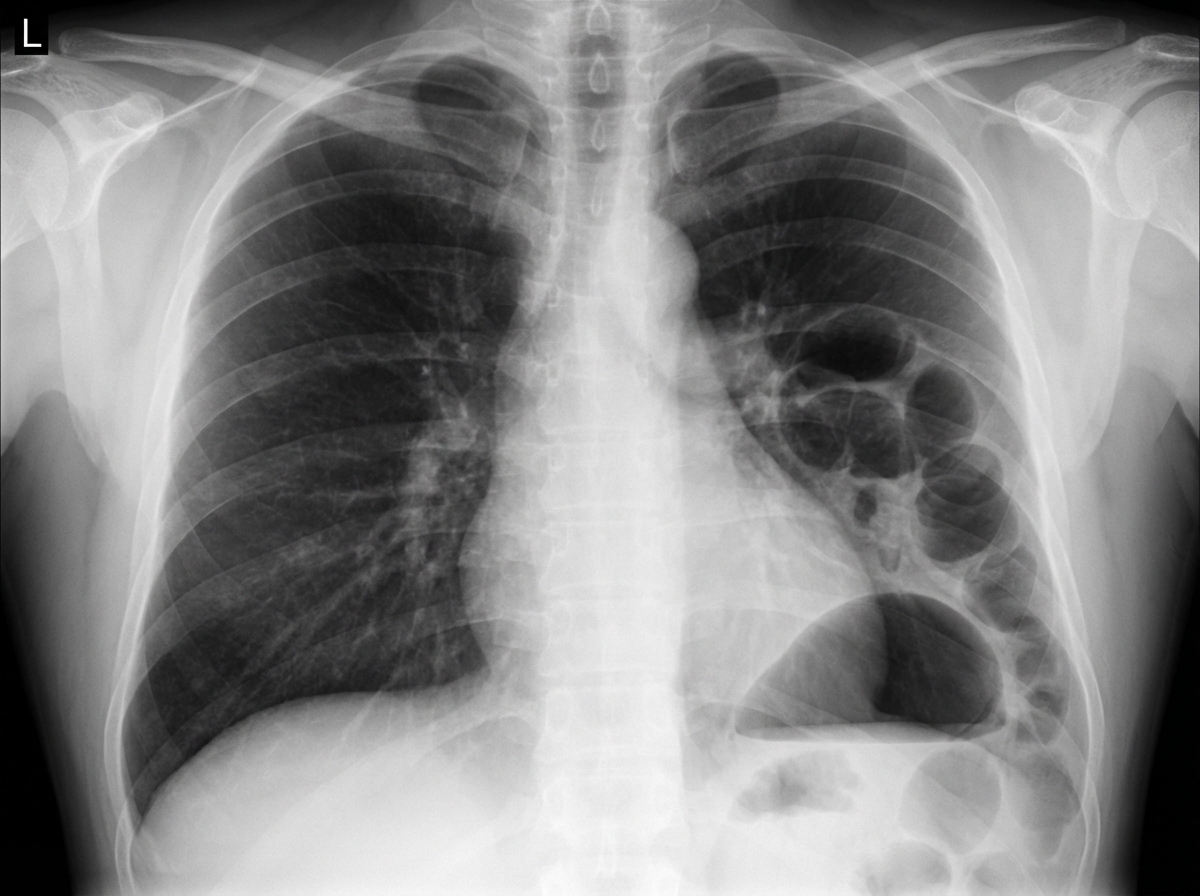
A 28-year-old man is brought to the emergency department with shortness of breath and chest pain, 35 minutes after he was involved in a high-speed motor vehicle collision. He was the helmeted driver of a scooter hit by a truck. On arrival, he is alert and oriented with a Glasgow Coma Scale rating of 14. His temperature is 37.3°C (99.1°F), pulse is 103/min, respirations are 33/min and blood pressure is 132/88 mm Hg. Pulse oximetry on room air shows an oxygen saturation of 94%. Examination shows multiple abrasions over his abdomen and extremities. There is a 2.5-cm (1-in) laceration on the left side of the chest. There are decreased breath sounds over the left base. Cardiac examination shows no abnormalities. The abdomen is soft and there is tenderness to palpation over the left upper quadrant. Bowel sounds are normal. His hemoglobin concentration is 13.6 g/dL, leukocyte count is 9,110/mm3, and platelet count is 190,000/mm3. A chest x-ray is shown. Which of the following is the most likely diagnosis?
Q184
An 8-year-old boy and his 26-year-old babysitter are brought into the emergency department with severe injuries caused by a motor vehicle accident. The child is wheeled to the pediatric intensive care unit with a severe injury to his right arm, as well as other external and internal injuries. He is hemorrhaging and found to be hemodynamically unstable. He subsequently requires transfusion and surgery, and he is currently unconscious. The pediatric trauma surgeon evaluates the child’s arm and realizes it will need to be amputated at the elbow. Which of the following is the most appropriate course of action to take with regards to the amputation?
Q185
A 37-year-old man is brought to the emergency department by a friend after he was found lying unconscious outside his front door. The friend reports that they were “pretty drunk” the previous night, and she had dropped her friend off at his home and driven off. When she came back in the morning, she found him passed out on the ground next to the doorstep. On arrival, he is conscious and cooperative. He reports feeling cold, with severe pain in his hands and face. He remembers having lost his gloves last night. His rectal temperature is 35.2°C (95.3°F), pulse is 86/min, respirations are 17/min, and blood pressure is 124/58 mm Hg. Examination shows decreased sensations over the distal fingers, which are cold to touch. The skin over the distal phalanges is cyanotic, hard, waxy, and tender, with surrounding edema. Laboratory studies are within the reference range. An x-ray of the chest and ECG show no abnormalities. Which of the following is the most appropriate next step in management?
Q186
A 35-year-old man is brought to the emergency department 40 minutes after spilling hot oil over himself in a kitchen accident. Examination shows multiple tense blisters over the abdomen, anterior chest, and right upper extremity. On deroofing the blisters, the skin over the right upper extremity is tender, pink, and blanches with pressure. The skin over the abdomen and anterior chest is tender, mottled, and does not blanch with pressure. The left thigh shows erythema only, is tender, and shows quick capillary refill after blanching with pressure. Which of the following most closely approximates the body surface area affected by 2nd-degree burns in this patient?
Q187
A 24-year-old man is brought to the emergency department 30 minutes after being involved in a high-speed motor vehicle collision in which he was a restrained driver. On arrival, he is alert and oriented. His pulse is 112/min, respirations are 29/min, and blood pressure is 100/60 mm Hg. The pupils are equal and reactive to light. There is a 3-cm laceration over the forehead and multiple bruises over the trunk. The lungs are clear to auscultation. Cardiac examination shows no abnormalities. The abdomen is soft and nontender. The right knee is swollen and tender; range of motion is limited by pain. Infusion of 0.9% saline is begun and intravenous acetaminophen is administered. Two hours later, blood-tinged fluid spontaneously drains from both nostrils, and is made worse by leaning forward. On a piece of gauze, it shows up as a rapidly-expanding clear ring of fluid surrounding blood. Further evaluation of this patient is most likely to show which of the following?
Q188
A 50-year-old man presents with severe chest pain for a week. His pain increases with breathing and is localized to the right. He has tried over-the-counter medications at home, but they did not help. The patient has a 20-pack-year smoking history and currently smokes 2 packs of cigarettes daily, and he drinks 3 to 4 cans of beer daily before dinner. His temperature is 39.1°C (102.3°F), blood pressure is 127/85 mm Hg, pulse is 109/min, and respirations are 20/min. Respiratory examination shows dullness to percussion from the 7th rib inferiorly at the right midaxillary line, decreased vocal tactile fremitus, and diminished breath sounds in the same area. Chest radiograph is shown in the image. The patient is prepared for thoracocentesis. Which of the following locations would be the most appropriate for insertion of a chest tube?
Q189
A 75-year-old man presents to the emergency department because of pain in his left thigh and left calf for the past 3 months. The pain occurs at rest, increases with walking, and is mildly improved by hanging the foot off the bed. He has had hypertension for 25 years and type 2 diabetes mellitus for 30 years. He has smoked 30–40 cigarettes per day for the past 45 years. On examination, femoral, popliteal, and dorsalis pedis pulses are faint on both sides. The patient’s foot is shown in the image. Resting ankle-brachial index (ABI) is found to be 0.30. Antiplatelet therapy and aggressive risk factors modifications are initiated. Which of the following is the best next step for this patient?
Q190
A 27-year-old man presents to the emergency department after being hit by a car while riding his bike. The patient was brought in with his airway intact, vitals stable, and with a C-collar on. Physical exam is notable for bruising over the patient’s head and a confused man with a Glasgow coma scale of 11. It is noticed that the patient has a very irregular pattern of breathing. Repeat vitals demonstrate his temperature is 97.5°F (36.4°C), blood pressure is 172/102 mmHg, pulse is 55/min, respirations are 22/min and irregular, and oxygen saturation is 94% on room air. Which of the following interventions are most likely to improve this patient's vital signs?
Trauma/Emergencies US Medical PG Practice Questions and MCQs
Question 181: A 35-year-old man is referred to a physical therapist due to limitation of movement in the wrist and fingers of his left hand. He cannot hold objects or perform daily activities with his left hand. He broke his left arm at the humerus one month ago. The break was simple and treatment involved a cast for one month. Then he lost his health insurance and could not return for follow up. Only after removing the cast did he notice the movement issues in his left hand and wrist. His past medical history is otherwise insignificant, and vital signs are within normal limits. On examination, the patient’s left hand is pale and flexed in a claw-like position. It is firm and tender to palpation. Right radial pulse is 2+ and left radial pulse is 1+. The patient is unable to actively extend his fingers and wrist, and passive extension is difficult and painful. Which of the following is a proper treatment for the presented patient?
A. Surgical release (Correct Answer)
B. Botulinum toxin injections
C. Collagenase injections
D. Needle fasciotomy
E. Corticosteroid injections
Explanation: ***Surgical release***
- The patient presents with classic signs of **established Volkmann's ischemic contracture** (claw-like hand, firm fibrotic tissue, limited movement, decreased radial pulse), which is the end-stage result of untreated compartment syndrome that occurred during fracture healing.
- Since this is **chronic contracture (one month post-injury)**, the appropriate surgical treatment involves **reconstructive procedures** such as muscle slide operations, tendon lengthening, tendon transfers, neurolysis, or in severe cases, free functional muscle transfer to restore hand function.
- Emergency fasciotomy would have been appropriate for **acute compartment syndrome** (within 6-8 hours of onset), but at this stage, the treatment focuses on releasing fibrotic tissue and restoring function through reconstructive surgery.
*Botulinum toxin injections*
- **Botulinum toxin** is used to relax spastic muscles in neurological conditions (e.g., cerebral palsy, stroke), but it does not address the underlying **ischemic fibrosis and muscle necrosis** of Volkmann's contracture.
- It would not improve the structural contracture or restore blood flow in this patient.
*Collagenase injections*
- **Collagenase injections** are used for localized fascial contractures like Dupuytren's contracture, where enzymatic breakdown of collagen cords can restore finger extension.
- They are ineffective for **Volkmann's contracture**, which involves widespread ischemic muscle necrosis, fibrosis, and nerve damage requiring surgical reconstruction.
*Needle fasciotomy*
- **Needle fasciotomy** is a minimally invasive technique for Dupuytren's contracture, involving percutaneous disruption of fascial cords.
- It is not suitable for **Volkmann's contracture**, which requires extensive surgical release of fibrotic muscle compartments, possible tendon transfers, and neurolysis—procedures that cannot be accomplished with needle techniques.
*Corticosteroid injections*
- **Corticosteroids** reduce inflammation in conditions like tenosynovitis or trigger finger.
- They would not address the **ischemic muscle necrosis and fibrotic contracture** in Volkmann's contracture and could potentially delay appropriate surgical treatment.
Question 182: A 20-year-old man presents to the family medicine clinic with left knee pain. He is the star running back for his college football team with a promising future in the sport. He states he injured his knee 2 days ago during the final game of the season while making a cutting move, where his foot was planted and rotated outward and his knee buckled inward. He admits to feeling a ‘pop’ and having immediate pain. He denies any locking, clicking, or giving way since the event. Physical examination reveals an antalgic gait with avoidance of active knee extension. His left knee demonstrates moderate, diffuse swelling and is very tender to palpation along the joint line. Which of the following structures is most likely damaged in this patient?
A. Medial meniscus
B. Anterior cruciate ligament (Correct Answer)
C. Lateral meniscus
D. Posterior cruciate ligament
E. Medial collateral ligament
Explanation: ***Anterior cruciate ligament***
- The mechanism of injury, described as a **cutting move** with the foot planted and knee buckled inward, is a classic non-contact mechanism for **ACL tears**.
- A palpable or audible **'pop'** at the time of injury, followed by immediate pain and swelling, is highly characteristic of an **ACL rupture**.
*Medial meniscus*
- While meniscal tears can cause pain and swelling along the joint line, the history of a **'pop' and immediate swelling** is more indicative of ligamentous injury.
- Absence of **locking or clicking** on the examination makes a primary meniscal tear less likely in this acute presentation.
*Lateral meniscus*
- The injury mechanism, an **external rotation force** on a planted foot, is less commonly associated with isolated lateral meniscal tears than with ACL or medial meniscal injuries.
- Similar to the medial meniscus, the lack of **locking or clicking** makes an isolated lateral meniscal tear less probable.
*Posterior cruciate ligament*
- PCL injuries typically result from a **direct blow to the anterior tibia** with the knee flexed or from a hyperextension injury, which is inconsistent with the described mechanism.
- A PCL injury would most likely present with **posterior laxity** on examination, rather than the general instability often associated with an ACL tear.
*Medial collateral ligament*
- MCL injuries result from a **valgus stress** to the knee, often without an audible 'pop' and usually causing localized pain on the medial side.
- While a valgus force can occur, the prominent **'pop' and immediate, diffuse swelling** are more consistent with an ACL injury than an isolated MCL sprain.
Question 183: A 28-year-old man is brought to the emergency department with shortness of breath and chest pain, 35 minutes after he was involved in a high-speed motor vehicle collision. He was the helmeted driver of a scooter hit by a truck. On arrival, he is alert and oriented with a Glasgow Coma Scale rating of 14. His temperature is 37.3°C (99.1°F), pulse is 103/min, respirations are 33/min and blood pressure is 132/88 mm Hg. Pulse oximetry on room air shows an oxygen saturation of 94%. Examination shows multiple abrasions over his abdomen and extremities. There is a 2.5-cm (1-in) laceration on the left side of the chest. There are decreased breath sounds over the left base. Cardiac examination shows no abnormalities. The abdomen is soft and there is tenderness to palpation over the left upper quadrant. Bowel sounds are normal. His hemoglobin concentration is 13.6 g/dL, leukocyte count is 9,110/mm3, and platelet count is 190,000/mm3. A chest x-ray is shown. Which of the following is the most likely diagnosis?
A. Pneumothorax
B. Phrenic nerve palsy
C. Esophageal perforation
D. Diaphragmatic rupture (Correct Answer)
E. Diaphragmatic eventration
Explanation: ***Diaphragmatic rupture***
- The patient's history of **high-speed motor vehicle collision**, **shortness of breath**, **chest pain**, **decreased breath sounds at the left base**, and **abdominal tenderness in the left upper quadrant** (suggesting possible visceral herniation) are all highly consistent with a diaphragmatic rupture.
- A **chest X-ray** showing an elevated hemidiaphragm, abnormal bowel gas patterns in the chest, or gastric bubble in the thoracic cavity would further support this diagnosis, given the clinical context.
*Pneumothorax*
- While a **pneumothorax** can cause sudden shortness of breath and chest pain and decreased breath sounds, the presence of **left upper quadrant abdominal tenderness** and the mechanism of injury make diaphragmatic rupture more likely as the primary diagnosis.
- A pneumothorax would typically present with a collapsed lung on chest X-ray but would not explain the abdominal symptoms.
*Phrenic nerve palsy*
- **Phrenic nerve palsy** typically causes paralysis of the diaphragm, leading to respiratory compromise and an elevated hemidiaphragm on imaging, but it's usually **atraumatic** or a complication of surgery, not acute trauma.
- It would not explain the acute onset of pain and tenderness after a high-speed collision.
*Esophageal perforation*
- **Esophageal perforation** would cause severe chest pain, often radiating to the back, and can lead to mediastinitis, but it is less likely to present with decreased breath sounds at the base and left upper quadrant tenderness.
- A history of significant **vomiting** or **instrumentation** is often associated with esophageal perforation, which is absent here.
*Diaphragmatic eventration*
- **Diaphragmatic eventration** is a congenital thinning of the diaphragm leading to its elevation, but it is a **chronic condition** and would not present acutely after a high-speed collision.
- It is typically asymptomatic or causes chronic respiratory symptoms, not acute traumatic symptoms.
Question 184: An 8-year-old boy and his 26-year-old babysitter are brought into the emergency department with severe injuries caused by a motor vehicle accident. The child is wheeled to the pediatric intensive care unit with a severe injury to his right arm, as well as other external and internal injuries. He is hemorrhaging and found to be hemodynamically unstable. He subsequently requires transfusion and surgery, and he is currently unconscious. The pediatric trauma surgeon evaluates the child’s arm and realizes it will need to be amputated at the elbow. Which of the following is the most appropriate course of action to take with regards to the amputation?
A. Obtain an emergency court order from a judge to obtain consent to amputate the child’s arm
B. Find the child’s parents to obtain consent to amputate the child’s arm
C. Amputate the child’s arm at the elbow joint (Correct Answer)
D. Wait for the child’s babysitter to recover from her injuries to obtain her consent to amputate the child’s arm
E. Wait for the child to gain consciousness to obtain his consent to amputate his arm
Explanation: ***Amputate the child’s arm at the elbow joint***
- In an emergency situation where a child's life is at risk and a procedure is immediately necessary to save their life or prevent significant harm, **implied consent** allows for medical intervention without explicit parental consent. The child's **hemodynamic instability** and **severe hemorrhage** indicate an immediate threat to life.
- The decision to amputate to save the child's life is a **medically necessary emergency intervention**. Waiting for consent would cause a dangerous delay.
*Obtain an emergency court order from a judge to obtain consent to amputate the child’s arm*
- While court orders can be used in cases of parental refusal or unavailability for non-emergency procedures, the **urgent nature** of this life-threatening situation precludes waiting for a court order.
- The delay in obtaining a court order could significantly worsen the child's prognosis or lead to death.
*Find the child’s parents to obtain consent to amputate the child’s arm*
- Although parental consent is generally required for minors, the child's **critical condition** and **hemodynamic instability** mean delaying life-saving treatment to locate parents would be medically irresponsible.
- The principle of **beneficence** (acting in the best interest of the patient) and avoiding harm takes precedence in this emergency.
*Wait for the child’s babysitter to recover from her injuries to obtain her consent to amputate the child’s arm*
- A babysitter is generally not legally authorized to provide consent for major medical procedures for a child, especially an amputation.
- Even if the babysitter had some form of temporary custody, her own injury makes her an unreliable source of consent, and the delay would be critical.
*Wait for the child to gain consciousness to obtain his consent to amputate his arm*
- An 8-year-old child is generally not considered mature enough to provide **informed consent** for such a major medical decision.
- The child is **unconscious and hemodynamically unstable**, making it impossible to obtain consent and dangerously delaying a life-saving procedure.
Question 185: A 37-year-old man is brought to the emergency department by a friend after he was found lying unconscious outside his front door. The friend reports that they were “pretty drunk” the previous night, and she had dropped her friend off at his home and driven off. When she came back in the morning, she found him passed out on the ground next to the doorstep. On arrival, he is conscious and cooperative. He reports feeling cold, with severe pain in his hands and face. He remembers having lost his gloves last night. His rectal temperature is 35.2°C (95.3°F), pulse is 86/min, respirations are 17/min, and blood pressure is 124/58 mm Hg. Examination shows decreased sensations over the distal fingers, which are cold to touch. The skin over the distal phalanges is cyanotic, hard, waxy, and tender, with surrounding edema. Laboratory studies are within the reference range. An x-ray of the chest and ECG show no abnormalities. Which of the following is the most appropriate next step in management?
A. Intravenous administration of warmed crystalloid
B. Debridement of the affected tissue
C. Immersion of affected extremities in warm water (Correct Answer)
D. Intra-arterial administration of tissue plasminogen activator
E. Intravenous administration of antibiotics
Explanation: ***Immersion of affected extremities in warm water***
- The patient presents with **frostbite** (cyanotic, hard, waxy skin with decreased sensation after cold exposure), and **rapid rewarming** with warm water (37-39°C or 98.6-102.2°F) is the most effective initial treatment.
- This method provides continuous, even heat transfer to optimize tissue perfusion and minimize damage.
*Intravenous administration of warmed crystalloid*
- While this patient has mild **hypothermia** (35.2°C), his vital signs are stable, and the primary concern is localized frostbite.
- **Core rewarming** with warmed crystalloids is typically reserved for more severe hypothermia or hemodynamic instability.
*Debridement of the affected tissue*
- **Debridement** of frostbitten tissue is **contraindicated** in the initial stages as it can cause further damage and make the assessment of viable tissue more difficult.
- Surgical intervention is usually delayed until the full extent of tissue damage is clear, which can take several days to weeks.
*Intra-arterial administration of tissue plasminogen activator*
- **Thrombolytics** like tPA might be considered in severe frostbite with evidence of **vascular compromise** if administered within 24 hours of thawing.
- However, it is an **advanced and invasive treatment**, and the immediate priority is always rewarming.
*Intravenous administration of antibiotics*
- **Prophylactic antibiotics** are generally **not recommended** for frostbite as they do not prevent infection and can promote antibiotic resistance.
- Antibiotics should only be used if there is clear evidence of **secondary infection**.
Question 186: A 35-year-old man is brought to the emergency department 40 minutes after spilling hot oil over himself in a kitchen accident. Examination shows multiple tense blisters over the abdomen, anterior chest, and right upper extremity. On deroofing the blisters, the skin over the right upper extremity is tender, pink, and blanches with pressure. The skin over the abdomen and anterior chest is tender, mottled, and does not blanch with pressure. The left thigh shows erythema only, is tender, and shows quick capillary refill after blanching with pressure. Which of the following most closely approximates the body surface area affected by 2nd-degree burns in this patient?
A. 45%
B. 18%
C. 54%
D. 9% (Correct Answer)
E. 36%
Explanation: ***9%***
- **2nd-degree (partial-thickness) burns** are characterized by blistering with an intact dermis that remains **painful and blanches with pressure**.
- In this patient, the **right upper extremity** shows tense blisters that, when deroofed, reveal tender, pink skin that **blanches with pressure** - this is consistent with **superficial to mid-partial-thickness (2nd-degree) burns**.
- Using the **Rule of Nines**: the entire upper extremity (arm) = **9%**.
- The abdomen and anterior chest show **mottled, non-blanching skin**, which indicates **full-thickness (3rd-degree) burns**, NOT 2nd-degree.
- The left thigh shows only **erythema with blanching**, consistent with **1st-degree (superficial) burns**.
*18%*
- This would represent two full segments using the Rule of Nines (e.g., both upper extremities or anterior trunk).
- The described 2nd-degree burns affect only the right upper extremity (9%), not two segments.
*36%*
- This would represent the anterior chest (9%) + abdomen (9%) + both upper extremities (18%).
- However, the abdomen and anterior chest show **non-blanching, mottled skin**, indicating **3rd-degree burns**, not 2nd-degree.
*45%*
- This represents approximately half the body surface area.
- Far exceeds the single upper extremity affected by 2nd-degree burns in this patient.
*54%*
- This represents more than half the total body surface area.
- Significantly overestimates the 2nd-degree burn involvement, which is limited to one upper extremity.
Question 187: A 24-year-old man is brought to the emergency department 30 minutes after being involved in a high-speed motor vehicle collision in which he was a restrained driver. On arrival, he is alert and oriented. His pulse is 112/min, respirations are 29/min, and blood pressure is 100/60 mm Hg. The pupils are equal and reactive to light. There is a 3-cm laceration over the forehead and multiple bruises over the trunk. The lungs are clear to auscultation. Cardiac examination shows no abnormalities. The abdomen is soft and nontender. The right knee is swollen and tender; range of motion is limited by pain. Infusion of 0.9% saline is begun and intravenous acetaminophen is administered. Two hours later, blood-tinged fluid spontaneously drains from both nostrils, and is made worse by leaning forward. On a piece of gauze, it shows up as a rapidly-expanding clear ring of fluid surrounding blood. Further evaluation of this patient is most likely to show which of the following?
A. Numbness of upper cheek area
B. Retroauricular ecchymosis
C. Bilateral periorbital ecchymosis (Correct Answer)
D. Cranial nerve XII palsy
E. Carotid artery dissection
Explanation: **Bilateral periorbital ecchymosis**
- The clinical presentation, including head trauma from a **high-speed motor vehicle collision**, neurological symptoms like **blood-tinged fluid draining from both nostrils with a halo sign**, and hemodynamic instability (tachycardia and hypotension), points towards a **basilar skull fracture**.
- **Bilateral periorbital ecchymosis** (raccoon eyes) is a classic sign of a basilar skull fracture, particularly one involving the **anterior cranial fossa**, indicating extravasation of blood into the periorbital tissues.
*Numbness of upper cheek area*
- **Numbness of the upper cheek area** is associated with injury to the **infraorbital nerve**, which often occurs with **maxillary (Le Fort II or III) fractures** or **orbital floor fractures**.
- While midface fractures can occur in severe trauma, the **halo sign** from the nostrils is more indicative of a **CSF leak** associated with a **basilar skull fracture**, rather than isolated maxillary injury.
*Retroauricular ecchymosis*
- **Retroauricular ecchymosis** (Battle's sign) is also a sign of a **basilar skull fracture**, but it specifically indicates a fracture involving the **middle cranial fossa** and the **temporal bone**.
- While possible, the spontaneous draining of CSF from the nostrils (rhinorrhea) is more directly linked to an **anterior cranial fossa fracture** and involvement of the **cribriform plate**, making bilateral periorbital ecchymosis a more likely and specific finding in this context.
*Cranial nerve XII palsy*
- **Cranial nerve XII (hypoglossal) palsy** would result in **tongue deviation** and weakness, typically associated with injuries to the **posterior cranial fossa** or the **neck**.
- This is not a common finding with the presented symptoms of **rhinorrhea with a halo sign**, which points to an **anterior cranial fossa fracture**.
*Carotid artery dissection*
- **Carotid artery dissection** can occur after significant trauma and may present with headaches, neck pain, and focal neurological deficits such as **hemiparesis** or **cranial nerve deficits (e.g., Horner's syndrome)**.
- While trauma increases the risk, the specific symptom of **CSF rhinorrhea with a halo sign** is not characteristic of a carotid dissection but rather indicative of a **communication between the subarachnoid space and the nasal cavity** due to a skull base fracture.
Question 188: A 50-year-old man presents with severe chest pain for a week. His pain increases with breathing and is localized to the right. He has tried over-the-counter medications at home, but they did not help. The patient has a 20-pack-year smoking history and currently smokes 2 packs of cigarettes daily, and he drinks 3 to 4 cans of beer daily before dinner. His temperature is 39.1°C (102.3°F), blood pressure is 127/85 mm Hg, pulse is 109/min, and respirations are 20/min. Respiratory examination shows dullness to percussion from the 7th rib inferiorly at the right midaxillary line, decreased vocal tactile fremitus, and diminished breath sounds in the same area. Chest radiograph is shown in the image. The patient is prepared for thoracocentesis. Which of the following locations would be the most appropriate for insertion of a chest tube?
A. Below the inferior border of the 7th rib in the midaxillary line
B. Above the superior border of the 8th rib in the midaxillary line (Correct Answer)
C. Above the superior border of the 5th rib in the midclavicular line
D. Below the inferior border of the 5th rib in the midaxillary line
E. Above the superior border of the 7th rib in the midclavicular line
Explanation: ***Above the superior border of the 8th rib in the midaxillary line***
- The patient presents with symptoms and signs suggestive of a **pleural effusion** (dullness to percussion, decreased fremitus, diminished breath sounds) and potentially an **empyema** given the fever and lung consolidation on the radiograph.
- Thoracocentesis should be performed in the **midaxillary line** between the 6th and 9th ribs to avoid injuring the **diaphragm and abdominal organs**, which can rise as high as the 5th intercostal space during expiration. To prevent damage to the neurovascular bundle that runs along the inferior border of the ribs, the needle should be inserted just **above the superior border** of the rib below the chosen intercostal space.
*Below the inferior border of the 7th rib in the midaxillary line*
- Inserting below the inferior border of the 7th rib increases the risk of injuring the **neurovascular bundle** that runs along the inferior rib margin.
- Such placement might also be too low, increasing the risk of penetrating the **diaphragm** or **abdominal organs**. This location would correspond to the 8th intercostal space, but the 'below inferior border' part is incorrect.
*Above the superior border of the 5th rib in the midclavicular line*
- The **midclavicular line** is typically used for needle decompression of a tension pneumothorax (2nd intercostal space) but is not the preferred site for thoracocentesis due to the risk of striking the lung parenchyma or internal mammary artery.
- Even if considering a pneumothorax, the 5th intercostal space in the midclavicular line is not the standard site, and an effusion is indicated here.
*Below the inferior border of the 5th rib in the midaxillary line*
- Inserting below the inferior border of the 5th rib, similar to option A, risks injury to the **neurovascular bundle**.
- While in the midaxillary line, the 5th rib might be too high for an effusion, and the technique of inserting below the inferior border is incorrect.
*Above the superior border of the 7th rib in the midclavicular line*
- The **midclavicular line** is generally avoided for thoracocentesis of effusions due to the risks mentioned previously and poor drainage if the effusion is posterior.
- The 7th intercostal space in the midclavicular line is also a non-standard and less safe location for this procedure.
Question 189: A 75-year-old man presents to the emergency department because of pain in his left thigh and left calf for the past 3 months. The pain occurs at rest, increases with walking, and is mildly improved by hanging the foot off the bed. He has had hypertension for 25 years and type 2 diabetes mellitus for 30 years. He has smoked 30–40 cigarettes per day for the past 45 years. On examination, femoral, popliteal, and dorsalis pedis pulses are faint on both sides. The patient’s foot is shown in the image. Resting ankle-brachial index (ABI) is found to be 0.30. Antiplatelet therapy and aggressive risk factors modifications are initiated. Which of the following is the best next step for this patient?
A. Cilostazol
B. Exercise therapy
C. Urgent assessment for revascularization (Correct Answer)
D. Amputation
E. Systemic anticoagulation with heparin
Explanation: ***Urgent assessment for revascularization***
- The patient presents with **critical limb ischemia (CLI)**, indicated by rest pain, non-healing wounds, and an extremely low ankle-brachial index (ABI) of 0.30. CLI requires urgent revascularization to prevent limb loss.
- The clinical picture (rest pain relieved by dependency, long-standing risk factors like smoking, hypertension, diabetes, and faint pulses) points to severe **peripheral arterial disease (PAD)** that has progressed to a limb-threatening stage.
*Cilostazol*
- **Cilostazol** is a phosphodiesterase inhibitor used to improve walking distance in patients with intermittent claudication, but it is **contraindicated in patients with heart failure** and not indicated for critical limb ischemia.
- It is not effective for relieving rest pain or preventing limb loss in severe PAD and would delay necessary definitive treatment.
*Exercise therapy*
- **Supervised exercise therapy** is recommended for patients with intermittent claudication to improve walking distance and quality of life.
- However, for patients with **critical limb ischemia** and rest pain, exercise is typically too painful and not the primary intervention for limb salvage.
*Amputation*
- **Amputation** is a last resort when revascularization attempts have failed or are not feasible, and the limb is unsalvageable or poses an immediate threat to the patient's life.
- It is premature to consider amputation before assessing the possibility of revascularization, which aims to restore blood flow and save the limb.
*Systemic anticoagulation with heparin*
- **Systemic anticoagulation with heparin** is primarily used for acute limb ischemia due to emboli or acute thrombosis, to prevent further clot propagation.
- While this patient has severe PAD, which is a chronic condition, there's no indication of acute arterial occlusion necessitating systemic heparin; the immediate need is to address the chronic severe ischemia via revascularization.
Question 190: A 27-year-old man presents to the emergency department after being hit by a car while riding his bike. The patient was brought in with his airway intact, vitals stable, and with a C-collar on. Physical exam is notable for bruising over the patient’s head and a confused man with a Glasgow coma scale of 11. It is noticed that the patient has a very irregular pattern of breathing. Repeat vitals demonstrate his temperature is 97.5°F (36.4°C), blood pressure is 172/102 mmHg, pulse is 55/min, respirations are 22/min and irregular, and oxygen saturation is 94% on room air. Which of the following interventions are most likely to improve this patient's vital signs?
A. Head elevation, sedation, hypertonic saline, hypoventilation
B. Lower head, sedation, hypertonic saline, hypoventilation
C. Head elevation, sedation, mannitol, hyperventilation (Correct Answer)
D. Head elevation, norepinephrine, mannitol, hyperventilation
E. Lower head, sedation, hypertonic saline, hyperventilation
Explanation: ***Head elevation, sedation, mannitol, hyperventilation***
- This patient presents with signs of **increased intracranial pressure (ICP)**, indicated by **Cushing's triad** (hypertension, bradycardia, irregular respirations) and a decreased Glasgow Coma Scale (GCS) after head trauma. **Head elevation** to 30 degrees promotes venous outflow from the brain, reducing ICP.
- **Sedation** lowers metabolic demand and reduces agitation, which can otherwise increase ICP. **Mannitol** is an osmotic diuretic that rapidly draws fluid from the brain, decreasing cerebral edema. **Hyperventilation** temporarily reduces ICP by causing cerebral vasoconstriction through decreased pCO2.
*Head elevation, sedation, hypertonic saline, hypoventilation*
- While **head elevation**, **sedation**, and **hypertonic saline** (an alternative osmotic agent to mannitol) are appropriate for ICP management, **hypoventilation** would increase pCO2, causing cerebral vasodilation and worsening ICP.
- The combination of effective and ineffective ICP-reducing strategies makes this an incorrect option.
*Lower head, sedation, hypertonic saline, hypoventilation*
- **Lowering the head** would impede venous drainage from the brain and increase ICP, which is detrimental in this scenario.
- As mentioned, **hypoventilation** is contraindicated as it exacerbates cerebral edema and elevated ICP.
*Head elevation, norepinephrine, mannitol, hyperventilation*
- While **head elevation**, **mannitol**, and **hyperventilation** are appropriate, **norepinephrine** is primarily used to treat hypotension and maintain cerebral perfusion pressure (CPP) if blood pressure is dangerously low.
- In this case, the patient is hypertensive (**blood pressure 172/102 mmHg**), so norepinephrine would further increase blood pressure and ICP.
*Lower head, sedation, hypertonic saline, hyperventilation*
- **Lowering the head** is contraindicated as it directly increases ICP by hindering venous outflow from the brain.
- Although **sedation**, **hypertonic saline**, and **hyperventilation** are useful for ICP control, the incorrect positioning makes this option less suitable.