A 32-year-old man is brought to the emergency department 10 minutes after he sustained a stab wound to the left chest just below the clavicle. On arrival, he is hypotensive with rapid and shallow breathing and appears anxious and agitated. He is intubated and mechanically ventilated. Infusion of 0.9% saline is begun. Five minutes later, his pulse is 137/min and blood pressure is 84/47 mm Hg. Examination shows a 3-cm single stab wound to the left chest at the 4th intercostal space at the midclavicular line without active external bleeding. Cardiovascular examination shows muffled heart sounds and jugular venous distention. Breath sounds are normal bilaterally. Further evaluation of this patient is most likely to show which of the following findings?
Q142
A 37-year-old man presents to the emergency department after he cut his hand while working on his car. The patient has a past medical history of antisocial personality disorder and has been incarcerated multiple times. His vitals are within normal limits. Physical exam is notable for a man covered in tattoos with many bruises over his face and torso. Inspection of the patient's right hand reveals 2 deep lacerations on the dorsal aspects of the second and third metacarpophalangeal (MCP) joints. The patient is given a tetanus vaccination, and the wound is irrigated. Which of the following is appropriate management for this patient?
Q143
A 45-year-old man presents to an urgent care clinic because he coughed up blood this morning. Although he had a persistent cough for the past 3 weeks, he had never coughed up blood until now. His voice is hoarse and admits that it has been like that for the past few months. Both his past medical history and family history are insignificant. He has smoked a pack of cigarettes a day since the age of 20 and drinks wine every night before bed. His vitals are: heart rate of 78/min, respiratory rate of 14/min, temperature of 36.5°C (97.8°F), blood pressure of 140/88 mm Hg. An indirect laryngoscopy reveals a rough vegetating lesion on the free border of the right vocal cord. Which of the following is the most likely diagnosis?
Q144
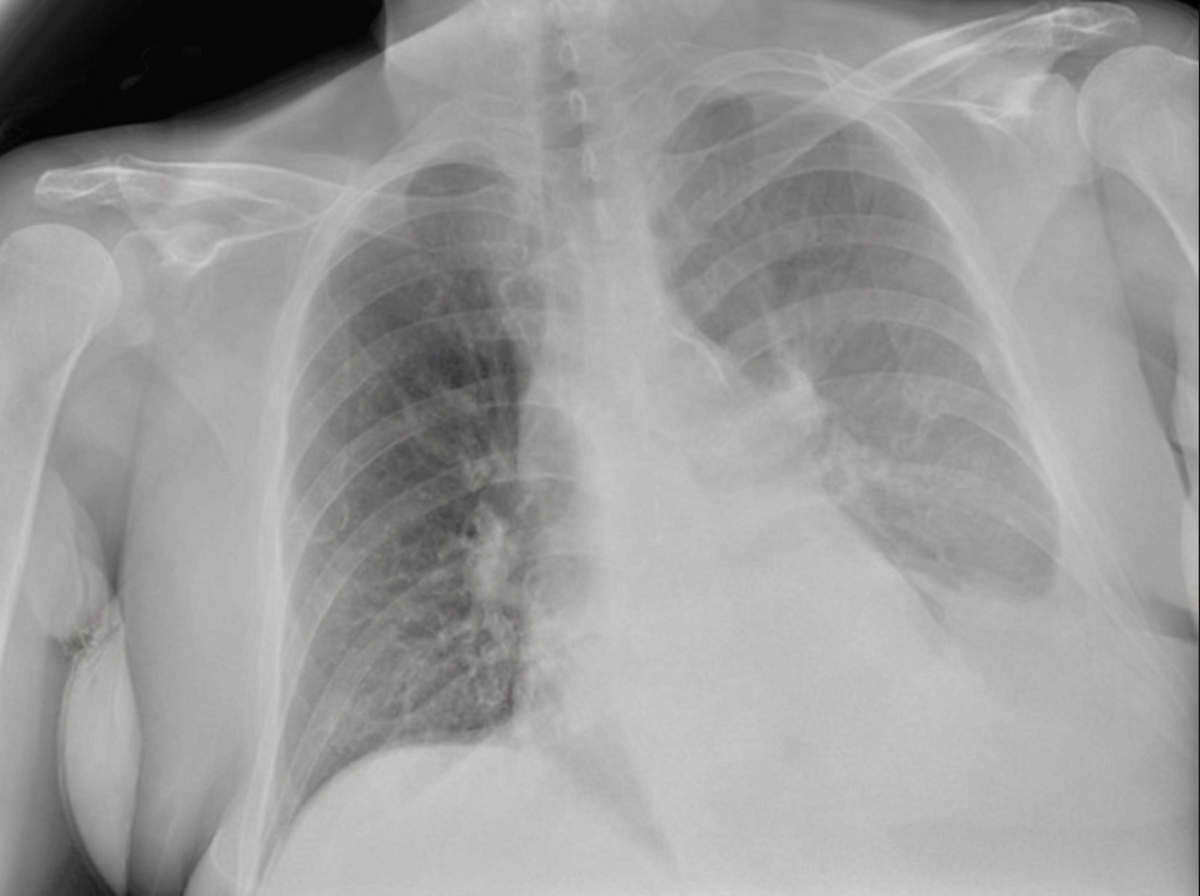
A 22-year-old soldier sustains a stab wound to his chest during a military attack in Mali. He is brought to the combat medic by his unit for a primary survey. The soldier reports shortness of breath. He is alert and oriented to time, place, and person. His pulse is 99/min, respirations are 32/min, and blood pressure is 112/72 mm Hg. Examination shows a 2-cm wound at the left fourth intercostal space at the midclavicular line. Bubbling of blood is seen with each respiration at the wound site. There is no jugular venous distention. There is hyperresonance to percussion and decreased breath sounds on the left side. The trachea is at the midline. Which of the following is the most appropriate next step in management?
Q145
A 65-year-old man with a past medical history of anterior myocardial infarction, peripheral arterial disease, and known patent foramen ovale presents to the emergency department after being found down from a fall on the sidewalk in the middle of winter. He states that his right leg feels numb and painful at the same time. He insists that he did not slip on ice or snow, yet fell suddenly. He is taking aspirin, simvastatin, and cilastazol. Vital signs show T 98.0 F, BP 100/60, HR 100, RR 18. His pulse is irregularly irregular. His right leg appears pale with no dorsalis pedis and posterior tibial pulses compared to 2+ pulses on the left. He cannot discern soft or sharp touch in his right leg. Which intervention will most likely improve the viability of this patient's right leg?
Q146
A 60-year-old man is brought to the emergency department 25 minutes after falling and hitting his left flank on a concrete block. He has severe left-sided chest pain and mild shortness of breath. He underwent a right knee replacement surgery 2 years ago. He has type 2 diabetes mellitus. He has smoked one pack of cigarettes daily for 42 years. Current medications include metformin, sitagliptin, and a multivitamin. He appears uncomfortable. His temperature is 37.5°C (99.5°F), pulse is 102/min, respirations are 17/min, and blood pressure is 132/90 mm Hg. Pulse oximetry on room air shows an oxygen saturation of 96%. Examination shows multiple abrasions on his left flank and trunk. The upper left chest wall is tender to palpation and bony crepitus is present. There are decreased breath sounds over both lung bases. Cardiac examination shows no murmurs, rubs, or gallops. The abdomen is soft and nontender. Focused assessment with sonography for trauma is negative. An x-ray of the chest shows nondisplaced fractures of the left 4th and 5th ribs, with clear lung fields bilaterally. Which of the following is the most appropriate next step in management?
Q147
A 54-year-old woman comes to the physician because of paresthesias and weakness in her left leg for one year. Her symptoms have become progressively worse during this period and have led to some difficulty walking for the past month. She has had frequent headaches for the past 4 months. She has a history of hypertension and hypothyroidism. Current medications include amlodipine and levothyroxine. Her temperature is 37.3°C (99.1°F), pulse is 97/min, and blood pressure is 110/80 mm Hg. Neurologic examination shows decreased muscle strength in the left lower extremity. Deep tendon reflexes of the lower extremity are 4+ on the left and 2+ on the right side. The remainder of the examination shows no abnormalities. A complete blood count and serum concentrations of electrolytes, glucose, creatinine, and calcium are within the reference ranges. An MRI of the brain is shown. Which of the following is the most appropriate next step in management?
Q148
A 23-year-old man is brought to the emergency department because of severe right shoulder pain and inability to move the shoulder for the past 30 minutes. The pain began after being tackled while playing football. He has nausea but has not vomited. He is in no apparent distress. Examination shows the right upper extremity externally rotated and slightly abducted. Palpation of the right shoulder joint shows tenderness and an empty glenoid fossa. The right humeral head is palpated below the coracoid process. The left upper extremity is unremarkable. The radial pulses are palpable bilaterally. Which of the following is the most appropriate next step in management?
Q149
A 35-year-old man is brought to the emergency department 30 minutes after being involved in a motor vehicle collision. The patient was on his way to work before he lost control of his car and crashed into a tree. On arrival, the patient appears weak and lethargic. He has pain in his abdomen. His temperature is 37°C (98.6°F), pulse is 121/min, respirations are 22/min, and blood pressure is 85/60 mm Hg. He is oriented to person but not to place or time. The lungs are clear to auscultation. Cardiac examination shows tachycardia but no murmurs, rubs, or gallops. Abdominal examination shows several bruises above the umbilicus; there is diffuse abdominal tenderness. Focused assessment with sonography in trauma (FAST) is performed but the results are inconclusive. In addition to intravenous fluid resuscitation, which of the following is the most appropriate next step in management of this patient?
Q150
A 17-year-old male presents to the emergency department after a knife fight. He initially refused to come to the hospital, but one of his wounds overlying the right antecubital fossa would not stop bleeding. Vitals include: BP 90/65, HR 115, and RR 24. He reports that he is light-headed and having visual changes. You hold direct pressure over the wound on his right arm while the rest of the team resuscitates him with crystalloid and pRBCs. After his vitals signs normalize, you note that his right arm is cool and you are unable to palpate a radial pulse. The vascular surgery team explores his right arm, finding and repairing a lacerated brachial artery. Two hours post-operatively he is complaining of 10/10 pain in his right forearm and screams out loud when you passively move his fingers. What is the most appropriate next step in management?
Trauma/Emergencies US Medical PG Practice Questions and MCQs
Question 141: A 32-year-old man is brought to the emergency department 10 minutes after he sustained a stab wound to the left chest just below the clavicle. On arrival, he is hypotensive with rapid and shallow breathing and appears anxious and agitated. He is intubated and mechanically ventilated. Infusion of 0.9% saline is begun. Five minutes later, his pulse is 137/min and blood pressure is 84/47 mm Hg. Examination shows a 3-cm single stab wound to the left chest at the 4th intercostal space at the midclavicular line without active external bleeding. Cardiovascular examination shows muffled heart sounds and jugular venous distention. Breath sounds are normal bilaterally. Further evaluation of this patient is most likely to show which of the following findings?
A. Inward collapse of part of the chest with inspiration
B. Subcutaneous crepitus on palpation of the chest wall
C. Cough productive of frank blood
D. Lateral shift of the trachea toward the right side
E. A 15 mm Hg decrease in systolic blood pressure during inspiration (Correct Answer)
Explanation: ***A 15 mm Hg decrease in systolic blood pressure during inspiration***
- The patient's presentation with **hypotension**, **tachycardia**, **muffled heart sounds**, and **jugular venous distention** following a chest stab wound is characteristic of **cardiac tamponade**, a component of **Beck's triad**.
- **Pulsus paradoxus**, defined as an inspiratory drop in systolic blood pressure greater than 10 mmHg, is a classic finding in cardiac tamponade due to increased right ventricular filling and bowing of the interventricular septum into the left ventricle during inspiration.
*Inward collapse of part of the chest with inspiration*
- This finding, known as a **flail chest**, occurs when three or more adjacent ribs are fractured in two or more places, leading to a segment of the chest wall paradoxically moving inward with inspiration.
- While it indicates significant chest trauma, it doesn't align with the present signs of **cardiac tamponade**, which is primarily a pericardial issue.
*Subcutaneous crepitus on palpation of the chest wall*
- **Subcutaneous crepitus** suggests the presence of air in the subcutaneous tissues, typically from a **pneumothorax** or **ruptured bronchus**.
- Although possible with chest trauma, the patient's normal breath sounds bilaterally and the specific symptoms pointing to cardiac tamponade make this a less likely primary finding compared to pulsus paradoxus.
*Cough productive of frank blood*
- **Hemoptysis** (coughing up blood) is indicative of airway or lung parenchymal injury, such as a **tracheobronchial tear** or **pulmonary contusion**.
- This symptom does not directly explain the classic triad of cardiac tamponade (hypotension, muffled heart sounds, JVD) observed in this patient.
*Lateral shift of the trachea toward the right side*
- A **tracheal shift** to the contralateral side is a hallmark sign of a **tension pneumothorax**, where air accumulates in the pleural space, compressing the lung and mediastinum.
- The patient's breath sounds are described as normal bilaterally, which makes a tension pneumothorax with tracheal deviation highly unlikely in this scenario.
Question 142: A 37-year-old man presents to the emergency department after he cut his hand while working on his car. The patient has a past medical history of antisocial personality disorder and has been incarcerated multiple times. His vitals are within normal limits. Physical exam is notable for a man covered in tattoos with many bruises over his face and torso. Inspection of the patient's right hand reveals 2 deep lacerations on the dorsal aspects of the second and third metacarpophalangeal (MCP) joints. The patient is given a tetanus vaccination, and the wound is irrigated. Which of the following is appropriate management for this patient?
A. Closure of the wound with sutures
B. Clindamycin and topical erythromycin
C. Ciprofloxacin and topical erythromycin
D. Surgical irrigation, debridement, and amoxicillin-clavulanic acid (Correct Answer)
E. No further management necessary
Explanation: ***Surgical irrigation, debridement, and amoxicillin-clavulanic acid***
- The presence of deep lacerations over the metacarpophalangeal joints, combined with an injury mechanism suggestive of a **fight bite** (laceration from striking another person's teeth), mandates **aggressive surgical management**.
- **Amoxicillin-clavulanic acid** is the appropriate antibiotic choice for **human bite wounds** due to its broad spectrum covering common oral flora like *Eikenella corrodens*, *Streptococci*, and anaerobes.
*Closure of the wound with sutures*
- **Primary closure** of human bite wounds, especially those on the hand, is strongly **contraindicated** due to the high risk of severe infection.
- These wounds should be left open to drain and heal by **secondary intention** following thorough debridement.
*Clindamycin and topical erythromycin*
- **Clindamycin** has good anaerobic coverage but lacks sufficient coverage for common aerobes found in human bites like *Eikenella corrodens*.
- **Topical erythromycin** is ineffective for deep soft tissue infections and does not provide systemic protection against the likely pathogens.
*Ciprofloxacin and topical erythromycin*
- **Ciprofloxacin** has limited activity against many oral anaerobes and *Eikenella corrodens*, making it a poor choice for human bite prophylaxis.
- As mentioned, **topical antibiotics** are insufficient for preventing serious infections in deep bite wounds.
*No further management necessary*
- This patient has sustained a **deep, contaminated wound** with a high risk of serious infection, potentially involving joints or tendons.
- Failing to provide further management, including surgical exploration and appropriate antibiotics, would likely lead to severe complications such as **osteomyelitis** or **septic arthritis**.
Question 143: A 45-year-old man presents to an urgent care clinic because he coughed up blood this morning. Although he had a persistent cough for the past 3 weeks, he had never coughed up blood until now. His voice is hoarse and admits that it has been like that for the past few months. Both his past medical history and family history are insignificant. He has smoked a pack of cigarettes a day since the age of 20 and drinks wine every night before bed. His vitals are: heart rate of 78/min, respiratory rate of 14/min, temperature of 36.5°C (97.8°F), blood pressure of 140/88 mm Hg. An indirect laryngoscopy reveals a rough vegetating lesion on the free border of the right vocal cord. Which of the following is the most likely diagnosis?
A. Acute laryngitis
B. Polypoid corditis
C. Leukoplakia
D. Laryngeal carcinoma (Correct Answer)
E. Vocal cord nodule
Explanation: ***Laryngeal carcinoma***
- The patient's long history of **smoking**, chronic **hoarseness** (lasting months), and especially the new onset of **hemoptysis** (coughing up blood) are highly suspicious for laryngeal carcinoma. The **rough vegetating lesion** on the vocal cord seen on laryngoscopy further supports this diagnosis.
- Alcohol consumption, in addition to smoking, significantly increases the risk of head and neck cancers, including **laryngeal carcinoma**. The duration of symptoms and the nature of the lesion point towards a malignant process rather than a benign or acute condition.
*Acute laryngitis*
- This is typically an **acute inflammatory condition** of the larynx, often viral in origin, lasting a few days to a couple of weeks, and usually resolves spontaneously.
- The patient's symptoms have been present for **months**, and the finding of a distinct **vegetating lesion** is not characteristic of acute laryngitis.
*Polypoid corditis*
- Also known as **Reinke's edema**, this condition is characterized by **edematous degeneration** of the vocal cords, primarily due to chronic irritation from smoking.
- While it causes hoarseness, it rarely presents with **hemoptysis** and the lesion described as "rough vegetating" is more suggestive of malignancy than the smooth, baggy appearance of Reinke's edema.
*Leukoplakia*
- **Leukoplakia** refers to white patches on mucous membranes that cannot be scraped off and are often **premalignant**. They can be caused by chronic irritation, such as smoking.
- Although leukoplakia can progress to carcinoma, the presence of **hemoptysis** and a "vegetating lesion" indicates a more advanced, likely malignant process rather than just a benign or premalignant white patch.
*Vocal cord nodule*
- **Vocal cord nodules** are benign growths, often bilateral, resulting from vocal abuse or misuse, and typically cause hoarseness and vocal fatigue.
- Nodules are usually **smooth** and rarely cause **hemoptysis** or appear as a "vegetating lesion." The patient's smoking history and hemoptysis point away from simple vocal cord nodules.
Question 144: A 22-year-old soldier sustains a stab wound to his chest during a military attack in Mali. He is brought to the combat medic by his unit for a primary survey. The soldier reports shortness of breath. He is alert and oriented to time, place, and person. His pulse is 99/min, respirations are 32/min, and blood pressure is 112/72 mm Hg. Examination shows a 2-cm wound at the left fourth intercostal space at the midclavicular line. Bubbling of blood is seen with each respiration at the wound site. There is no jugular venous distention. There is hyperresonance to percussion and decreased breath sounds on the left side. The trachea is at the midline. Which of the following is the most appropriate next step in management?
A. Supplemental oxygen
B. Partially occlusive dressing (Correct Answer)
C. Needle thoracostomy
D. Emergency pericardiocentesis
E. Emergency echocardiography
Explanation: ***Partially occlusive dressing***
- The patient presents with classic signs of an **open pneumothorax** (sucking chest wound), including a penetrating chest injury with bubbling of blood at the wound site, shortness of breath, hyperresonance, and decreased breath sounds.
- Applying a partially occlusive dressing (e.g., a **three-sided dressing**) prevents air from entering the pleural space during inspiration while allowing trapped air to escape during expiration, thus preventing tension pneumothorax.
*Supplemental oxygen*
- While **supplemental oxygen** is a general supportive measure for shortness of breath and hypoxemia, it does not address the underlying mechanical issue of air entering the pleural space in an open pneumothorax.
- It would be administered after addressing the life-threatening chest wound, not as the primary immediate intervention.
*Needle thoracostomy*
- **Needle thoracostomy** is indicated for a **tension pneumothorax**, which presents with signs such as marked respiratory distress, hypotension, tracheal deviation, and jugular venous distention.
- This patient does not exhibit these signs, as his trachea is midline, blood pressure is stable, and there is no jugular venous distention.
*Emergency pericardiocentesis*
- **Emergency pericardiocentesis** is indicated for **cardiac tamponade**, which is characterized by Becks triad (hypotension, muffled heart sounds, and jugular venous distention) and pulsus paradoxus.
- There is no clinical evidence in the patient's presentation to suggest cardiac tamponade.
*Emergency echocardiography*
- **Emergency echocardiography** could be useful in diagnosing cardiac tamponade or other cardiac injuries, but it is not the most appropriate immediate life-saving intervention for an open pneumothorax.
- The urgency of the open pneumothorax requires immediate physical intervention to seal the wound.
Question 145: A 65-year-old man with a past medical history of anterior myocardial infarction, peripheral arterial disease, and known patent foramen ovale presents to the emergency department after being found down from a fall on the sidewalk in the middle of winter. He states that his right leg feels numb and painful at the same time. He insists that he did not slip on ice or snow, yet fell suddenly. He is taking aspirin, simvastatin, and cilastazol. Vital signs show T 98.0 F, BP 100/60, HR 100, RR 18. His pulse is irregularly irregular. His right leg appears pale with no dorsalis pedis and posterior tibial pulses compared to 2+ pulses on the left. He cannot discern soft or sharp touch in his right leg. Which intervention will most likely improve the viability of this patient's right leg?
A. Warfarin
B. Catheter-based thrombectomy / thrombolysis (Correct Answer)
C. Percutaneous transluminal stent implantation
D. Heparin
E. Rivaroxaban
Explanation: ***Catheter-based thrombectomy / thrombolysis***
- This patient presents with acute limb ischemia characterized by **sudden onset pain**, **pallor**, **pulselessness**, **paresthesia**, and **paralysis** (the five P's), suggesting an acute arterial occlusion requiring urgent revascularization.
- **Catheter-based thrombectomy or thrombolysis** can directly remove or dissolve the clot, restoring blood flow and improving limb viability.
*Warfarin*
- **Warfarin** is an anticoagulant used for long-term prevention of thromboembolic events, especially in conditions like atrial fibrillation.
- While indicated for preventing future clots, its **delayed onset of action** and need for INR monitoring make it unsuitable for acute limb ischemia requiring immediate revascularization.
*Percutaneous transluminal stent implantation*
- **Percutaneous transluminal stent implantation** is primarily used to treat **atherosclerotic stenosis** that causes chronic limb ischemia or claudication.
- It is not the first-line treatment for an **acute embolic occlusion** without underlying significant atherosclerotic narrowing.
*Heparin*
- **Heparin** is an anticoagulant that can prevent further clot propagation once a thrombus has formed.
- While it may be used as an adjunct to prevent further thrombosis, it does **not actively dissolve or remove existing large clots** causing acute limb ischemia.
*Rivaroxaban*
- **Rivaroxaban** is a direct oral anticoagulant (DOAC) that can be used for long-term anticoagulation in conditions like atrial fibrillation or for venous thromboembolism.
- Similar to warfarin, its primary role is **prevention of clot formation**, not the acute dissolution or mechanical removal of an existing, symptomatic arterial embolism.
Question 146: A 60-year-old man is brought to the emergency department 25 minutes after falling and hitting his left flank on a concrete block. He has severe left-sided chest pain and mild shortness of breath. He underwent a right knee replacement surgery 2 years ago. He has type 2 diabetes mellitus. He has smoked one pack of cigarettes daily for 42 years. Current medications include metformin, sitagliptin, and a multivitamin. He appears uncomfortable. His temperature is 37.5°C (99.5°F), pulse is 102/min, respirations are 17/min, and blood pressure is 132/90 mm Hg. Pulse oximetry on room air shows an oxygen saturation of 96%. Examination shows multiple abrasions on his left flank and trunk. The upper left chest wall is tender to palpation and bony crepitus is present. There are decreased breath sounds over both lung bases. Cardiac examination shows no murmurs, rubs, or gallops. The abdomen is soft and nontender. Focused assessment with sonography for trauma is negative. An x-ray of the chest shows nondisplaced fractures of the left 4th and 5th ribs, with clear lung fields bilaterally. Which of the following is the most appropriate next step in management?
A. Internal fixation
B. Admission and surveillance in the intensive care unit
C. Prophylactic antibiotic therapy
D. Adequate analgesia and conservative management (Correct Answer)
E. Continuous positive airway pressure
Explanation: ***Adequate analgesia and conservative management***
- The patient has **nondisplaced rib fractures** with clear lung fields and stable vitals, indicating that conservative management with **adequate analgesia** is the most appropriate initial step.
- Pain control is crucial to prevent complications such as **pneumonia** and **atelectasis** by allowing the patient to breathe deeply and cough effectively.
*Internal fixation*
- **Internal fixation** is generally reserved for patients with severe rib fractures, such as **flail chest**, significant displacement, or those who fail conservative management, which is not the case here.
- This patient's fractures are **nondisplaced**, and he is hemodynamically stable without signs of respiratory compromise requiring surgical intervention.
*Admission and surveillance in the intensive care unit*
- Admission to the **intensive care unit (ICU)** is typically indicated for patients with **flail chest**, severe respiratory distress, or significant associated injuries, which are absent in this patient.
- While rib fractures can be serious, stable patients with **nondisplaced fractures** do not automatically require ICU admission; a general medical ward or even outpatient management (depending on overall stability and pain control) might be sufficient.
*Prophylactic antibiotic therapy*
- There is currently **no evidence of infection** (e.g., fever, elevated white blood cell count, purulent sputum) to warrant prophylactic antibiotic therapy.
- Rib fractures themselves, without an open wound or lung contusion leading to pneumonia, do not routinely require **antibiotics**.
*Continuous positive airway pressure*
- **Continuous positive airway pressure (CPAP)** is used for respiratory support in conditions like **acute respiratory failure** or **sleep apnea**, or in severe chest wall injuries like flail chest causing significant respiratory compromise.
- This patient has an **oxygen saturation of 96%** on room air and mild shortness of breath, indicating he does not currently require CPAP.
Question 147: A 54-year-old woman comes to the physician because of paresthesias and weakness in her left leg for one year. Her symptoms have become progressively worse during this period and have led to some difficulty walking for the past month. She has had frequent headaches for the past 4 months. She has a history of hypertension and hypothyroidism. Current medications include amlodipine and levothyroxine. Her temperature is 37.3°C (99.1°F), pulse is 97/min, and blood pressure is 110/80 mm Hg. Neurologic examination shows decreased muscle strength in the left lower extremity. Deep tendon reflexes of the lower extremity are 4+ on the left and 2+ on the right side. The remainder of the examination shows no abnormalities. A complete blood count and serum concentrations of electrolytes, glucose, creatinine, and calcium are within the reference ranges. An MRI of the brain is shown. Which of the following is the most appropriate next step in management?
A. Stereotactic brain biopsy
B. Surgical resection (Correct Answer)
C. Intrathecal methotrexate therapy
D. Whole brain radiotherapy
E. Stereotactic radiosurgery
Explanation: ***Surgical resection***
- The MRI shows a **single, well-demarcated lesion** with surrounding edema, suggestive of a **brain tumor** in a patient with progressive neurological deficits and new-onset headaches.
- Given the patient's symptoms (paresthesia, weakness, difficulty walking, hyperreflexia) and the MRI findings, **surgical resection** is the most appropriate initial management to obtain a definitive diagnosis, relieve mass effect, and potentially cure if the tumor is resectable. (The mass needs to be resected to relieve symptoms and pressure)
*Stereotactic brain biopsy*
- While a biopsy is essential for diagnosis, **surgical resection** often combines the benefits of diagnosis and treatment for single, resectable lesions with significant mass effect.
- A biopsy might be preferred for deep, unresectable, or multiple lesions, or when the goal is primarily to establish a diagnosis without attempting complete removal.
*Intrathecal methotrexate therapy*
- This therapy is typically used for **leptomeningeal carcinomatosis** or certain types of lymphoma affecting the central nervous system, which is not indicated by the MRI findings of a solitary mass.
- It would not address the immediate mass effect or provide a definitive diagnosis for a potentially resectable solid tumor.
*Whole brain radiotherapy*
- This is usually reserved for patients with **multiple brain metastases**, widespread disease, or as a palliative measure for unresectable tumors, which is not the case here as there is only one lesion found in the MRI.
- It carries significant side effects and is not the first-line treatment for a single, potentially resectable lesion.
*Stereotactic radiosurgery*
- This is an option for **small, well-defined tumors** that are either surgically inaccessible or in patients who are poor surgical candidates.
- Given the patient's progressive symptoms and the potential for a complete resection, surgery is generally favored first for larger or symptomatic lesions that can be safely removed.
Question 148: A 23-year-old man is brought to the emergency department because of severe right shoulder pain and inability to move the shoulder for the past 30 minutes. The pain began after being tackled while playing football. He has nausea but has not vomited. He is in no apparent distress. Examination shows the right upper extremity externally rotated and slightly abducted. Palpation of the right shoulder joint shows tenderness and an empty glenoid fossa. The right humeral head is palpated below the coracoid process. The left upper extremity is unremarkable. The radial pulses are palpable bilaterally. Which of the following is the most appropriate next step in management?
A. Drop arm test
B. Closed reduction
C. Neer impingement test
D. Arthroscopic shoulder repair
E. Test sensation of the lateral shoulder (Correct Answer)
Explanation: ***Test sensation of the lateral shoulder***
- The patient presents with classic signs of an **anterior shoulder dislocation**, including **externally rotated** and **abducted upper extremity**, an **empty glenoid fossa**, and a **humeral head palpated below the coracoid**.
- Assessing sensation of the **lateral shoulder** is crucial to check for **axillary nerve injury**, which is a common complication of shoulder dislocations and can cause deltoid weakness and sensory loss over the lateral deltoid region.
*Drop arm test*
- The **drop arm test** is used to evaluate for a **rotator cuff tear**, particularly involving the supraspinatus muscle.
- In this scenario, the primary concern is an acute shoulder dislocation, not a rotator cuff tear, although the latter can coexist.
*Closed reduction*
- While **closed reduction** is the definitive treatment for an acute shoulder dislocation, it should only be performed *after* neurovascular status has been thoroughly assessed.
- Reducing the dislocation before checking for nerve damage could mask an existing injury or worsen it.
*Neer impingement test*
- The **Neer impingement test** is used to diagnose **rotator cuff impingement syndrome**, a condition where soft tissues are compressed in the subacromial space.
- This patient's symptoms are indicative of an acute dislocation, not chronic impingement.
*Arthroscopic shoulder repair*
- **Arthroscopic shoulder repair** is a surgical procedure for certain shoulder conditions, often for recurrent instability or significant structural damage, after initial closed reduction has failed or if there are contraindications to closed reduction.
- It is not the immediate next step in managing an acute, primary shoulder dislocation before proper assessment.
Question 149: A 35-year-old man is brought to the emergency department 30 minutes after being involved in a motor vehicle collision. The patient was on his way to work before he lost control of his car and crashed into a tree. On arrival, the patient appears weak and lethargic. He has pain in his abdomen. His temperature is 37°C (98.6°F), pulse is 121/min, respirations are 22/min, and blood pressure is 85/60 mm Hg. He is oriented to person but not to place or time. The lungs are clear to auscultation. Cardiac examination shows tachycardia but no murmurs, rubs, or gallops. Abdominal examination shows several bruises above the umbilicus; there is diffuse abdominal tenderness. Focused assessment with sonography in trauma (FAST) is performed but the results are inconclusive. In addition to intravenous fluid resuscitation, which of the following is the most appropriate next step in management of this patient?
A. X-ray of the abdomen
B. CT scan of the abdomen
C. Exploratory laparotomy (Correct Answer)
D. Nasogastric tube insertion
E. Diagnostic peritoneal lavage
Explanation: ***Exploratory laparotomy***
- The patient is **hemodynamically unstable** (BP 85/60, pulse 121) following blunt abdominal trauma with **clinical signs of intra-abdominal injury** (abdominal pain, bruising, tenderness).
- When FAST is **inconclusive** in a hemodynamically unstable patient with high clinical suspicion for intra-abdominal hemorrhage, **immediate exploratory laparotomy** is indicated per current ATLS guidelines.
- Delaying surgery for additional diagnostic tests in an unstable patient risks life-threatening blood loss and death.
- The patient's persistent hypotension despite fluid resuscitation indicates ongoing hemorrhage requiring urgent surgical control.
*Diagnostic peritoneal lavage*
- DPL was historically used after inconclusive FAST exams, but it has been **largely replaced** by FAST and CT in modern trauma management.
- While DPL is highly sensitive (98%), it is **not specific** and can detect clinically insignificant injuries, potentially leading to unnecessary laparotomies.
- More importantly, in a **hemodynamically unstable** patient like this one, DPL would **delay definitive surgical treatment** without changing management—the patient needs operative intervention regardless.
- DPL may still have limited utility in resource-limited settings or when other modalities are unavailable.
*CT scan of the abdomen*
- CT is the **gold standard** for evaluating abdominal trauma in **hemodynamically stable** patients, providing detailed anatomic information.
- However, this patient's **persistent hypotension and tachycardia** make CT inappropriate—it requires transporting the patient away from resuscitation capabilities and delays necessary surgical intervention.
- CT should only be performed once hemodynamic stability is achieved.
*X-ray of the abdomen*
- Abdominal X-ray can identify **free air** (bowel perforation) or **bony injuries**, but it has **poor sensitivity** for solid organ injury and intra-abdominal hemorrhage.
- It does not provide the rapid, actionable information needed in this hemodynamically unstable patient.
- Plain films have minimal role in modern blunt abdominal trauma evaluation.
*Nasogastric tube insertion*
- NG tube placement is a **supportive measure** to decompress the stomach, prevent aspiration, and facilitate subsequent procedures.
- While often performed in trauma patients, it does not address the **urgent need for hemorrhage control** in this unstable patient.
- It is not a diagnostic or definitive therapeutic intervention for intra-abdominal bleeding.
Question 150: A 17-year-old male presents to the emergency department after a knife fight. He initially refused to come to the hospital, but one of his wounds overlying the right antecubital fossa would not stop bleeding. Vitals include: BP 90/65, HR 115, and RR 24. He reports that he is light-headed and having visual changes. You hold direct pressure over the wound on his right arm while the rest of the team resuscitates him with crystalloid and pRBCs. After his vitals signs normalize, you note that his right arm is cool and you are unable to palpate a radial pulse. The vascular surgery team explores his right arm, finding and repairing a lacerated brachial artery. Two hours post-operatively he is complaining of 10/10 pain in his right forearm and screams out loud when you passively move his fingers. What is the most appropriate next step in management?
A. Nerve block
B. Watchful waiting
C. Compressive bandage
D. Measure forearm compartment pressures (Correct Answer)
E. Increase his dose of hydromorphone
Explanation: ***Measure forearm compartment pressures***
- This patient presents with classic signs and symptoms of **acute compartment syndrome** in the forearm: severe pain out of proportion to injury, pain with passive stretching of fingers, and a history of vascular injury and reperfusion.
- Measuring compartment pressures is the definitive diagnostic step to confirm the diagnosis and guide the need for urgent **fasciotomy**.
*Nerve block*
- While a nerve block could alleviate pain temporarily, it would **mask critical symptoms** of compartment syndrome and delay diagnosis and treatment.
- Delaying definitive treatment for compartment syndrome can lead to irreversible muscle and nerve damage.
*Watchful waiting*
- **Acute compartment syndrome is a surgical emergency**, and watchful waiting would only exacerbate the condition, leading to permanent functional deficits.
- Irreversible muscle damage begins within a few hours of untreated compartment syndrome.
*Compressive bandage*
- Applying a compressive bandage would **worsen the compartment syndrome** by further increasing pressure within the already compromised fascial compartments.
- The goal is to relieve pressure, not increase it.
*Increase his dose of hydromorphone*
- Increasing analgesia would simply **mask the escalating pain**, which is a crucial indicator of worsening compartment syndrome.
- This would delay recognizing the need for surgical intervention, leading to potentially devastating long-term consequences.