A 15-year-old boy presents to the emergency room with severe lower abdominal pain that awoke him from sleep about 3 hours ago. The pain is sharp and radiates to his left thigh. While in the emergency room, the patient experiences one episode of vomiting. His temperature is 99.3°F (37.4°C), blood pressure is 126/81 mmHg, pulse is 119/min, respirations are 14/min, and oxygen saturation is 99% on room air. Abdominal examination reveals no tenderness in all 4 quadrants. Scrotal examination reveals an elevated left testicle that is diffusely tender. Stroking of the patient's inner thigh on the left side does not result in elevation of the testicle. What is the next step in the management of this patient?
Q112
A 45-year-old woman comes to the physician because of right foot pain for 3 months. She has a burning sensation in the plantar area between the third and fourth metatarsals that radiates to the third and fourth digits. She had a right distal radius fracture that was treated with a splint and physical therapy three months ago. She is an account executive and wears high heels to work every day. Vital signs are within normal limits. Examination of the right lower extremity shows intact skin. The posterior tibial and dorsalis pedis pulses are palpable. When pressure is applied to the sole of the foot between the metatarsal heads the patient feels pain and there is an audible click. Tapping on the affected area causes pain that shoots into the third and fourth digits. Which of the following is the most likely diagnosis?
Q113
A 54-year-old male carpenter accidentally amputated his right thumb while working in his workshop 30 minutes ago. He reports that he was cutting a piece of wood, and his hand became caught up in the machinery. He is calling the emergency physician for advice on how to transport his thumb and if it is necessary. Which of the following is the best information for this patient?
Q114
A 13-year-old boy is brought to the emergency department by his mother because of vomiting and severe testicular pain for 3 hours. The boy has had 4–5 episodes of vomiting during this period. He has never had a similar episode in the past and takes no medications. His father died of testicular cancer at the age of 50. His immunizations are up-to-date. He appears anxious and uncomfortable. His temperature is 37°C (98.6°F), pulse is 90/min, respirations are 14/min, and blood pressure is 100/60 mm Hg. Cardiopulmonary examination shows no abnormalities The abdomen is soft and nondistended. The left scrotum is firm, erythematous, and swollen. There is severe tenderness on palpation of the scrotum that persists on elevation of the testes. Stroking the inner side of the left thigh fails to elicit elevation of the scrotum. Which of the following is the most appropriate next step in management?
Q115
A 35-year-old man is brought to the emergency department from a kitchen fire. The patient was cooking when boiling oil splashed on his exposed skin. His temperature is 99.7°F (37.6°C), blood pressure is 127/82 mmHg, pulse is 120/min, respirations are 12/min, and oxygen saturation is 98% on room air. He has dry, nontender, and circumferential burns over his arms bilaterally, burns over the anterior portion of his chest and abdomen, and tender spot burns with blisters on his shins. A 1L bolus of normal saline is administered and the patient is given morphine and his pulse is subsequently 80/min. A Foley catheter is placed which drains 10 mL of urine. What is the best next step in management?
Q116
A 17-year-old adolescent male is brought to the emergency department by fire and rescue after being struck by a moving vehicle. The patient reports that he was running through his neighborhood when a car struck him while turning right on a red light. He denies any loss of consciousness. His temperature is 99.0°F (37.2°C), blood pressure is 88/56 mmHg, pulse is 121/min, respirations are 12/min, and SpO2 is 95% on room air. The patient is alert and oriented to person, place and time and is complaining of pain in his abdomen. He has lacerations on his face and extremities. On cardiac exam, he is tachycardic with normal S1 and S2. His lungs are clear to auscultation bilaterally, and his abdomen is soft but diffusely tender to palpation. The patient tenses his abdomen when an abdominal exam is performed. Bowel sounds are present, and he is moving all 4 extremities spontaneously. His skin is cool with delayed capillary refill. After the primary survey, 2 large-bore IVs are placed, and the patient is given a bolus of 2 liters of normal saline.
Which of the following is the best next step in management?
Q117
A 42-year-old man is brought to the physician 25 minutes after an episode of violent jerky movements of his hands and legs that lasted for 5 minutes. After the episode, he had difficulty conversing. For the past 10 days, he has had a left-sided headache and nausea. Apart from a history of recurrent ear infections treated with antibiotics, he reports no other personal or family history of serious illness. He works as an assistant at a veterinarian clinic. He appears ill and is oriented to place and person only. His temperature is 37.8°C (100°F), pulse is 102/min, and blood pressure 112/78 mm Hg. Examination shows bilateral optic disc swelling. There is no lymphadenopathy. Muscle strength and tone is normal in all extremities. Deep tendon reflexes are 2+ bilaterally. Plantar reflex shows a flexor response bilaterally. Laboratory studies show a CD4 count within the reference range. An MRI of the brain is shown. Intravenous mannitol and levetiracetam are administered. Which of the following is the most appropriate next step in management?
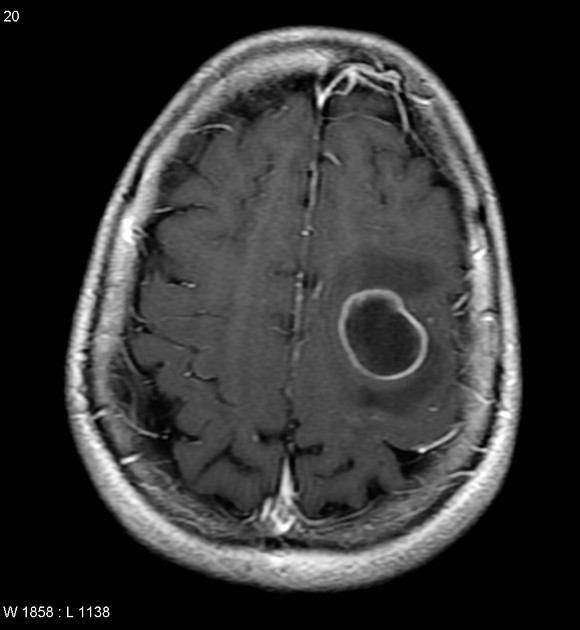
Q118
A 66-year-old man is brought to the emergency department after a motor vehicle accident. The patient was a restrained passenger in a car that was struck on the passenger side while crossing an intersection. In the emergency department, he is alert and complaining of abdominal pain. He has a history of hyperlipidemia, gastroesophageal reflux disease, chronic kidney disease, and perforated appendicitis for which he received an interval appendectomy four years ago. His home medications include rosuvastatin and lansoprazole. His temperature is 99.2°F (37.3°C), blood pressure is 120/87 mmHg, pulse is 96/min, and respirations are 20/min. He has full breath sounds bilaterally. He is tender to palpation over the left 9th rib and the epigastrium. He is moving all four extremities. His FAST exam reveals fluid in Morrison's pouch.
This patient is most likely to have which of the following additional signs or symptoms?
Q119
An obese 52-year-old man is brought to the emergency department because of increasing shortness of breath for the past 8 hours. Two months ago, he noticed a mass on the right side of his neck and was diagnosed with laryngeal cancer. He has smoked two packs of cigarettes daily for 27 years. He drinks two pints of rum daily. He appears ill. He is oriented to person, place, and time. His temperature is 37°C (98.6°F), pulse is 111/min, respirations are 34/min, and blood pressure is 140/90 mm Hg. Pulse oximetry on room air shows an oxygen saturation of 89%. Examination shows a 9-cm, tender, firm subglottic mass on the right side of the neck. Cervical lymphadenopathy is present. His breathing is labored and he has audible inspiratory stridor but is able to answer questions. The lungs are clear to auscultation. Arterial blood gas analysis on room air shows:
pH 7.36
PCO2 45 mm Hg
PO2 74 mm Hg
HCO3- 25 mEq/L
He has no advanced directive. Which of the following is the most appropriate next step in management?
Q120
A 33-year-old man is brought to the emergency department because of trauma from a motor vehicle accident. His pulse is 122/min and rapid and thready, the blood pressure is 78/37 mm Hg, the respirations are 26/min, and the oxygen saturation is 90% on room air. On physical examination, the patient is drowsy, with cold and clammy skin. Abdominal examination shows ecchymoses in the right flank. The external genitalia are normal. No obvious external wounds are noted, and the rest of the systemic examination values are within normal limits. Blood is sent for laboratory testing and urinalysis shows 6 RBC/HPF. Hematocrit is 22% and serum creatinine is 1.1 mg/dL. Oxygen supplementation and IV fluid resuscitation are started immediately, but the hypotension persists. The focused assessment with sonography in trauma (FAST) examination shows a retroperitoneal fluid collection. What is the most appropriate next step in management?
Trauma/Emergencies US Medical PG Practice Questions and MCQs
Question 111: A 15-year-old boy presents to the emergency room with severe lower abdominal pain that awoke him from sleep about 3 hours ago. The pain is sharp and radiates to his left thigh. While in the emergency room, the patient experiences one episode of vomiting. His temperature is 99.3°F (37.4°C), blood pressure is 126/81 mmHg, pulse is 119/min, respirations are 14/min, and oxygen saturation is 99% on room air. Abdominal examination reveals no tenderness in all 4 quadrants. Scrotal examination reveals an elevated left testicle that is diffusely tender. Stroking of the patient's inner thigh on the left side does not result in elevation of the testicle. What is the next step in the management of this patient?
A. Observation and morphine
B. IV antibiotics
C. Testicular doppler ultrasound
D. Surgical exploration (Correct Answer)
E. CT scan of abdomen and pelvis
Explanation: ***Surgical exploration***
- The patient presents with classic symptoms of **testicular torsion**, including sudden-onset severe scrotal pain radiating to the thigh, an **elevated and tender testicle**, and absence of the **cremasteric reflex**.
- Given the time-sensitive nature of testicular torsion (viability decreases significantly after 6 hours), **immediate surgical exploration** is warranted to confirm the diagnosis and detorse the testicle, ideally within 4-6 hours from symptom onset.
*Testicular doppler ultrasound*
- While a **doppler ultrasound** can confirm the absence of blood flow, it may **delay definitive treatment**.
- In cases with a classic presentation and high clinical suspicion for testicular torsion, the diagnostic value of ultrasound is often outweighed by the critical need for rapid surgical intervention.
*Observation and morphine*
- **Observation** is inappropriate given the emergent nature of testicular torsion, which can lead to **testicular necrosis** if not promptly addressed.
- While **morphine** can manage pain, it does not address the underlying pathology and crucial time would be lost.
*IV antibiotics*
- **IV antibiotics** are indicated for infections like **epididymitis**, which typically presents with a more gradual onset of pain, less severe pain, relief with elevation of the testicle (Prehn's sign), and an intact cremasteric reflex.
- The clinical picture provided does not support an infectious cause.
*CT scan of abdomen and pelvis*
- A **CT scan** of the abdomen and pelvis is not indicated for the evaluation of acute scrotal pain and would expose the patient to **unnecessary radiation** and cause a significant **delay in diagnosis and treatment**.
- It would not provide the necessary information to diagnose testicular torsion or other acute scrotal pathology.
Question 112: A 45-year-old woman comes to the physician because of right foot pain for 3 months. She has a burning sensation in the plantar area between the third and fourth metatarsals that radiates to the third and fourth digits. She had a right distal radius fracture that was treated with a splint and physical therapy three months ago. She is an account executive and wears high heels to work every day. Vital signs are within normal limits. Examination of the right lower extremity shows intact skin. The posterior tibial and dorsalis pedis pulses are palpable. When pressure is applied to the sole of the foot between the metatarsal heads the patient feels pain and there is an audible click. Tapping on the affected area causes pain that shoots into the third and fourth digits. Which of the following is the most likely diagnosis?
A. Ganglion cyst
B. Metatarsal osteochondrosis
C. Intermetatarsal neuroma (Correct Answer)
D. Osteomyelitis
E. Third metatarsal stress fracture
Explanation: ***Intermetatarsal neuroma***
- The patient's presentation of a **burning sensation** between the third and fourth metatarsals, radiating to the digits, along with the reproduction of pain and an **audible click** (Mulder's sign) on palpation, are classic signs of an intermetatarsal neuroma, commonly known as **Morton's neuroma**.
- **Tinel's sign** (pain with tapping) in the affected area confirms nerve involvement, and wearing high heels is a common predisposing factor.
*Ganglion cyst*
- While ganglion cysts can cause pain, they typically present as a **palpable, mobile mass** and do not characteristically cause a burning sensation that radiates to the digits, or an audible click.
- The symptoms described are more consistent with **nerve compression** rather than a space-occupying lesion alone.
*Metatarsal osteochondrosis*
- This condition, such as **Freiberg's disease**, typically affects the **metatarsal head**, most commonly the second metatarsal, and presents with pain and swelling exacerbated by activity.
- It does not usually involve a radiating **burning sensation** or the characteristic click observed in this patient.
*Osteomyelitis*
- Osteomyelitis is a bone infection characterized by **severe, constant pain**, fever, redness, and swelling, often with elevated **inflammatory markers** (ESR, CRP).
- The patient's skin is intact, vital signs are normal, and there are no signs of infection, making this diagnosis unlikely.
*Third metatarsal stress fracture*
- A stress fracture typically causes ** localized pain** in the bone, which worsens with weight-bearing or activity and improves with rest.
- It would not typically involve a **burning sensation** radiating into the toes or an audible click, which are indicative of nerve pathology.
Question 113: A 54-year-old male carpenter accidentally amputated his right thumb while working in his workshop 30 minutes ago. He reports that he was cutting a piece of wood, and his hand became caught up in the machinery. He is calling the emergency physician for advice on how to transport his thumb and if it is necessary. Which of the following is the best information for this patient?
A. Place thumb in cup of cold milk
B. Wrap thumb in saline-moistened, sterile gauze and place in sterile bag (Correct Answer)
C. Wrap thumb in sterile gauze and submerge in a cup of saline
D. There is no need to save the thumb
E. Place thumb directly into cooler of ice
Explanation: ***Wrap thumb in saline-moistened, sterile gauze and place in sterile bag***
- This method provides a **moist, sterile environment** for the amputated part, which is crucial for preserving tissue viability.
- The use of a sterile bag helps prevent contamination and allows the part to be placed inside a cooler without direct ice contact, preventing **frostbite**.
*Place thumb in cup of cold milk*
- While cold milk might offer some cooling, it is **not sterile** and could introduce bacteria, increasing the risk of infection.
- Milk's composition is **not ideal for cell preservation** compared to saline, which is more isotonic.
*Wrap thumb in sterile gauze and submerge in a cup of saline*
- Submerging the amputated part directly in saline, even with sterile gauze, can lead to **tissue maceration** due to overhydration.
- This method also makes it more difficult to prevent contamination during transportation if the cup is not sealed.
*There is no need to save the thumb*
- **Replantation surgery** is often possible and highly desirable for thumb amputations due to its critical functional role.
- Dismissing the amputated part would deprive the patient of a chance to restore function, especially given the short time since amputation.
*Place thumb directly into cooler of ice*
- Direct contact with ice can cause **frostbite** and **tissue damage**, compromising the viability of the amputated part.
- The preferred method is to keep the amputated part cool, but not frozen, usually by placing it in a sealed bag within an ice-filled container.
Question 114: A 13-year-old boy is brought to the emergency department by his mother because of vomiting and severe testicular pain for 3 hours. The boy has had 4–5 episodes of vomiting during this period. He has never had a similar episode in the past and takes no medications. His father died of testicular cancer at the age of 50. His immunizations are up-to-date. He appears anxious and uncomfortable. His temperature is 37°C (98.6°F), pulse is 90/min, respirations are 14/min, and blood pressure is 100/60 mm Hg. Cardiopulmonary examination shows no abnormalities The abdomen is soft and nondistended. The left scrotum is firm, erythematous, and swollen. There is severe tenderness on palpation of the scrotum that persists on elevation of the testes. Stroking the inner side of the left thigh fails to elicit elevation of the scrotum. Which of the following is the most appropriate next step in management?
A. Urine dipstick
B. Ceftriaxone and doxycycline therapy
C. Close observation
D. CT scan of the abdomen and pelvis
E. Surgical exploration of the scrotum (Correct Answer)
Explanation: ***Surgical exploration of the scrotum***
- The sudden onset of severe testicular pain, vomiting, an **absent cremasteric reflex**, and testicular tenderness that **persists on elevation (negative Prehn's sign)** are highly suggestive of **testicular torsion**.
- **Testicular torsion** is a surgical emergency requiring immediate exploration to salvage the testis; delaying surgery beyond 6-8 hours significantly increases the risk of **testicular ischemia** and necrosis.
*Urine dipstick*
- While a **urine dipstick** can help rule out a **urinary tract infection** or **epididymitis**, these conditions typically present with more gradual pain and often have associated urinary symptoms, which are not the primary concern here.
- Delaying definitive treatment for a suspected **testicular torsion** by performing non-urgent diagnostic tests can lead to irreversible damage to the testis.
*Ceftriaxone and doxycycline therapy*
- This antibiotic regimen is typically used to treat **epididymitis** or **orchitis**, especially in sexually active adolescents, or cases suspected of bacterial infection.
- The acute, severe nature of the pain and the absence of fever or urinary symptoms make **bacterial epididymitis** less likely, and administering antibiotics would delay the critical intervention needed for **testicular torsion**.
*Close observation*
- **Close observation** is inappropriate given the highly suspicious symptoms of **testicular torsion**, which is a time-sensitive emergency.
- Delaying intervention can result in irreversible **ischemic damage** to the testicle, leading to its loss.
*CT scan of the abdomen and pelvis*
- A **CT scan** is not the appropriate initial diagnostic step for acute scrotal pain; it exposes the patient to radiation and would delay definitive diagnosis and treatment.
- While it could identify other sources of abdominal pain, the clinical presentation is characteristic of a local scrotal pathology, and **ultrasound with Doppler** is preferred if imaging is needed to confirm **testicular torsion**, though clinical suspicion often warrants direct surgical exploration.
Question 115: A 35-year-old man is brought to the emergency department from a kitchen fire. The patient was cooking when boiling oil splashed on his exposed skin. His temperature is 99.7°F (37.6°C), blood pressure is 127/82 mmHg, pulse is 120/min, respirations are 12/min, and oxygen saturation is 98% on room air. He has dry, nontender, and circumferential burns over his arms bilaterally, burns over the anterior portion of his chest and abdomen, and tender spot burns with blisters on his shins. A 1L bolus of normal saline is administered and the patient is given morphine and his pulse is subsequently 80/min. A Foley catheter is placed which drains 10 mL of urine. What is the best next step in management?
A. Additional fluids and escharotomy (Correct Answer)
B. Escharotomy
C. Continuous observation
D. Moist dressings and discharge
E. Additional fluids and admission to the ICU
Explanation: ***Additional fluids and escharotomy***
- The patient has **circumferential full-thickness burns** on both arms (dry, nontender), which require **escharotomy** to prevent compartment syndrome and vascular compromise to the limbs.
- The **oliguria** (10 mL urine output) despite a 1L fluid bolus indicates **inadequate fluid resuscitation** from burn shock. With approximately 40% TBSA burns, the patient requires aggressive fluid resuscitation per the Parkland formula (4 mL/kg/% TBSA), which would be approximately 11 liters in the first 24 hours. Adequate resuscitation targets urine output of 0.5-1 mL/kg/hr (35-70 mL/hr for this patient).
- Both interventions are immediately necessary: fluids for burn shock and escharotomy for circumferential burns.
*Escharotomy*
- While **escharotomy** is essential for the circumferential full-thickness burns to prevent compartment syndrome, it alone will not address the **severe fluid deficit** causing oliguria and hypoperfusion.
- The low urine output reflects systemic hypovolemia from burn shock, not just local compartment issues, requiring aggressive fluid resuscitation.
*Continuous observation*
- **Continuous observation** is inappropriate given the patient's critical findings: circumferential full-thickness burns requiring urgent escharotomy and oliguria indicating inadequate resuscitation.
- Delaying escharotomy can lead to irreversible ischemic damage to the limbs, and inadequate fluid resuscitation can progress to multiorgan failure.
*Moist dressings and discharge*
- This option is completely inappropriate for a patient with **extensive deep burns** (approximately 40% TBSA) including full-thickness injuries requiring hospitalization and specialized burn care.
- Discharge would lead to severe complications including infection, inadequate fluid resuscitation, compartment syndrome, and potential limb loss.
*Additional fluids and admission to the ICU*
- While ICU admission and additional fluids are necessary components of care, this option is **incomplete** because it omits **escharotomy**, which is urgently needed for the circumferential full-thickness burns.
- Escharotomy is a time-sensitive procedure that must be performed promptly to prevent ischemic injury to the limbs from vascular compromise.
Question 116: A 17-year-old adolescent male is brought to the emergency department by fire and rescue after being struck by a moving vehicle. The patient reports that he was running through his neighborhood when a car struck him while turning right on a red light. He denies any loss of consciousness. His temperature is 99.0°F (37.2°C), blood pressure is 88/56 mmHg, pulse is 121/min, respirations are 12/min, and SpO2 is 95% on room air. The patient is alert and oriented to person, place and time and is complaining of pain in his abdomen. He has lacerations on his face and extremities. On cardiac exam, he is tachycardic with normal S1 and S2. His lungs are clear to auscultation bilaterally, and his abdomen is soft but diffusely tender to palpation. The patient tenses his abdomen when an abdominal exam is performed. Bowel sounds are present, and he is moving all 4 extremities spontaneously. His skin is cool with delayed capillary refill. After the primary survey, 2 large-bore IVs are placed, and the patient is given a bolus of 2 liters of normal saline.
Which of the following is the best next step in management?
A. Abdominal CT
B. Diagnostic laparoscopy
C. Diagnostic peritoneal lavage
D. Focused Abdominal Sonography for Trauma (FAST) exam (Correct Answer)
E. Emergency laparotomy
Explanation: ***Focused Abdominal Sonography for Trauma (FAST) exam***
- A **FAST exam** is the most appropriate next step in a hemodynamically unstable blunt trauma patient with suspected intra-abdominal injury after initial fluid resuscitation.
- It is a rapid, non-invasive, and repeatable bedside assessment that can quickly identify the presence of free fluid (blood) in the peritoneal, pericardial, or pleural spaces.
- **ATLS protocol:** In an unstable patient, a positive FAST exam confirms the need for immediate laparotomy without further imaging.
*Abdominal CT*
- An **abdominal CT** scan is generally the imaging modality of choice for hemodynamically stable blunt trauma patients to identify specific organ injuries.
- However, performing a CT on an **unstable patient** like this one would delay critical interventions and further destabilize them due to the need to transport them to the scanner.
*Diagnostic laparoscopy*
- **Diagnostic laparoscopy** is a surgical procedure that is more invasive and time-consuming than a FAST exam.
- While it can identify injuries, it is typically reserved for hemodynamically stable patients when other non-invasive diagnostic tests are inconclusive or specific injuries are strongly suspected.
*Diagnostic peritoneal lavage*
- **Diagnostic peritoneal lavage (DPL)** is an invasive procedure with a high false-positive rate and has largely been replaced by the FAST exam and CT scans in blunt abdominal trauma.
- It involves inserting a catheter into the peritoneum to aspirate fluid, which is then analyzed for blood or other contents, but it is less specific for organ injury.
*Emergency laparotomy*
- An **emergency laparotomy** is the definitive surgical intervention for life-threatening intra-abdominal hemorrhage or organ injury.
- In this unstable patient, laparotomy would be performed immediately **after** a positive FAST exam confirms hemoperitoneum, or in cases of obvious peritonitis or hemodynamic collapse where the patient cannot wait even for FAST.
- Proceeding directly to laparotomy without FAST would bypass a rapid 2-3 minute diagnostic test that confirms the indication and location of bleeding.
Question 117: A 42-year-old man is brought to the physician 25 minutes after an episode of violent jerky movements of his hands and legs that lasted for 5 minutes. After the episode, he had difficulty conversing. For the past 10 days, he has had a left-sided headache and nausea. Apart from a history of recurrent ear infections treated with antibiotics, he reports no other personal or family history of serious illness. He works as an assistant at a veterinarian clinic. He appears ill and is oriented to place and person only. His temperature is 37.8°C (100°F), pulse is 102/min, and blood pressure 112/78 mm Hg. Examination shows bilateral optic disc swelling. There is no lymphadenopathy. Muscle strength and tone is normal in all extremities. Deep tendon reflexes are 2+ bilaterally. Plantar reflex shows a flexor response bilaterally. Laboratory studies show a CD4 count within the reference range. An MRI of the brain is shown. Intravenous mannitol and levetiracetam are administered. Which of the following is the most appropriate next step in management?
A. Aspiration and surgical drainage (Correct Answer)
B. Pyrimethamine and sulfadiazine therapy
C. Ciprofloxacin and metronidazole therapy
D. Albendazole therapy
E. Metronidazole and cefotaxime therapy
Explanation: ***Aspiration and surgical drainage***
- The MRI shows a **ring-enhancing lesion** with surrounding edema, consistent with a **brain abscess**, indicated by the patient's symptoms (headache, nausea, seizures, fever, optic disc swelling from increased intracranial pressure) and history of ear infections.
- Due to the size of the lesion and the associated mass effect (seizures, altered mental status, papilledema), **surgical drainage** is crucial to relieve pressure, obtain a pathogen sample for targeted antibiotic therapy, and achieve rapid improvement, especially in cases where empiric antibiotics alone may not be sufficient or the abscess is large.
*Pyrimethamine and sulfadiazine therapy*
- This regimen is the primary treatment for **Toxoplasma gondii encephalitis**, which typically occurs in immunocompromised individuals (e.g., HIV with low CD4 count).
- The patient's **CD4 count is within the reference range**, making toxoplasmosis less likely, and the MRI appearance of a single, large ring-enhancing lesion is not as typical for multifocal toxoplasmosis.
*Ciprofloxacin and metronidazole therapy*
- While metronidazole is often used for anaerobic coverage in brain abscesses, ciprofloxacin is a broad-spectrum antibiotic but not the first-line choice for typical brain abscess pathogens originating from otitis media (e.g., Strep species, anaerobes).
- **Empiric antibiotic therapy** is typically initiated, but given the significant mass effect and neurological compromise, **surgical intervention is generally prioritized alongside antibiotics** for symptomatic abscesses.
*Albendazole therapy*
- **Albendazole** is an **anti-parasitic medication** used to treat infections like neurocysticercosis, which can present with ring-enhancing lesions.
- However, the patient's history (ear infections, no travel to endemic areas for neurocysticercosis) and the imaging characteristics (single, thick-walled cavity) make a bacterial abscess more probable.
*Metronidazole and cefotaxime therapy*
- This is a common **empiric antibiotic regimen for brain abscesses**, covering both anaerobic bacteria (metronidazole) and common streptococcal species (cefotaxime, a third-generation cephalosporin).
- While appropriate as medical therapy, given the patient's **acute neurological symptoms** (seizures, altered mental status from high intracranial pressure) and the size of the abscess on MRI, **surgical aspiration and drainage** are equally, if not more, important as an initial step to reduce mass effect and obtain cultures, rather than relying solely on antibiotics.
Question 118: A 66-year-old man is brought to the emergency department after a motor vehicle accident. The patient was a restrained passenger in a car that was struck on the passenger side while crossing an intersection. In the emergency department, he is alert and complaining of abdominal pain. He has a history of hyperlipidemia, gastroesophageal reflux disease, chronic kidney disease, and perforated appendicitis for which he received an interval appendectomy four years ago. His home medications include rosuvastatin and lansoprazole. His temperature is 99.2°F (37.3°C), blood pressure is 120/87 mmHg, pulse is 96/min, and respirations are 20/min. He has full breath sounds bilaterally. He is tender to palpation over the left 9th rib and the epigastrium. He is moving all four extremities. His FAST exam reveals fluid in Morrison's pouch.
This patient is most likely to have which of the following additional signs or symptoms?
A. Pain radiating to the back
B. Gross hematuria
C. Muffled heart sounds
D. Free air on chest radiograph
E. Shoulder pain (Correct Answer)
Explanation: ***Shoulder pain***
- The presence of **fluid in Morrison's pouch** (hepatorenal recess) on FAST exam indicates **intra-abdominal bleeding**, likely from a liver or spleen injury.
- **Diaphragmatic irritation** due to intra-abdominal hemorrhage often manifests as referred **shoulder pain** (Kehr's sign), especially on the left side with splenic injury or right side with liver injury.
*Pain radiating to the back*
- While pancreatic injury can cause pain radiating to the back, the primary finding of **fluid in Morrison's pouch** points towards hemoperitoneum, less specifically to pancreatic trauma.
- Significant pancreatic injury would likely involve more severe abdominal tenderness and potentially elevated **amylase/lipase**, which are not mentioned here.
*Gross hematuria*
- **Gross hematuria** would suggest a **renal or urologic injury**, but the patient's primary finding is intra-abdominal fluid in Morrison's pouch, which is more indicative of solid organ injury like the liver or spleen.
- Though concurrent injuries are possible in trauma, hepatorenal fluid points specifically to **hemoperitoneum**, not necessarily kidney damage.
*Muffled heart sounds*
- **Muffled heart sounds** are a component of **Beck's triad** (along with hypotension and jugular venous distension), indicative of **cardiac tamponade** due to fluid around the heart.
- There is no clinical information in the stem suggestive of cardiac injury or tamponade; the fluid is specifically mentioned in the abdomen.
*Free air on chest radiograph*
- **Free air on chest radiograph** (pneumoperitoneum) indicates a **perforated hollow viscus**, such as the bowel or stomach.
- The FAST exam finding of fluid in Morrison's pouch is characteristic of **hemoperitoneum** from a solid organ injury, not free air from a perforation.
Question 119: An obese 52-year-old man is brought to the emergency department because of increasing shortness of breath for the past 8 hours. Two months ago, he noticed a mass on the right side of his neck and was diagnosed with laryngeal cancer. He has smoked two packs of cigarettes daily for 27 years. He drinks two pints of rum daily. He appears ill. He is oriented to person, place, and time. His temperature is 37°C (98.6°F), pulse is 111/min, respirations are 34/min, and blood pressure is 140/90 mm Hg. Pulse oximetry on room air shows an oxygen saturation of 89%. Examination shows a 9-cm, tender, firm subglottic mass on the right side of the neck. Cervical lymphadenopathy is present. His breathing is labored and he has audible inspiratory stridor but is able to answer questions. The lungs are clear to auscultation. Arterial blood gas analysis on room air shows:
pH 7.36
PCO2 45 mm Hg
PO2 74 mm Hg
HCO3- 25 mEq/L
He has no advanced directive. Which of the following is the most appropriate next step in management?
A. Comfort care measures
B. Cricothyroidotomy (Correct Answer)
C. Tracheostomy
D. Intramuscular epinephrine
E. Tracheal stenting
Explanation: ***Correct: Cricothyroidotomy***
- This patient has **impending complete airway obstruction** evidenced by inspiratory stridor, severe tachypnea (34/min), hypoxia (O2 sat 89%), and a large obstructing laryngeal mass
- **Cricothyroidotomy** is the emergent surgical airway procedure of choice when there is **imminent or actual complete upper airway obstruction** and endotracheal intubation cannot be safely performed
- The subglottic mass makes endotracheal intubation **extremely dangerous** - instrumentation could precipitate complete obstruction and inability to ventilate
- Cricothyroidotomy provides **immediate airway access** (can be performed in 30-60 seconds) below the level of obstruction, making it life-saving in this emergency
- In the "cannot intubate, cannot ventilate" scenario, cricothyroidotomy is the definitive emergency intervention per ATLS and airway management guidelines
*Incorrect: Tracheostomy*
- While tracheostomy provides definitive airway management, it is a **controlled, elective procedure** typically performed in the OR that takes 20-30 minutes
- This patient requires **immediate airway access** - waiting for OR setup and performing tracheostomy risks complete airway collapse and death
- Tracheostomy may be performed later as a planned procedure once the airway is secured with cricothyroidotomy
- The presence of stridor indicates **critical airway narrowing** requiring emergency intervention, not elective surgery
*Incorrect: Comfort care measures*
- The patient is **alert and oriented** without an advanced directive indicating wishes for comfort care only
- This is an **acute, reversible condition** with appropriate emergency airway intervention
- Presumed consent applies in life-threatening emergencies when the patient cannot formally consent but intervention would be life-saving
- Comfort care would be inappropriate without documented patient wishes or irreversible terminal condition
*Incorrect: Intramuscular epinephrine*
- Epinephrine is indicated for **anaphylaxis** or angioedema causing airway edema from allergic/inflammatory mechanisms
- This patient has **mechanical obstruction** from a solid tumor mass, which will not respond to epinephrine
- Epinephrine causes vasoconstriction and reduces mucosal edema but cannot reduce tumor mass
- Would delay definitive airway management and not address the underlying problem
*Incorrect: Tracheal stenting*
- Tracheal stenting requires **bronchoscopy** in a controlled setting and is used for palliation of tracheal narrowing
- Cannot be performed emergently in an unstable patient with impending airway obstruction
- The obstruction is at the **laryngeal/subglottic level**, not typically amenable to emergency stenting
- Requires time for procedure setup and sedation, which this patient cannot afford given the critical airway emergency
Question 120: A 33-year-old man is brought to the emergency department because of trauma from a motor vehicle accident. His pulse is 122/min and rapid and thready, the blood pressure is 78/37 mm Hg, the respirations are 26/min, and the oxygen saturation is 90% on room air. On physical examination, the patient is drowsy, with cold and clammy skin. Abdominal examination shows ecchymoses in the right flank. The external genitalia are normal. No obvious external wounds are noted, and the rest of the systemic examination values are within normal limits. Blood is sent for laboratory testing and urinalysis shows 6 RBC/HPF. Hematocrit is 22% and serum creatinine is 1.1 mg/dL. Oxygen supplementation and IV fluid resuscitation are started immediately, but the hypotension persists. The focused assessment with sonography in trauma (FAST) examination shows a retroperitoneal fluid collection. What is the most appropriate next step in management?
A. Perform an MRI scan of the abdomen and pelvis
B. CT of the abdomen and pelvis with contrast
C. Obtain a retrograde urethrogram
D. Take the patient to the OR for an exploratory laparotomy (Correct Answer)
E. Perform a diagnostic peritoneal lavage
Explanation: ***Take the patient to the OR for an exploratory laparotomy***
- The patient is **hemodynamically unstable** (BP 78/37 mm Hg, pulse 122/min) with signs of hemorrhagic shock (cold and clammy skin, drowsy, tachycardia) and **hypotension persists despite IV fluid resuscitation**.
- FAST examination shows **retroperitoneal fluid collection** (presumed blood), flank ecchymoses (Grey Turner sign), and hematocrit of 22% indicating **significant blood loss**.
- According to **ATLS (Advanced Trauma Life Support) protocols**, hemodynamically **unstable patients with positive FAST exams require immediate surgical intervention** and should not be delayed for further imaging.
- **Exploratory laparotomy** allows for immediate identification and control of bleeding sources, which is life-saving in this persistently hypotensive patient. The retroperitoneal hematoma can be explored and bleeding vessels ligated or repaired.
*CT of the abdomen and pelvis with contrast*
- CT scan is the **appropriate next step for hemodynamically STABLE trauma patients** or those who **respond to initial resuscitation** to characterize injuries and guide management.
- This patient has **persistent hypotension despite resuscitation**, making him too unstable to safely transport to the CT scanner. Delaying surgery for imaging in an unstable patient increases mortality risk.
- The principle is: **"Blood pressure is better than pictures"** - unstable patients need operative hemorrhage control, not diagnostic imaging.
*Perform an MRI scan of the abdomen and pelvis*
- **MRI has no role in acute trauma evaluation** due to long acquisition time (30-60 minutes), limited availability, and inability to adequately monitor critically ill patients in the MRI suite.
- This would be an inappropriate and potentially fatal delay in a patient with ongoing hemorrhage and hemodynamic instability.
*Perform a diagnostic peritoneal lavage*
- **Diagnostic peritoneal lavage (DPL)** has been largely replaced by FAST examination for detecting intraperitoneal hemorrhage in the modern trauma algorithm.
- While DPL can detect intra-abdominal blood, the **FAST has already identified retroperitoneal fluid**, and the patient's persistent instability mandates immediate surgical intervention rather than additional diagnostic procedures.
- DPL also does not evaluate the retroperitoneum well and would not change management in this unstable patient.
*Obtain a retrograde urethrogram*
- **Retrograde urethrogram (RUG)** is indicated when urethral injury is suspected (blood at meatus, high-riding prostate, perineal hematoma, inability to void).
- This patient has **normal external genitalia** and only microscopic hematuria (6 RBC/HPF), which is nonspecific in blunt trauma.
- The immediate life-threatening issue is **hemorrhagic shock from retroperitoneal bleeding**, not potential urethral injury. RUG would be an inappropriate delay in management and can be performed later if clinically indicated.