
Organ preservation techniques — MCQs

A 78-year-old man dies suddenly from complications of acute kidney failure. An autopsy is performed and microscopic evaluation of the kidneys shows pale, swollen cells in the proximal convoluted tubules. Microscopic evaluation of the liver shows similar findings. Which of the following is the most likely underlying mechanism of these findings?
A 22-year-old man is brought to the emergency department by ambulance 1 hour after a motor vehicle accident. He did not require any circulatory resuscitation at the scene, but he was intubated because he was unresponsive. He has no history of serious illnesses. He is on mechanical ventilation with no sedation. His blood pressure is 121/62 mm Hg, the pulse is 68/min, and the temperature is 36.5°C (97.7°F). His Glasgow coma scale (GCS) is 3. Early laboratory studies show no abnormalities. A search of the state donor registry shows that he has registered as an organ donor. Which of the following is the most appropriate next step in evaluation?
A 45-year-old woman comes to the physician because of a 3-month history of worsening fatigue, loss of appetite, itching of the skin, and progressive leg swelling. Although she has been drinking 2–3 L of water daily, she has been passing only small amounts of urine. She has type 1 diabetes mellitus, chronic kidney disease, hypertension, and diabetic polyneuropathy. Her current medications include insulin, torasemide, lisinopril, and synthetic erythropoietin. Her temperature is 36.7°C (98°F), pulse is 87/min, and blood pressure is 138/89 mm Hg. She appears pale. There is 2+ pitting edema in the lower extremities. Sensation to pinprick and light touch is decreased over the feet and legs bilaterally. Laboratory studies show: Hemoglobin 11.4 g/dL Leukocyte count 6000/mm3 Platelet count 280,000/mm3 Serum Na+ 137 mEq/L K+ 5.3 mEq/L Cl− 100 mEq/L HCO3− 20 mEq/L Urea nitrogen 85 mg/dL Creatinine 8 mg/dL pH 7.25 Which of the following long-term treatments would best improve quality of life and maximize survival in this patient?
A 65-year-old man with decompensated cirrhosis secondary to hepatitis C is brought to the emergency department with 2 episodes of massive hematemesis that started 2 hours ago. He is a liver transplant candidate. The blood pressure is 110/85 mm Hg in the supine position and 90/70 mm Hg after sitting for 3 minutes. The pulse is 110/min, the respirations are 22/min, and the temperature is 36.1°C (97.0°F). The physical examination shows spider angiomata, palmar erythema, and symmetric abdominal distension with positive shifting dullness. The lung and heart examination shows no abnormalities. Two large-bore intravenous lines are obtained. Saline (0.9%) is initiated. Laboratory tests are pending. The most important next step is to administer which of the following intravenous therapies?
A 52-year-old man is brought to the emergency department by ambulance after a motor vehicle accident. He was an unrestrained passenger who was ejected from the vehicle. On presentation, he is found to be actively bleeding from numerous wounds. His blood pressure is 76/42 mmHg and pulse is 152/min. Attempts at resuscitation fail, and he dies 25 minutes later. Autopsy shows blood in the peritoneal cavity, and histology of the kidney reveals swelling of the proximal convoluted tubule epithelial cells. Which of the following is most likely the mechanism underlying the renal cell findings?
A 45-year-old female is undergoing renal transplantation for management of chronic renal failure secondary to glomerulonephritis. The transplant surgeon placed the donor kidney in the recipient and anastomosed the donor renal artery to the recipient's external iliac artery as well as the donor ureter to the recipient's bladder. After removing the clamps on the external iliac artery, the recipient's blood is allowed to perfuse the transplanted kidney. Within 3 minutes, the surgeon notes that the kidney does not appear to be sufficiently perfused. Upon further investigation, an inflammatory reaction is noted that led to clotting off of the donor renal artery, preventing blood flow to the transplanted organ. Which of the following best describes the pathophysiology of this complication?
Two hours after undergoing a left femoral artery embolectomy, an obese 63-year-old woman has severe pain, numbness, and tingling of the left leg. The surgery was without complication and peripheral pulses were weakly palpable postprocedure. She has type 2 diabetes mellitus, peripheral artery disease, hypertension, and hypercholesterolemia. Prior to admission, her medications included insulin, enalapril, carvedilol, aspirin, and rosuvastatin. She appears uncomfortable. Her temperature is 37.1°C (99.3°F), pulse is 98/min, and blood pressure is 132/90 mm Hg. Examination shows a left groin surgical incision. The left lower extremity is swollen, stiff, and tender on palpation. Dorsiflexion of her left foot causes severe pain in her calf. Femoral pulses are palpated bilaterally. Pedal pulses are weaker on the left side as compared to the right side. Laboratory studies show: Hemoglobin 12.1 Leukocyte count 11,300/mm3 Platelet count 189,000/mm3 Serum Glucose 222 mg/dL Creatinine 1.1 mg/dL Urinalysis is within normal limits. Which of the following is the most likely cause of these findings?
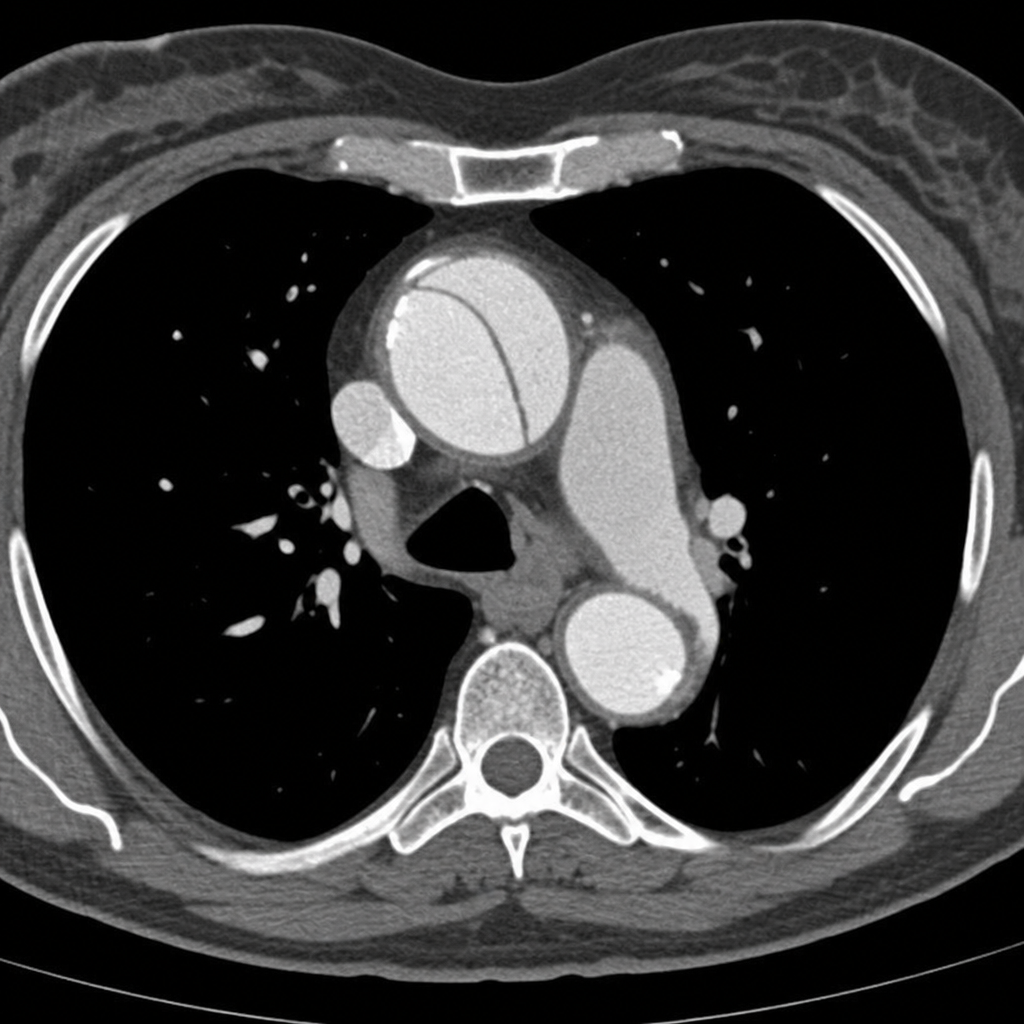
A 45-year-old woman presents to the emergency department with sudden-onset severe tearing chest pain radiating to the interscapular region. Her blood pressure is 178/96 mmHg in the right arm and 142/80 mmHg in the left arm. She is diaphoretic and in moderate distress. A CT angiogram of the chest is obtained and demonstrates an intimal flap involving the ascending aorta, consistent with a Stanford Type A aortic dissection. Based on the imaging findings, which of the following is the most appropriate next step in management?
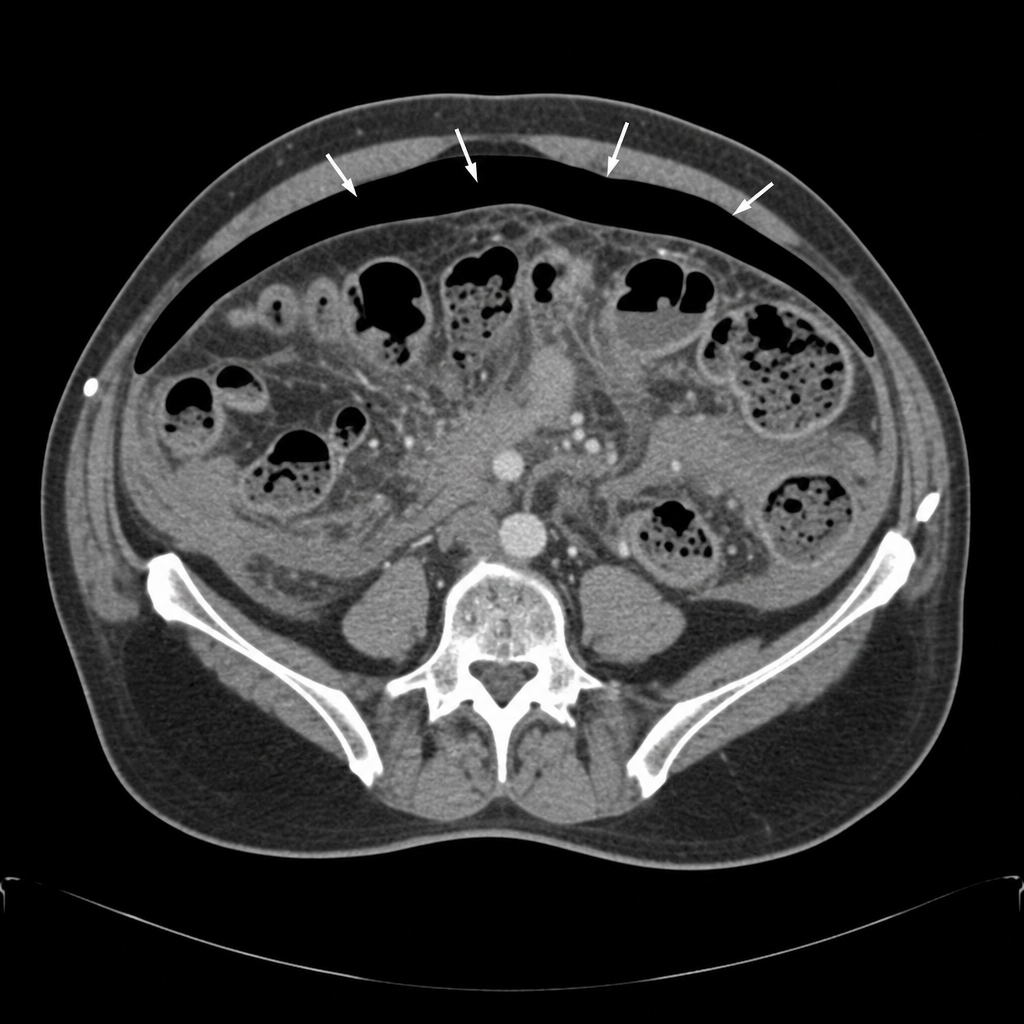
A 58-year-old woman undergoes an elective sigmoid colectomy for recurrent diverticulitis. On postoperative day 6, she develops a temperature of 38.9°C, HR of 118 bpm, and BP of 88/54 mmHg despite 2L of IV fluid resuscitation. She complains of worsening lower abdominal pain. Her abdomen is diffusely tender with guarding and rigidity. WBC is 19,500/µL. A CT scan of the abdomen and pelvis with contrast demonstrates free intraperitoneal air and diffuse pelvic fluid consistent with an uncontained anastomotic leak. Based on the CT findings, what is the most appropriate next step in management?
A 38-year-old kidney transplant recipient maintained on tacrolimus presents with a 2-week history of progressive confusion, ataxia, and visual disturbances. MRI shows multifocal white matter lesions without mass effect or enhancement. CSF analysis reveals mild pleocytosis with elevated protein. JC virus DNA is detected in CSF by PCR. Serum tacrolimus level is therapeutic at 8 ng/mL. Apply knowledge of this condition to determine the appropriate management strategy.
Want unlimited practice?
Get full access to all questions, explanations, and performance tracking.
Scan to download app