
Kidney transplantation — MCQs

A 31-year-old female receives a kidney transplant for autosomal dominant polycystic kidney disease (ADPKD). Three weeks later, the patient experiences acute, T-cell mediated rejection of the allograft and is given sirolimus. Which of the following are side effects of this medication?
A 62-year-old female with a history of uncontrolled hypertension undergoes kidney transplantation. One month following surgery she has elevated serum blood urea nitrogen and creatinine and the patient complains of fever and arthralgia. Her medications include tacrolimus and prednisone. If the patient were experiencing acute, cell-mediated rejection, which of the following would you most expect to see upon biopsy of the transplanted kidney?
A 45-year-old woman comes to the physician because of a 3-month history of worsening fatigue, loss of appetite, itching of the skin, and progressive leg swelling. Although she has been drinking 2–3 L of water daily, she has been passing only small amounts of urine. She has type 1 diabetes mellitus, chronic kidney disease, hypertension, and diabetic polyneuropathy. Her current medications include insulin, torasemide, lisinopril, and synthetic erythropoietin. Her temperature is 36.7°C (98°F), pulse is 87/min, and blood pressure is 138/89 mm Hg. She appears pale. There is 2+ pitting edema in the lower extremities. Sensation to pinprick and light touch is decreased over the feet and legs bilaterally. Laboratory studies show: Hemoglobin 11.4 g/dL Leukocyte count 6000/mm3 Platelet count 280,000/mm3 Serum Na+ 137 mEq/L K+ 5.3 mEq/L Cl− 100 mEq/L HCO3− 20 mEq/L Urea nitrogen 85 mg/dL Creatinine 8 mg/dL pH 7.25 Which of the following long-term treatments would best improve quality of life and maximize survival in this patient?
Twelve days after undergoing a cadaveric renal transplant for adult polycystic kidney disease, a 23-year-old man has pain in the right lower abdomen and generalized fatigue. During the past 4 days, he has had decreasing urinary output. Creatinine concentration was 2.3 mg/dL on the second postoperative day. Current medications include prednisone, cyclosporine, azathioprine, and enalapril. His temperature is 38°C (100.4°F), pulse is 103/min, and blood pressure is 168/98 mm Hg. Examination reveals tenderness to palpation on the graft site. Creatinine concentration is 4.3 mg/dL. A biopsy of the transplanted kidney shows tubulitis. C4d staining is negative. Which of the following is the most likely cause of this patient's findings?
Several weeks following a kidney transplantation, a 50-year-old Caucasian female presents for evaluation of the transplanted organ. Biopsy shows inflammation involving the endothelial cells of the kidney vasculature and the presence of mononuclear cells in the interstitium. Which cells are most likely responsible for this presentation?
A 42-year-old woman comes to the physician because of right flank pain that started 3 days following a procedure. Her vital signs are within normal limits. Physical examination shows right costovertebral angle tenderness. An intravenous pyelogram shows a dilated renal pelvis and ureter on the right with a lack of contrast proximal to the ureterovesical junction. This patient most likely recently underwent which of the following procedures?
A 55-year-old woman recently underwent kidney transplantation for end-stage renal disease. Her early postoperative period was uneventful, and her serum creatinine is lowered from 4.3 mg/dL (preoperative) to 2.5 mg/dL. She is immediately started on immunosuppressive therapy. On postoperative day 7, she presents to the emergency department (ED) because of nausea, fever, abdominal pain at the transplant site, malaise, and pedal edema. The vital signs include: pulse 106/min, blood pressure 167/96 mm Hg, respirations 26/min, and temperature 40.0°C (104.0°F). The surgical site shows no signs of infection. Her urine output is 250 mL over the past 24 hours. Laboratory studies show: Hematocrit 33% White blood cell (WBC) count 6700/mm3 Blood urea 44 mg/dL Serum creatinine 3.3 mg/dL Serum sodium 136 mEq/L Serum potassium 5.6 mEq/L An ultrasound of the abdomen shows collection of fluid around the transplanted kidney with moderate hydronephrosis. Which of the following initial actions is the most appropriate?
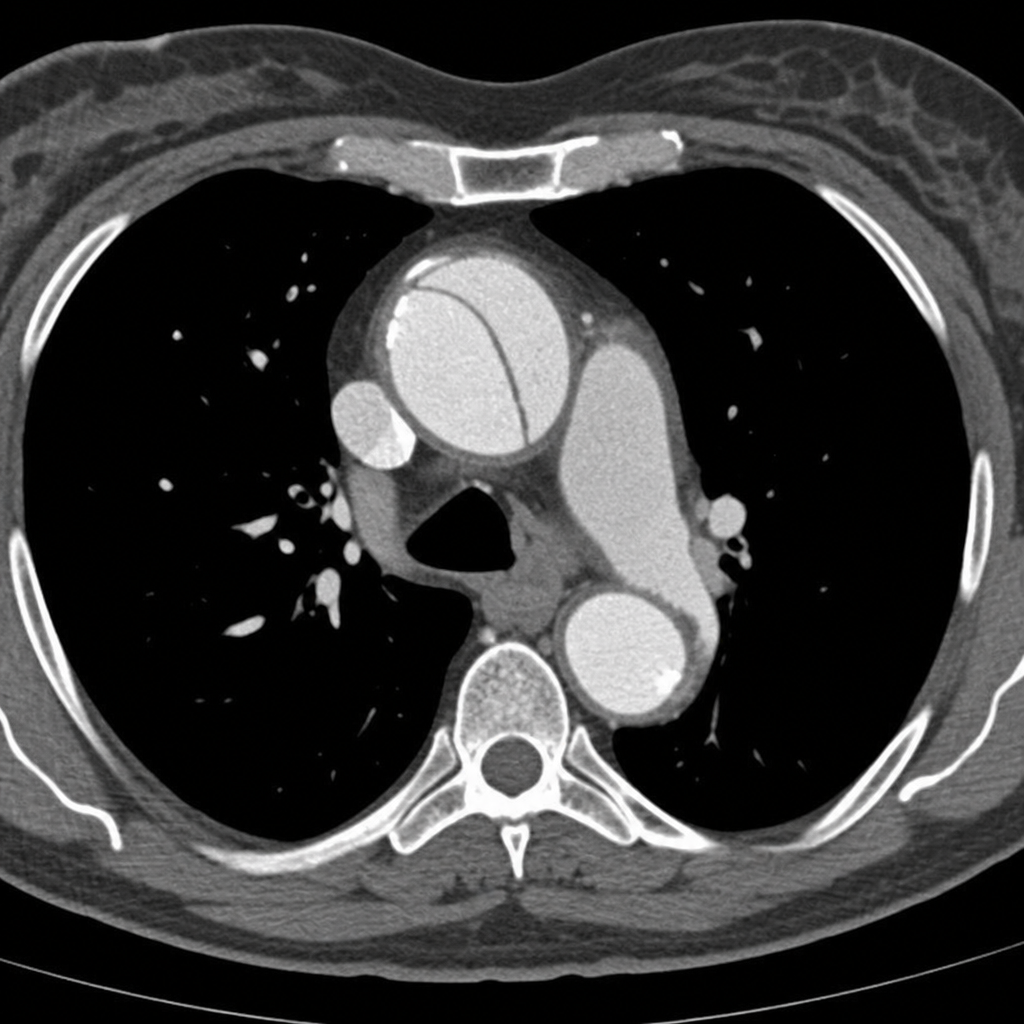
A 45-year-old woman presents to the emergency department with sudden-onset severe tearing chest pain radiating to the interscapular region. Her blood pressure is 178/96 mmHg in the right arm and 142/80 mmHg in the left arm. She is diaphoretic and in moderate distress. A CT angiogram of the chest is obtained and demonstrates an intimal flap involving the ascending aorta, consistent with a Stanford Type A aortic dissection. Based on the imaging findings, which of the following is the most appropriate next step in management?
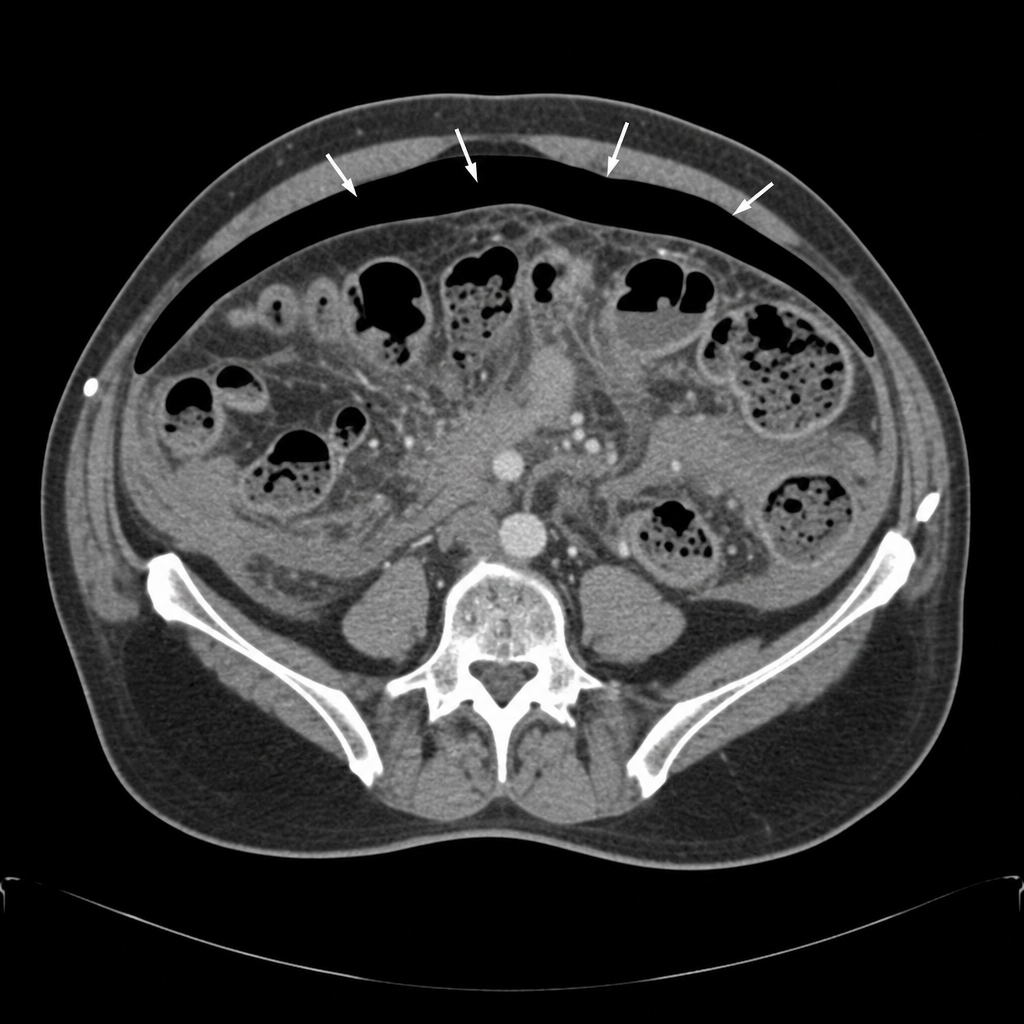
A 58-year-old woman undergoes an elective sigmoid colectomy for recurrent diverticulitis. On postoperative day 6, she develops a temperature of 38.9°C, HR of 118 bpm, and BP of 88/54 mmHg despite 2L of IV fluid resuscitation. She complains of worsening lower abdominal pain. Her abdomen is diffusely tender with guarding and rigidity. WBC is 19,500/µL. A CT scan of the abdomen and pelvis with contrast demonstrates free intraperitoneal air and diffuse pelvic fluid consistent with an uncontained anastomotic leak. Based on the CT findings, what is the most appropriate next step in management?
A 38-year-old kidney transplant recipient maintained on tacrolimus presents with a 2-week history of progressive confusion, ataxia, and visual disturbances. MRI shows multifocal white matter lesions without mass effect or enhancement. CSF analysis reveals mild pleocytosis with elevated protein. JC virus DNA is detected in CSF by PCR. Serum tacrolimus level is therapeutic at 8 ng/mL. Apply knowledge of this condition to determine the appropriate management strategy.
Want unlimited practice?
Get full access to all questions, explanations, and performance tracking.
Scan to download app