
Neurological complications — MCQs

A 24-year-old man presents to the emergency department after a motor vehicle collision. He was in the front seat and unrestrained driver in a head on collision. His temperature is 99.2°F (37.3°C), blood pressure is 90/65 mmHg, pulse is 152/min, respirations are 16/min, and oxygen saturation is 100% on room air. Physical exam is notable for a young man who opens his eyes spontaneously and is looking around. He answers questions with inappropriate responses but discernible words. He withdraws from pain but does not have purposeful movement. Which of the following is this patient's Glasgow coma scale?
A 34-year-old woman is recovering in the post-operative unit following a laparoscopic procedure for chronic endometriosis. She had initially presented with complaints of painful menstrual cramps that kept her bedridden most of the day. She also mentioned to her gynecologist that she had been diagnosed with endometriosis 4 years ago, and she could not find a medication or alternative therapeutic measure that helped. Her medical history was significant for surgery she had 6 years ago to remove tumors she had above her kidneys, after which she was prescribed hydrocortisone. An hour after the laparoscopic procedure, she calls the nurse because she is having difficulty breathing. The nurse records her vital signs include: blood pressure 85/55 mm Hg, respirations 20/min, and pulse 115/min. The patient suddenly loses consciousness. Intravenous fluids are started immediately. She gains consciousness, but her blood pressure is unchanged. Which of the following is the most likely cause of the hypotension?
A 59-year-old man is brought to the emergency department by a coworker for right arm weakness and numbness. The symptoms started suddenly 2 hours ago. His coworker also noticed his face appears to droop on the right side and his speech is slurred. He has a history of hypertension, hyperlipidemia, type 2 diabetes, and peripheral arterial disease. He works as a partner at a law firm and has been under more stress than usual lately. His father died of a stroke at age 70. The patient has smoked a pack of cigarettes daily for the last 40 years. He drinks two pints (750 mL) of whiskey each week. He takes aspirin, atorvastatin, lisinopril, and metformin daily. He is 167.6 cm (5 ft 6 in) tall and weighs 104.3 kg (230 lb); BMI is 37 kg/m2. His temperature is 37.1°C (98.8°F), pulse is 92/min, respirations are 15/min, and blood pressure is 143/92 mm Hg. He is fully alert and oriented. Neurological examination shows asymmetry of the face with droop of the lips on the right. There is 3/5 strength in right wrist flexion and extension, and right finger abduction. Sensation to light touch and pinprick is reduced throughout the right arm. Which of the following is the strongest predisposing factor for this patient's condition?
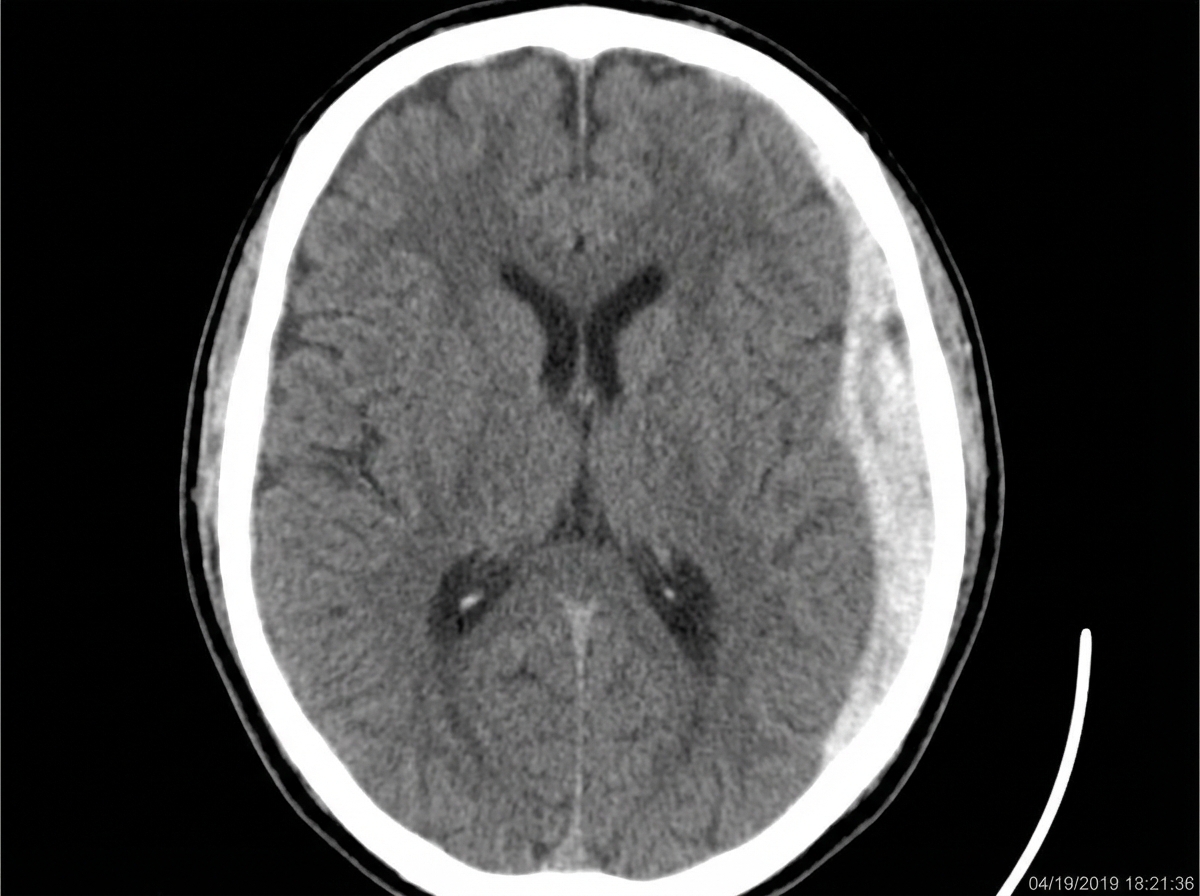
A 68-year-old community-dwelling woman is transported to the emergency department with decreased consciousness, headache, and nausea. The symptoms began after the patient had a syncopal episode and fell at her home. She has a history of arterial hypertension and atrial fibrillation. Her current medications include hydrochlorothiazide, lisinopril, metoprolol, and warfarin. On admission, her blood pressure is 140/90 mm Hg, heart rate is 83/min and irregular, respiratory rate is 12/min, and temperature is 36.8°C (98.4°F). She is conscious and verbally responsive, albeit confused. She is able to follow motor commands. Her pupils are round, equal, and poorly reactive to light. She is unable to abduct both eyes on an eye movement examination. She has decreased strength and increased tone (Ashworth 1/4) and reflexes (3+) in her right upper and lower extremities. Her lungs are clear to auscultation. The cardiac examination shows the presence of S3 and a pulse deficit. A head CT scan is shown in the picture. Which of the following led to the patient’s condition?
Two hours after undergoing elective cholecystectomy with general anesthesia, a 41-year-old woman is evaluated for decreased mental status. BMI is 36.6 kg/m2. Respirations are 18/min and blood pressure is 126/73 mm Hg. Physical examination shows the endotracheal tube in normal position. She does not respond to sternal rub and gag reflex is absent. Arterial blood gas analysis on room air shows normal PO2 and PCO2 levels. Which of the following anesthetic properties is the most likely cause of these findings?
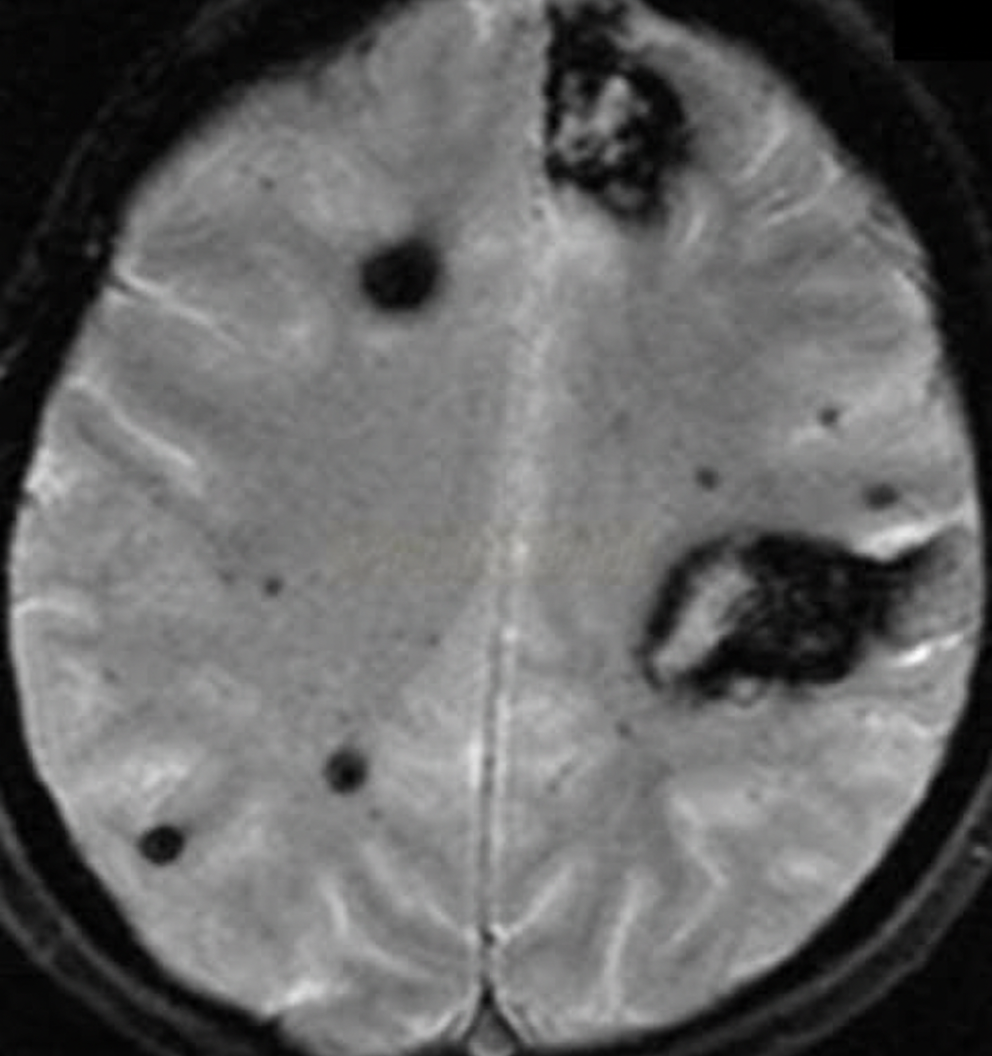
An 88-year-old woman with no significant medical history is brought to the emergency room by her daughter after a fall, where the woman lightly hit her head against a wall. The patient is lucid and complains of a mild headache. The daughter indicates that her mother did not lose consciousness after the fall. On exam, there are no focal neurological deficits, but you decide to perform a CT scan to be sure there is no intracranial bleeding. The CT scan is within normal limits and head MRI is performed (shown). Which of the following conditions has the most similar risk factor to this patient's condition?
A 23-year-old college student was playing basketball when he fell directly onto his left elbow. He had sudden, intense pain and was unable to move his elbow. He was taken immediately to the emergency room by his teammates. He has no prior history of trauma or any chronic medical conditions. His blood pressure is 128/84 mm Hg, the heart rate is 92/min, and the respiratory rate is 14/min. He is in moderate distress and is holding onto his left elbow. On physical examination, pinprick sensation is absent in the left 5th digit and the medial aspect of the left 4th digit. Which of the following is the most likely etiology of this patient’s condition?
A 57-year-old man was brought into the emergency department unconscious 2 days ago. His friends who were with him at that time say he collapsed on the street. Upon arrival to the ED, he had a generalized tonic seizure. At that time, he was intubated and is being treated with diazepam and phenytoin. A noncontrast head CT revealed hemorrhages within the pons and cerebellum with a mass effect and tonsillar herniation. Today, his blood pressure is 110/65 mm Hg, heart rate is 65/min, respiratory rate is 12/min (intubated, ventilator settings: tidal volume (TV) 600 ml, positive end-expiratory pressure (PEEP) 5 cm H2O, and FiO2 40%), and temperature is 37.0°C (98.6°F). On physical examination, the patient is in a comatose state. Pupils are 4 mm bilaterally and unresponsive to light. Cornea reflexes are absent. Gag reflex and cough reflex are also absent. Which of the following is the next best step in the management of this patient?
A 24-year-old woman at 36 weeks pregnant presents to the emergency department with a headache and abdominal pain. The woman has no known past medical history and has inconsistently followed up with an obstetrician for prenatal care. Her temperature is 98.5°F (36.9°C), blood pressure is 163/101 mmHg, pulse is 90/min, respirations are 16/min, and oxygen saturation is 97% on room air. Prior to performing the physical exam, the patient experiences a seizure, which resolves after 60 seconds. Which of the following is the best management for this patient?
A 55-year-old man presents to his primary care physician for a wellness checkup. The patient has a past medical history of alcohol abuse and is currently attending alcoholics anonymous with little success. He is currently drinking roughly 1L of hard alcohol every day and does not take his disulfiram anymore. Which of the following findings is most likely to also be found in this patient?
Want unlimited practice?
Get full access to all questions, explanations, and performance tracking.
Scan to download app