A 56-year-old woman comes to the physician because she palpated a mass in her right breast during self-examination a week ago. Menarche was at the age of 14, and her last menstrual period was at the age of 51. Vital signs are within normal limits. Examination shows a nontender, firm and hard mass in the upper outer quadrant of the right breast. Mammography shows large, dense breasts, with a 1.7-cm mass in the right upper outer quadrant. The patient undergoes right upper outer quadrant lumpectomy with subsequent sentinel node biopsy, which reveals moderately differentiated invasive ductal carcinoma and micrometastasis to one axillary lymph node. There is no evidence of extranodal metastasis. The tumor tests positive for both estrogen and progesterone receptors and does not show human epidermal growth factor receptor 2 (HER2) over-expression. Flow-cytometry reveals aneuploid tumor cells. Which of the following factors has the greatest effect on this patient's prognosis?
Q12
A 59-year-old woman presents to her primary care provider with a 6-month history of progressive left-arm swelling. Two years ago she had a partial mastectomy and axillary lymph node dissection for left breast cancer. She was also treated with radiotherapy at the time. Upon further questioning, she denies fever, pain, or skin changes, but reports difficulty with daily tasks because her hand feels heavy and weak. She is bothered by the appearance of her enlarged extremity and has stopped playing tennis. On physical examination, nonpitting edema of the left arm is noted with hyperkeratosis, papillomatosis, and induration of the skin. Limb elevation, exercise, and static compression bandaging are started. If the patient has no improvement, which of the following will be the best next step?
Q13
A 23-year-old woman presents to the physician with complaints of pain and paresthesias in her left hand, particularly her thumb, index, and middle fingers. She notes that the pain is worse at night, though she still feels significant discomfort during the day. The patient insists that she would like urgent relief of her symptoms, as the pain is keeping her from carrying out her daily activities. On physical examination, pain and paresthesias are elicited when the physician percusses the patient’s wrist as well as when the patient is asked to flex both of her palms at the wrist. Which of the following is the most appropriate initial step in the management of this patient’s condition?
Q14
A 56-year-old woman is one week status post abdominal hysterectomy when she develops a fever of 101.4°F (38.6°C). Her past medical history is significant for type II diabetes mellitus and a prior history of alcohol abuse. The operative report and intraoperative cystoscopy indicate that the surgery was uncomplicated. The nurse reports that since the surgery, the patient has also complained of worsening lower abdominal pain. She has given the patient the appropriate pain medications with little improvement. The patient has tolerated an oral diet well and denies nausea, vomiting, or abdominal distension. Her blood pressure is 110/62 mmHg, pulse is 122/min, and respirations are 14/min. Since being given 1000 mL of intravenous fluids yesterday, the patient has excreted 800 mL of urine. On physical exam, she is uncomfortable, shivering, and sweating. The surgical site is intact, but the surrounding skin appears red. No drainage is appreciated. The abdominal examination reveals tenderness to palpation and hypoactive bowel sounds. Labs and a clean catch urine specimen are obtained as shown below:
Leukocyte count and differential:
Leukocyte count: 18,000/mm^3
Segmented neutrophils: 80%
Bands: 10%
Eosinophils: 1%
Basophils: < 1%
Lymphocytes: 5%
Monocytes: 4%
Platelet count: 300,000/mm^3
Hemoglobin: 12.5 g/dL
Hematocrit: 42%
Urine:
Epithelial cells: 15/hpf
Glucose: positive
RBC: 1/hpf
WBC: 2/hpf
Bacteria: 50 cfu/mL
Ketones: none
Nitrites: negative
Leukocyte esterase: negative
Which of the following is most likely the cause of this patient’s symptoms?
Q15
Eight hours after undergoing an open right hemicolectomy and a colostomy for colon cancer, a 52-year-old man has wet and bloody surgical dressings. He has had episodes of blood in his stools during the past 6 months, which led to the detection of colon cancer. He has hypertension and ischemic heart disease. His younger brother died of a bleeding disorder at the age of 16. The patient has smoked one pack of cigarettes daily for 36 years and drinks three to four beers daily. Prior to admission, his medications included aspirin, metoprolol, enalapril, and simvastatin. Aspirin was stopped 7 days prior to the scheduled surgery. He appears uncomfortable. His temperature is 36°C (96.8°F), pulse is 98/min, respirations are 14/min, and blood pressure is 118/72 mm Hg. Examination shows a soft abdomen with a 14-cm midline incision that has severe oozing of blood from its margins. The colostomy bag has some blood collected within. Laboratory studies show:
Hemoglobin 12.3 g/dL
Leukocyte count 11,200/mm3
Platelet count 210,000/mm3
Bleeding time 4 minutes
Prothrombin time 15 seconds (INR=1.1)
Activated partial thromboplastin time 36 seconds
Serum
Urea nitrogen 30 mg/dL
Glucose 96 mg/dL
Creatinine 1.1 mg/dL
AST 48 U/L
ALT 34 U/L
γ-Glutamyltransferase 70 U/L (N= 5–50 U/L)
Which of the following is the most likely cause of this patient's bleeding?
Q16
A 26-year-old woman presents to the medicine clinic with swelling around the right side of her chin and neck (Image A). She reports pain when moving her jaw and chewing. Her symptoms developed two days after receiving an uncomplicated tonsillectomy. She has been followed by a general medical physician since birth and has received all of her standard health maintenance procedures. Vital signs are stable with the exception of a temperature of 38.4 degrees Celcius. The area in question on the right side is exquisitely tender. The remainder of her exam is benign. What is the most likely diagnosis?
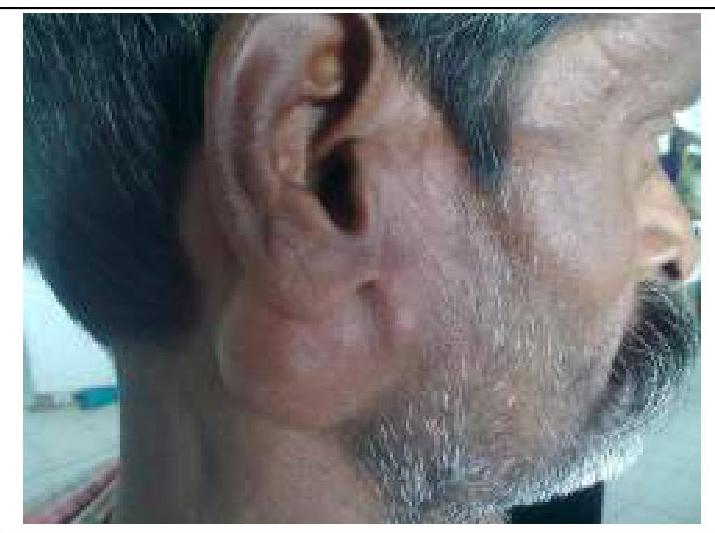
Q17
A 68-year-old woman comes to the physician because of a 3-month history of an oozing, red area above the left ankle. She does not recall any trauma to the lower extremity. She has type 2 diabetes mellitus, hypertension, atrial fibrillation, and ulcerative colitis. She had a myocardial infarction 2 years ago and a stroke 7 years ago. She has smoked 2 packs of cigarettes daily for 48 years and drinks 2 alcoholic beverages daily. Current medications include warfarin, metformin, aspirin, atorvastatin, carvedilol, and mesalamine. She is 165 cm (5 ft 4 in) tall and weighs 67 kg (148 lb); BMI is 24.6 kg/m2. Her temperature is 36.7°C (98°F), pulse is 90/min, respirations are 12/min, and blood pressure is 135/90 mm Hg. Examination shows yellow-brown spots and dilated tortuous veins over the lower extremities. The feet and the left calf are edematous. Femoral, popliteal, and pedal pulses are palpable bilaterally. There is a 3-cm (1.2-in) painless, shallow, exudative ulcer surrounded by granulation tissue above the medial left ankle. There is slight drooping of the right side of the face. Which of the following is the most likely cause of this patient's ulcer?
Q18
A 27-year-old man comes to the physician because of intermittent right shoulder pain for the past 2 weeks. The pain awakens him at night and is worse when he lies on the right shoulder. He does not have any paresthesia or numbness in the right arm. He is a painter, and these episodes of pain have not allowed him to work efficiently. He appears healthy. Vital signs are within normal limits. Examination shows painful abduction of the arm above the shoulder. There is severe pain when the elbow is flexed and the right shoulder is internally rotated. Elevation of the internally rotated and outstretched arm causes pain over the anterior lateral aspect of the shoulder. An x-ray of the shoulder shows no abnormalities. Injection of 5 mL of 1% lidocaine into the right subacromial space relieves the pain and increases the range of motion of the right arm. Which of the following is the most appropriate next step in management?
Q19
A 43-year-old woman comes to the physician because of a 3-month history of a painless ulcer on the sole of her right foot. There is no history of trauma. She has been dressing the ulcer once daily at home with gauze. She has a 15-year history of poorly-controlled type 1 diabetes mellitus and hypertension. Current medications include insulin and lisinopril. Vital signs are within normal limits. Examination shows a 2 x 2-cm ulcer on the plantar aspect of the base of the great toe with whitish, loose tissue on the floor of the ulcer and a calloused margin. A blunt metal probe reaches the deep plantar space. Sensation to vibration and light touch is decreased over both feet. Pedal pulses are intact. An x-ray of the right foot shows no abnormalities. Which of the following is the most appropriate initial step in management?
Q20
A 47-year-old woman comes to the physician for a mass in her left breast she noticed 2 days ago during breast self-examination. She has hypothyroidism treated with levothyroxine. There is no family history of breast cancer. Examination shows large, moderately ptotic breasts. The mass in her left breast is small (approximately 1 cm x 0.5 cm), firm, mobile, and painless. It is located 4 cm from her nipple-areolar complex at the 7 o'clock position. There are no changes in the skin or nipple, and there is no palpable axillary adenopathy. No masses are palpable in her right breast. A urine pregnancy test is negative. Mammogram showed a soft tissue mass with poorly defined margins. Core needle biopsy confirms a low-grade infiltrating ductal carcinoma. The pathological specimen is positive for estrogen receptors and negative for progesterone and human epidermal growth factor receptor 2 (HER2) receptors. Staging shows no distant metastatic disease. Which of the following is the most appropriate next step in management?
Post-op care US Medical PG Practice Questions and MCQs
Question 11: A 56-year-old woman comes to the physician because she palpated a mass in her right breast during self-examination a week ago. Menarche was at the age of 14, and her last menstrual period was at the age of 51. Vital signs are within normal limits. Examination shows a nontender, firm and hard mass in the upper outer quadrant of the right breast. Mammography shows large, dense breasts, with a 1.7-cm mass in the right upper outer quadrant. The patient undergoes right upper outer quadrant lumpectomy with subsequent sentinel node biopsy, which reveals moderately differentiated invasive ductal carcinoma and micrometastasis to one axillary lymph node. There is no evidence of extranodal metastasis. The tumor tests positive for both estrogen and progesterone receptors and does not show human epidermal growth factor receptor 2 (HER2) over-expression. Flow-cytometry reveals aneuploid tumor cells. Which of the following factors has the greatest effect on this patient's prognosis?
A. Age
B. Tumor size
C. Hormone receptor status
D. Nodal status (Correct Answer)
E. HER2 receptor status
Explanation: **Nodal status**
- The presence of **micrometastasis to one axillary lymph node** is the *most significant prognostic indicator* in this patient's case.
- **Lymph node involvement** signifies systemic spread and is the strongest predictor of recurrence and overall survival in breast cancer.
*Age*
- While **age** can influence treatment choices and comorbidity, it is generally *less impactful on long-term prognosis* than nodal status.
- Very young or very old age can sometimes be associated with more aggressive disease or worse outcomes, but it is not the primary determinant.
*Tumor size*
- The **tumor size of 1.7 cm** is a prognostic factor, with larger tumors generally having a worse prognosis.
- However, for this patient, the **presence of lymph node metastasis** is a more powerful indicator of systemic disease than the primary tumor size alone.
*Hormone receptor status*
- **Positive estrogen and progesterone receptors** indicate that the tumor is likely to respond to endocrine therapies.
- This is a *favorable prognostic factor* as it opens up additional treatment options, but it does not outweigh the negative impact of nodal involvement.
*HER2 receptor status*
- **Absence of HER2 overexpression** is a positive factor, as HER2-positive cancers are generally more aggressive and require targeted therapy.
- However, while HER2 status guides treatment, the presence of **lymph node metastasis** still holds greater weight in determining overall prognosis.
Question 12: A 59-year-old woman presents to her primary care provider with a 6-month history of progressive left-arm swelling. Two years ago she had a partial mastectomy and axillary lymph node dissection for left breast cancer. She was also treated with radiotherapy at the time. Upon further questioning, she denies fever, pain, or skin changes, but reports difficulty with daily tasks because her hand feels heavy and weak. She is bothered by the appearance of her enlarged extremity and has stopped playing tennis. On physical examination, nonpitting edema of the left arm is noted with hyperkeratosis, papillomatosis, and induration of the skin. Limb elevation, exercise, and static compression bandaging are started. If the patient has no improvement, which of the following will be the best next step?
A. Diethylcarbamazine
B. Low molecular weight heparin
C. Endovascular stenting
D. Vascularized lymph node transfer (Correct Answer)
E. Antibiotics
Explanation: ***Vascularized lymph node transfer***
- This patient presents with **secondary lymphedema** due to axillary dissection and radiotherapy, which has not responded to conservative management.
- **Vascularized lymph node transfer** is a surgical option that involves transplanting healthy lymph nodes to the affected area to re-establish lymphatic drainage pathways, offering a more definitive solution for refractory cases.
*Diethylcarbamazine*
- **Diethylcarbamazine** is an anti-filarial drug used to treat lymphedema caused by **parasitic infections**, specifically filariasis.
- The patient's lymphedema is secondary to breast cancer treatment, not parasitic infection, making this a **misdirected treatment**.
*Low molecular weight heparin*
- **Low molecular weight heparin** is an anticoagulant used to prevent or treat **venous thromboembolism (VTE)**.
- While patients with cancer are at increased risk for VTE, her symptoms are consistent with lymphedema and not thrombosis, which would typically present with more acute pain and swelling, making this an inappropriate treatment.
*Endovascular stenting*
- **Endovascular stenting** is a procedure used to open blocked or narrowed **blood vessels**, such as in peripheral artery disease or venous obstruction.
- Her condition is specifically lymphedema, a lymphatic circulation issue, not a vascular obstruction, so stenting would not address the underlying problem.
*Antibiotics*
- **Antibiotics** are used to treat **bacterial infections**, which can complicate lymphedema (e.g., cellulitis).
- While chronic lymphedema causes skin changes (hyperkeratosis, papillomatosis, induration), the patient shows no signs of **acute infection** such as fever, pain, erythema, or warmth, making empirical antibiotics unnecessary at this stage.
Question 13: A 23-year-old woman presents to the physician with complaints of pain and paresthesias in her left hand, particularly her thumb, index, and middle fingers. She notes that the pain is worse at night, though she still feels significant discomfort during the day. The patient insists that she would like urgent relief of her symptoms, as the pain is keeping her from carrying out her daily activities. On physical examination, pain and paresthesias are elicited when the physician percusses the patient’s wrist as well as when the patient is asked to flex both of her palms at the wrist. Which of the following is the most appropriate initial step in the management of this patient’s condition?
A. Nonsteroidal anti-inflammatory drugs
B. Electromyography testing
C. Corticosteroid injection
D. Surgical decompression
E. Splinting (Correct Answer)
Explanation: **Splinting**
- **Nocturnal wrist splinting** is often the first-line treatment for **carpal tunnel syndrome (CTS)**, especially when symptoms are worse at night, by maintaining the wrist in a neutral position to reduce pressure on the median nerve.
- If nocturnal symptoms are severe or persistent during the day, **daytime splinting** may also be beneficial, providing both immediate relief and long-term symptom management.
*Nonsteroidal anti-inflammatory drugs*
- **NSAIDs** are generally not effective for **carpal tunnel syndrome** as it is a compressive neuropathy, not primarily an inflammatory condition of a joint or muscle.
- While NSAIDs can help with general pain, they do not address the underlying **median nerve compression**.
*Electromyography testing*
- **Electromyography (EMG)** and **nerve conduction studies (NCS)** are diagnostic tests used to confirm the diagnosis and assess the severity of **nerve damage**, but they are not a treatment.
- These tests are typically performed if initial conservative management fails or if surgery is being considered, to help guide treatment decisions.
*Corticosteroid injection*
- **Corticosteroid injections** can provide temporary relief by reducing inflammation and swelling around the **median nerve**.
- While effective, they are usually considered after conservative measures like splinting have been tried and failed, or for more severe cases where immediate but temporary symptom relief is desired before other definitive treatments.
*Surgical decompression*
- **Surgical decompression** (carpal tunnel release) is the most definitive treatment for **carpal tunnel syndrome** and is typically reserved for cases that have failed extensive conservative management.
- Given that this is the patient's initial presentation for symptoms, **less invasive methods** should be attempted first.
Question 14: A 56-year-old woman is one week status post abdominal hysterectomy when she develops a fever of 101.4°F (38.6°C). Her past medical history is significant for type II diabetes mellitus and a prior history of alcohol abuse. The operative report and intraoperative cystoscopy indicate that the surgery was uncomplicated. The nurse reports that since the surgery, the patient has also complained of worsening lower abdominal pain. She has given the patient the appropriate pain medications with little improvement. The patient has tolerated an oral diet well and denies nausea, vomiting, or abdominal distension. Her blood pressure is 110/62 mmHg, pulse is 122/min, and respirations are 14/min. Since being given 1000 mL of intravenous fluids yesterday, the patient has excreted 800 mL of urine. On physical exam, she is uncomfortable, shivering, and sweating. The surgical site is intact, but the surrounding skin appears red. No drainage is appreciated. The abdominal examination reveals tenderness to palpation and hypoactive bowel sounds. Labs and a clean catch urine specimen are obtained as shown below:
Leukocyte count and differential:
Leukocyte count: 18,000/mm^3
Segmented neutrophils: 80%
Bands: 10%
Eosinophils: 1%
Basophils: < 1%
Lymphocytes: 5%
Monocytes: 4%
Platelet count: 300,000/mm^3
Hemoglobin: 12.5 g/dL
Hematocrit: 42%
Urine:
Epithelial cells: 15/hpf
Glucose: positive
RBC: 1/hpf
WBC: 2/hpf
Bacteria: 50 cfu/mL
Ketones: none
Nitrites: negative
Leukocyte esterase: negative
Which of the following is most likely the cause of this patient’s symptoms?
A. Surgical error
B. Post-operative ileus
C. Wound infection (Correct Answer)
D. Alcohol withdrawal
E. Urinary tract infection
Explanation: ***Wound infection***
- The patient presents with **fever**, worsening **lower abdominal pain**, **tachycardia**, and **local signs of inflammation** (redness around the surgical site, tenderness) one week post-hysterectomy, with a **leukocytosis and left shift** (elevated neutrophils and bands). These findings are highly characteristic of a common **post-surgical wound infection**.
- The lack of significant drainage initially does not rule out infection, and the symptoms are localized to the surgical area.
*Surgical error*
- The operative report and intraoperative cystoscopy indicated the surgery was **uncomplicated**, making an immediate post-operative surgical error less likely to be the primary cause of these symptoms.
- While complications can arise later, the current presentation points more directly to an infectious process rather than an unnoted immediate surgical complication.
*Post-operative ileus*
- Although bowel sounds are hypoactive, the patient is **tolerating an oral diet well** and denies nausea, vomiting, or abdominal distension, which are key symptoms of a clinically significant ileus.
- Her primary complaint is localized pain and systemic signs of infection, rather than generalized abdominal distension and inability to pass flatus or stool.
*Alcohol withdrawal*
- While the patient has a history of alcohol abuse, the primary symptoms (fever, localized abdominal pain, redness around the incision, leukocytosis) are more indicative of an **infectious process** than alcohol withdrawal.
- Alcohol withdrawal typically presents with tremors, agitation, hallucinations, and autonomic instability, and while some overlap (tachycardia) exists, the overall clinical picture doesn't fit.
*Urinary tract infection*
- The urine analysis shows **negative nitrites and leukocyte esterase**, with only 2 WBC/hpf, which makes a **urinary tract infection (UTI) highly unlikely** despite the presence of some bacteria (50 cfu/mL, which is often considered contamination in a clean catch).
- The patient's symptoms are also predominantly localized to the surgical wound area rather than dysuria, frequency, or urgency.
Question 15: Eight hours after undergoing an open right hemicolectomy and a colostomy for colon cancer, a 52-year-old man has wet and bloody surgical dressings. He has had episodes of blood in his stools during the past 6 months, which led to the detection of colon cancer. He has hypertension and ischemic heart disease. His younger brother died of a bleeding disorder at the age of 16. The patient has smoked one pack of cigarettes daily for 36 years and drinks three to four beers daily. Prior to admission, his medications included aspirin, metoprolol, enalapril, and simvastatin. Aspirin was stopped 7 days prior to the scheduled surgery. He appears uncomfortable. His temperature is 36°C (96.8°F), pulse is 98/min, respirations are 14/min, and blood pressure is 118/72 mm Hg. Examination shows a soft abdomen with a 14-cm midline incision that has severe oozing of blood from its margins. The colostomy bag has some blood collected within. Laboratory studies show:
Hemoglobin 12.3 g/dL
Leukocyte count 11,200/mm3
Platelet count 210,000/mm3
Bleeding time 4 minutes
Prothrombin time 15 seconds (INR=1.1)
Activated partial thromboplastin time 36 seconds
Serum
Urea nitrogen 30 mg/dL
Glucose 96 mg/dL
Creatinine 1.1 mg/dL
AST 48 U/L
ALT 34 U/L
γ-Glutamyltransferase 70 U/L (N= 5–50 U/L)
Which of the following is the most likely cause of this patient's bleeding?
A. Factor VIII deficiency
B. Liver dysfunction
C. Erosion of blood vessels
D. Insufficient mechanical hemostasis (Correct Answer)
E. Platelet dysfunction
Explanation: ***Insufficient mechanical hemostasis***
- The patient's **coagulation studies are within normal limits** (normal PT, aPTT, bleeding time, and platelet count), ruling out most common intrinsic bleeding disorders.
- Given the timing (8 hours post-surgery) and the nature of bleeding (oozing from incision margins and colostomy site), **inadequate surgical closure or ligature** is the most probable cause.
*Factor VIII deficiency*
- This would present with a **prolonged activated partial thromboplastin time (aPTT)**, which is normal in this patient (36 seconds). His brother's death from a bleeding disorder is a red herring.
- Congenital factor deficiencies typically manifest earlier in life and cause more severe, spontaneous bleeding, not just post-operative oozing with normal coagulation factors.
*Liver dysfunction*
- Severe liver dysfunction would typically lead to **prolonged PT and aPTT** due to impaired synthesis of clotting factors.
- While the patient has elevated GGT, indicating some liver stress likely from alcohol, his AST and ALT are only mildly elevated, and his coagulation tests are normal.
*Erosion of blood vessels*
- This is less likely to cause widespread oozing and would typically present as a more significant, **pulsatile hemorrhage** or hematoma.
- While possible in a surgical field, the lack of significant hemodynamic compromise and normal coagulation points away from a major vessel erosion.
*Platelet dysfunction*
- This would typically result in a **prolonged bleeding time**, which is normal in this patient (4 minutes).
- Although the patient was on aspirin, it was stopped 7 days prior to surgery, which is typically sufficient for platelet function to recover.
Question 16: A 26-year-old woman presents to the medicine clinic with swelling around the right side of her chin and neck (Image A). She reports pain when moving her jaw and chewing. Her symptoms developed two days after receiving an uncomplicated tonsillectomy. She has been followed by a general medical physician since birth and has received all of her standard health maintenance procedures. Vital signs are stable with the exception of a temperature of 38.4 degrees Celcius. The area in question on the right side is exquisitely tender. The remainder of her exam is benign. What is the most likely diagnosis?
A. Superior vena cava syndrome
B. Mumps
C. Acute bacterial parotitis (Correct Answer)
D. Sjogren's syndrome
E. Pleomorphic adenoma
Explanation: **Acute bacterial parotitis**
- The patient's presentation with **unilateral swelling** around the chin and neck, **pain with jaw movement and chewing**, fever, and **exquisite tenderness** in the area, particularly after a recent **tonsillectomy** (which can predispose to dehydration or salivary gland dysfunction), is highly characteristic of acute bacterial parotitis.
- The elevated temperature further supports an infectious etiology, and the **post-operative setting** increases the risk for this condition due to potential retrograde infection from the oral cavity.
*Superior vena cava syndrome*
- This syndrome typically presents with **facial and neck edema**, distended neck veins, and dyspnea, resulting from obstruction of the superior vena cava, usually by a mass.
- It does not typically cause localized, **exquisitely tender swelling** or pain with jaw movement, and a recent tonsillectomy is not a risk factor.
*Mumps*
- While mumps causes **parotid gland swelling**, it is a viral infection that usually presents with **bilateral parotitis**, although unilateral cases can occur.
- The patient's history of receiving **all standard health maintenance procedures** suggests she has likely been vaccinated against mumps, making it less probable, and the rapid onset post-tonsillectomy points more towards a bacterial process.
*Sjogren's syndrome*
- This is a **chronic autoimmune disease** primarily affecting the exocrine glands, leading to **dry eyes and dry mouth**, and can cause recurrent enlargement of the parotid glands.
- It would not explain the **acute, painful, and tender swelling with fever** in a patient with no prior history of autoimmune disease, nor would it typically follow a tonsillectomy.
*Pleomorphic adenoma*
- This is a common **benign salivary gland tumor** that typically presents as a **slow-growing, painless mass** in the parotid gland.
- It would not explain the **acute onset, pain, tenderness, and fever** described in the patient, which are indicative of an inflammatory or infectious process.
Question 17: A 68-year-old woman comes to the physician because of a 3-month history of an oozing, red area above the left ankle. She does not recall any trauma to the lower extremity. She has type 2 diabetes mellitus, hypertension, atrial fibrillation, and ulcerative colitis. She had a myocardial infarction 2 years ago and a stroke 7 years ago. She has smoked 2 packs of cigarettes daily for 48 years and drinks 2 alcoholic beverages daily. Current medications include warfarin, metformin, aspirin, atorvastatin, carvedilol, and mesalamine. She is 165 cm (5 ft 4 in) tall and weighs 67 kg (148 lb); BMI is 24.6 kg/m2. Her temperature is 36.7°C (98°F), pulse is 90/min, respirations are 12/min, and blood pressure is 135/90 mm Hg. Examination shows yellow-brown spots and dilated tortuous veins over the lower extremities. The feet and the left calf are edematous. Femoral, popliteal, and pedal pulses are palpable bilaterally. There is a 3-cm (1.2-in) painless, shallow, exudative ulcer surrounded by granulation tissue above the medial left ankle. There is slight drooping of the right side of the face. Which of the following is the most likely cause of this patient's ulcer?
A. Peripheral neuropathy
B. Drug-induced microvascular occlusion
C. Chronic pressure
D. Decreased arterial blood flow
E. Venous insufficiency (Correct Answer)
Explanation: ***Venous insufficiency***
- The presence of **edema**, **dilated tortuous veins**, and **yellow-brown spots** (hemosiderin deposition) on the lower extremities, along with a **painless, shallow, exudative ulcer** above the medial ankle, are classic signs of chronic venous insufficiency.
- The ulcer's location (medial malleolus) and its characteristics (granulation tissue, oozing) further support a venous etiology, as good arterial pulses indicate adequate inflow.
*Peripheral neuropathy*
- Ulcers due to peripheral neuropathy (e.g., in diabetes) are typically **painless** but often occur on the **plantar surface of the foot** or pressure points and can be deep.
- While the patient has diabetes, the clinical presentation with prominent venous stasis signs and edema points away from a primary neuropathic ulcer in this location.
*Drug-induced microvascular occlusion*
- Drug-induced microvascular occlusion (e.g., from **warfarin necrosis**) typically presents as painful, irregular, purpuric lesions that can progress to necrosis and ulceration, often occurring within days of starting the medication or with high doses.
- The 3-month history, painless nature, and specific signs of venous stasis do not align with drug-induced microvascular occlusion.
*Chronic pressure*
- Pressure ulcers develop over **bony prominences** due to prolonged pressure, leading to tissue ischemia and breakdown.
- This patient's ulcer is above the medial ankle, which is not a common site for pressure ulcers, and the presentation includes clear signs of venous hypertension, not just external compression.
*Decreased arterial blood flow*
- Ulcers due to decreased arterial blood flow (arterial ulcers) are typically **painful**, often located on the **toes, heels, or dorsum of the foot**, and have a "punched-out" appearance with **pale bases** and minimal granulation tissue.
- The presence of palpable pedal pulses and the painless nature of the ulcer rule out significant arterial insufficiency as the primary cause.
Question 18: A 27-year-old man comes to the physician because of intermittent right shoulder pain for the past 2 weeks. The pain awakens him at night and is worse when he lies on the right shoulder. He does not have any paresthesia or numbness in the right arm. He is a painter, and these episodes of pain have not allowed him to work efficiently. He appears healthy. Vital signs are within normal limits. Examination shows painful abduction of the arm above the shoulder. There is severe pain when the elbow is flexed and the right shoulder is internally rotated. Elevation of the internally rotated and outstretched arm causes pain over the anterior lateral aspect of the shoulder. An x-ray of the shoulder shows no abnormalities. Injection of 5 mL of 1% lidocaine into the right subacromial space relieves the pain and increases the range of motion of the right arm. Which of the following is the most appropriate next step in management?
A. Physical therapy (Correct Answer)
B. Thoracic outlet decompression
C. Arthroscopic repair
D. Intraarticular glucocorticoids
E. MRI of the shoulder
Explanation: ***Physical therapy***
- This patient presents with **shoulder impingement syndrome**, likely due to his occupation as a painter. **Physical therapy** is the first-line treatment, focusing on strengthening rotator cuff muscles, improving posture, and increasing range of motion.
- The positive response to a **lidocaine injection** into the subacromial space confirms the diagnosis and indicates that an inflammatory process (like **tendinitis** or **bursitis**) is the source of pain, which usually responds well to conservative management.
*Thoracic outlet decompression*
- **Thoracic outlet syndrome** is characterized by neurovascular compression, leading to symptoms like **paresthesia, numbness, or weakness in the arm/hand**, which are absent in this patient.
- Surgical decompression is a last-resort treatment for severe, refractory cases of thoracic outlet syndrome and is not indicated here.
*Arthroscopic repair*
- **Arthroscopic repair** is usually reserved for cases of **rotator cuff tears** that fail conservative management or for large, traumatic tears. There is no evidence of a tear in this case, and the pain relief with lidocaine suggests inflammation, not structural damage requiring surgery.
- It would be a premature and overly aggressive intervention given the patient's symptoms and initial response to diagnostic injection.
*Intraarticular glucocorticoids*
- While **glucocorticoid injections** can reduce inflammation and provide temporary pain relief in shoulder impingement, they are typically considered after a trial of conservative management, such as **physical therapy**, has failed.
- Repeated injections carry risks like **tendon weakening** and may mask symptoms, delaying appropriate long-term management.
*MRI of the shoulder*
- An **X-ray was already performed** and showed no abnormalities, ruling out significant bony pathology. An **MRI** would be indicated if there was suspicion of a **rotator cuff tear** or other significant soft tissue injury that has not responded to initial conservative measures.
- Given the classic presentation of impingement and the positive response to a diagnostic injection, immediate MRI is not necessary for establishing the diagnosis or guiding the next step in initial treatment.
Question 19: A 43-year-old woman comes to the physician because of a 3-month history of a painless ulcer on the sole of her right foot. There is no history of trauma. She has been dressing the ulcer once daily at home with gauze. She has a 15-year history of poorly-controlled type 1 diabetes mellitus and hypertension. Current medications include insulin and lisinopril. Vital signs are within normal limits. Examination shows a 2 x 2-cm ulcer on the plantar aspect of the base of the great toe with whitish, loose tissue on the floor of the ulcer and a calloused margin. A blunt metal probe reaches the deep plantar space. Sensation to vibration and light touch is decreased over both feet. Pedal pulses are intact. An x-ray of the right foot shows no abnormalities. Which of the following is the most appropriate initial step in management?
A. Surgical revascularization of the right foot
B. Amputation of the right forefoot
C. Total contact casting of right foot
D. Intravenous antibiotic therapy
E. Sharp surgical debridement of the ulcer (Correct Answer)
Explanation: ***Sharp surgical debridement of the ulcer***
- The presence of a **painless ulcer**, decreased sensation (neuropathy), and a calloused margin with loose tissue indicates a **neuropathic ulcer** common in diabetic patients. **Sharp surgical debridement** is crucial to remove non-viable tissue and promote healing.
- The probe reaching the deep plantar space suggests a potential deep infection or osteomyelitis, which needs aggressive debridement to remove all infected and necrotic tissue. However, since the X-ray is normal, it is less likely to have osteomyelitis, but it needs to be ruled out by further investigations.
*Surgical revascularization of the right foot*
- This is primarily indicated for **ischemic ulcers** where blood supply is compromised.
- The patient has **intact pedal pulses**, meaning good distal blood flow, making revascularization unnecessary at this stage.
*Amputation of the right forefoot*
- Amputation is a measure of last resort for **severe, non-healing ulcers** with extensive infection or gangrene that fail to respond to conservative and surgical debridement.
- The current presentation does not warrant such an extreme intervention as a first step.
*Total contact casting of right foot*
- **Total contact casting** is used for **off-loading pressure** from a neuropathic ulcer to facilitate healing.
- While it's an important step in management, it should generally follow **debridement** to ensure a clean wound bed.
*Intravenous antibiotic therapy*
- This is indicated if there are definitive signs of **spreading infection** (e.g., cellulitis, fever, purulence).
- While debridement helps prevent infection by removing necrotic tissue, there is no mention of systemic signs of infection or severe local infection requiring immediate IV antibiotics.
Question 20: A 47-year-old woman comes to the physician for a mass in her left breast she noticed 2 days ago during breast self-examination. She has hypothyroidism treated with levothyroxine. There is no family history of breast cancer. Examination shows large, moderately ptotic breasts. The mass in her left breast is small (approximately 1 cm x 0.5 cm), firm, mobile, and painless. It is located 4 cm from her nipple-areolar complex at the 7 o'clock position. There are no changes in the skin or nipple, and there is no palpable axillary adenopathy. No masses are palpable in her right breast. A urine pregnancy test is negative. Mammogram showed a soft tissue mass with poorly defined margins. Core needle biopsy confirms a low-grade infiltrating ductal carcinoma. The pathological specimen is positive for estrogen receptors and negative for progesterone and human epidermal growth factor receptor 2 (HER2) receptors. Staging shows no distant metastatic disease. Which of the following is the most appropriate next step in management?
A. Lumpectomy with sentinel lymph node biopsy followed by hormone therapy
B. Nipple-sparing mastectomy with axillary lymph node dissection followed by hormone therapy
C. Nipple-sparing mastectomy with axillary lymph node dissection, followed by radiation and hormone therapy
D. Radical mastectomy followed by hormone therapy
E. Lumpectomy with sentinel lymph node biopsy, followed by radiation and hormone therapy (Correct Answer)
Explanation: **Lumpectomy with sentinel lymph node biopsy, followed by radiation and hormone therapy**
- The patient has **early-stage (T1N0M0) estrogen receptor (ER)-positive, HER2-negative invasive ductal carcinoma** suitable for **breast-conserving surgery (lumpectomy)**.
- **Lumpectomy** must be followed by **radiation therapy** to the remaining breast tissue to reduce the risk of local recurrence, and **endocrine therapy** (due to ER positivity) is indicated to reduce systemic recurrence risk.
- **Sentinel lymph node biopsy** is performed to stage the axilla; if positive, an axillary lymph node dissection may be indicated. However, in this case, the mass is small, and there is no palpable axillary adenopathy, making sentinel lymph node biopsy the appropriate initial step.
*Lumpectomy with sentinel lymph node biopsy followed by hormone therapy*
- While **lumpectomy with sentinel lymph node biopsy** and **hormone therapy** are part of the appropriate management, **radiation therapy** to the conserved breast is a critical component that is missing from this option.
- Omitting **radiation therapy** after lumpectomy for invasive breast cancer significantly increases the risk of local recurrence.
*Nipple-sparing mastectomy with axillary lymph node dissection followed by hormone therapy*
- A **nipple-sparing mastectomy** is a more aggressive surgical approach than typically required for a **small, early-stage tumor** like this, which is amenable to breast-conserving surgery.
- **Axillary lymph node dissection** is usually reserved for cases with clinically positive lymph nodes or a positive sentinel lymph node biopsy, not as an initial step when there is no palpable axillary adenopathy.
*Nipple-sparing mastectomy with axillary lymph node dissection, followed by radiation and hormone therapy*
- This option involves an **unnecessarily extensive surgical procedure (nipple-sparing mastectomy with axillary lymph node dissection)** for a **small (1cm x 0.5cm) early-stage tumor** that can be managed with breast-conserving therapy.
- While radiation and hormone therapy are relevant, the initial surgical choice is too aggressive given the clinical presentation.
*Radical mastectomy followed by hormone therapy*
- **Radical mastectomy** (which includes removal of the breast, underlying chest muscle, and axillary lymph nodes) is rarely performed today due to its significant morbidity and is not indicated for this **early-stage tumor**.
- **Modified radical mastectomy**, which removes the breast and axillary lymph nodes while preserving the chest muscle, is typically only considered if breast-conserving surgery is not feasible or desired, and **hormone therapy** would be indicated, but **radiation** may also be needed depending on other factors.