
Nutrition support in surgical patients — MCQs

Four days after admission to the hospital for anorexia nervosa, a 20-year-old woman has new-onset palpitations and paresthesias in all four limbs. Prior to admission, she was found unconscious by her parents on the floor of a residential treatment center. The patient was started on a trial of nutritional rehabilitation upon arrival to the hospital. Her temperature is 36°C (96.8°F), pulse is 47/min, and blood pressure is 90/60 mmHg. She is 160 cm tall and weighs 35 kg; BMI is 14 kg/m2. The patient appears emaciated. Examination shows lower leg edema. A 2/6 holosystolic murmur is heard over the 5th intercostal space at the midclavicular line. An ECG shows intermittent supraventricular tachycardia and QTc prolongation. Serum studies show: Day 2 Day 4 Potassium (mEq/L) 3.5 2.7 Calcium (mg/dL) 8.5 7.8 Magnesium (mEq/L) 1.2 0.5 Phosphorus (mg/dL) 3.6 1.5 Which of the following is the most likely underlying cause of this patient's condition?
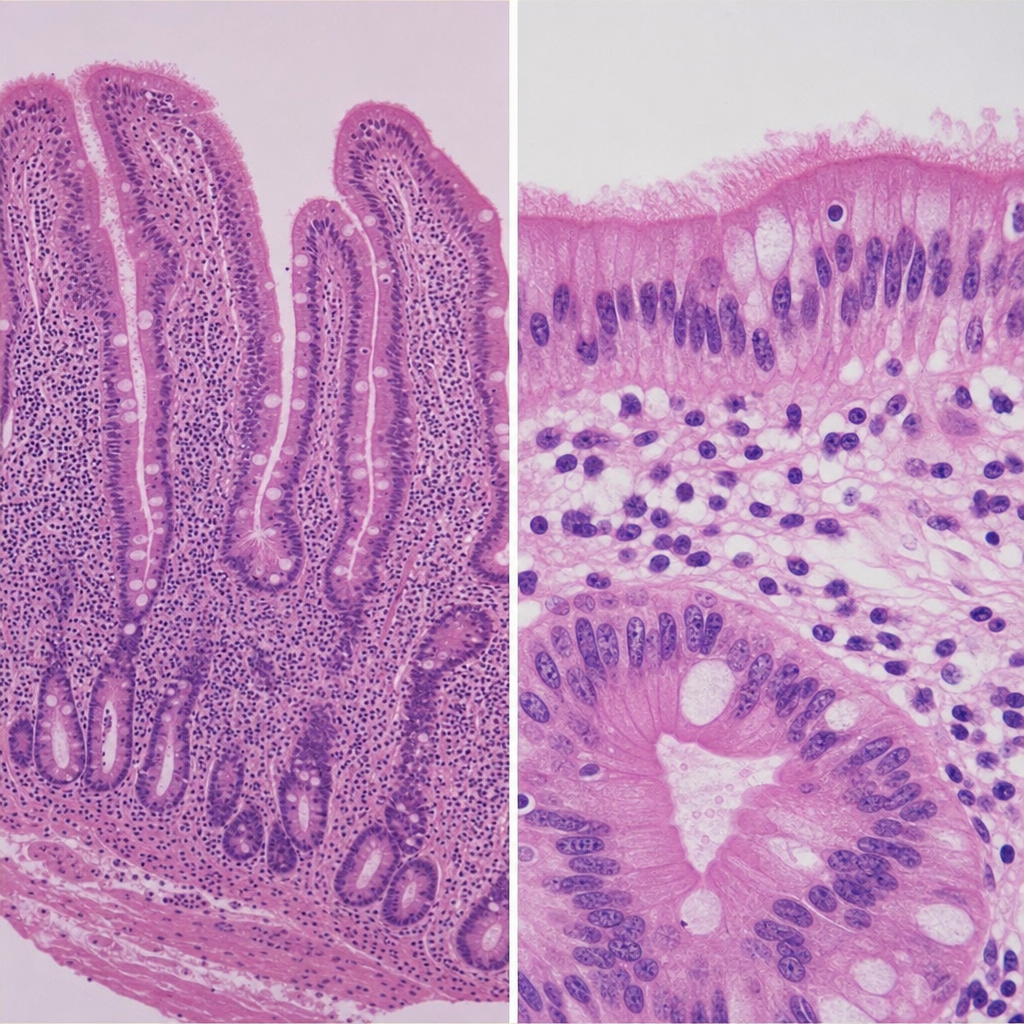
A 34-year-old man comes to the physician because of foul-smelling diarrhea, fatigue, and bloating for 6 months. During this time, he has had a 5-kg (11-lb) weight loss without a change in diet. He has type 1 diabetes mellitus that is well-controlled with insulin. Examination shows conjunctival pallor and inflammation of the corners of the mouth. The abdomen is soft, and there is diffuse tenderness to palpation with no guarding or rebound. His hemoglobin concentration is 10.4 g/dL. The patient undergoes upper endoscopy. A photomicrograph of tissue from an intestinal biopsy is shown. Which of the following is most likely to improve this patient's symptoms?
A 65-year-old man presents to the diabetes clinic for a check-up. He has been successfully managing his diabetes through diet alone, and has not experienced any complications related to retinopathy, neuropathy, or nephropathy. He recently started a new exercise regimen and is eager to see whether his weight has declined since his last visit. The nurse measures his height to be 170 cm and his weight to be 165 lb (75 kg). What range does this patient’s body mass index currently fall into?
A 21-year-old woman presents to the clinic complaining of fatigue for the past 2 weeks. She reports that it is difficult for her to do strenuous tasks such as lifting heavy boxes at the bar she works at. She denies any precipitating factors, weight changes, nail changes, dry skin, chest pain, abdominal pain, or urinary changes. She is currently trying out a vegetarian diet for weight loss and overall wellness. Besides heavier than usual periods, the patient is otherwise healthy with no significant medical history. A physical examination demonstrates conjunctival pallor. Where in the gastrointestinal system is the most likely mineral that is deficient in the patient absorbed?
A 28-year-old male presents to his primary care physician with complaints of intermittent abdominal pain and alternating bouts of constipation and diarrhea. His medical chart is not significant for any past medical problems or prior surgeries. He is not prescribed any current medications. Which of the following questions would be the most useful next question in eliciting further history from this patient?
A 66-year-old man weighing 50 kg (110 lb) is admitted to the hospital because of sepsis complicated by acute respiratory distress syndrome. The physician decides to initiate total parenteral nutrition and prescribes short-term hypocaloric intake of 20 kcal/kg/day with 20% of the total energy requirement provided by proteins and 30% provided by fats. The physician calculates that a total volume of 1100 mL/day should be infused during the parenteral nutrition therapy to maintain fluid balance. A colloid containing 10 g/dL of albumin and an emulsion with a fat concentration of 33 g/dL are used to prepare parenteral nutrition modules. Which of the following is the most appropriate module to meet the carbohydrate requirement in this patient over the next 24 hours?
One week after undergoing sigmoidectomy with end colostomy for complicated diverticulitis, a 67-year-old man has upper abdominal pain. During the surgery, he was transfused two units of packed red blood cells. His postoperative course was uncomplicated. Two days ago, he developed fever. He is currently receiving parenteral nutrition through a central venous catheter. He has type 2 diabetes mellitus, hypertension, and hypercholesterolemia. He is oriented to person, but not to place and time. Prior to admission, his medications included metformin, valsartan, aspirin, and atorvastatin. His temperature is 38.9°C (102.0°F), pulse is 120/min, and blood pressure is 100/60 mmHg. Examination shows jaundice of the conjunctivae. Abdominal examination shows tenderness to palpation in the right upper quadrant. There is no rebound tenderness or guarding; bowel sounds are hypoactive. Laboratory studies show: Leukocytes 13,500 /mm3 Segmented neutrophils 75 % Serum Aspartate aminotransferase 140 IU/L Alanine aminotransferase 85 IU/L Alkaline phosphatase 150 IU/L Bilirubin Total 2.1 mg/dL Direct 1.3 mg/dL Amylase 20 IU/L Which of the following is the most likely diagnosis in this patient?
Three days after being admitted to the hospital because of a fall from the roof of a two-story building, a 27-year-old man is being monitored in the intensive care unit. On arrival, the patient was somnolent and not oriented to person, place, or time. A CT scan of the head showed an epidural hemorrhage that was 45 cm3 in size and a midline shift of 7 mm. Emergency surgery was performed with craniotomy and hematoma evacuation on the day of admission. Perioperatively, a bleeding vessel was identified and ligated. Postoperatively, the patient was transferred to the intensive care unit and placed on a ventilator. His temperature is 37°C (98.6°F), pulse is 67/min, and blood pressure is 117/78 mm Hg. The ventilator is set at a FiO2 of 55%, tidal volume of 520 mL, and positive end-expiratory pressure of 5.0 cm H2O. In addition to intravenous administration of fluids, which of the following is the most appropriate next step in managing this patient's nutrition?
A 30-year-old male gang member is brought to the emergency room with a gunshot wound to the abdomen. The patient was intubated and taken for an exploratory laparotomy, which found peritoneal hemorrhage and injury to the small bowel. He required 5 units of blood during this procedure. Following the operation, the patient was sedated and remained on a ventilator in the surgical intensive care unit (SICU). The next day, a central line is placed and the patient is started on total parenteral nutrition. Which of the following complications is most likely in this patient?
Want unlimited practice?
Get full access to all questions, explanations, and performance tracking.
Scan to download app