
Pyloric stenosis diagnosis and pyloromyotomy — MCQs

A 23-year-old college senior visits the university health clinic after vomiting large amounts of blood. He has been vomiting for the past 36 hours after celebrating his team’s win at the national hockey championship with his varsity friends while consuming copious amounts of alcohol. His personal medical history is unremarkable. His blood pressure is 129/89 mm Hg while supine and 100/70 mm Hg while standing. His pulse is 98/min, strong and regular, with an oxygen saturation of 98%. His body temperature is 36.5°C (97.7°F), while the rest of the physical exam is normal. Which of the following is associated with this patient’s condition?
A 4-year-old boy presents to the emergency department after his parents found him drinking blue liquid out of an unlabeled bottle in the garage. They have no idea what was in the bottle and are concerned for his health. They have brought the bottle with them to the emergency department. The child's past medical history is not remarkable, and he is currently not taking any medications. The patient's vitals are within normal limits for his age. Physical exam reveals a crying child who is drooling. A radiograph is performed, and the child's vitals are closely monitored. It is determined that the blue liquid is a strong alkali. Which of the following is the best next step in management?
A 48-year-old woman is transferred from her primary care physician's office to the emergency department for further evaluation of hypokalemia to 2.5 mEq/L. She was recently diagnosed with hypertension 2 weeks ago and started on medical therapy. The patient said that she enjoys all kinds of food and exercises regularly, but has not been able to complete her workouts as she usually does. Her temperature is 97.7°F (36.5°C), blood pressure is 107/74 mmHg, pulse is 80/min, respirations are 15/min, and SpO2 is 94% on room air. Her physical exam is unremarkable. Peripheral intravenous (IV) access is obtained. Her basic metabolic panel is obtained below. Serum: Na+: 135 mEq/L Cl-: 89 mEq/L K+: 2.2 mEq/L HCO3-: 33 mEq/L BUN: 44 mg/dL Glucose: 147 mg/dL Creatinine: 2.3 mg/dL Magnesium: 2.0 mEq/L What is the next best step in management?
A 3-week-old firstborn baby girl is brought to the pediatric emergency room with projectile vomiting. She started vomiting while feeding 12 hours ago and has been unable to keep anything down since then. After vomiting, she appears well and hungry, attempting to feed again. The vomitus has been non-bloody and non-bilious. The last wet diaper was 10 hours ago. The child was born at 40 weeks gestation to a healthy mother. On examination, the child appears sleepy but has a healthy cry during the exam. The child has dry mucous membranes and delayed capillary refill. There is a palpable olive-shaped epigastric mass on palpation. Which of the following is the most likely cause of this patient's condition?
A 5-week-old infant boy presents to the pediatrician with intermittent vomiting for the last 2 weeks. The mother reports that the vomiting is non-bilious and immediately follows feeding. After vomiting, the baby is hungry and wants to feed again. The frequency of vomiting has been increasing progressively over 2 weeks. The vital signs are within normal limits. The examination of the abdomen reveals the presence of a firm mass of approx. 2 cm in length, above and to the right of the umbilicus. The mass is movable, olive-shaped, and hard on palpation. Which of the following is the most likely surgical treatment for this infant’s condition?
A 42-year-old woman is brought to the emergency department because of a 5-day history of epigastric pain, fever, nausea, and malaise. Five weeks ago she had acute biliary pancreatitis and was treated with endoscopic retrograde cholangiopancreatography and subsequent cholecystectomy. Her maternal grandfather died of pancreatic cancer. She does not smoke. She drinks 1–2 beers daily. Her temperature is 38.7°C (101.7°F), respirations are 18/min, pulse is 120/min, and blood pressure is 100/70 mm Hg. Abdominal examination shows epigastric tenderness and three well-healed laparoscopy scars. The remainder of the examination shows no abnormalities. Laboratory studies show: Hemoglobin 10 g/dL Leukocyte count 15,800/mm3 Serum Na+ 140 mEq/L Cl− 103 mEq/L K+ 4.5 mEq/L HCO3- 25 mEq/L Urea nitrogen 18 mg/dL Creatinine 1.0 mg/dL Alkaline phosphatase 70 U/L Aspartate aminotransferase (AST, GOT) 22 U/L Alanine aminotransferase (ALT, GPT) 19 U/L γ-Glutamyltransferase (GGT) 55 U/L (N = 5–50) Bilirubin 1 mg/dl Glucose 105 mg/dL Amylase 220 U/L Lipase 365 U/L (N = 14–280) Abdominal ultrasound shows a complex cystic fluid collection with irregular walls and septations in the pancreas. Which of the following is the most likely diagnosis?
A 37-year-old man presents to the physician. He has been overweight since childhood. He has not succeeded in losing weight despite following different diet and exercise programs over the past several years. He has had diabetes mellitus for 2 years and severe gastroesophageal reflux disease for 9 years. His medications include metformin, aspirin, and pantoprazole. His blood pressure is 142/94 mm Hg, pulse is 76/min, and respiratory rate is 14/min. His BMI is 36.5 kg/m2. Laboratory studies show: Hemoglobin A1C 6.6% Serum Fasting glucose 132 mg/dL Which of the following is the most appropriate surgical management?
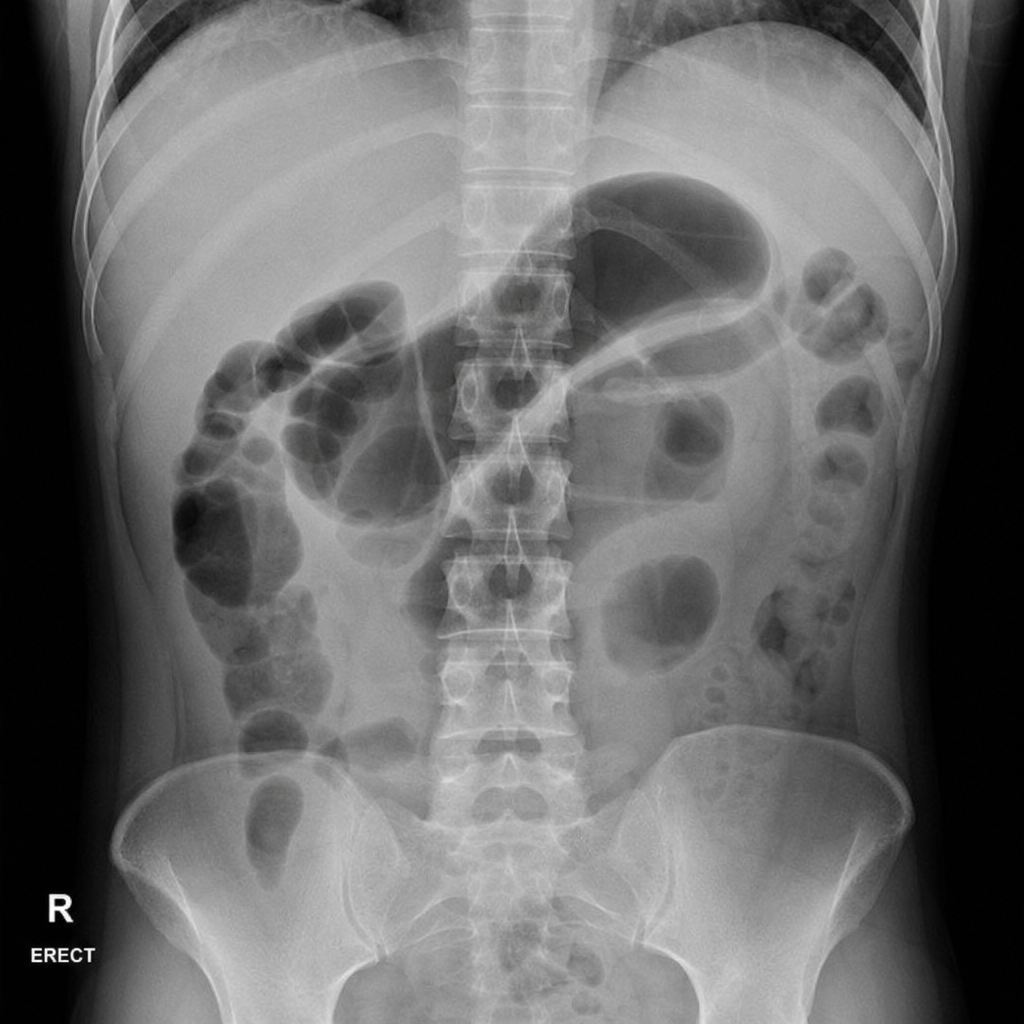
A 45-year-old woman presents to the emergency department with a 12-hour history of severe epigastric pain radiating to the back, nausea, and vomiting. She has a history of gallstones and drinks alcohol occasionally. On examination, she has periumbilical ecchymosis and flank ecchymosis bilaterally. Vital signs: BP 90/60 mmHg, HR 130 bpm, temp 38.1°C, SpO2 94% on 2 L nasal cannula. Serum lipase is 4,200 U/L. A plain abdominal radiograph is obtained. The image demonstrates a gas-filled loop of small bowel in the left upper quadrant with an abrupt transition and absence of gas distally. Which of the following is the most appropriate immediate next step in management?
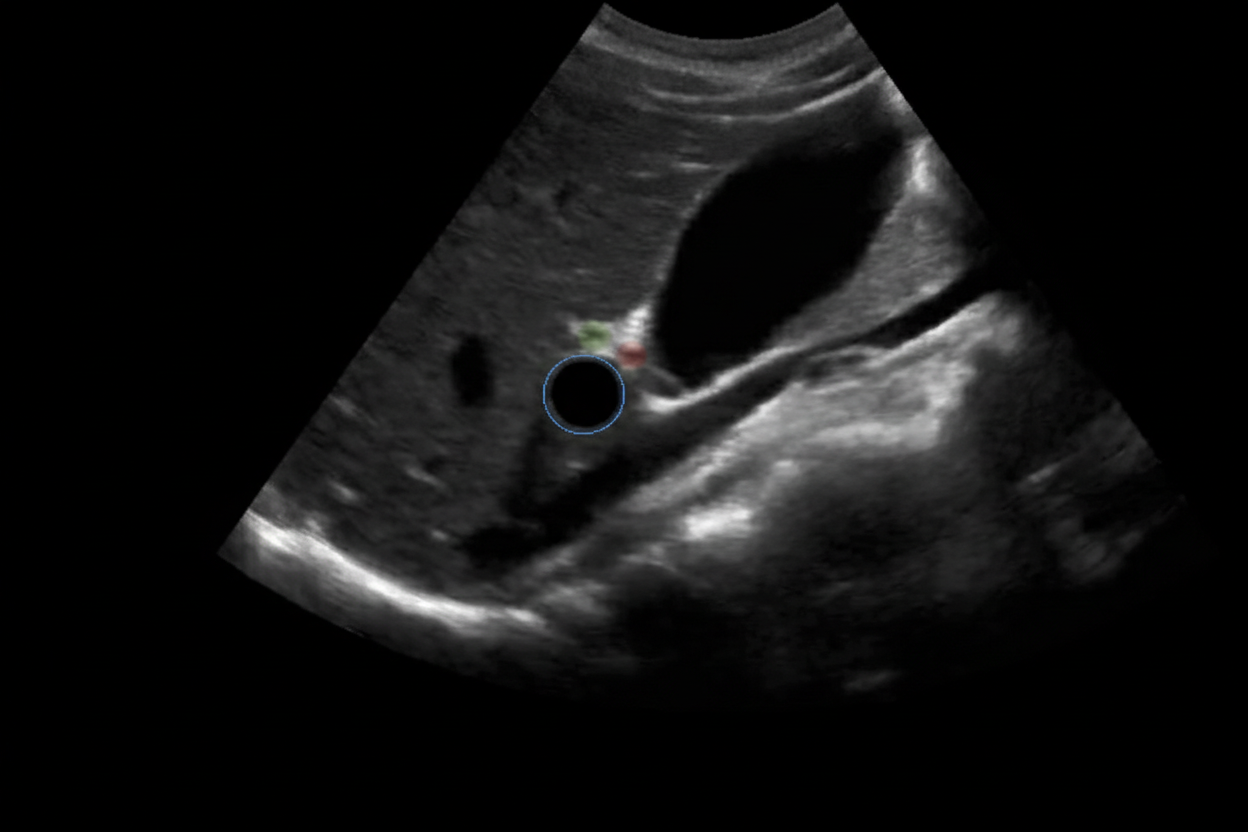
A 6-year-old baby is brought to the hospital by her parents complaining about right upper quadrant pain. On examination the baby is found to have jaundice and palpable abdominal mass. USG of the baby is shown below. What is the most likely cause?
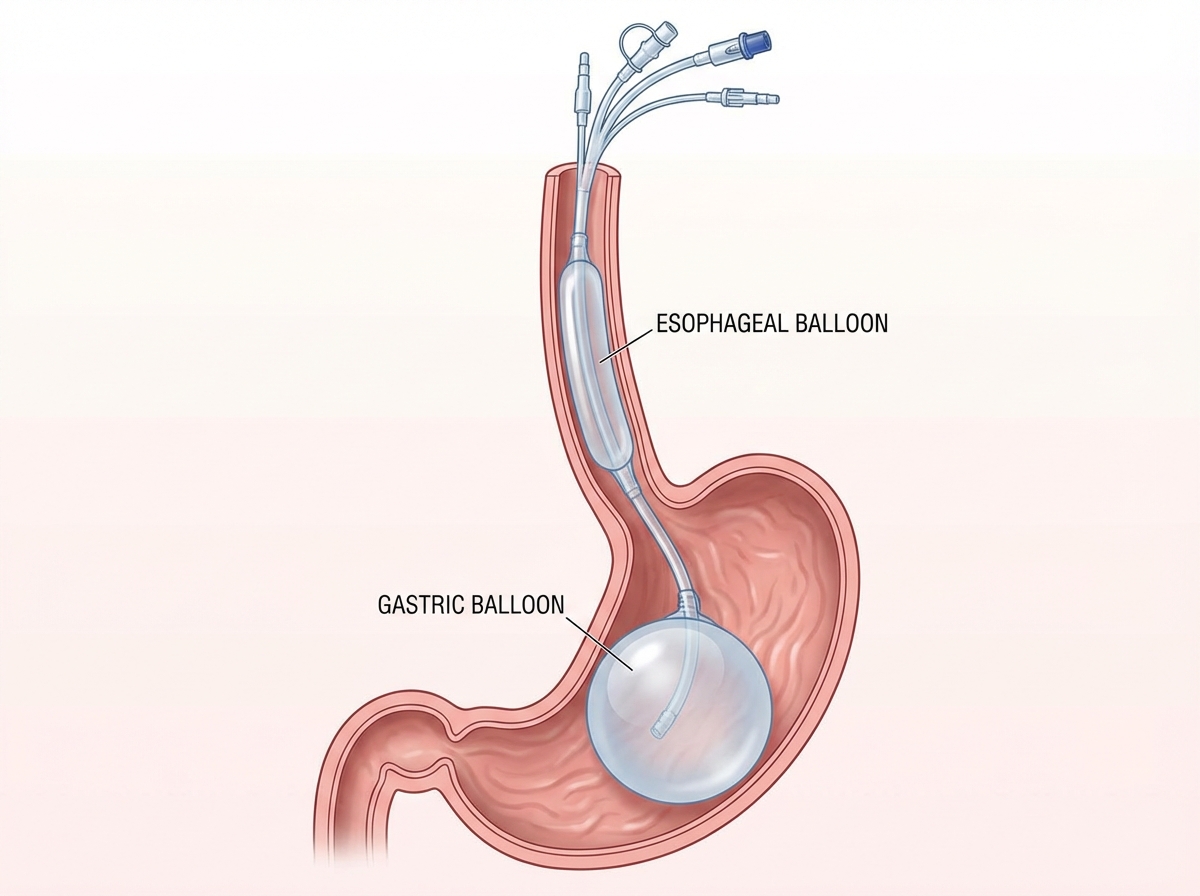
A 12-year-old patient with esophageal varices is managed by the procedure shown in the image. All of the following statements regarding this condition are true except:
Want unlimited practice?
Get full access to all questions, explanations, and performance tracking.
Scan to download app