
Pancreatic surgery procedures — MCQs

During a surgical procedure to repair an abdominal aortic aneurysm, the surgeon must be careful to avoid injury to which of the following arterial structures that originates near the level of the renal vessels?
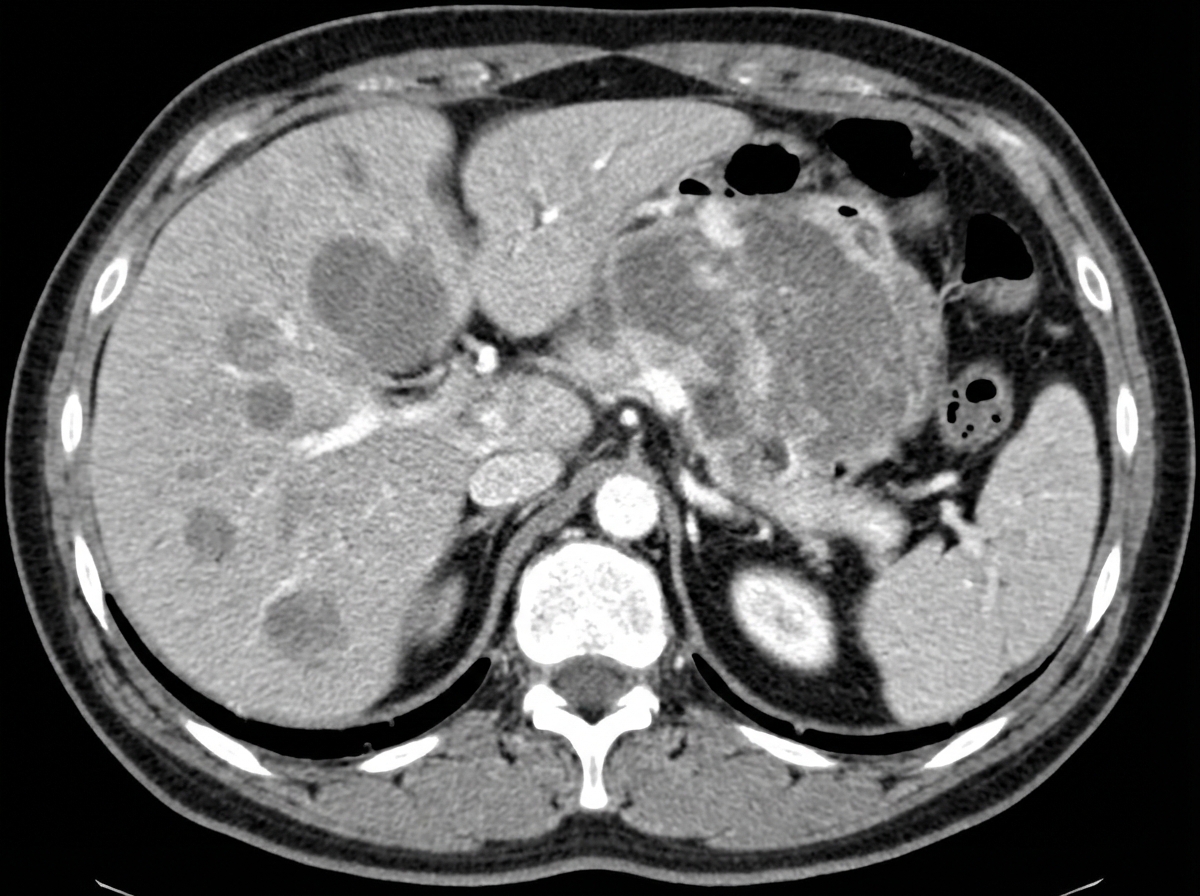
A 40-year-old man presents with severe fatigue, dyspnea on exertion, and weight loss. He reports a weight loss of 15 kg (33.0 lb) over the past 3 months and feels full almost immediately after starting to eat, often feeling nauseous and occasionally vomiting. Past medical history is not significant. However, the patient reports a 10-pack-year smoking history. His temperature is 37.0°C (98.6°F), respiratory rate is 15/min, pulse is 67/min, and blood pressure is 122/98 mm Hg. Physical examination reveals paleness and conjunctival pallor. Abdominal examination reveals an ill-defined nontender mass in the epigastric region along with significant hepatomegaly. Routine laboratory studies show a hemoglobin level of 7.2 g/dL. A contrast CT scan of the abdomen is presented below. Which of the following structures is most helpful in the anatomical classification of gastrointestinal bleeding in this patient?
A 47-year-old woman presents to the emergency department with abdominal pain. The patient states that she felt this pain come on during dinner last night. Since then, she has felt bloated, constipated, and has been vomiting. Her current medications include metformin, insulin, levothyroxine, and ibuprofen. Her temperature is 99.0°F (37.2°C), blood pressure is 139/79 mmHg, pulse is 95/min, respirations are 12/min, and oxygen saturation is 98% on room air. On physical exam, the patient appears uncomfortable. Abdominal exam is notable for hypoactive bowel sounds, abdominal distension, and diffuse tenderness in all four quadrants. Cardiac and pulmonary exams are within normal limits. Which of the following is the best next step in management?
Five days after undergoing a pancreaticoduodenectomy for pancreatic cancer, a 46-year-old woman has 2 episodes of non-bilious vomiting and mild epigastric pain. She has a patient-controlled analgesia pump. She has a history of hypertension. She has smoked one pack of cigarettes daily for 25 years. She drinks 3–4 beers daily. Prior to admission to the hospital, her only medications were amlodipine and hydrochlorothiazide. Her temperature is 37.8°C (100°F), pulse is 98/min, and blood pressure is 116/82 mm Hg. Pulse oximetry on room air shows an oxygen saturation of 96%. Examination shows a midline surgical incision over the abdomen with minimal serous discharge and no erythema. The abdomen is soft with mild tenderness to palpation in the epigastrium. The remainder of the examination shows no abnormalities. Laboratory studies show: Hemoglobin 11.6 g/dL Leukocyte count 16,000/mm3 Serum Na+ 133 mEq/L K+ 3.4 mEq/L Cl- 115 mEq/L Glucose 77 mg/dL Creatinine 1.2 mg/dL Arterial blood gas on room air shows: pH 7.20 pCO2 23 mm Hg pO2 91 mm Hg HCO3- 10 mEq/L Which of the following is the most likely cause of this patient's acid-base status?
A 50-year-old Caucasian man is admitted to the ER with an 8-hour history of intense abdominal pain that radiates to the back, nausea, and multiple episodes of vomiting. Past medical history is insignificant. His blood pressure is 90/60 mm Hg, pulse is 120/min, respirations are 20/min, and body temperature is 37.8°C (100°F). Upon examination, he has significant epigastric tenderness, and hypoactive bowel sounds. Serum lipase and amylase are elevated and the patient rapidly deteriorates, requiring transfer to the intensive care unit for a month. After being stabilized, he is transferred to the general medicine floor with an abdominal computed tomography (CT) reporting a well-circumscribed collection of fluid of homogeneous density. Which of the following best describes the condition this patient has developed?
A 66-year-old man comes to the physician because of yellowish discoloration of his eyes and skin, abdominal discomfort, and generalized fatigue for the past 2 weeks. He has had dark urine and pale stools during this period. He has had a 10-kg (22-lb) weight loss since his last visit 6 months ago. He has hypertension. He has smoked one pack of cigarettes daily for 34 years. He drinks three to four beers over the weekends. His only medication is amlodipine. His temperature is 37.3°C (99.1°F), pulse is 89/min, respirations are 14/min, and blood pressure is 114/74 mm Hg. Examination shows jaundice of the sclera and skin and excoriation marks on his trunk and extremities. The lungs are clear to auscultation. The abdomen is soft and nontender. The remainder of the examination shows no abnormalities. Laboratory studies show: Hemoglobin 12 g/dL Leukocyte count 5,000/mm3 Platelet count 400,000/mm3 Serum Urea nitrogen 28 mg/dL Creatinine 1.2 mg/dL Bilirubin Total 7.0 mg/dL Direct 5.5 mg/dL Alkaline phosphatase 615 U/L Aspartate aminotransferase (AST, GOT) 170 U/L Alanine aminotransferase (ALT, GPT) 310 U/L γ-Glutamyltransferase (GGT) 592 U/L (N = 5–50 U/L) An ultrasound shows extrahepatic biliary dilation. A CT scan of the abdomen shows a 2.5-cm (1-in) mass in the head of the pancreas with no abdominal lymphadenopathy. The patient undergoes biliary stenting. Which of the following is the most appropriate next step in the management of this patient?
A 64-year-old woman presents to the physician’s office to find out the results of her recent abdominal CT. She had been complaining of fatigue, weight loss, and jaundice for 6 months prior to seeing the physician. The patient has a significant medical history of hypothyroidism, generalized anxiety disorder, and hyperlipidemia. She takes levothyroxine, sertraline, and atorvastatin. The vital signs are stable today. On physical examination, her skin shows slight jaundice, but no scleral icterus is present. The palpation of the abdomen reveals no tenderness, guarding, or masses. The CT results shows a 3 x 3 cm mass located at the head of the pancreas. Which of the following choices is most appropriate for delivering bad news to the patient?
A 27-year-old-man is brought to the emergency department 30 minutes after being involved in a motorcycle accident. He lost control at high speed and was thrown forward onto the handlebars. On arrival, he is alert and responsive. He has abdominal pain and superficial lacerations on his left arm. Vital signs are within normal limits. Examination shows a tender, erythematous area over his epigastrium. The abdomen is soft and non-distended. A CT scan of the abdomen shows no abnormalities. Treatment with analgesics is begun, the lacerations are cleaned and dressed, and the patient is discharged home after 2 hours of observation. Four days later, the patient returns to the emergency department with gradually worsening upper abdominal pain, fever, poor appetite, and vomiting. His pulse is 91/min and blood pressure is 135/82 mm Hg. Which of the following is the most likely diagnosis?
A 37-year-old man presents to the emergency department after he cut his hand while working on his car. The patient has a past medical history of antisocial personality disorder and has been incarcerated multiple times. His vitals are within normal limits. Physical exam is notable for a man covered in tattoos with many bruises over his face and torso. Inspection of the patient's right hand reveals 2 deep lacerations on the dorsal aspects of the second and third metacarpophalangeal (MCP) joints. The patient is given a tetanus vaccination, and the wound is irrigated. Which of the following is appropriate management for this patient?
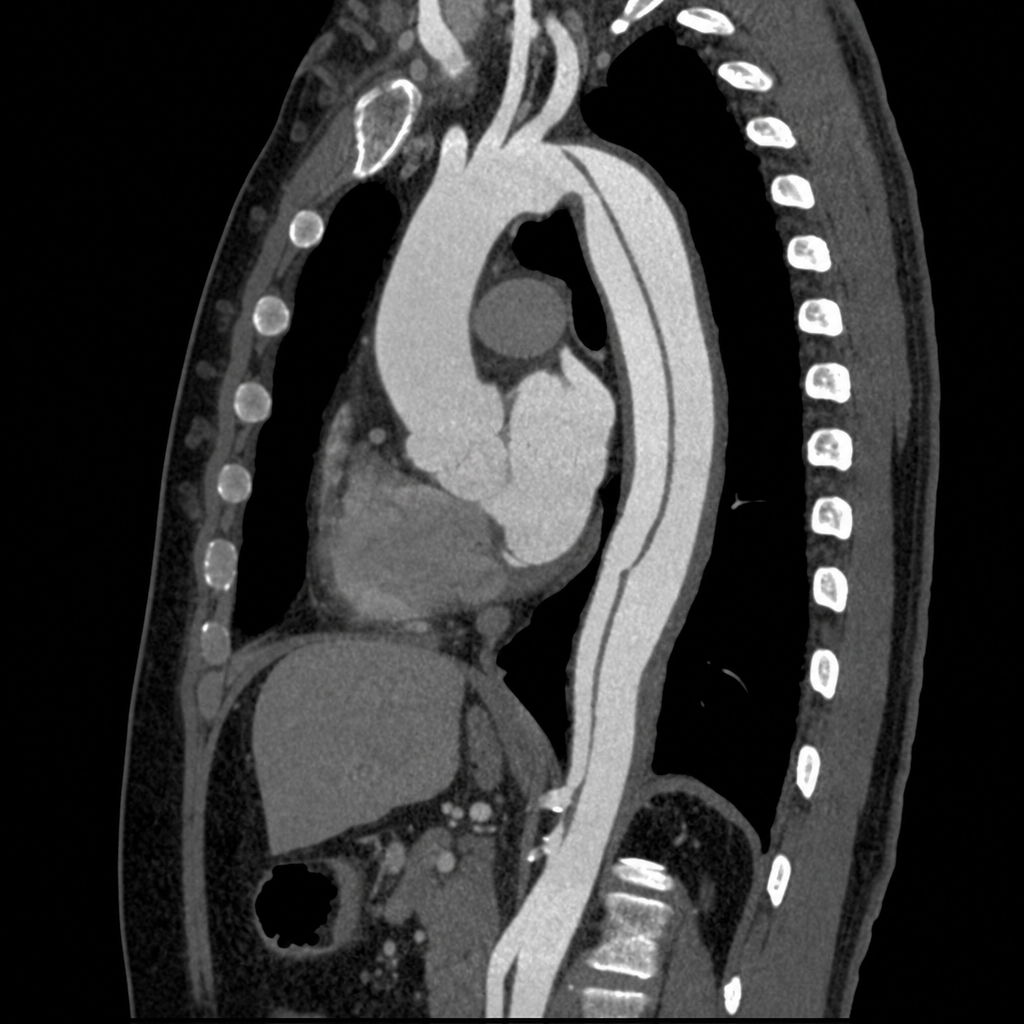
A 55-year-old man presents to the emergency department with sudden-onset tearing chest pain radiating to the interscapular region. He has a history of poorly controlled hypertension. BP is 178/96 mmHg in the right arm and 142/80 mmHg in the left arm. He is diaphoretic and in moderate distress. A CT angiogram of the chest is obtained. The image demonstrates an intimal flap originating 3 cm distal to the left subclavian artery with the false lumen extending through the descending thoracic aorta to the level of the renal arteries; the ascending aorta and aortic root appear normal. Which of the following is the most appropriate management?
Want unlimited practice?
Get full access to all questions, explanations, and performance tracking.
Scan to download app