
Colorectal cancer resection principles — MCQs

A 53-year-old woman comes to the emergency department because of weakness and abdominal pain for 24 hours. She has had three bowel movements with dark stool during this period. She has not had vomiting and has never had such episodes in the past. She underwent a tubal ligation 15 years ago. She has chronic lower extremity lymphedema, osteoarthritis, and type 2 diabetes mellitus. Her father died of colon cancer at the age of 72 years. Current medications include metformin, naproxen, and calcium with vitamin D3. She had a screening colonoscopy at 50 years of age which was normal. She appears pale and diaphoretic. Her temperature is 36°C (96.8°F), pulse is 110/min, respirations are 20/min, and blood pressure is 90/50 mm Hg. Pulse oximetry on room air shows an oxygen saturation of 98%. The abdomen is soft and nondistended with mild epigastric tenderness. Rectal exam shows tarry stool. Two large bore IV lines are placed and fluid resuscitation with normal saline is initiated. Which of the following is the most appropriate next step in management?
A 26-year-old white man comes to the physician because of increasing generalized fatigue for 6 months. He has been unable to work out at the gym during this period. He has also had cramping lower abdominal pain and diarrhea for the past 5 weeks that is occasionally bloody. His father was diagnosed with colon cancer at the age of 65. He has smoked half a pack of cigarettes daily for the past 10 years. He drinks 1–2 beers on social occasions. His temperature is 37.3°C (99.1°F), pulse is 88/min, and blood pressure is 116/74 mm Hg. Physical examination shows dry mucous membranes. The abdomen is soft and nondistended with slight tenderness to palpation over the lower quadrants bilaterally. Rectal examination shows stool mixed with blood. His hemoglobin concentration is 13.5 g/dL, leukocyte count is 7,500/mm3, and platelet count is 480,000/mm3. Urinalysis is within normal limits. Which of the following is the most appropriate next step in management?
A 64-year-old woman has progressively worsening abdominal pain 5 hours after an open valve replacement with cardiopulmonary bypass. The pain is crampy and associated with an urge to defecate. The patient reports having had 2 bloody bowel movements in the last hour. Her operation was complicated by significant intraoperative blood loss, which prolonged the operation and necessitated 2 transfusions of red blood cells. She has hypercholesterolemia and type 2 diabetes mellitus. The patient received prophylactic perioperative antibiotics and opioid pain management during recovery. Her temperature is 37.9°C (98.9°F), pulse is 95/min, and blood pressure is 115/69 mm Hg. Examination shows a soft abdomen with mild tenderness to palpation in the left quadrants but no rebound tenderness or guarding. Bowel sounds are decreased. Rectal examination shows blood on the examining finger. Which of the following is the most likely underlying cause of this patient's symptoms?
Five days after undergoing an open colectomy and temporary colostomy for colon cancer, a 73-year-old man develops severe pain and swelling of the left calf. He was diagnosed with colon cancer 3 months ago. He has hypothyroidism and hypertension. His father died of colon cancer at the age of 68. He does not smoke. Prior to admission, his medications included levothyroxine, amlodipine, and carvedilol. Since the surgery, he has also been receiving unfractionated heparin, morphine, and piperacillin-tazobactam. He is 172 cm (5 ft 8 in) tall and weighs 101 kg (223 lb); BMI is 34.1 kg/m2. He appears uncomfortable. His temperature is 38.1°C (100.6°F), pulse is 103/min, and blood pressure is 128/92 mm Hg. Examination shows multiple necrotic lesions over bilateral thighs. The left calf is erythematous, tender, and swollen. Dorsiflexion of the left foot elicits pain behind the knee. The abdomen is soft and nontender. There is a healing midline incision and the colostomy is healthy and functioning. The remainder of the examination shows no abnormalities. Laboratory studies show: Hemoglobin 13.6 g/dL Leukocyte count 12,100/mm3 Platelet count 78,000/mm3 Prothrombin time 18 seconds (INR = 1.1) Activated partial thromboplastin time 46 seconds Serum Na+ 138 mEq/L Cl- 103 mEq/L K+ 4.1 mEq/L Urea nitrogen 18 mg/dL Glucose 101 mg/dL Creatinine 1.1 mg/dL Which of the following is the most appropriate next step in management?
A 25-year-old woman presents to a physician for a new patient physical exam. Aside from occasional shin splints, she has a relatively unremarkable medical history. She takes oral contraceptive pills as scheduled and a multivitamin daily. She reports no known drug allergies. All of her age appropriate immunizations are up to date. Her periods have been regular, occurring once every 28 to 30 days with normal flow. She is sexually active with two partners, who use condoms routinely. She works as a cashier at the local grocery store. Her mother has diabetes and coronary artery disease, and her father passed away at age 45 after being diagnosed with colon cancer at age 40. Her grand-aunt underwent bilateral mastectomies after being diagnosed with breast cancer at age 60. Her physical exam is unremarkable. Which of the following is the best recommendation for this patient?
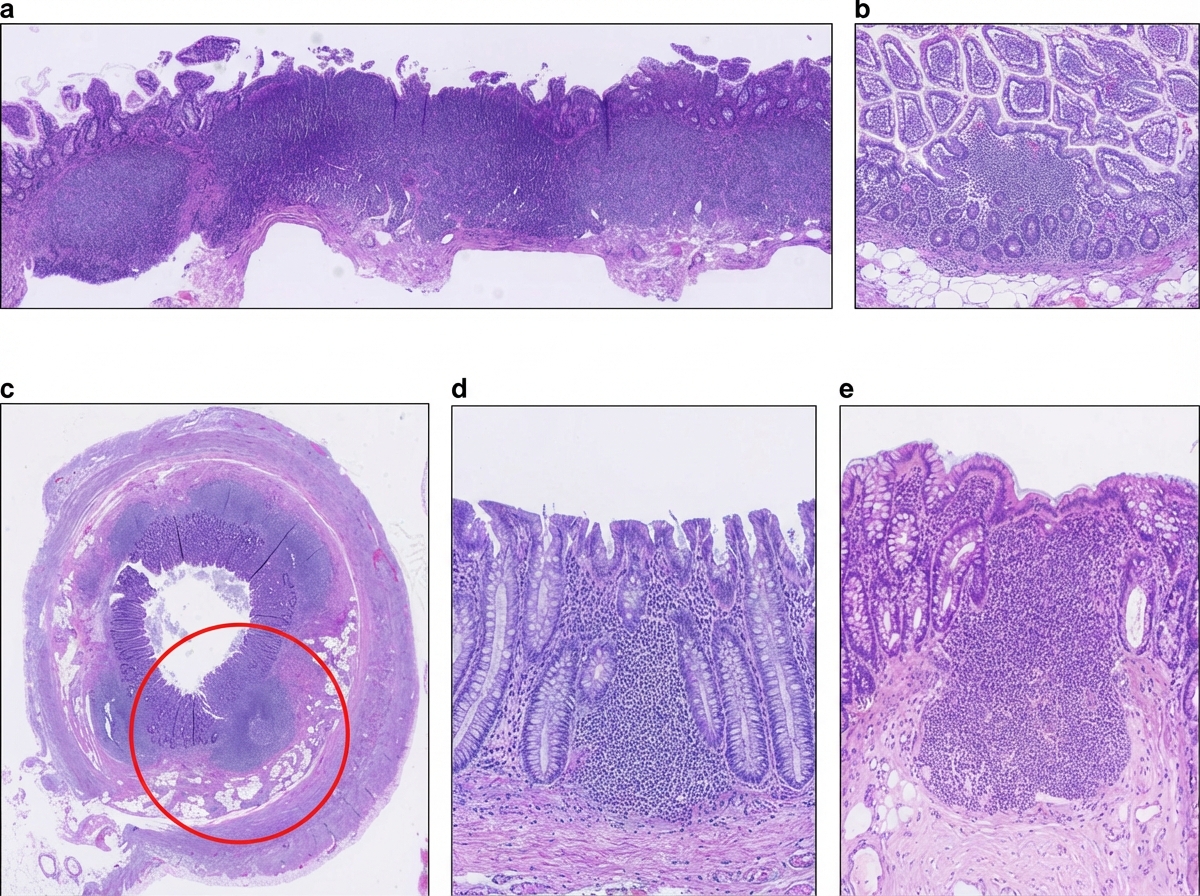
A 36-year-old man undergoes ileocecal resection after a gunshot injury. The resected ileocecal segment is sent for histological evaluation. One of the slides derived from the specimen is shown in the image. Which of the following statements regarding the structure marked within the red circle is correct?
A 55-year-old woman is being managed on the surgical floor after having a total abdominal hysterectomy as a definitive treatment for endometriosis. On day 1 after the operation, the patient complains of fevers. She has no other complaints other than aches and pains from lying in bed as she has not moved since the procedure. She is currently receiving ondansetron, acetaminophen, and morphine. Her temperature is 101°F (38.3°C), blood pressure is 127/68 mmHg, pulse is 100/min, respirations are 17/min, and oxygen saturation is 94% on room air. Her abdominal exam is within normal limits and cardiopulmonary exam is only notable for mild crackles. Which of the following is the most likely etiology of this patient’s fever?
A newborn boy born vaginally to a healthy 37-year-old G3P1 from a pregnancy complicated by hydramnios fails to pass meconium after 24 hours of life. The vital signs are within normal limits for his age. The abdomen is distended, the anus is patent, and the rectal examination reveals pale mucous with non-pigmented meconium. Based on a barium enema, the boy is diagnosed with sigmoid colonic atresia. Disruption of which structure during fetal development could lead to this anomaly?
A 47-year-old woman is brought to the emergency department by her husband with the complaints of severe abdominal pain and discomfort. The pain began 2 days earlier, she describes it as radiating to her back and is associated with nausea. Her past medical history is significant for similar episodes of pain after fatty meals that resolved on its own. She drinks socially and has a 15 pack-year smoking history. Her pulse is 121/min, blood pressure is 121/71 mm Hg, and her temperature is 103.1°F (39.5°C). She has tenderness in the right upper quadrant and epigastrium with guarding and rebound tenderness. Bowel sounds are hypoactive. Part of a CBC is given below. What is the next best step in the management of this patient? Hb%: 11 gm/dL Total count (WBC): 13,400/mm3 Differential count: Neutrophils: 80% Lymphocytes: 15% Monocytes: 5% ESR: 45 mm/hr C-reactive protein: 9.9 mg/dL (Normal < 3.0 mg/dL)
A 39-year-old man presents with painless swelling of the right testis and a sensation of heaviness. The physical examination revealed an intra-testicular solid mass that could not be felt separately from the testis. After a thorough evaluation, he was diagnosed with testicular seminoma. Which of the following group of lymph nodes are most likely involved?
Want unlimited practice?
Get full access to all questions, explanations, and performance tracking.
Scan to download app