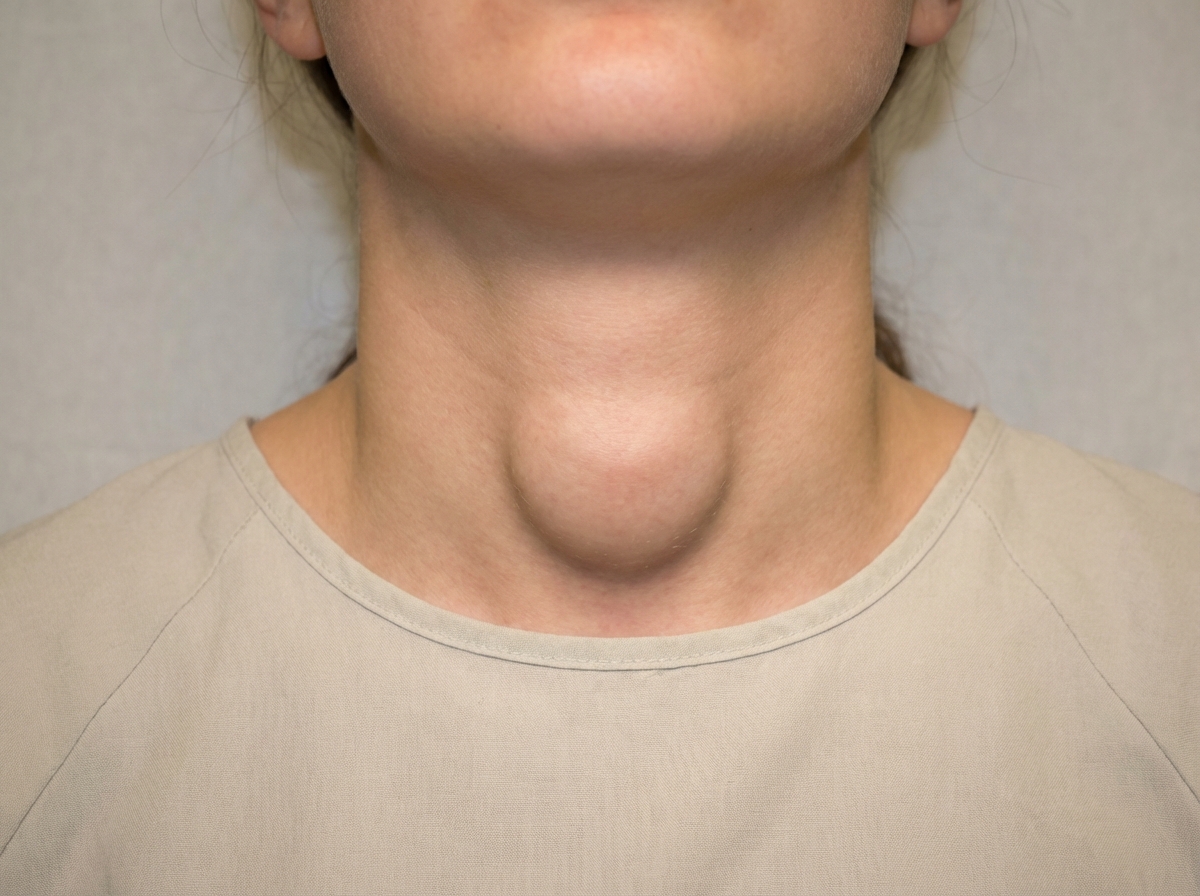
A 51-year-old woman presents with complaints of nervousness and weight loss. She reveals that she has been feeling her heart racing often. On examination, she has a fine tremor, and a large mass in the front of her neck that moves when she swallows. What is the definite treatment of choice for this condition?
Q13
A 25-year-old patient presents with a neck swelling which moves with deglutition as shown below. Your diagnosis is?
Q14
Which is correct about tumor found in the triangle location shown below?
Endocrine Surgery US Medical PG Practice Questions and MCQs
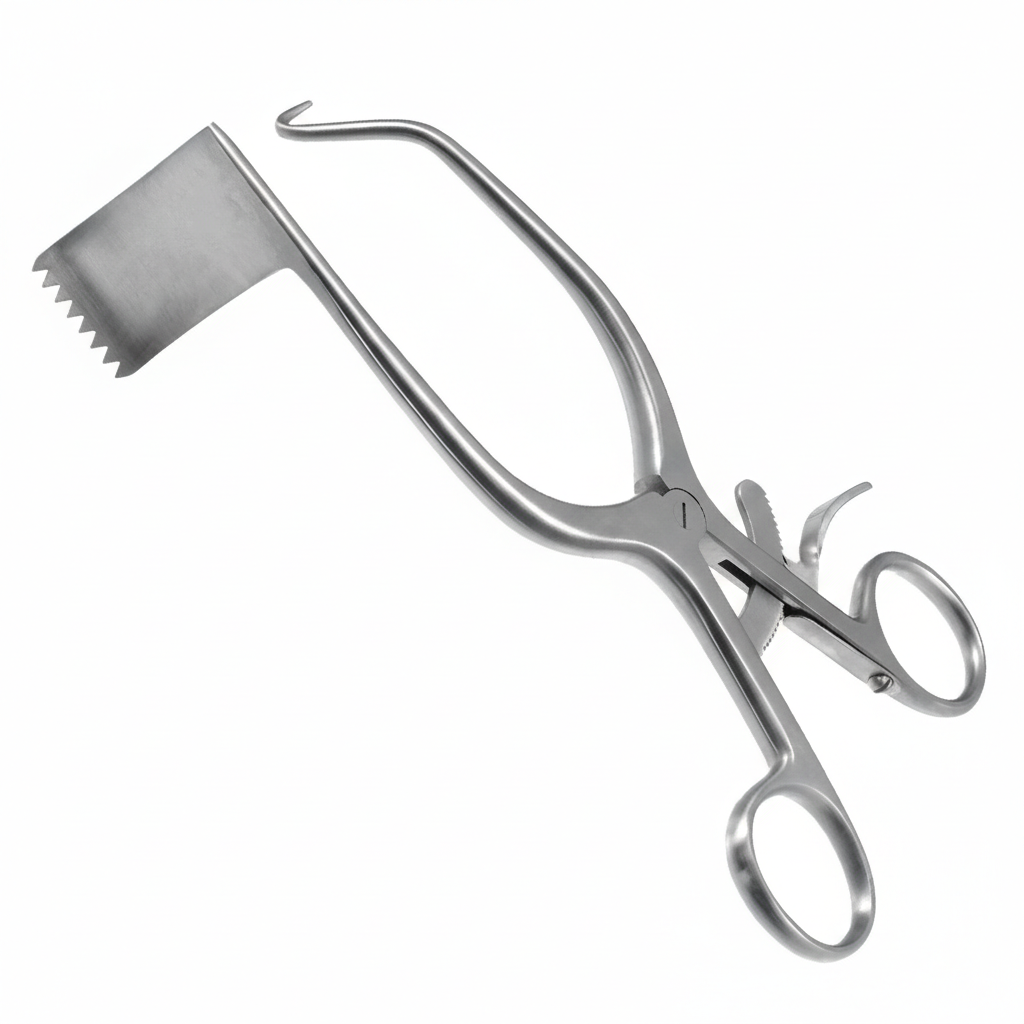
Question 11: Identify the instrument in the image:
A. Langenbeck retractor
B. Morris retractor
C. Joll retractor (Correct Answer)
D. Dyball retractor
E. Green retractor
Explanation: ***Joll retractor***
- The image displays a **Joll retractor**, which is a self-retaining retractor used commonly in **thyroid and parathyroid surgeries**.
- Its design typically includes a frame with adjustable blades or hooks that help maintain exposure of the surgical site.
*Langenbeck retractor*
- A **Langenbeck retractor** is a handheld, single-ended retractor with an L-shaped blade, used for **superficial soft tissue retraction**.
- It does not have the self-retaining mechanism or the complex frame shown in the image.
*Morris retractor*
- The **Morris retractor** is another type of handheld retractor, often used in **deep surgical fields**.
- It is also a single-ended instrument with a curved or angled blade, unlike the self-retaining instrument pictured.
*Dyball retractor*
- The **Dyball retractor** is a specialized retractor, often used in **neck surgery** for deeper dissection.
- While used in similar surgical areas to the Joll retractor, its design is distinct and does not match the instrument in the image.
*Green retractor*
- The **Green retractor** (also called thyroid retractor) is a double-ended handheld retractor commonly used in **thyroid surgery**.
- It has a simple blade design and lacks the self-retaining frame mechanism characteristic of the Joll retractor.
Question 12: A 51-year-old woman presents with complaints of nervousness and weight loss. She reveals that she has been feeling her heart racing often. On examination, she has a fine tremor, and a large mass in the front of her neck that moves when she swallows. What is the definite treatment of choice for this condition?
A. Subtotal thyroidectomy
B. Propranolol
C. Total thyroidectomy (Correct Answer)
D. ${ }^{131} \mathrm{I}$ radioablation
E. Antithyroid drugs (Methimazole)
Explanation: ***Total thyroidectomy***
- The patient exhibits classic symptoms of **hyperthyroidism** (nervousness, weight loss, racing heart, fine tremor) and has a **large goiter** (mass in the front of her neck that moves with swallowing).
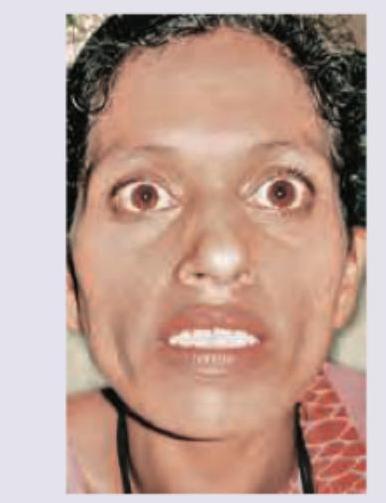
- The image shows **exophthalmos/proptosis**, indicating **Graves' ophthalmopathy**.
- For a **large symptomatic goiter**, **total thyroidectomy** is the definitive treatment of choice, providing immediate resolution of symptoms and removal of the compressive mass.
- Surgery is preferred over radioactive iodine when there is a large goiter, as it provides rapid symptom relief and eliminates concerns about gland enlargement from radiation-induced thyroiditis.
*Subtotal thyroidectomy*
- **Subtotal thyroidectomy** leaves residual thyroid tissue, which carries a **higher risk of recurrent hyperthyroidism** (10-30% recurrence rate).
- With a **large goiter** and significant symptoms, **total thyroidectomy** is preferred for definitive cure and to avoid recurrence.
*Propranolol*
- **Propranolol** is a beta-blocker used to manage **symptomatic effects** of hyperthyroidism (palpitations, tremor, anxiety) but does not address the underlying thyroid hormone excess.
- It is an **adjunctive therapy** or temporary measure, not a definitive treatment.
*${ }^{131} \\mathrm{I}$ radioablation*
- **Radioactive iodine (RAI)** is an effective definitive treatment for Graves' disease and is the most common treatment in the United States.
- However, for patients with a **very large goiter** (>80g), RAI may be less effective, can cause transient thyroid enlargement (radiation thyroiditis) with potential airway compromise, and takes months to achieve full effect.
- Surgery is preferred for large goiters requiring rapid symptom resolution or when there are compressive symptoms.
*Antithyroid drugs (Methimazole)*
- **Antithyroid drugs** (methimazole, propylthiouracil) block thyroid hormone synthesis and are used for initial management of hyperthyroidism.
- While they can achieve remission in some patients (30-50% after 12-18 months), they are **not considered definitive treatment** as relapse is common after discontinuation.
- They do not address the **large goiter**, which may require definitive therapy with surgery or RAI.
Question 13: A 25-year-old patient presents with a neck swelling which moves with deglutition as shown below. Your diagnosis is?
A. Thyroglossal cyst (Correct Answer)
B. Brachial cyst
C. Cystic hygroma
D. Cervical lymphadenopathy
E. Dermoid cyst
Explanation: ***Thyroglossal cyst***
- A **thyroglossal duct cyst** is a common congenital neck mass that typically presents in the midline of the neck.
- The classic characteristic feature is its **movement with deglutition** (swallowing) and often with protrusion of the tongue, due to its attachment to the hyoid bone and remnants of the thyroglossal duct.
*Brachial cyst*
- **Branchial cleft cysts** are usually located laterally in the neck, anterior to the sternocleidomastoid muscle, and do not typically move with deglutition.
- They are remnants of the branchial arches failing to involute completely.
*Cystic hygroma*
- A **cystic hygroma** is a type of lymphangioma, commonly found in the posterior triangle of the neck or axilla.
- It is typically a soft, compressible, and ill-defined mass that does not move with deglutition.
*Cervical lymphadenopathy*
- **Cervical lymphadenopathy** involves enlarged lymph nodes, which can be firm or tender depending on the cause (e.g., infection, malignancy).
- While they are common in the neck, they are generally not mobile with deglutition unless they are very superficial and freely movable, but they do not typically have the same characteristic movement as a thyroglossal cyst.
*Dermoid cyst*
- A **dermoid cyst** is another congenital midline neck mass that can present in the submental region.
- Unlike thyroglossal cysts, dermoid cysts do not move with deglutition or tongue protrusion as they are not attached to the hyoid bone.
- They are typically non-tender, doughy masses that may contain hair, sebum, and skin elements.
Question 14: Which is correct about tumor found in the triangle location shown below?
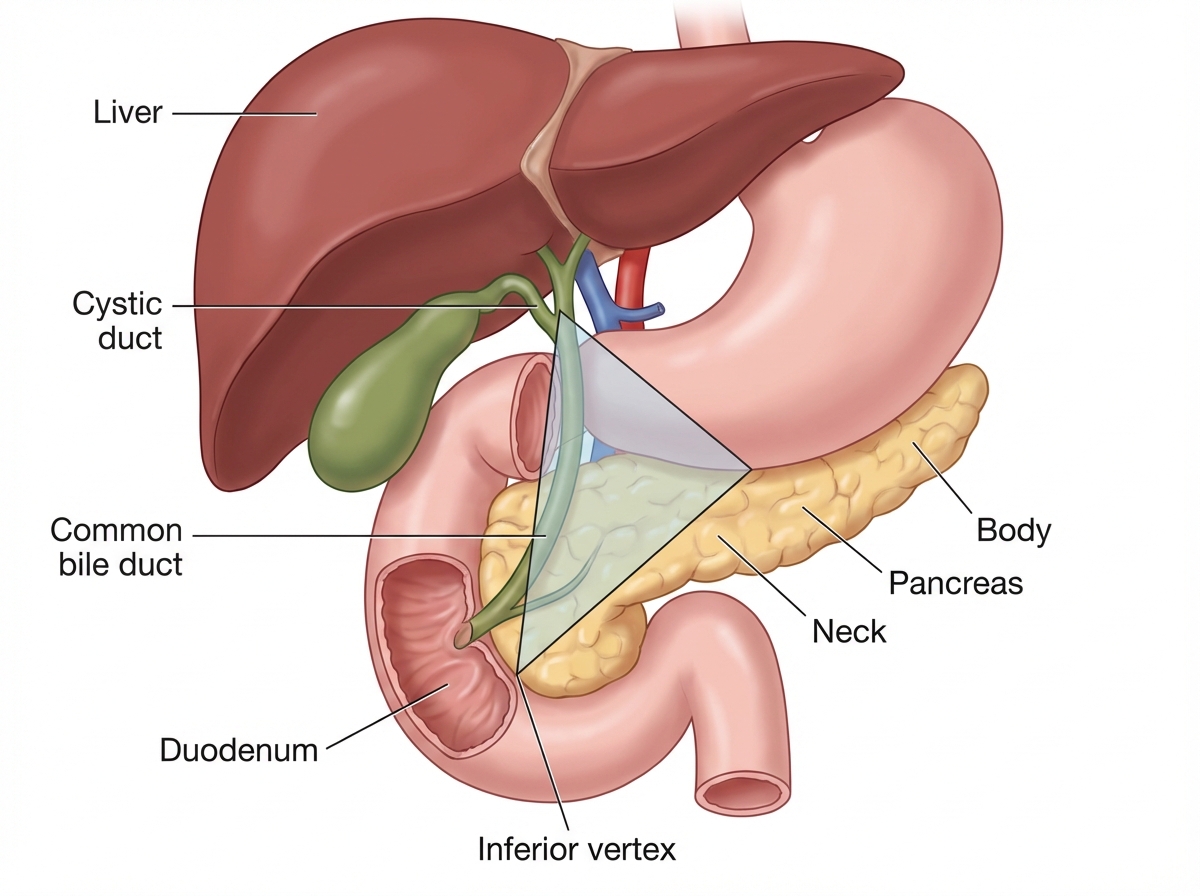
A. Associated with MEN1 (Correct Answer)
B. Most common site is stomach
C. Best test for diagnosis is pentagastrin test
D. Metastasis to adjacent gut
E. Primary treatment is medical with proton pump inhibitors
Explanation: ***Associated with MEN1***
- The triangle shown in the image represents the **Gastrinoma Triangle**, a common location for gastrin-producing tumors (gastrinomas) to occur.
- Approximately 20-30% of gastrinomas are associated with **Multiple Endocrine Neoplasia type 1 (MEN1)** syndrome, which involves tumors of the parathyroid glands, pituitary gland, and pancreas.
*Most common site is stomach*
- The most common primary site for gastrinomas is the **duodenum** (50-70%), followed by the pancreas (20-40%).
- Gastrinomas found in the stomach are rare and usually associated with MEN1, but the duodenum is the predominant site overall.
*Best test for diagnosis is pentagastrin test*
- The **pentagastrin stimulation test** is used to assess maximal acid output but it is not specific for diagnosing gastrinomas.
- The **secretin stimulation test** is the most sensitive and specific provocative test for gastrinoma, as secretin normally inhibits gastrin release from G cells but paradoxically stimulates it in gastrinomas.
*Metastasis to adjacent gut*
- Gastrinomas are malignant neuroendocrine tumors that commonly **metastasize to regional lymph nodes** and the **liver**.
- While they can invade locally, metastasis typically involves distant sites rather than just the adjacent gut wall.
*Primary treatment is medical with proton pump inhibitors*
- While **proton pump inhibitors (PPIs)** are essential for managing acid hypersecretion symptoms, they are not the primary definitive treatment.
- **Surgical resection** is the primary treatment for localized, sporadic gastrinomas when feasible, offering potential cure.
- PPIs serve as adjunctive medical therapy to control symptoms but do not address the underlying tumor.