
Valve replacement and repair procedures — MCQs

A 58-year-old female presents to her primary care physician with complaints of chest pain and palpitations. A thorough past medical history reveals a diagnosis of rheumatic fever during childhood. Echocardiography is conducted and shows enlargement of the left atrium and narrowing of the mitral valve opening. Which of the following should the physician expect to hear on cardiac auscultation?
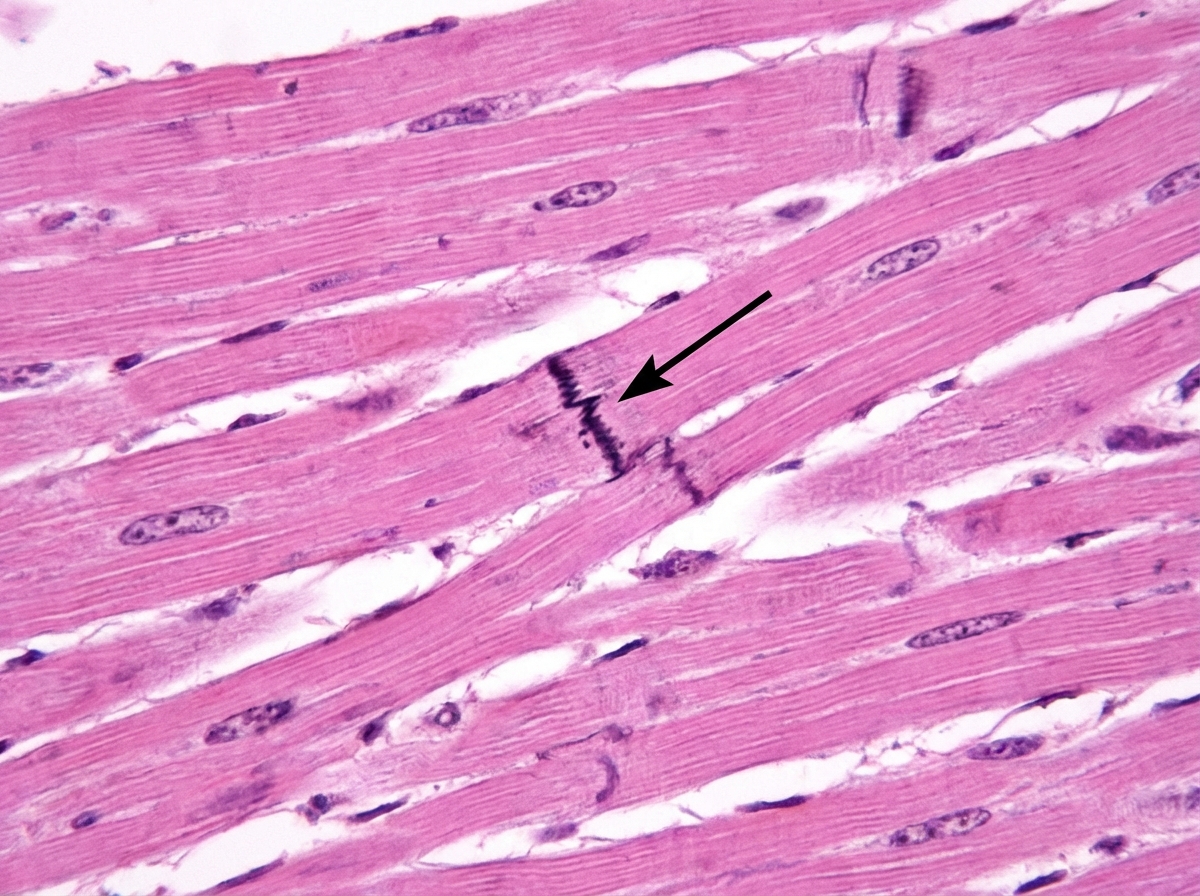
Cardiac muscle serves many necessary functions, leading to a specific structure that serves these functions. The structure highlighted is an important histology component of cardiac muscle. What would be the outcome if this structure diffusely failed to function?
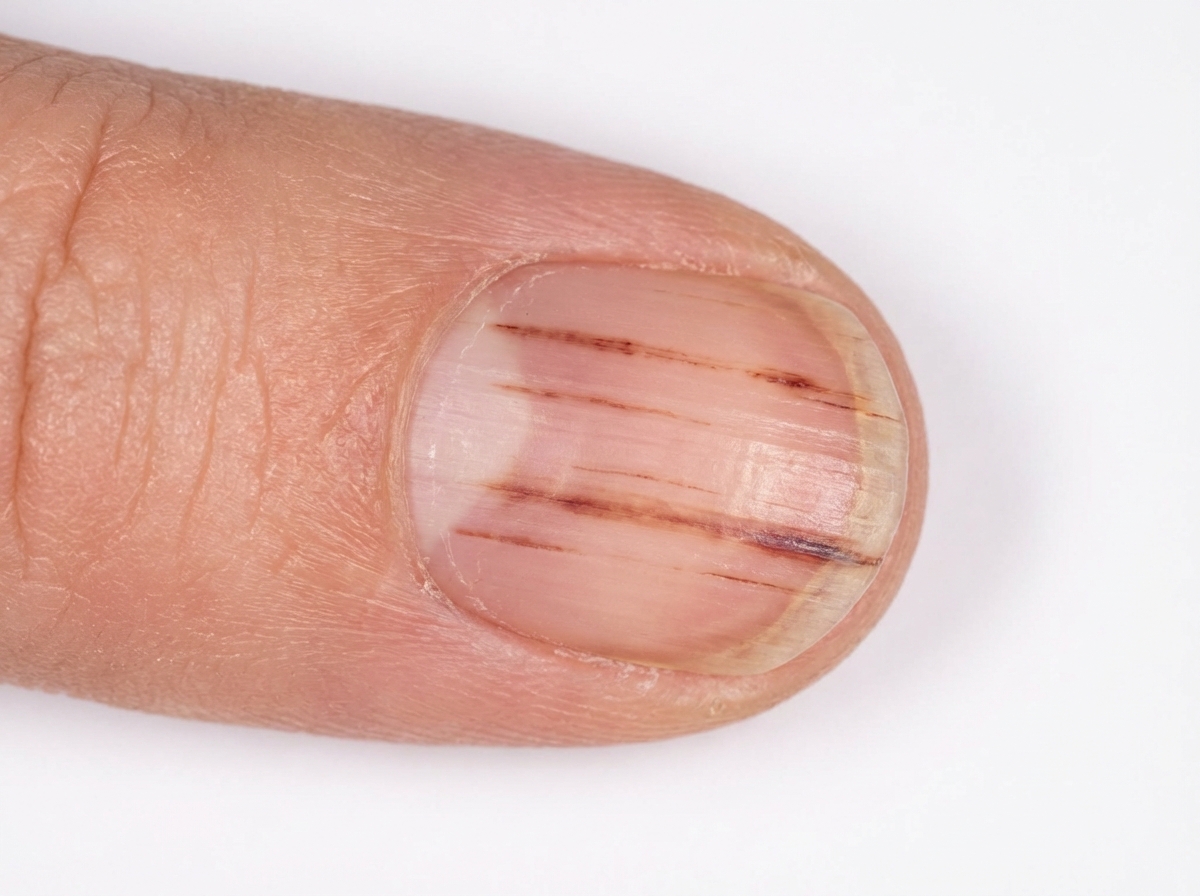
A 63-year-old man comes to the physician for evaluation of fever and a nonproductive cough for the past 2 weeks. During this period, he has also had fatigue, myalgia, and difficulty breathing. Five weeks ago, he underwent an aortic prosthetic valve replacement due to high-grade aortic stenosis. The patient has a history of hypertension, asthma, and type 2 diabetes mellitus. A colonoscopy 2 years ago was normal. The patient has smoked one pack of cigarettes daily for the past 40 years. He has never used illicit drugs. Current medications include aspirin, warfarin, lisinopril, metformin, inhaled albuterol, and a multivitamin. The patient appears lethargic. Temperature is 38.6°C (101.5°F), pulse is 105/min, and blood pressure is 140/60 mm Hg. Rales are heard on auscultation of the lungs. A grade 2/6, diastolic blowing murmur is heard over the left sternal border and radiates to the right sternal border. A photograph of his right index finger is shown. Laboratory studies show a leukocyte count of 13,800/mm3 and an erythrocyte sedimentation rate of 48 mm/h. Which of the following is the most likely causal organism?
A 38-year-old female presents to the emergency room with fevers, fatigue, and anorexia for over a month. Past medical history includes mild mitral valve prolapse. She underwent an uncomplicated tooth extraction approximately 6 weeks ago. Her vital signs include a temperature of 100.8 F, pulse of 83, blood pressure of 110/77, and SpO2 of 97% on room air. On exam, you note a grade III/VI holosystolic murmur at the apex radiating to the axilla as well as several red, painful nodules on her fingers. Which of the following is the next best course of action?
Blood cultures are sent to the laboratory. Intravenous antibiotic therapy is started. Transesophageal echocardiography shows a large, oscillating vegetation attached to the tricuspid valve. There are multiple small vegetations attached to tips of the tricuspid valve leaflets. There is moderate tricuspid regurgitation. The left side of the heart and the ejection fraction are normal. Which of the following is the most likely causal organism of this patient's condition?
A 32-year-old woman is supposed to undergo tooth extraction surgery. Physical examination is unremarkable, and she has a blood pressure of 126/84 mm Hg and regular pulse of 72/min. She takes no medications. Which of the following cardiac conditions would warrant antibiotic prophylaxis to prevent infective endocarditis in this patient?
A 61-year-old white man presents to the emergency department because of progressive fatigue and shortness of breath on exertion and while lying down. He has had type 2 diabetes mellitus for 25 years and hypertension for 15 years. He is taking metformin and captopril for his diabetes and hypertension. He has smoked 10 cigarettes per day for the past 12 years and drinks alcohol occasionally. His temperature is 36.7°C (98.0°F) and blood pressure is 130/60 mm Hg. On physical examination, his arterial pulse shows a rapid rise and a quick collapse. An early diastolic murmur is audible over the left upper sternal border. Echocardiography shows severe chronic aortic regurgitation with a left ventricular ejection fraction of 55%–60% and mild left ventricular hypertrophy. Which of the following is an indication for aortic valve replacement in this patient?
A 45-year-old male is brought into the emergency room by emergency medical services due to a stab wound in the chest. The wound is located superior and medial to the left nipple. Upon entry, the patient appears alert and is conversational, but soon becomes confused and loses consciousness. The patient's blood pressure is 80/40 mmHg, pulse 110/min, respirations 26/min, and temperature 97.0 deg F (36.1 deg C). On exam, the patient has distended neck veins with distant heart sounds. What is the next best step to increase this patient's survival?
A 67-year-old man presents to the emergency department with abdominal pain that started 1 hour ago. The patient has a past medical history of diabetes and hypertension as well as a 40 pack-year smoking history. His blood pressure is 107/58 mmHg, pulse is 130/min, respirations are 23/min, and oxygen saturation is 98% on room air. An abdominal ultrasound demonstrates focal dilation of the aorta with peri-aortic fluid. Which of the following is the best next step in management?
A 45-year-old man presents with a 3-day history of fever, right upper quadrant pain, and jaundice. He has a history of choledocholithiasis. On examination, temperature is 39.4°C, BP is 85/50 mmHg, HR is 122 bpm, and he is confused. RUQ ultrasound shows a dilated common bile duct of 14 mm with a shadowing calculus. Total bilirubin is 8.2 mg/dL, WBC is 22,000/µL, and alkaline phosphatase is markedly elevated. After initiating IV fluids and broad-spectrum antibiotics, what is the most appropriate next step?
Want unlimited practice?
Get full access to all questions, explanations, and performance tracking.
Scan to download app