
Lung transplantation candidacy — MCQs

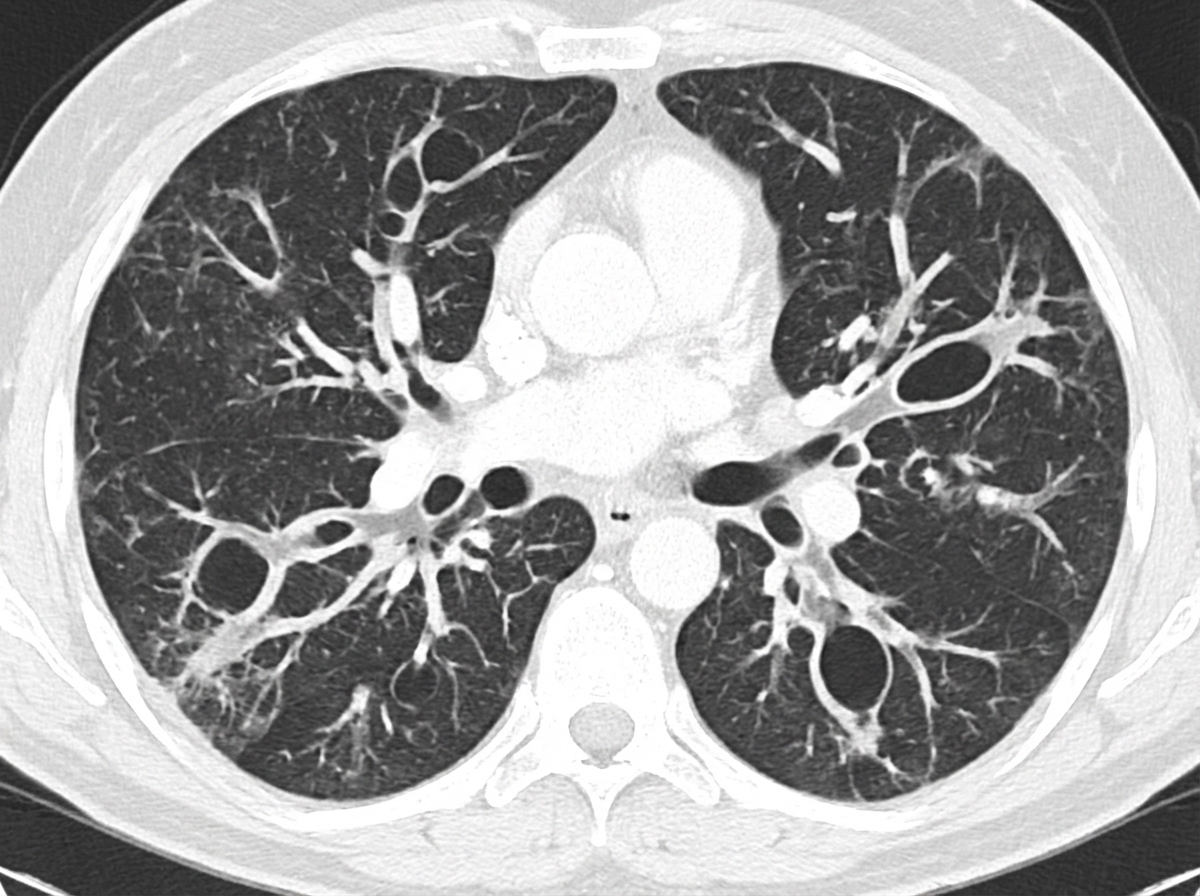
A 47-year-old man comes to the physician because of a 7-week history of cough, shortness of breath, and daily copious sputum production. He has had frequent respiratory tract infections over the past several years. Current medications include dextromethorphan and guaifenesin as needed. He does not smoke cigarettes. His temperature is 37.1°C (98.8°F), pulse is 88/min, respirations are 21/min, and blood pressure is 133/84 mm Hg. Pulse oximetry on room air shows an oxygen saturation of 95%. Diffuse crackles and wheezing are heard on auscultation over bilateral lung fields. A CT scan of the chest is shown. The patient is at greatest risk for which of the following complications?
A 56-year-old man comes to the emergency department because of progressively worsening shortness of breath and fever for 2 days. He also has a nonproductive cough. He does not have chest pain or headache. He has chronic myeloid leukemia and had a bone marrow transplant 3 months ago. His current medications include busulfan, mycophenolate mofetil, tacrolimus, and methylprednisolone. His temperature is 38.1°C (100.6°F), pulse is 103/min, respirations are 26/min, and blood pressure is 130/70 mm Hg. Pulse oximetry on room air shows an oxygen saturation of 93%. Pulmonary examination shows diffuse crackles. The spleen tip is palpated 4 cm below the left costal margin. Laboratory studies show: Hemoglobin 10.3 g/dL Leukocyte count 4,400/mm3 Platelet count 160,000/mm3 Serum Glucose 78 mg/dL Creatinine 2.1 mg/dL D-dimer 96 ng/mL (N < 250) pp65 antigen positive Galactomannan antigen negative Urinalysis is normal. An x-ray of the chest shows diffuse bilateral interstitial infiltrates. An ECG shows sinus tachycardia. Which of the following is the most appropriate pharmacotherapy?
Which of the following physiologic changes decreases pulmonary vascular resistance (PVR)?
A previously healthy 64-year-old woman comes to the physician because of a dry cough and progressively worsening shortness of breath for the past 2 months. She has not had fever, chills, or night sweats. She has smoked one pack of cigarettes daily for the past 45 years. She appears thin. Examination of the lung shows a prolonged expiratory phase and end-expiratory wheezing. Spirometry shows decreased FEV1:FVC ratio (< 70% predicted), decreased FEV1, and a total lung capacity of 125% of predicted. The diffusion capacity of the lung (DLCO) is decreased. Which of the following is the most likely diagnosis?
Which mechanism is primarily responsible for the increase in pulmonary diffusing capacity during exercise?
A 14-year-old boy has undergone kidney transplantation due to stage V chronic kidney disease. A pre-transplantation serologic assessment showed that he is negative for past or present HIV infection, viral hepatitis, EBV, and CMV infection. He has a known allergy for macrolides. The patient has no complaints 1 day after transplantation. His vital signs include: blood pressure 120/70 mm Hg, heart rate 89/min, respiratory rate 17/min, and temperature 37.0°C (98.6°F). On physical examination, the patient appears to be pale, his lungs are clear on auscultation, heart sounds are normal, and his abdomen is non-tender on palpation. His creatinine is 0.65 mg/dL (57.5 µmol/L), GFR is 71.3 mL/min/1.73 m2, and urine output is 0.9 mL/kg/h. Which of the following drugs should be used in the immunosuppressive regimen in this patient?
A 72-year-old obese man presents as a new patient to his primary care physician because he has been feeling tired and short of breath after recently moving to Denver. He is a former 50 pack-year smoker and has previously had deep venous thrombosis. Furthermore, he previously had a lobe of the lung removed due to lung cancer. Finally, he has a family history of a progressive restrictive lung disease. Laboratory values are obtained as follows: Oxygen tension in inspired air = 130 mmHg Alveolar carbon dioxide tension = 48 mmHg Arterial oxygen tension = 58 mmHg Respiratory exchange ratio = 0.80 Respiratory rate = 20/min Tidal volume = 500 mL Which of the following mechanisms is consistent with these values?
A 45-year-old man presents with a 3-day history of fever, right upper quadrant pain, and jaundice. He has a history of choledocholithiasis. On examination, temperature is 39.4°C, BP is 85/50 mmHg, HR is 122 bpm, and he is confused. RUQ ultrasound shows a dilated common bile duct of 14 mm with a shadowing calculus. Total bilirubin is 8.2 mg/dL, WBC is 22,000/µL, and alkaline phosphatase is markedly elevated. After initiating IV fluids and broad-spectrum antibiotics, what is the most appropriate next step?
A 70-year-old man with severe ischemic cardiomyopathy (EF 25%) has recurrent ventricular tachycardia despite optimal medical therapy and ICD placement. Cardiac MRI shows a large anteroseptal scar with viable myocardium in the lateral and inferior walls. He has three-vessel coronary disease. His daughter is advocating for heart transplantation, but he has multiple comorbidities including obesity (BMI 37) and active tobacco use. Evaluate the management priority and rationale.
A 49-year-old woman with myasthenia gravis undergoes CT chest showing a 5 cm anterior mediastinal mass with irregular borders. Biopsy confirms thymoma (WHO type B2). She has well-controlled myasthenic symptoms on pyridostigmine. Staging shows no distant metastases, but the mass abuts the pericardium without clear invasion. Evaluate the optimal treatment approach.
Want unlimited practice?
Get full access to all questions, explanations, and performance tracking.
Scan to download app