
Empyema and pleural space infections — MCQs

Myeloperoxidase (MPO) is a heme-containing molecule that is found in the azurophilic granules of neutrophils. Upon release, the enzyme catalyzes hypochlorous acid production during the phagocytic response. In the setting of pneumonia, which of the following clinical findings is most directly associated with myeloperoxidase activity?
A previously healthy 21-year-old man is brought to the emergency department 4 hours after the sudden onset of shortness of breath and pleuritic chest pain. He has smoked 1 pack of cigarettes daily for the past 3 years. He is 188 cm (6.2 ft) tall and weighs 70 kg (154 lb); BMI is 19.8 kg/m2. Physical examination shows decreased tactile fremitus and diminished breath sounds over the left lung. Which of the following is the most likely cause of this patient's symptoms?
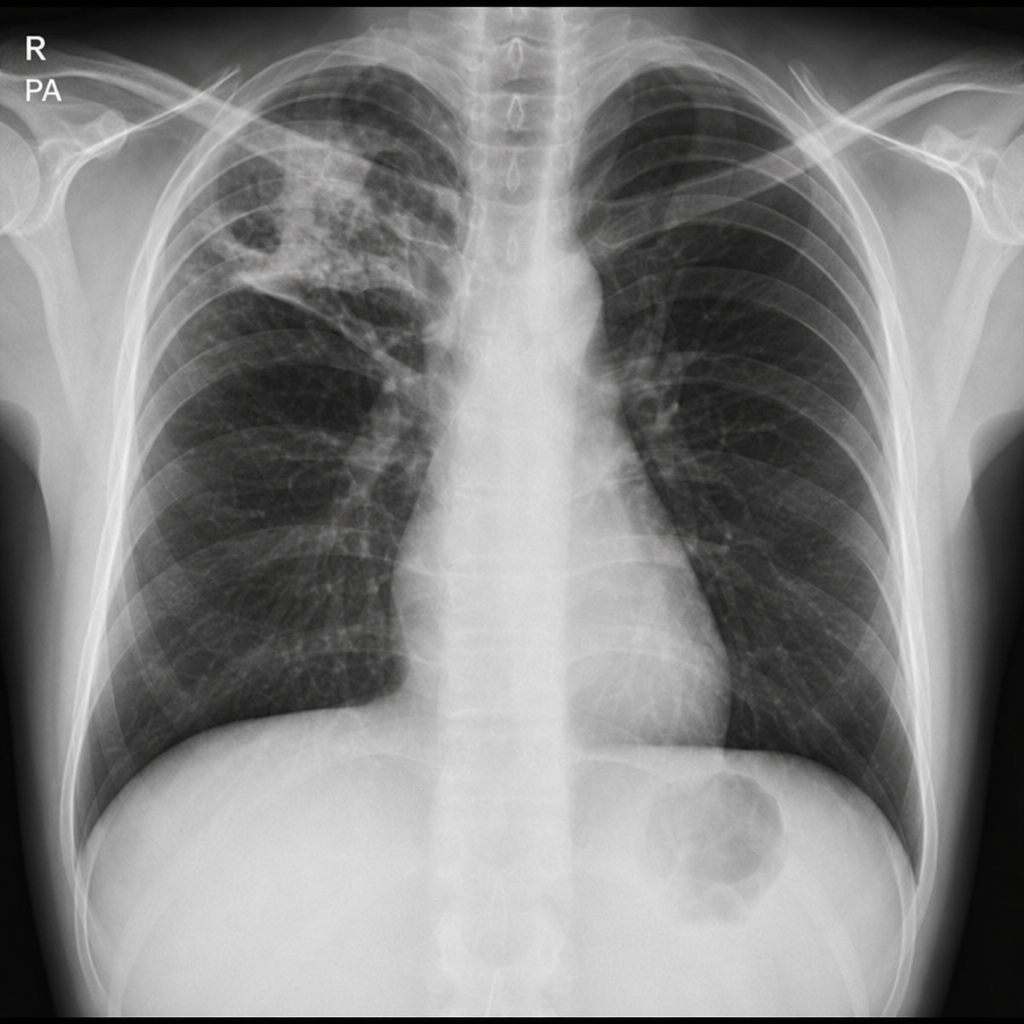
A 35-year-old man who recently emigrated from a country with a high prevalence of tuberculosis presents with 3 weeks of cough, night sweats, and weight loss. Chest radiography shows a right upper-lobe cavitary opacity with surrounding infiltrate, as shown. Which of the following is the most appropriate initial management?
A 37-year-old man presents to the emergency department after he cut his hand while working on his car. The patient has a past medical history of antisocial personality disorder and has been incarcerated multiple times. His vitals are within normal limits. Physical exam is notable for a man covered in tattoos with many bruises over his face and torso. Inspection of the patient's right hand reveals 2 deep lacerations on the dorsal aspects of the second and third metacarpophalangeal (MCP) joints. The patient is given a tetanus vaccination, and the wound is irrigated. Which of the following is appropriate management for this patient?
A 45-year-old man presents with a 3-day history of fever, right upper quadrant pain, and jaundice. He has a history of choledocholithiasis. On examination, temperature is 39.4°C, BP is 85/50 mmHg, HR is 122 bpm, and he is confused. RUQ ultrasound shows a dilated common bile duct of 14 mm with a shadowing calculus. Total bilirubin is 8.2 mg/dL, WBC is 22,000/µL, and alkaline phosphatase is markedly elevated. After initiating IV fluids and broad-spectrum antibiotics, what is the most appropriate next step?
A 70-year-old man with severe ischemic cardiomyopathy (EF 25%) has recurrent ventricular tachycardia despite optimal medical therapy and ICD placement. Cardiac MRI shows a large anteroseptal scar with viable myocardium in the lateral and inferior walls. He has three-vessel coronary disease. His daughter is advocating for heart transplantation, but he has multiple comorbidities including obesity (BMI 37) and active tobacco use. Evaluate the management priority and rationale.
A 49-year-old woman with myasthenia gravis undergoes CT chest showing a 5 cm anterior mediastinal mass with irregular borders. Biopsy confirms thymoma (WHO type B2). She has well-controlled myasthenic symptoms on pyridostigmine. Staging shows no distant metastases, but the mass abuts the pericardium without clear invasion. Evaluate the optimal treatment approach.
A 58-year-old man with coronary artery disease requires CABG. Preoperative angiography shows 90% left main stenosis, 95% proximal LAD stenosis, 80% circumflex stenosis, and chronic total occlusion of the RCA with collaterals. He has diabetes, renal insufficiency (Cr 2.1), and previous stroke. Evaluate the optimal grafting strategy to maximize long-term patency and outcomes.
A 62-year-old man develops sudden onset of severe chest and back pain. CT angiography shows a Stanford Type B aortic dissection extending from just distal to the left subclavian artery to the iliac bifurcation. Blood pressure is 165/95 mmHg, heart rate 88/min. He has no evidence of malperfusion, rupture, or refractory pain. Analyze the initial management strategy.
A 68-year-old woman with rheumatic heart disease has severe mitral stenosis (valve area 0.9 cm²) and moderate mitral regurgitation. She is in atrial fibrillation. Echocardiography shows heavily calcified mitral valve leaflets with restricted mobility and moderate subvalvular disease. The left atrium measures 6.2 cm. Analyze the optimal surgical approach.
Want unlimited practice?
Get full access to all questions, explanations, and performance tracking.
Scan to download app