
Coronary artery bypass grafting indications — MCQs

A 71-year-old man comes to the physician for a routine health maintenance examination. He feels well. He goes for a 30-minute walk three times a week and does not experience any shortness of breath or chest or leg pain on exertion. He has not had any weakness, numbness, or vision disturbance. He has diabetes that is well controlled with insulin injections. He had smoked one pack of cigarettes every day for 40 years but quit 5 years ago. He appears healthy and well nourished. His temperature is 36.3°C (97.3°F), pulse is 75/min, and blood pressure is 136/78 mm Hg. Physical examination shows normal heart sounds. There are systolic bruits over the neck bilaterally. Physical and neurologic examinations show no other abnormalities. Fasting serum studies show: Total cholesterol 210 mg/dL HDL cholesterol 28 mg/dL LDL cholesterol 154 mg/dL Triglycerides 140 mg/dL Glucose 102 mg/dL Duplex ultrasonography of the carotid arteries shows a 85% stenosis on the left and a 55% stenosis on the right side. Which of the following is the most appropriate next step in management?
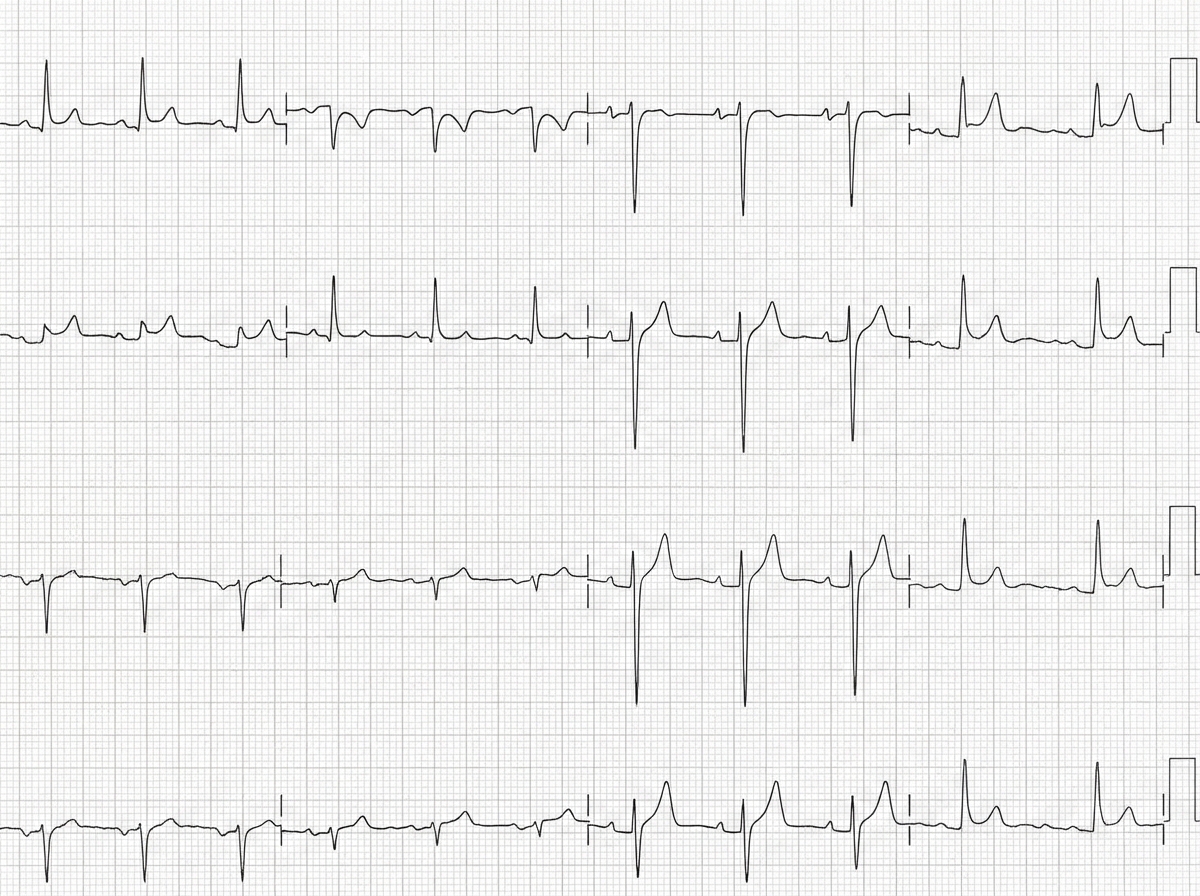
A 50-year-old man with a history of stage 4 kidney disease was admitted to the hospital for an elective hemicolectomy. His past medical history is significant for severe diverticulitis. After the procedure he becomes septic and was placed on broad spectrum antibiotics. On morning rounds, he appear weak and complains of fatigue and nausea. His words are soft and he has difficulty answering questions. His temperature is 38.9°C (102.1°F), heart rate is 110/min, respiratory rate is 15/min, blood pressure 90/65 mm Hg, and saturation is 89% on room air. On physical exam, his mental status appears altered. He has a bruise on his left arm that spontaneously appeared overnight. His cardiac exam is positive for a weak friction rub. Blood specimens are collected and sent for evaluation. An ECG is performed (see image). What therapy will this patient most likely receive next?
A 41-year-old man presents to his primary care provider because of chest pain with activity for the past 6 months. Past medical history is significant for appendectomy at age 12 and hypertension, and diabetes mellitus type 2 that is poorly controlled. He takes metformin and lisinopril but admits that he is bad at remembering to take them everyday. His father had a heart attack at 41 and 2 stents were placed in his heart. His mother is healthy. He drinks alcohol occasionally and smokes a half of a pack of cigarettes a day. He is a sales executive and describes his work as stressful. Today, the blood pressure is 142/85 and the body mass index (BMI) is 28.5 kg/m2. A coronary angiogram shows > 75% narrowing of the left anterior descending coronary artery. Which of the following is most significant in this patient?
A 72-year-old man arrives at the emergency department 30 minutes after developing rapid onset right-sided weakness and decreased sensation on the right side of his body. The patient’s wife also reports that he has had difficulty forming sentences. His wife adds that these symptoms were at their maximum within a few minutes of the incident and began to resolve almost instantaneously. The patient says he had a related episode of painless visual loss in his left eye that resolved after about 10–20 minutes about 3 months ago. His past medical history includes diabetes mellitus type 2 and essential hypertension. The patient reports a 50 pack-year smoking history. His blood pressure is 140/60 mm Hg, and his temperature is 36.5°C (97.7°F). Neurological examination is significant for a subtle weakness of the right hand. A noncontrast CT scan of the head is unremarkable, and a carotid Doppler ultrasound shows 10% stenosis of the right internal carotid artery and 50% stenosis of the left internal carotid artery. Which of the following is the expected change in resistance to blood flow through the stenotic artery most likely responsible for this patient’s current symptoms?
A 57-year-old man presents to his primary care provider because of chest pain for the past 3 weeks. The chest pain occurs after climbing more than 2 flight of stairs or walking for more than 10 minutes and resolves with rest. He is obese, has a history of type 2 diabetes mellitus, and has smoked 15-20 cigarettes a day for the past 25 years. His father died from a myocardial infarction at 52 years of age. Vital signs reveal a temperature of 36.7 °C (98.06°F), a blood pressure of 145/93 mm Hg, and a heart rate of 85/min. The physical examination is unremarkable. Which of the following best represents the most likely etiology of the patient’s condition?
A 55-year-old man comes to the emergency department because of left-sided chest pain and difficulty breathing for the past 30 minutes. His pulse is 88/min. He is pale and anxious. Serum studies show increased cardiac enzymes. An ECG shows ST-elevations in leads I, aVL, and V5-V6. A percutaneous coronary intervention is performed. In order to localize the site of the lesion, the catheter must pass through which of the following structures?
A 62-year-old man with a past medical history of previous myocardial infarction, angina, hypertension, hyperlipidemia, diabetes mellitus, peripheral vascular disease, and below knee amputation has developed new chest pain. His medication includes insulin, hydrochlorothiazide, lisinopril, metoprolol, daily aspirin, atorvastatin, and nitroglycerin as needed. His vitals include: blood pressure 135/87 mm Hg, pulse 52/min, and respirations 17/min. Coronary arteriography shows a reduced ejection fraction, a 65% stenosis of the left anterior descending artery, and a 75% stenosis of the left circumflex artery. Which of the following is the recommended treatment for the patient?
Four days after undergoing a craniotomy and evacuation of a subdural hematoma, a 56-year-old man has severe pain and swelling of his right leg. He has chills and nausea. He has type 2 diabetes mellitus and chronic kidney disease, and was started on hemodialysis 2 years ago. Prior to admission, his medications were insulin, enalapril, atorvastatin, and sevelamer. His temperature is 38.3°C (101°F), pulse is 110/min, and blood pressure is 130/80 mm Hg. Examination shows a swollen, warm, and erythematous right calf. Dorsiflexion of the right foot causes severe pain in the right calf. The peripheral pulses are palpated bilaterally. Cardiopulmonary examination shows no abnormalities. Laboratory studies show: Hemoglobin 10.1 g/dL Leukocyte count 11,800/mm3 Platelet count 230,000/mm3 Serum Glucose 87 mg/dL Creatinine 1.9 mg/dL Which of the following is the most appropriate next step in treatment?
A 59-year-old patient comes to the emergency department accompanied by his wife because of severe right leg pain and numbness. His condition suddenly started an hour ago. His wife says that he has a heart rhythm problem for which he takes a blood thinner, but he is not compliant with his medications. He has smoked 10–15 cigarettes daily for the past 15 years. His temperature is 36.9°C (98.42°F), blood pressure is 140/90 mm Hg, and pulse is 85/min and irregular. On physical examination, the patient is anxious and his right leg is cool and pale. Palpation of the popliteal fossa shows a weaker popliteal pulse on the right side compared to the left side. Which of the following is the best initial step in the management of this patient's condition?
A 62-year-old man presents to the emergency department with sudden onset of severe left leg pain accompanied by numbness and weakness. His medical history is remarkable for hypertension and hyperlipidemia. His vital signs include a blood pressure of 155/92 mm Hg, a temperature of 37.1°C (98.7°F), and an irregular pulse of 92/min. Physical examination reveals absent left popliteal and posterior tibial pulses. His left leg is noticeably cold and pale. There is no significant tissue compromise, nerve damage, or sensory loss. Which of the following will most likely be required for this patient's condition?
Want unlimited practice?
Get full access to all questions, explanations, and performance tracking.
Scan to download app