A 17-year-old male is brought to the emergency department following a motor vehicle accident. He has suffered several wounds and is minimally responsive. There is a large laceration on his forehead as well as a fracture of his nasal bridge. He appears to be coughing and spitting blood. He is already wearing a soft collar. Vitals are as follows: T 36.4C, BP 102/70 mmHg, HR 126 bpm, RR 18/min, and SpO2 is 88% on RA. He has 2 peripheral IVs and received 2L of IV normal saline on route to the hospital. There is frank blood in the oropharynx. Breath sounds are present bilaterally. Abdomen is distended and tender. Pulses are 1+. Which of the following should be the first step in management?
Q12
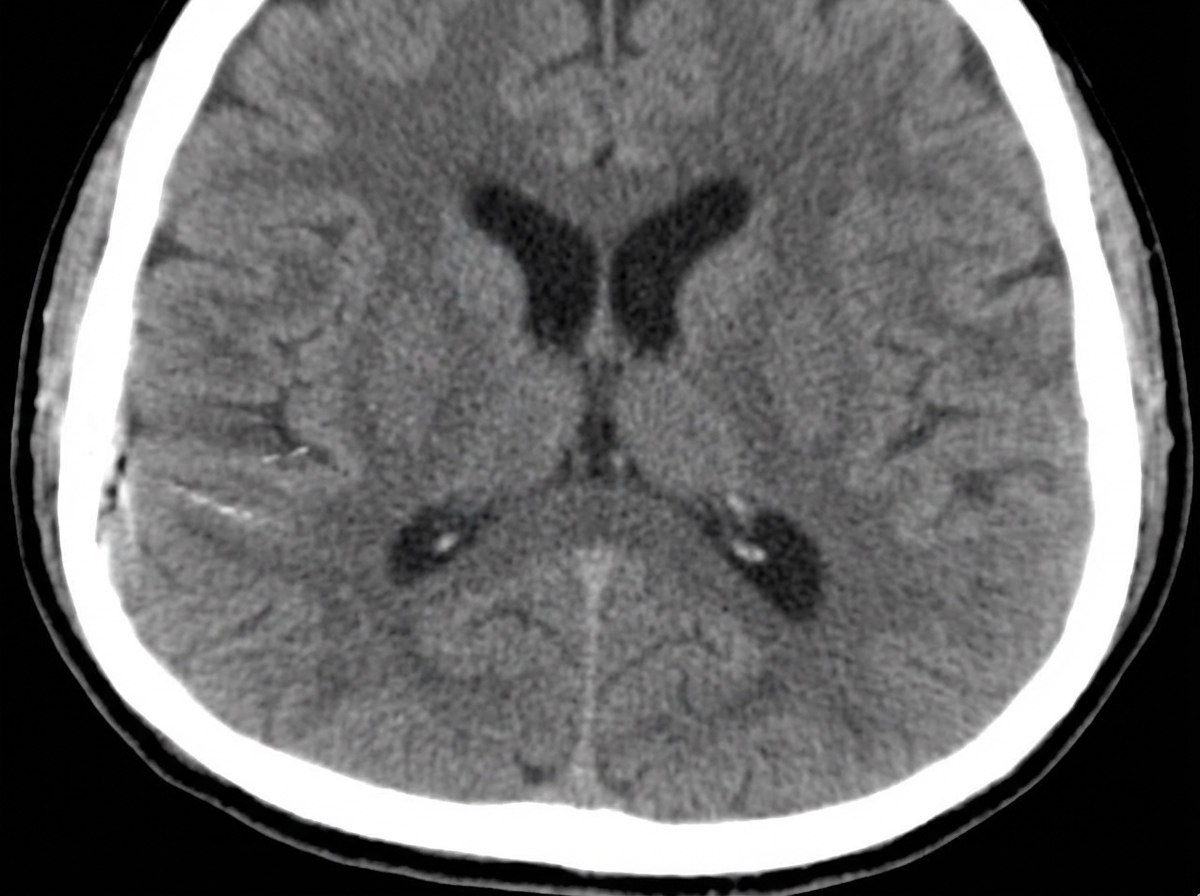
A 31-year-old unresponsive man is admitted to the emergency department after a single-vehicle roll-over accident. On primary assessment by paramedics, he was unresponsive. On admission, he opened his eyes to painful stimuli, was not responsive to verbal commands, and demonstrated abnormal flexion of his arms with extension of his legs in response to pain. The patient was intubated and examined. The blood pressure is 150/90 mm Hg; the heart rate, 56/min; the respiratory rate, 14/min; the temperature, 37.5℃ (99.5℉), and the SpO2, 94% on room air. The examination shows a depressed fracture of the left temporal bone and ecchymoses and scratches over his abdomen and extremities. His pupils are round, equal, and show a poor response to light. There is no disconjugate eye deviation. His lungs are clear to auscultation and the heart sounds are normal. Abdominal examination reveals normal bowel sounds and no fluid wave. There are no meningeal signs. Focused assessment with sonography for trauma is negative for blood in the abdominal cavity. Head CT scan is shown in the picture. Which procedure is required to guide further management?
Q13
A 19-year-old man is rushed to the emergency department 30 minutes after diving head-first into a shallow pool of water from a cliff. He was placed on a spinal board and a rigid cervical collar was applied by the emergency medical technicians. On arrival, he is unconscious and withdraws all extremities to pain. His temperature is 36.7°C (98.1°F), pulse is 70/min, respirations are 8/min, and blood pressure is 102/70 mm Hg. Pulse oximetry on room air shows an oxygen saturation of 96%. The pupils are equal and react sluggishly to light. There is a 3-cm (1.2-in) laceration over the forehead. The lungs are clear to auscultation. Cardiac examination shows no abnormalities. The abdomen is soft and nontender. There is a step-off palpated over the cervical spine. Which of the following is the most appropriate next step in management?
Q14
A 45-year-old female presents to the emergency room as a trauma after a motor vehicle accident. The patient was a restrained passenger who collided with a drunk driver traveling approximately 45 mph. Upon impact, the passenger was able to extricate herself from the crushed car and was sitting on the ground at the scene of the accident. Her vitals are all stable. On physical exam, she is alert and oriented, speaking in complete sentences with a GCS of 15. She has a cervical spine collar in place and endorses exquisite cervical spine tenderness on palpation. Aside from her superficial abrasions on her right lower extremity, the rest of her examination including FAST exam is normal. Rapid hemoglobin testing is within normal limits. What is the next best step in management of this trauma patient?
Q15
A 45-year-old man was a driver in a motor vehicle collision. The patient is not able to offer a medical history during initial presentation. His temperature is 97.6°F (36.4°C), blood pressure is 104/74 mmHg, pulse is 150/min, respirations are 12/min, and oxygen saturation is 98% on room air. On exam, he does not open his eyes, he withdraws to pain, and he makes incomprehensible sounds. He has obvious signs of trauma to the chest and abdomen. His abdomen is distended and markedly tender to palpation. He also has an obvious open deformity of the left femur. What is the best initial step in management?
ATLS protocols US Medical PG Practice Questions and MCQs
Question 11: A 17-year-old male is brought to the emergency department following a motor vehicle accident. He has suffered several wounds and is minimally responsive. There is a large laceration on his forehead as well as a fracture of his nasal bridge. He appears to be coughing and spitting blood. He is already wearing a soft collar. Vitals are as follows: T 36.4C, BP 102/70 mmHg, HR 126 bpm, RR 18/min, and SpO2 is 88% on RA. He has 2 peripheral IVs and received 2L of IV normal saline on route to the hospital. There is frank blood in the oropharynx. Breath sounds are present bilaterally. Abdomen is distended and tender. Pulses are 1+. Which of the following should be the first step in management?
A. Focused Assessment with Sonography for Trauma (FAST) scan
B. Type and screen for matched blood transfusion
C. Blood transfusion with unmatched blood
D. Cricothyroidotomy
E. Orotracheal intubation (Correct Answer)
Explanation: ***Orotracheal intubation***
- The patient has suffered multiple traumas, including facial fractures, and is minimally responsive with frank blood in the oropharynx, indicating a **compromised airway**. His SpO2 of 88% on room air is also an indicator that the patient needs immediate assistance with oxygenation.
- Ensuring a **patent airway** and adequate ventilation is the first priority in trauma management, following the **ABCDE (Airway, Breathing, Circulation, Disability, Exposure)** approach.
*Focused Assessment with Sonography for Trauma (FAST) scan*
- While a FAST scan is crucial for evaluating internal bleeding in a trauma patient with abdominal distension and tenderness, it addresses **Circulation** issues, which, in the ABCDE approach, come after addressing the airway and breathing.
- Doing a FAST scan first, delaying airway management, could lead to further **hypoxia and irreversible brain damage**.
*Type and screen for matched blood transfusion*
- This is an important step in managing a patient with potential significant blood loss (indicated by the distended abdomen, tachycardia, and weak pulses). However, it is part of managing **Circulation** and takes time.
- Airway management and immediate resuscitation measures take **precedence over waiting for matched blood**, especially when the patient is hypoxic.
*Blood transfusion with unmatched blood*
- Administering unmatched blood (e.g., O negative) is a critical intervention for severe hemorrhage and hemodynamic instability. The patient's tachycardia, weak pulses, and distended abdomen suggest significant blood loss, which would indicate starting a transfusion as soon as possible.
- However, establishing an **adequate airway and ensuring oxygenation** is a more immediate life-saving step, as hypoxia can quickly lead to irreversible damage.
*Cricothyroidotomy*
- **Cricothyroidotomy** is indicated for a definitive airway when orotracheal intubation is either impossible or contraindicated, particularly in cases of severe facial trauma or upper airway obstruction.
- While the patient has facial trauma and blood in the oropharynx, **orotracheal intubation is still the preferred initial method** for airway management unless it's explicitly stated to be impossible.
Question 12: A 31-year-old unresponsive man is admitted to the emergency department after a single-vehicle roll-over accident. On primary assessment by paramedics, he was unresponsive. On admission, he opened his eyes to painful stimuli, was not responsive to verbal commands, and demonstrated abnormal flexion of his arms with extension of his legs in response to pain. The patient was intubated and examined. The blood pressure is 150/90 mm Hg; the heart rate, 56/min; the respiratory rate, 14/min; the temperature, 37.5℃ (99.5℉), and the SpO2, 94% on room air. The examination shows a depressed fracture of the left temporal bone and ecchymoses and scratches over his abdomen and extremities. His pupils are round, equal, and show a poor response to light. There is no disconjugate eye deviation. His lungs are clear to auscultation and the heart sounds are normal. Abdominal examination reveals normal bowel sounds and no fluid wave. There are no meningeal signs. Focused assessment with sonography for trauma is negative for blood in the abdominal cavity. Head CT scan is shown in the picture. Which procedure is required to guide further management?
A. Lumbar puncture
B. Brain MRI
C. Placement of an arterial line
D. Placement of an intraventricular catheter (Correct Answer)
E. Diagnostic peritoneal lavage
Explanation: ***Placement of an intraventricular catheter***
- The patient exhibits signs of **Cushing's triad** (hypertension 150/90, bradycardia 56/min) and **decorticate posturing** (abnormal flexion of arms with leg extension), indicating elevated **intracranial pressure (ICP)** due to severe traumatic brain injury with depressed skull fracture.
- An intraventricular catheter (external ventricular drain, EVD) is the **gold standard** for directly measuring and therapeutically managing elevated ICP by allowing **continuous pressure monitoring and cerebrospinal fluid (CSF) drainage**.
- In severe TBI with signs of elevated ICP, this provides both diagnostic information and therapeutic intervention, making it the most appropriate next step per **ATLS and Brain Trauma Foundation guidelines**.
*Lumbar puncture*
- A lumbar puncture is **absolutely contraindicated** in cases of suspected elevated ICP and mass effect due to the risk of **transtentorial or tonsillar herniation**.
- The patient's Cushing's triad, depressed skull fracture, and altered mental status make LP dangerous and inappropriate.
*Brain MRI*
- While MRI provides superior anatomical detail compared to CT, it is **not suitable for immediate management** in an acutely unstable trauma patient with suspected elevated ICP.
- MRI requires longer scanning time, is less accessible in emergency settings, and the patient cannot be monitored as closely during the procedure.
- **CT scan is sufficient** for immediate trauma management and was already performed.
*Placement of an arterial line*
- An arterial line provides **continuous blood pressure monitoring** and facilitates **arterial blood gas sampling**, which is valuable for critical care management.
- While important for maintaining adequate **cerebral perfusion pressure (CPP = MAP - ICP)**, an arterial line does not directly measure or treat elevated ICP.
- It does not address the primary neurological issue and **does not guide neurosurgical management** as specifically as ICP monitoring would.
*Diagnostic peritoneal lavage*
- DPL is used to detect **occult intra-abdominal hemorrhage** in hemodynamically unstable trauma patients when FAST is unavailable or equivocal.
- Given the patient's **negative FAST exam**, hemodynamic stability, and predominant signs of **severe head injury with elevated ICP**, DPL is not indicated.
- The life-threatening issue is neurological, not abdominal, making ICP monitoring the priority.
Question 13: A 19-year-old man is rushed to the emergency department 30 minutes after diving head-first into a shallow pool of water from a cliff. He was placed on a spinal board and a rigid cervical collar was applied by the emergency medical technicians. On arrival, he is unconscious and withdraws all extremities to pain. His temperature is 36.7°C (98.1°F), pulse is 70/min, respirations are 8/min, and blood pressure is 102/70 mm Hg. Pulse oximetry on room air shows an oxygen saturation of 96%. The pupils are equal and react sluggishly to light. There is a 3-cm (1.2-in) laceration over the forehead. The lungs are clear to auscultation. Cardiac examination shows no abnormalities. The abdomen is soft and nontender. There is a step-off palpated over the cervical spine. Which of the following is the most appropriate next step in management?
A. Rapid sequence intubation (Correct Answer)
B. CT scan of the spine
C. X-ray of the cervical spine
D. MRI of the spine
E. Rectal tone assessment
Explanation: ***Rapid sequence intubation***
- The patient has a **compromised airway** due to very shallow respirations (8/min), indicating impending respiratory failure, which is prioritized in the management of trauma patients.
- Due to the high suspicion of a **cervical spine injury** (diving into a shallow pool, step-off palpable over the cervical spine), **rapid sequence intubation** is the safest way to secure the airway while maintaining **cervical spine immobilization**.
*CT scan of the spine*
- Imaging studies of the spine are important for diagnosis but must be performed **after securing the airway** and stabilizing vital functions.
- While a CT scan is the preferred imaging modality for evaluating bony spinal trauma, it does not address the immediate life-threatening issue of respiratory insufficiency.
*X-ray of the cervical spine*
- X-rays are less sensitive for detecting all types of cervical spine injuries, especially ligamentous damage, compared to CT or MRI.
- As with other imaging, it should be done **after airway management** is secured.
*MRI of the spine*
- MRI is excellent for evaluating **soft tissue structures** like spinal cord, ligaments, and discs, and is generally performed after initial stabilization and CT for bony injury.
- It is not an immediate diagnostic priority when the patient's airway and breathing are acutely compromised.
*Rectal tone assessment*
- This assessment is part of the neurological examination to evaluate for spinal cord injury, specifically involving the **sacral segments**.
- While important for comprehensive neurological assessment, it is not the most appropriate *next step* when the patient has critical airway and breathing compromise.
Question 14: A 45-year-old female presents to the emergency room as a trauma after a motor vehicle accident. The patient was a restrained passenger who collided with a drunk driver traveling approximately 45 mph. Upon impact, the passenger was able to extricate herself from the crushed car and was sitting on the ground at the scene of the accident. Her vitals are all stable. On physical exam, she is alert and oriented, speaking in complete sentences with a GCS of 15. She has a cervical spine collar in place and endorses exquisite cervical spine tenderness on palpation. Aside from her superficial abrasions on her right lower extremity, the rest of her examination including FAST exam is normal. Rapid hemoglobin testing is within normal limits. What is the next best step in management of this trauma patient?
A. Remove the patient’s cervical collar immediately
B. Discharge home and start physical therapy
C. Initiate rapid sequence intubation.
D. Consult neurosurgery immediately
E. CT cervical spine (Correct Answer)
Explanation: ***CT cervical spine***
- Given the patient's **mechanism of injury** (motor vehicle accident at 45 mph) and **cervical spine tenderness**, a CT cervical spine is the most appropriate next step to rule out a fracture or other significant injury.
- While the patient is alert and stable, the presence of **exquisite tenderness** mandates imaging to ensure no occult injury is missed that could lead to neurological compromise.
*Remove the patient’s cervical collar immediately*
- Removing the cervical collar prematurely in a trauma patient with cervical spine tenderness is dangerous, as it could lead to further damage if an **unstable fracture** is present.
- The collar should remain in place until imaging has ruled out a clinically significant cervical spine injury.
*Discharge home and start physical therapy*
- Discharging a patient with **cervical spine tenderness** after a high-impact motor vehicle accident without imaging is inappropriate and could result in severe consequences if an injury is present.
- Physical therapy would only be considered after a thorough workup has cleared any acute injury.
*Initiate rapid sequence intubation.*
- **Rapid sequence intubation (RSI)** is used for airway management in patients with impending or actual respiratory failure or inability to protect their airway.
- This patient is alert, speaking in complete sentences, has a GCS of 15, and stable vitals, indicating **no immediate need for intubation**.
*Consult neurosurgery immediately*
- While a neurosurgery consult may be necessary if an injury is identified, the immediate next step is to **diagnose the injury** with imaging.
- Consulting neurosurgery without definitive imaging results would be premature in this stable patient.
Question 15: A 45-year-old man was a driver in a motor vehicle collision. The patient is not able to offer a medical history during initial presentation. His temperature is 97.6°F (36.4°C), blood pressure is 104/74 mmHg, pulse is 150/min, respirations are 12/min, and oxygen saturation is 98% on room air. On exam, he does not open his eyes, he withdraws to pain, and he makes incomprehensible sounds. He has obvious signs of trauma to the chest and abdomen. His abdomen is distended and markedly tender to palpation. He also has an obvious open deformity of the left femur. What is the best initial step in management?
A. Emergency open fracture repair
B. Packed red blood cells
C. Exploratory laparotomy
D. Intubation (Correct Answer)
E. 100% oxygen
Explanation: ***Intubation***
- The patient's **Glasgow Coma Scale (GCS) score is 7** (E=1, V=2, M=4), which is below 8 and indicates a severe head injury needing **airway protection** via intubation.
- A GCS ≤ 8 mandates **definitive airway management** to prevent aspiration and ensure adequate ventilation.
*Emergency open fracture repair*
- While the patient has an open femur fracture, it is not the most immediate life-threatening concern after a major trauma; **airway and breathing** take precedence.
- **Hemorrhage control** and **stabilization** often precede definitive orthopedic repair in polytrauma.
*Packed red blood cells*
- Although the patient is likely in **hemorrhagic shock** (tachycardia, hypotension, obvious trauma), administering blood products without first securing the airway is not the initial priority.
- **Circulation** management, including fluid resuscitation and blood products, follows **airway and breathing** establishment.
*Exploratory laparotomy*
- The patient's distended and tender abdomen strongly suggests intra-abdominal injury, but this is a **diagnostic and therapeutic procedure** that comes after initial resuscitation and stabilization.
- **Emergent laparotomy** for abdominal trauma is considered once the patient's airway, breathing, and circulation are secured.
*100% oxygen*
- Administering 100% oxygen is part of initial resuscitation, but it does not address the fundamental problem of an unsecured airway and the risk of **hypoventilation** or **aspiration** in a patient with a GCS of 7.
- Oxygen supplementation helps improve saturation in spontaneously breathing patients but cannot protect a compromised airway.