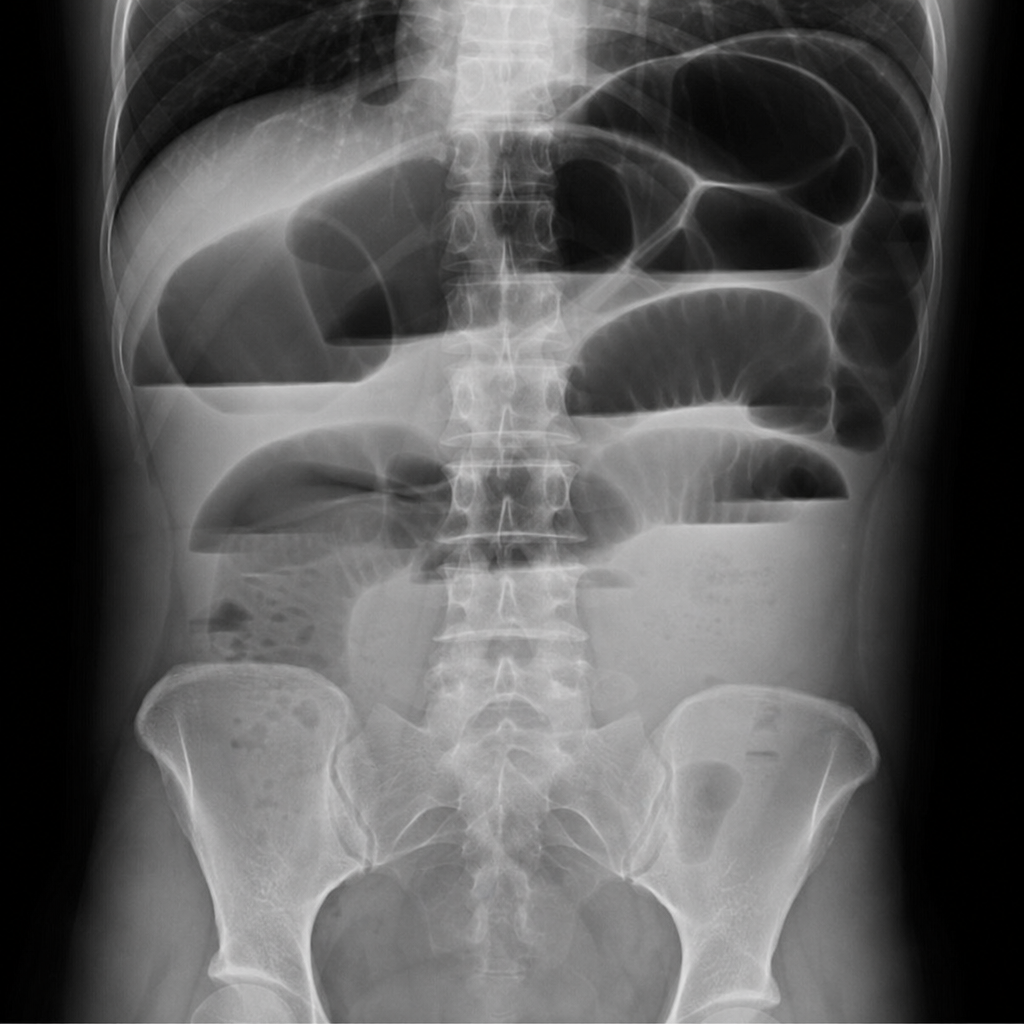
An 82-year-old woman visits her primary care provider complaining of a vague cramping pain on the right side of her abdomen for the past 6 hours. She is also nauseated and had an episode of vomiting earlier today and two episodes yesterday. Past medical history includes third-degree heart block, gastroesophageal reflux disease, hypertension, hypothyroidism and chronic cholecystitis with cholelithiasis. She is not a good candidate for cholecystectomy due to cardiac disease and is treated with analgesics and ursodeoxycholic acid. Her medications include chlorthalidone, omeprazole, levothyroxine, and occasional naproxen for pain. Vitals are normal. A supine abdominal X-ray reveals air in the gallbladder and biliary tree, small bowel obstruction, and a large radiolucent gallstone impacted in the small bowel. What is the most likely diagnosis?
Q82
A 29-year-old man presents to the emergency room with severe abdominal pain. He states that for the entire day, he has had pain in his lower right abdomen in addition to a loss of appetite accompanied by nausea and vomiting. His temperature is 101.3°F (38.5°C), blood pressure is 125/98 mmHg, pulse is 78/min, and respirations are 15/min. On physical examination, he exhibits increased abdominal pain in his right lower quadrant upon deep palpation of the left lower quadrant. What is the next step in the management of this patient?
Q83
A 72-year-old man is brought to the emergency department with increasing fever and abdominal pain over the past week. The pain is constant and limited to the lower right part of his abdomen. He has nausea but no vomiting or diarrhea. His past medical history is unremarkable for any serious illnesses. He takes acetaminophen for knee arthritis. He is fully alert and oriented. His temperature is 39.5°C (103.1°F), pulse is 89/min, respirations are 15/min, and blood pressure is 135/70 mm Hg. Abdominal examination shows a tender mass in the right lower quadrant. CT shows obstruction of the appendiceal neck with a fecalith and the appendiceal tip leading to an irregular walled-off fluid collection. Stranding of the surrounding fat planes is also noted. Intravenous hydration is initiated. Which of the following is the most appropriate next step in management?
Q84
A 66-year-old man comes to the physician because of yellowish discoloration of his eyes and skin, abdominal discomfort, and generalized fatigue for the past 2 weeks. He has had dark urine and pale stools during this period. He has had a 10-kg (22-lb) weight loss since his last visit 6 months ago. He has hypertension. He has smoked one pack of cigarettes daily for 34 years. He drinks three to four beers over the weekends. His only medication is amlodipine. His temperature is 37.3°C (99.1°F), pulse is 89/min, respirations are 14/min, and blood pressure is 114/74 mm Hg. Examination shows jaundice of the sclera and skin and excoriation marks on his trunk and extremities. The lungs are clear to auscultation. The abdomen is soft and nontender. The remainder of the examination shows no abnormalities. Laboratory studies show:
Hemoglobin 12 g/dL
Leukocyte count 5,000/mm3
Platelet count 400,000/mm3
Serum
Urea nitrogen 28 mg/dL
Creatinine 1.2 mg/dL
Bilirubin
Total 7.0 mg/dL
Direct 5.5 mg/dL
Alkaline phosphatase 615 U/L
Aspartate aminotransferase (AST, GOT) 170 U/L
Alanine aminotransferase (ALT, GPT) 310 U/L
γ-Glutamyltransferase (GGT) 592 U/L (N = 5–50 U/L)
An ultrasound shows extrahepatic biliary dilation. A CT scan of the abdomen shows a 2.5-cm (1-in) mass in the head of the pancreas with no abdominal lymphadenopathy. The patient undergoes biliary stenting. Which of the following is the most appropriate next step in the management of this patient?
Q85
A 59-year-old woman presents to the family medicine clinic with a lump in her breast for the past 6 months. She states that she has been doing breast self-examinations once a month. She has a medical history significant for generalized anxiety disorder and systemic lupus erythematosus. She takes sertraline and hydroxychloroquine for her medical conditions. The heart rate is 102/min, and the rest of the vital signs are stable. On physical examination, the patient appears anxious and tired. Her lungs are clear to auscultation bilaterally. Capillary refill is 2 seconds. There is no axillary lymphadenopathy present. Palpation of the left breast reveals a 2 x 2 cm mass. What is the most appropriate next step given the history of the patient?
Q86
A 68-year-old man presents for a screening ultrasound scan. He has been feeling well and is in his usual state of good health. His medical history is notable for mild hypertension and a 100-pack-year tobacco history. He has a blood pressure of 128/86 and heart rate of 62/min. Physical examination is clear lung sounds and regular heart sounds. On ultrasound, an infrarenal aortic aneurysm of 4 cm in diameter is identified. Which of the following is the best initial step for this patient?
Q87
A 40-year-old woman comes to the physician because of a 2-week history of anal pain that occurs during defecation and lasts for several hours. She reports that she often strains during defecation and sees bright red blood on toilet paper after wiping. She typically has 3 bowel movements per week. Physical examination shows a longitudinal, perianal tear. This patient's symptoms are most likely caused by tissue injury in which of the following locations?
Q88
A 76-year-old female is brought to the emergency department after being found unresponsive in her room at her nursing facility. Past medical history is significant for Alzheimer's disease, hypertension, and diabetes. Surgical history is notable for an open cholecystectomy at age 38 and multiple cesarean sections. On arrival, she is non-responsive but breathing by herself, and her vital signs are T 102.9 F, HR 123 bpm, BP 95/64, RR 26/min, and SaO2 97% on 6L nasal cannula. On physical exam the patient has marked abdominal distension and is tympanic to percussion. Laboratory studies are notable for a lactic acidosis. An upright abdominal radiograph and CT abdomen/pelvis with contrast are shown in Figures A and B respectively. She is started on IV fluids and a nasogastric tube is placed to suction which returns green bilious fluid. Repeat vitals 1 hour later are T 101F, HR 140 bpm, BP 75/44, RR 30/min, and SaO2 is 100% on the ventilator after she is intubated for airway concerns. What is the next best step in management?
Q89
A 69-year-old man is brought to the emergency department because of severe abdominal pain radiating to his left flank for 30 minutes. He is weak and has been unable to stand since the onset of the pain. He vomited twice on the way to the hospital. He has not passed stools for 3 days. He has hypertension, coronary heart disease, and peptic ulcer disease. He has smoked half a pack of cigarettes daily for 46 years. Current medications include enalapril, metoprolol, aspirin, simvastatin, and pantoprazole. He appears ill. His temperature is 37°C (98.6°F), pulse is 131/min, respirations are 31/min, and blood pressure is 82/56 mm Hg. Pulse oximetry on room air shows an oxygen saturation of 92%. The lungs are clear to auscultation. Cardiac examination shows no abnormalities. Examination shows a painful pulsatile abdominal mass. Intravenous fluid resuscitation is begun. Which of the following is the most appropriate next step in management?
Q90
A 31-year-old man presents to an urgent care clinic with symptoms of lower abdominal pain, bloating, bloody diarrhea, and fullness, all of which have become more frequent over the last 3 months. His vital signs are as follows: blood pressure is 121/81 mm Hg, heart rate is 87/min, and respiratory rate is 15/min. Rectal examination reveals a small amount of bright red blood. Lower endoscopy is performed, showing extensive mucosal erythema, induration, and pseudopolyps extending from the rectum to the splenic flexure. Given the following options, what is the most appropriate initial treatment for this patient's underlying disease?
Abdominal emergencies US Medical PG Practice Questions and MCQs
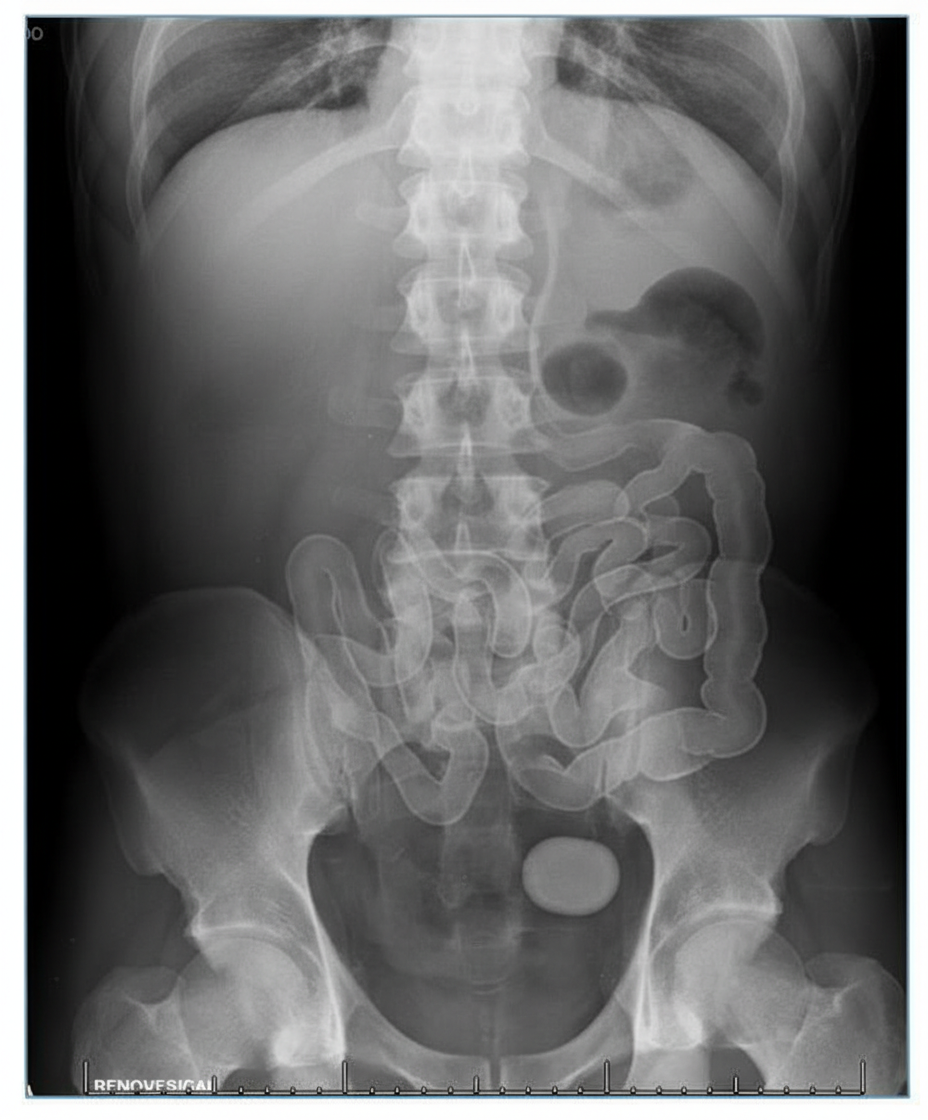
Question 81: An 82-year-old woman visits her primary care provider complaining of a vague cramping pain on the right side of her abdomen for the past 6 hours. She is also nauseated and had an episode of vomiting earlier today and two episodes yesterday. Past medical history includes third-degree heart block, gastroesophageal reflux disease, hypertension, hypothyroidism and chronic cholecystitis with cholelithiasis. She is not a good candidate for cholecystectomy due to cardiac disease and is treated with analgesics and ursodeoxycholic acid. Her medications include chlorthalidone, omeprazole, levothyroxine, and occasional naproxen for pain. Vitals are normal. A supine abdominal X-ray reveals air in the gallbladder and biliary tree, small bowel obstruction, and a large radiolucent gallstone impacted in the small bowel. What is the most likely diagnosis?
A. Cholecystitis
B. Small bowel perforation
C. Choledocolithiasis
D. Gallstone ileus (Correct Answer)
E. Primary biliary cholangitis
Explanation: ***Gallstone ileus***
- The presence of **air in the gallbladder and biliary tree** (**pneumobilia**), signs of **small bowel obstruction**, and a **large radiolucent gallstone impacted in the small bowel** are the classic features of gallstone ileus, known as **Rigler's triad**.
- This condition occurs when a gallstone erodes through the gallbladder wall into the small intestine, causing obstruction.
*Cholecystitis*
- While the patient has a history of chronic cholecystitis with cholelithiasis, the described **radiographic findings** (pneumobilia, small bowel obstruction) are not typical for uncomplicated acute cholecystitis.
- Acute cholecystitis would typically present with **right upper quadrant pain**, fever, and nausea/vomiting, often with gallbladder wall thickening and pericholecystic fluid on imaging.
*Small bowel perforation*
- Small bowel perforation would typically present with **acute, severe abdominal pain**, signs of peritonitis, and potentially **free air under the diaphragm** on abdominal radiographs.
- While there is small bowel obstruction, the other specific findings of gallstone ileus (pneumobilia, impacted gallstone) differentiate this from a simple perforation.
*Choledocolithiasis*
- This involves the presence of gallstones in the **common bile duct**, leading to symptoms like **jaundice**, cholangitis, or pancreatitis.
- The imaging findings of **air in the gallbladder and biliary tree** and a **small bowel obstruction** with an impacted stone are not characteristic of choledocholithiasis.
*Primary biliary cholangitis*
- This is a **chronic autoimmune liver disease** affecting the small bile ducts, presenting with fatigue, pruritus, and elevated liver enzymes, particularly **alkaline phosphatase**.
- It does not involve gallstone impaction in the small bowel or present with acute small bowel obstruction.
Question 82: A 29-year-old man presents to the emergency room with severe abdominal pain. He states that for the entire day, he has had pain in his lower right abdomen in addition to a loss of appetite accompanied by nausea and vomiting. His temperature is 101.3°F (38.5°C), blood pressure is 125/98 mmHg, pulse is 78/min, and respirations are 15/min. On physical examination, he exhibits increased abdominal pain in his right lower quadrant upon deep palpation of the left lower quadrant. What is the next step in the management of this patient?
A. Stool ova and parasite examination
B. Colonoscopy
C. Laparoscopic surgery
D. Abdominal radiograph
E. Abdominal ultrasound (Correct Answer)
Explanation: ***Abdominal ultrasound***
- An abdominal ultrasound is an **appropriate imaging modality** for evaluating suspected **appendicitis**. While **CT scan is typically preferred in adult patients** in the US due to higher sensitivity and specificity, ultrasound is a reasonable alternative, particularly when CT is unavailable or in certain clinical settings.
- The patient's symptoms, including **right lower quadrant pain**, loss of appetite, nausea, vomiting, fever, and the presence of **Rovsing's sign** (pain in the right lower quadrant upon palpation of the left lower quadrant), are highly suggestive of acute appendicitis and warrant imaging confirmation.
- Ultrasound can visualize an inflamed appendix, assess for periappendiceal fluid, and rule out other conditions without radiation exposure.
*Stool ova and parasite examination*
- This test is used to diagnose **parasitic infections** of the gastrointestinal tract, which typically present with diarrhea, abdominal cramps, and chronic symptoms, not acute appendicitis.
- The acute presentation with fever, localized peritoneal signs, and Rovsing's sign points to appendicitis, not a parasitic infection.
*Colonoscopy*
- A colonoscopy is an invasive procedure used to visualize the **entire colon** and is indicated for colorectal cancer screening, evaluating chronic bleeding, or diagnosing inflammatory bowel disease.
- It is **contraindicated in the acute setting** of suspected appendicitis due to risk of perforation and would significantly delay definitive management.
*Laparoscopic surgery*
- While **laparoscopic appendectomy** is the definitive treatment for appendicitis, the standard approach in US emergency departments is to **confirm the diagnosis with imaging first** before proceeding to surgery.
- Imaging helps avoid negative appendectomies and can identify alternative diagnoses. Surgery without imaging confirmation should only be considered in cases of clear peritonitis or hemodynamic instability.
*Abdominal radiograph*
- An abdominal radiograph has **very limited utility** in diagnosing appendicitis as it cannot visualize the appendix directly and lacks sensitivity and specificity for this condition.
- It may occasionally show non-specific findings like a **fecalith** or dilated bowel loops, but it is not the appropriate imaging modality for suspected appendicitis.
Question 83: A 72-year-old man is brought to the emergency department with increasing fever and abdominal pain over the past week. The pain is constant and limited to the lower right part of his abdomen. He has nausea but no vomiting or diarrhea. His past medical history is unremarkable for any serious illnesses. He takes acetaminophen for knee arthritis. He is fully alert and oriented. His temperature is 39.5°C (103.1°F), pulse is 89/min, respirations are 15/min, and blood pressure is 135/70 mm Hg. Abdominal examination shows a tender mass in the right lower quadrant. CT shows obstruction of the appendiceal neck with a fecalith and the appendiceal tip leading to an irregular walled-off fluid collection. Stranding of the surrounding fat planes is also noted. Intravenous hydration is initiated. Which of the following is the most appropriate next step in management?
A. Antibiotics + CT-guided drainage (Correct Answer)
B. Early surgical drainage + interval appendectomy
C. Appendectomy within 12 hours
D. Emergency appendectomy
E. Antibiotics + interval appendectomy
Explanation: ***Antibiotics + CT-guided drainage***
- The imaging findings of a **walled-off fluid collection** and **stranding of surrounding fat planes** indicate a contained abscess, making percutaneous drainage under CT guidance the most appropriate initial management alongside broad-spectrum antibiotics.
- This approach is preferred for **perforated appendicitis with abscess formation** as it treats the infection and allows for stabilization before a potential elective appendectomy.
*Early surgical drainage + interval appendectomy*
- **Early surgical drainage** performed initially is typically reserved for **diffuse peritonitis** or extensive, uncontained abscesses.
- In this case, the abscess is **walled-off**, making percutaneous drainage less invasive and equally effective.
*Appendectomy within 12 hours*
- This is primarily indicated for **uncomplicated appendicitis** or early perforation without significant abscess formation.
- Given the established **abscess**, immediate appendectomy carries a higher risk of complications and is not the first-line treatment.
*Emergency appendectomy*
- **Emergency appendectomy** is usually indicated for **acute, uncomplicated appendicitis** or generalized peritonitis.
- The presence of a **contained abscess** suggests a more chronic or subacute process where initial non-operative management is safer.
*Antibiotics + interval appendectomy*
- While antibiotics are essential, this option **fails to address the immediate abscess** that requires drainage now.
- The patient has a **walled-off fluid collection** that needs percutaneous or surgical drainage to prevent ongoing sepsis and complications.
- **Interval appendectomy** is typically performed 6-8 weeks after successful non-operative management (antibiotics + drainage) once the acute infection has resolved.
Question 84: A 66-year-old man comes to the physician because of yellowish discoloration of his eyes and skin, abdominal discomfort, and generalized fatigue for the past 2 weeks. He has had dark urine and pale stools during this period. He has had a 10-kg (22-lb) weight loss since his last visit 6 months ago. He has hypertension. He has smoked one pack of cigarettes daily for 34 years. He drinks three to four beers over the weekends. His only medication is amlodipine. His temperature is 37.3°C (99.1°F), pulse is 89/min, respirations are 14/min, and blood pressure is 114/74 mm Hg. Examination shows jaundice of the sclera and skin and excoriation marks on his trunk and extremities. The lungs are clear to auscultation. The abdomen is soft and nontender. The remainder of the examination shows no abnormalities. Laboratory studies show:
Hemoglobin 12 g/dL
Leukocyte count 5,000/mm3
Platelet count 400,000/mm3
Serum
Urea nitrogen 28 mg/dL
Creatinine 1.2 mg/dL
Bilirubin
Total 7.0 mg/dL
Direct 5.5 mg/dL
Alkaline phosphatase 615 U/L
Aspartate aminotransferase (AST, GOT) 170 U/L
Alanine aminotransferase (ALT, GPT) 310 U/L
γ-Glutamyltransferase (GGT) 592 U/L (N = 5–50 U/L)
An ultrasound shows extrahepatic biliary dilation. A CT scan of the abdomen shows a 2.5-cm (1-in) mass in the head of the pancreas with no abdominal lymphadenopathy. The patient undergoes biliary stenting. Which of the following is the most appropriate next step in the management of this patient?
A. Gemcitabine and 5-fluorouracil therapy
B. Stereotactic radiation therapy
C. Central pancreatectomy
D. Gastroenterostomy
E. Pancreaticoduodenectomy (Correct Answer)
Explanation: ***Pancreaticoduodenectomy***
- The patient presents with **obstructive jaundice**, a **pancreatic head mass** on CT, and **significant weight loss**, highly suggestive of **pancreatic adenocarcinoma**.
- Given the mass is localized to the head of the pancreas without evidence of metastases or lymphadenopathy on CT, **surgical resection (Whipple procedure)** is the only potentially curative treatment.
*Gemcitabine and 5-fluorouracil therapy*
- This is a form of **chemotherapy** commonly used for **advanced or metastatic pancreatic cancer**, or as adjuvant therapy after surgical resection.
- It is not the most appropriate *initial* step for a potentially resectable tumor, as surgery offers the best chance for cure.
*Stereotactic radiation therapy*
- **Radiation therapy** is typically used for **locally advanced, unresectable pancreatic cancer** to control tumor growth and symptoms, or as an adjunct to chemotherapy.
- It is not a primary curative treatment for resectable pancreatic head masses.
*Central pancreatectomy*
- **Central pancreatectomy** is a less common procedure typically reserved for tumors in the **neck or body of the pancreas**, aiming to preserve the pancreatic head and tail.
- It is not appropriate for a mass located in the **head of the pancreas** that is causing biliary obstruction.
*Gastroenterostomy*
- **Gastroenterostomy** is a **palliative surgical procedure** used to bypass an obstructed duodenum, often due to an **unresectable pancreatic head mass** causing gastric outlet obstruction.
- While the patient has obstructive jaundice, the primary goal here is to resect the tumor, not merely bypass the obstruction, especially since it appears resectable.
Question 85: A 59-year-old woman presents to the family medicine clinic with a lump in her breast for the past 6 months. She states that she has been doing breast self-examinations once a month. She has a medical history significant for generalized anxiety disorder and systemic lupus erythematosus. She takes sertraline and hydroxychloroquine for her medical conditions. The heart rate is 102/min, and the rest of the vital signs are stable. On physical examination, the patient appears anxious and tired. Her lungs are clear to auscultation bilaterally. Capillary refill is 2 seconds. There is no axillary lymphadenopathy present. Palpation of the left breast reveals a 2 x 2 cm mass. What is the most appropriate next step given the history of the patient?
A. Mammography (Correct Answer)
B. Continue breast self-examinations
C. Referral to general surgery
D. Biopsy of the mass
E. Lumpectomy
Explanation: ***Mammography***
- The presence of a **new breast mass** in a 59-year-old woman warrants immediate investigation to rule out malignancy.
- **Mammography** is the initial imaging modality of choice for evaluating breast lumps, especially in women over 40, and represents the most appropriate **first diagnostic step** after clinical examination.
- Standard workup follows the **triple assessment approach**: clinical examination (completed), imaging (mammography ± ultrasound), and tissue diagnosis (biopsy if imaging is suspicious).
- While this mass has been present for 6 months and will ultimately require biopsy if suspicious features are found, mammography is the appropriate initial imaging study to characterize the lesion and guide further management.
*Continue breast self-examinations*
- Continuing breast self-examinations alone is insufficient given the presence of a **palpable mass** that has persisted for 6 months.
- While self-exams are important for awareness, a new, persistent lump necessitates diagnostic evaluation, not just continued monitoring.
*Referral to general surgery*
- While surgical consultation may be necessary later, it is usually not the **immediate first step** before radiological evaluation.
- Referral to surgery without prior imaging would be premature and does not follow standard diagnostic algorithms.
*Biopsy of the mass*
- A **biopsy** is typically performed after initial imaging (mammography ± ultrasound) has characterized the mass.
- While biopsy will likely be needed given the 6-month duration of this palpable mass, mammography is the standard initial imaging study to perform first.
- Direct biopsy without imaging would miss the opportunity to evaluate the entire breast and axilla for multifocal disease or lymph node involvement.
*Lumpectomy*
- **Lumpectomy** is a therapeutic surgical procedure for excising a mass, not a diagnostic step.
- It is performed after a definitive diagnosis of cancer has been established via imaging and biopsy, along with appropriate staging.
- Performing a lumpectomy without prior diagnostic workup would be inappropriate and does not allow for proper surgical planning.
Question 86: A 68-year-old man presents for a screening ultrasound scan. He has been feeling well and is in his usual state of good health. His medical history is notable for mild hypertension and a 100-pack-year tobacco history. He has a blood pressure of 128/86 and heart rate of 62/min. Physical examination is clear lung sounds and regular heart sounds. On ultrasound, an infrarenal aortic aneurysm of 4 cm in diameter is identified. Which of the following is the best initial step for this patient?
A. Reassurance
B. Beta-blockers
C. Urgent repair
D. Surveillance (Correct Answer)
E. Elective repair
Explanation: **Surveillance**
- An **infrarenal aortic aneurysm** of 4 cm in diameter in an asymptomatic patient is typically managed with **regular surveillance** to monitor for growth.
- Surgical intervention is generally reserved for aneurysms larger than 5.5 cm or those that are rapidly expanding or symptomatic.
*Reassurance*
- While it's important to provide reassurance, simply doing so without a concrete plan for follow-up would be inappropriate given the potential for **aneurysm expansion** and rupture.
- The patient's **tobacco history** is a significant risk factor for aneurysm progression and warrants monitoring.
*Beta-blockers*
- Beta-blockers may be part of the medical management for **hypertension** and could theoretically slow aneurysm growth by reducing pulsatile stress.
- However, they are not the primary **initial step** for an asymptomatic aneurysm of this size and do not replace the need for surveillance.
*Urgent repair*
- **Urgent repair** is indicated for symptomatic aneurysms, those that are rapidly expanding, or those showing signs of rupture or impending rupture, none of which are present here.
- A 4 cm aneurysm in an asymptomatic patient does not meet the criteria for **urgent intervention**.
*Elective repair*
- **Elective repair** is typically considered for aneurysms exceeding 5.5 cm in diameter or those that are symptomatic or rapidly growing.
- A 4 cm aneurysm is below the threshold for **elective repair** in an asymptomatic patient without other high-risk features.
Question 87: A 40-year-old woman comes to the physician because of a 2-week history of anal pain that occurs during defecation and lasts for several hours. She reports that she often strains during defecation and sees bright red blood on toilet paper after wiping. She typically has 3 bowel movements per week. Physical examination shows a longitudinal, perianal tear. This patient's symptoms are most likely caused by tissue injury in which of the following locations?
A. Anterior midline of the anal canal, proximal to the pectinate line
B. Posterior midline of the anal canal, distal to the pectinate line (Correct Answer)
C. Posterior midline of the anal canal, proximal to the pectinate line
D. Lateral aspect of the anal canal, distal to the pectinate line
E. Anterior midline of the anal canal, distal to the pectinate line
Explanation: ***Posterior midline of the anal canal, distal to the pectinate line***
- The described symptoms of severe **anal pain during and after defecation**, bright red blood on toilet paper, and straining with defecation are classic for an **anal fissure**.
- Anal fissures most commonly occur in the **posterior midline** of the anal canal, **distal to the pectinate (dentate) line**, due to reduced blood supply and increased mechanical stress in this area.
*Anterior midline of the anal canal, proximal to the pectinate line*
- Fissures can occur in the anterior midline but are less common than posterior midline fissures.
- Lesions proximal to the pectinate line are typically less painful as this area is innervated by the autonomic nervous system, unlike the highly sensitive somatic innervation distal to the pectinate line.
*Posterior midline of the anal canal, proximal to the pectinate line*
- While the posterior midline is a common location for fissures, involvement **proximal to the pectinate line** would likely present with less severe pain compared to the highly sensitive area distal to it.
- Lesions proximal to the pectinate line are more commonly internal hemorrhoids or proctitis, which present differently.
*Lateral aspect of the anal canal, distal to the pectinate line*
- Fissures in the lateral position are **atypical** and may suggest underlying conditions such as **Crohn's disease**, tuberculosis, or sexually transmitted infections, which are not indicated in this patient's presentation.
- The **midline** positions (anterior or posterior) are far more common for idiopathic anal fissures.
*Anterior midline of the anal canal, distal to the pectinate line*
- Though the anterior midline, distal to the pectinate line, is a possible location for fissures (especially in women), the **posterior midline** is the **most common** site due to anatomical factors.
- Given the classic presentation, the most frequent location is the most likely answer.
Question 88: A 76-year-old female is brought to the emergency department after being found unresponsive in her room at her nursing facility. Past medical history is significant for Alzheimer's disease, hypertension, and diabetes. Surgical history is notable for an open cholecystectomy at age 38 and multiple cesarean sections. On arrival, she is non-responsive but breathing by herself, and her vital signs are T 102.9 F, HR 123 bpm, BP 95/64, RR 26/min, and SaO2 97% on 6L nasal cannula. On physical exam the patient has marked abdominal distension and is tympanic to percussion. Laboratory studies are notable for a lactic acidosis. An upright abdominal radiograph and CT abdomen/pelvis with contrast are shown in Figures A and B respectively. She is started on IV fluids and a nasogastric tube is placed to suction which returns green bilious fluid. Repeat vitals 1 hour later are T 101F, HR 140 bpm, BP 75/44, RR 30/min, and SaO2 is 100% on the ventilator after she is intubated for airway concerns. What is the next best step in management?
A. Sigmoidoscopy, attempted derotation and rectal tube placement
B. Continue IV fluid hydration, nasogastric suction, NPO
C. Pneumatic enema
D. Immediate laparotomy and surgical management (Correct Answer)
E. Therapy with levofloxacin and metronidazole
Explanation: ***Immediate laparotomy and surgical management***
- The patient presents with **signs of shock** (hypotension, tachycardia, tachypnea, fever, lactic acidosis) and **peritoneal signs** (marked abdominal distension, tympany) along with imaging findings (not provided but implied by the clinical picture) consistent with **bowel obstruction complicated by ischemia or perforation**. **Laparotomy** is urgently needed to address the underlying surgical emergency.
- Given the patient's deteriorating vital signs despite initial resuscitation, and the likelihood of **severe bowel compromise**, medical management or less invasive procedures are insufficient and would delay definitive treatment.
*Sigmoidoscopy, attempted derotation and rectal tube placement*
- This approach is typically used for **uncomplicated sigmoid volvulus** in a stable patient without signs of perforation or peritonitis.
- Given the patient's **septic shock** and **lactic acidosis**, there is a high suspicion of bowel ischemia or perforation, making endoscopic derotation contraindicated and dangerous.
*Continue IV fluid hydration, nasogastric suction, NPO*
- While important initial steps for any bowel obstruction, these measures alone are **insufficient** given the patient's rapidly deteriorating condition and evidence of **organ damage** (lactic acidosis suggests tissue hypoperfusion/ischemia).
- These are supportive measures, not definitive treatment for a **surgical emergency** like complicated bowel obstruction.
*Pneumatic enema*
- **Pneumatic enema** is primarily used for the reduction of **intussusception**, usually in pediatric patients.
- It is **not indicated** for the management of suspected bowel obstruction with signs of ischemia or perforation in an elderly patient and could be harmful.
*Therapy with levofloxacin and metronidazole*
- While **antibiotics** are crucial in managing septic shock due to an abdominal source, they are an **adjunctive treatment** and not the primary step for a surgical emergency.
- Antibiotics alone will not resolve the underlying mechanical obstruction or address compromised bowel, which requires **surgical intervention**.
Question 89: A 69-year-old man is brought to the emergency department because of severe abdominal pain radiating to his left flank for 30 minutes. He is weak and has been unable to stand since the onset of the pain. He vomited twice on the way to the hospital. He has not passed stools for 3 days. He has hypertension, coronary heart disease, and peptic ulcer disease. He has smoked half a pack of cigarettes daily for 46 years. Current medications include enalapril, metoprolol, aspirin, simvastatin, and pantoprazole. He appears ill. His temperature is 37°C (98.6°F), pulse is 131/min, respirations are 31/min, and blood pressure is 82/56 mm Hg. Pulse oximetry on room air shows an oxygen saturation of 92%. The lungs are clear to auscultation. Cardiac examination shows no abnormalities. Examination shows a painful pulsatile abdominal mass. Intravenous fluid resuscitation is begun. Which of the following is the most appropriate next step in management?
A. Transfusion of packed red blood cells
B. CT scan of the abdomen and pelvis with contrast
C. Open emergency surgery (Correct Answer)
D. Colonoscopy
E. Supine and erect x-rays of the abdomen
Explanation: ***Open emergency surgery***
- The patient presents with classic signs of a **ruptured abdominal aortic aneurysm (AAA)**: sudden onset severe abdominal pain radiating to the flank, **hemodynamic instability** (hypotension, tachycardia), and a **painful pulsatile abdominal mass**.
- Given the patient's critical condition and high suspicion for a ruptured AAA, immediate **open emergency surgery** is the most appropriate next step to control the hemorrhage and repair the aneurysm.
*Transfusion of packed red blood cells*
- While **blood transfusion** is indicated and necessary due to presumed significant blood loss, it is a supportive measure, not the definitive treatment.
- Transfusion alone will not stop the ongoing hemorrhage from a ruptured aneurysm, which requires surgical intervention.
*CT scan of the abdomen and pelvis with contrast*
- A **CT scan** would confirm the diagnosis of a ruptured AAA, but obtaining it would cause a dangerous delay in a patient with severe hemodynamic instability.
- In a patient with classic signs of rupture and hypovolemic shock, surgical exploration takes precedence over diagnostic imaging.
*Colonoscopy*
- **Colonoscopy** is an invasive diagnostic procedure used to visualize the colon and rectum, primarily for gastrointestinal bleeding, polyps, or inflammatory bowel disease.
- It is completely inappropriate for a patient presenting with acute, severe abdominal pain, hemodynamic instability, and a pulsatile mass, as it carries risks and would critically delay life-saving intervention.
*Supine and erect x-rays of the abdomen*
- **Plain abdominal x-rays** have limited utility in diagnosing a ruptured AAA; they might show calcification of the aortic wall but cannot reliably detect rupture or retroperitoneal hemorrhage.
- This imaging modality would not provide sufficient information to guide immediate management and would delay definitive treatment in a critically ill patient.
Question 90: A 31-year-old man presents to an urgent care clinic with symptoms of lower abdominal pain, bloating, bloody diarrhea, and fullness, all of which have become more frequent over the last 3 months. His vital signs are as follows: blood pressure is 121/81 mm Hg, heart rate is 87/min, and respiratory rate is 15/min. Rectal examination reveals a small amount of bright red blood. Lower endoscopy is performed, showing extensive mucosal erythema, induration, and pseudopolyps extending from the rectum to the splenic flexure. Given the following options, what is the most appropriate initial treatment for this patient's underlying disease?
A. Azathioprine
B. Mesalamine (Correct Answer)
C. Systemic corticosteroids
D. Total proctocolectomy
E. Sulfasalazine
Explanation: ***Mesalamine***
- The patient's symptoms (bloody diarrhea, abdominal pain, erythema, pseudopolyps, and inflammation extending from the rectum to the splenic flexure) are highly suggestive of **ulcerative colitis (UC) affecting the left colon (distal colitis)**.
- **Mesalamine** (a 5-aminosalicylic acid or 5-ASA derivative) is the first-line treatment for mild to moderate UC, especially for proctitis and left-sided colitis. Its anti-inflammatory action is exerted topically on the colonic mucosa.
*Azathioprine*
- Azathioprine is an **immunomodulator** used for maintaining remission in UC or in cases where patients are steroid-dependent or refractory to 5-ASAs.
- It is not typically used as a first-line agent for acute, mild to moderate disease.
*Systemic corticosteroids*
- **Systemic corticosteroids** are used for moderate to severe UC or for severe flares, not for initial mild to moderate disease, due to their significant side effect profile.
- While effective in inducing remission, their long-term use is limited, and they are not considered a maintenance therapy.
*Total proctocolectomy*
- **Total proctocolectomy** is a surgical option reserved for severe, refractory UC that does not respond to medical therapy, or in cases of dysplasia/cancer.
- It is an invasive procedure and not an appropriate initial treatment for a patient presenting with symptoms of mild to moderate disease.
*Sulfasalazine*
- **Sulfasalazine** is an older 5-ASA compound that is also effective for mild to moderate UC.
- However, it has a **higher incidence of side effects** (e.g., GI upset, headaches, hypersensitivity) compared to mesalamine, making mesalamine generally preferred for better tolerability.