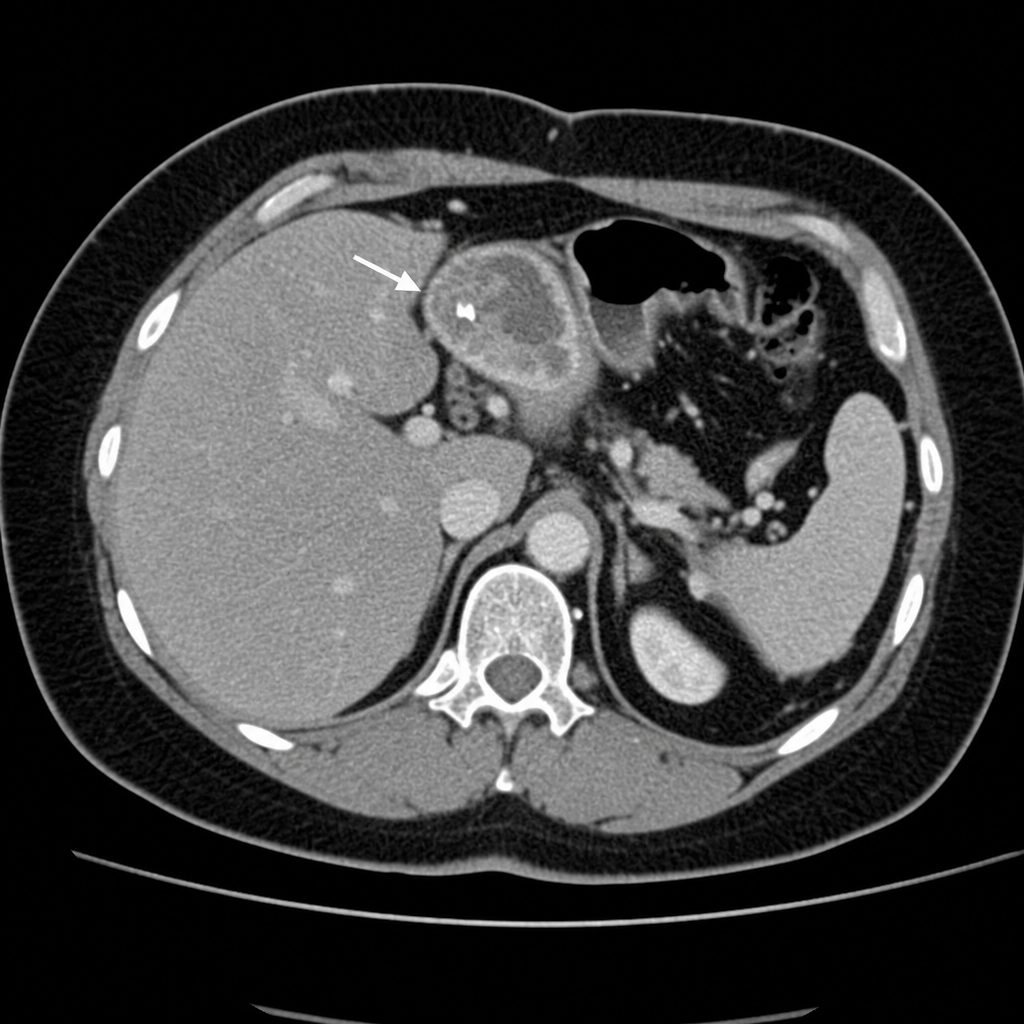
A 42-year-old man presents to the emergency department with abdominal pain. The patient was at home watching television when he experienced sudden and severe abdominal pain that prompted him to instantly call emergency medical services. The patient has a past medical history of obesity, smoking, alcoholism, hypertension, and osteoarthritis. His current medications include lisinopril and ibuprofen. His temperature is 98.5°F (36.9°C), blood pressure is 120/97 mmHg, pulse is 130/min, respirations are 22/min, and oxygen saturation is 97% on room air. The patient is in an antalgic position on the stretcher. His abdomen is rigid and demonstrates rebound tenderness and hypoactive bowel sounds. What is the next best step in management?
Q52
A 35-year-old man is admitted with an acute onset of dysphagia, odynophagia, slight retrosternal chest pain, hypersalivation, and bloody sputum. These symptoms appeared 3 hours ago during a meal when the patient ate fish. The patient’s past medical history is significant for repair of a traumatic esophageal rupture 5 years ago.
The patient’s vital signs are as follows: blood pressure 140/90 mm Hg, heart rate 87/min, respiratory rate 16/min, and temperature 36.8℃ (98.2℉). On exam, the patient is pale and breathing deeply. The oral cavity appears normal. The pharynx is erythematous but with no visible lesions. Lungs are clear to auscultation. Cardiovascular examination shows no abnormalities. The abdomen is nondistended and nontender. Which of the following interventions are indicated in this patient?
Q53
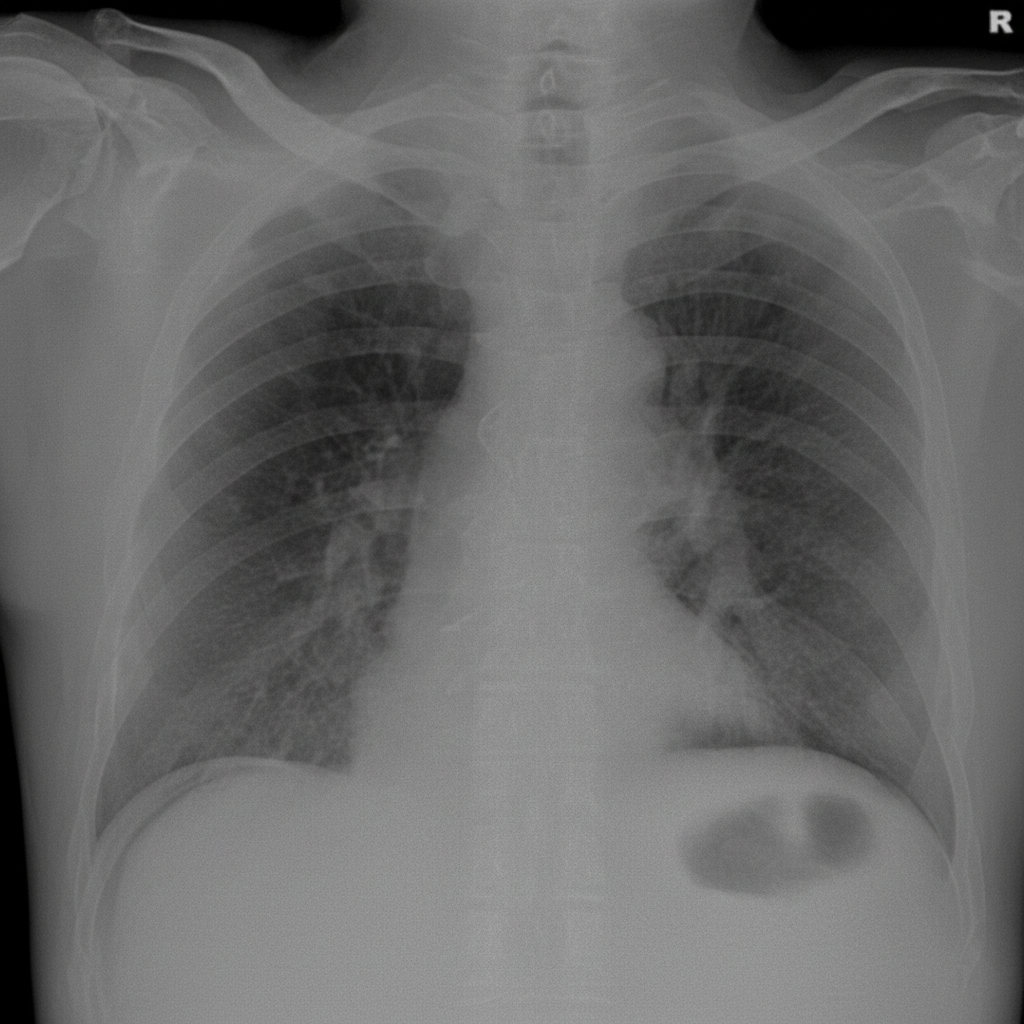
A 56-year-old man is brought to the emergency department after 4 hours of severe abdominal pain with an increase in its intensity over the last hour. His personal history is relevant for peptic ulcer disease and H. pylori infection that is being treated with clarithromycin triple therapy. Upon admission his vital signs are as follows: pulse of 120/min, a respiratory rate of 20/min, body temperature of 39°C (102.2°F), and blood pressure of 90/50 mm Hg. Physical examination reveals significant tenderness over the abdomen. A chest radiograph taken when the patient was standing erect is shown. Which of the following is the next best step in the management of this patient?
Q54
A 72-year-old woman comes to the physician for follow-up care. One year ago, she was diagnosed with a 3.8-cm infrarenal aortic aneurysm found incidentally on abdominal ultrasound. She has no complaints. She has hypertension, type 2 diabetes mellitus, and COPD. Current medications include hydrochlorothiazide, lisinopril, glyburide, and an albuterol inhaler. She has smoked a pack of cigarettes daily for 45 years. Her temperature is 37°C (98.6°F), pulse is 90/min, respirations are 12/min, and blood pressure is 145/85 mm Hg. Examination shows a faint abdominal bruit on auscultation. Ultrasonography of the abdomen shows a 4.9-cm saccular dilation of the infrarenal aorta. Which of the following is the most appropriate next step in management?
Q55
A 62-year-old man presents to his primary care physician. He was brought in by his daughter as he has refused to see a physician for the past 10 years. The patient has been having worsening abdominal pain. He claims that it was mild initially but has gotten worse over the past week. The patient has been eating lots of vegetables recently to help with his pain. The patient has a past medical history of constipation and a 50 pack-year smoking history. He is not currently taking any medications. On review of systems, the patient endorses trouble defecating and blood that coats his stool. His temperature is 99.5°F (37.5°C), blood pressure is 197/128 mmHg, pulse is 100/min, respirations are 17/min, and oxygen saturation is 98% on room air. On abdominal exam, the patient complains of right upper quadrant tenderness and a palpable liver edge that extends 4 cm beneath the costal margin. Murphy's sign is positive. HEENT exam is notable for poor dentition, normal sclera, and normal extraocular movements. There are no palpable lymph nodes. Laboratory studies are ordered as seen below.
Hemoglobin: 9 g/dL
Hematocrit: 30%
Leukocyte count: 7,500/mm^3 with normal differential
Platelet count: 199,000/mm^3
Serum:
Na+: 140 mEq/L
Cl-: 101 mEq/L
K+: 4.0 mEq/L
HCO3-: 23 mEq/L
BUN: 29 mg/dL
Glucose: 197 mg/dL
Creatinine: 1.4 mg/dL
Ca2+: 10.2 mg/dL
Total bilirubin: 1.1 mg/dL
AST: 150 U/L
ALT: 112 U/L
Which of the following is the most likely diagnosis?
Q56
A 63-year-old man presents to the ambulatory medical clinic with symptoms of dysphagia and ‘heartburn’, which he states have become more troublesome over the past year. Past medical history is significant for primary hypertension. On physical exam, he is somewhat tender to palpation over his upper abdomen. The vital signs include: temperature 36.7°C (98.0°F), blood pressure 126/74 mm Hg, heart rate 74/min, and respiratory rate 14/min. Barium swallow fluoroscopy demonstrates a subdiaphragmatic gastroesophageal junction, with herniation of the gastric fundus into the left hemithorax. Given the following options, what is the most appropriate next step in the management of this patient’s underlying condition?
Q57
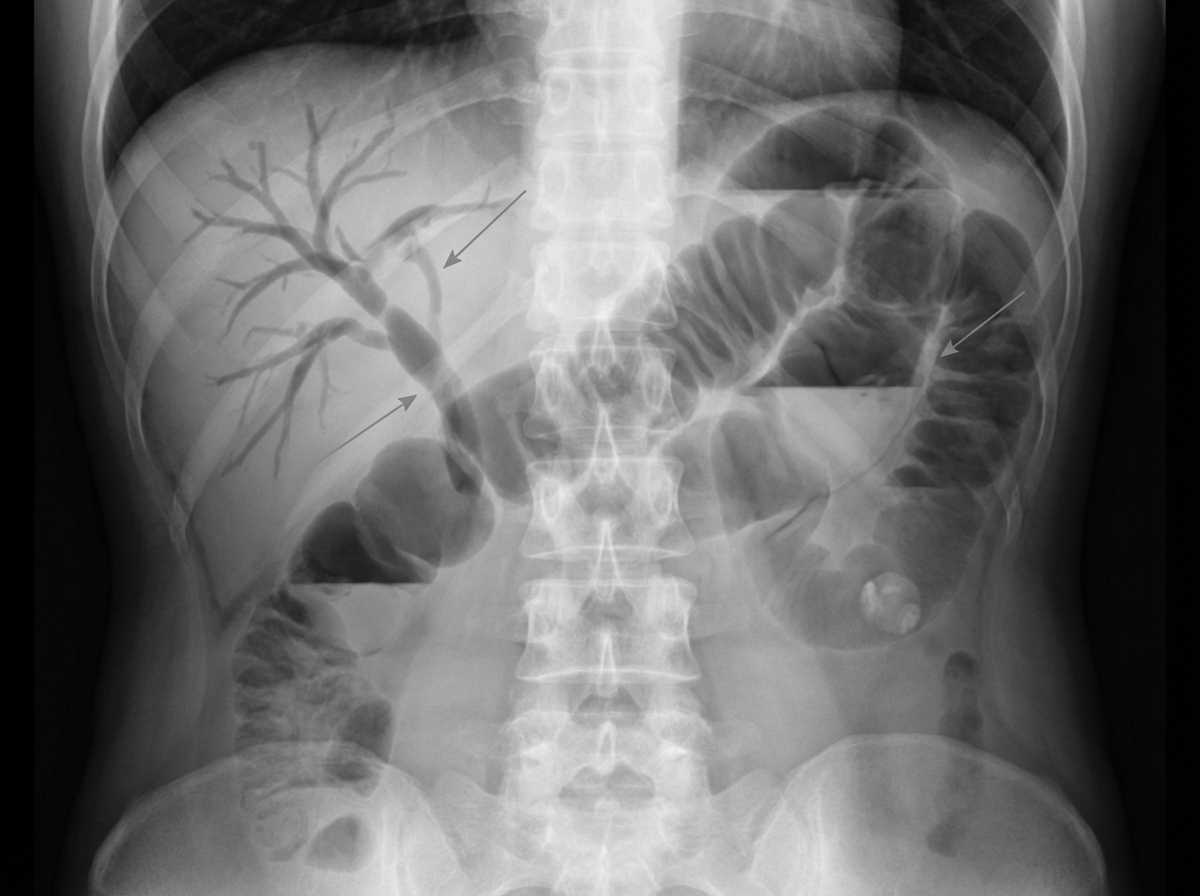
A 46-year-old woman comes to the emergency department because of intermittent abdominal pain and vomiting for 2 days. The abdominal pain is colicky and diffuse. The patient's last bowel movement was 3 days ago. She has had multiple episodes of upper abdominal pain that radiates to her scapulae and vomiting over the past 3 months; her symptoms subsided after taking ibuprofen. She has coronary artery disease, type 2 diabetes mellitus, gastroesophageal reflux disease, and osteoarthritis of both knees. Current medications include aspirin, atorvastatin, rabeprazole, insulin, and ibuprofen. She appears uncomfortable. Her temperature is 39°C (102.2°F), pulse is 111/min, and blood pressure is 108/68 mm Hg. Examination shows dry mucous membranes. The abdomen is distended and tympanitic with diffuse tenderness; bowel sounds are high-pitched. Rectal examination shows a collapsed rectum. Her hemoglobin concentration is 13.8 g/dL, leukocyte count is 14,400/mm3, and platelet count is 312,000/mm3. An x-ray of the abdomen is shown. Which of the following is the most likely cause of this patient's findings?
Q58
A 57-year-old man presents with acute-onset nausea and left flank pain. He says his symptoms suddenly started 10 hours ago and have not improved. He describes the pain as severe, colicky, intermittent, and localized to the left flank. The patient denies any fever, chills, or dysuria. His past medical history is significant for nephrolithiasis, incidentally diagnosed 10 months ago on a routine ultrasound, for which he has not been treated. His family history is unremarkable. The patient is afebrile, and his vital signs are within normal limits. On physical examination, he is writhing in pain and moaning. Severe left costovertebral angle tenderness is noted. Gross hematuria is present on urinalysis. A non-contrast CT of the abdomen and pelvis reveals a 12-mm obstructing calculus at the left ureterovesical junction. Initial management, consisting of IV fluid resuscitation, antiemetics, and analgesia, is administered. Which of the following is the best next step in the management of this patient?
Q59
A 57-year-old man presents to the office with complaints of perianal pain during defecation and perineal heaviness for 1 month. He also complains of discharge around his anus, and bright red bleeding during defecation. The patient provides a history of having a sexual relationship with other men without using any methods of protection. The physical examination demonstrates edematous verrucous anal folds that are of hard consistency and painful to the touch. A proctosigmoidoscopy reveals an anal canal ulcer with well defined, indurated borders on a white background. A biopsy is taken and the results are pending. What is the most likely diagnosis?
Q60
An 18-year-old woman presents to the emergency department with severe right lower quadrant discomfort and stomach pain for the past day. She has no significant past medical history. She states that she is sexually active and uses oral contraceptive pills for birth control. Her vital signs include: blood pressure 127/81 mm Hg, pulse 101/min, respiratory rate 19/min, and temperature 39.0°C (102.2°F). Abdominal examination is significant for focal tenderness and guarding in the right lower quadrant. Blood is drawn for lab tests which reveal the following:
Hb% 13 gm/dL
Total count (WBC) 15,400 /mm3
Differential count
Neutrophils:
Segmented 70%
Band Form 5%
Lymphocytes 20%
Monocytes 5%
What is the next best step in the management of this patient?
Abdominal emergencies US Medical PG Practice Questions and MCQs
Question 51: A 42-year-old man presents to the emergency department with abdominal pain. The patient was at home watching television when he experienced sudden and severe abdominal pain that prompted him to instantly call emergency medical services. The patient has a past medical history of obesity, smoking, alcoholism, hypertension, and osteoarthritis. His current medications include lisinopril and ibuprofen. His temperature is 98.5°F (36.9°C), blood pressure is 120/97 mmHg, pulse is 130/min, respirations are 22/min, and oxygen saturation is 97% on room air. The patient is in an antalgic position on the stretcher. His abdomen is rigid and demonstrates rebound tenderness and hypoactive bowel sounds. What is the next best step in management?
A. CT of the abdomen
B. Urgent laparoscopy
C. NPO, IV fluids, and analgesics
D. Urgent laparotomy (Correct Answer)
E. Abdominal radiograph
Explanation: ***Urgent laparotomy***
- The patient's presentation with **sudden, severe abdominal pain**, a **rigid abdomen**, **rebound tenderness**, and **hypoactive bowel sounds** indicates **acute peritonitis**, most likely from a **perforated viscus**.
- In a patient with **frank peritonitis** and clinical signs of perforation, the diagnosis is **made clinically** based on physical examination findings.
- **Urgent laparotomy** (exploratory surgery) is the definitive management and should not be delayed for imaging when peritonitis is obvious.
- The patient's risk factors (NSAID use, alcoholism) further support peptic ulcer perforation as the likely etiology.
*CT of the abdomen*
- While CT scan is highly sensitive for identifying perforation and can provide anatomic detail, it is **not necessary when the diagnosis of peritonitis is clinically evident**.
- In a patient with **obvious peritonitis**, obtaining a CT scan would **delay definitive surgical treatment** without changing management.
- CT is more appropriate for stable patients with **uncertain diagnosis** or equivocal physical findings, not for those with frank peritonitis.
*Urgent laparoscopy*
- **Laparoscopy** can be used diagnostically and therapeutically in selected cases of abdominal emergencies.
- However, in a patient with diffuse peritonitis and suspected perforation, **laparotomy** is generally preferred over laparoscopy as it provides better exposure, faster source control, and easier peritoneal lavage.
- Laparoscopy may be considered in stable patients with localized findings, but this patient has signs of diffuse peritonitis.
*NPO, IV fluids, and analgesics*
- These are **essential supportive measures** and should be initiated immediately as part of resuscitation.
- However, they are **adjunctive** to definitive surgical management and do not constitute the "next best step" in a patient requiring emergency surgery.
- These measures should be initiated concurrently while preparing for urgent laparotomy.
*Abdominal radiograph*
- An **upright chest X-ray** or **abdominal radiograph** can show **free air under the diaphragm** (pneumoperitoneum) in cases of perforation.
- However, it is **only 50-70% sensitive**, meaning it misses many perforations.
- In a patient with **clinical peritonitis**, the absence of free air on X-ray does **not rule out perforation** and should not delay surgery.
- Imaging should not delay surgical intervention when peritonitis is clinically evident.
Question 52: A 35-year-old man is admitted with an acute onset of dysphagia, odynophagia, slight retrosternal chest pain, hypersalivation, and bloody sputum. These symptoms appeared 3 hours ago during a meal when the patient ate fish. The patient’s past medical history is significant for repair of a traumatic esophageal rupture 5 years ago.
The patient’s vital signs are as follows: blood pressure 140/90 mm Hg, heart rate 87/min, respiratory rate 16/min, and temperature 36.8℃ (98.2℉). On exam, the patient is pale and breathing deeply. The oral cavity appears normal. The pharynx is erythematous but with no visible lesions. Lungs are clear to auscultation. Cardiovascular examination shows no abnormalities. The abdomen is nondistended and nontender. Which of the following interventions are indicated in this patient?
A. Foley catheter removal
B. Removal with Magill forceps
C. Bougienage
D. Emergency endoscopy (Correct Answer)
E. IV administration of glucagon
Explanation: ***Emergency endoscopy***
- This patient presents with **acute dysphagia**, **odynophagia**, and **bloody sputum** after ingesting fish, strongly suggesting an esophageal foreign body, possibly with esophageal injury or perforation given his history of esophageal repair.
- **Emergency endoscopy** is the most appropriate intervention to directly visualize, retrieve the foreign body, assess the extent of injury, and manage potential complications like perforation.
*Foley catheter removal*
- The patient's presentation does not provide any information or indication for the presence of a **Foley catheter**, which is typically used for urinary drainage.
- Removing a Foley catheter would not address the patient's acute esophageal symptoms or potential foreign body.
*Removal with Magill forceps*
- While Magill forceps can be used to remove foreign bodies from the **oropharynx or hypopharynx**, they are generally not suitable for deep esophageal foreign bodies.
- This method risks blindly pushing the object further or causing additional trauma to the esophagus, especially in a patient with a history of esophageal repair.
*Bougienage*
- **Bougienage** (esophageal dilation) is contraindicated in the presence of an esophageal foreign body or suspected perforation.
- Attempting bougienage could worsen esophageal injury, push the foreign body into deeper structures, or exacerbate an existing perforation.
*IV administration of glucagon*
- **Glucagon** is sometimes used to relax the smooth muscle of the esophagus in cases of food impaction without sharp objects, to facilitate passage.
- However, it is **contraindicated** if there is suspicion of a sharp foreign body, severe esophageal injury, or perforation, as seen in this patient with bloody sputum and a history of esophageal rupture.
Question 53: A 56-year-old man is brought to the emergency department after 4 hours of severe abdominal pain with an increase in its intensity over the last hour. His personal history is relevant for peptic ulcer disease and H. pylori infection that is being treated with clarithromycin triple therapy. Upon admission his vital signs are as follows: pulse of 120/min, a respiratory rate of 20/min, body temperature of 39°C (102.2°F), and blood pressure of 90/50 mm Hg. Physical examination reveals significant tenderness over the abdomen. A chest radiograph taken when the patient was standing erect is shown. Which of the following is the next best step in the management of this patient?
A. Abdominal ultrasound
B. Emergency abdominal surgery (Correct Answer)
C. Abdominal computed tomography
D. Nasogastric tube placement followed by gastric lavage
E. Emergency endoscopy
Explanation: ***Emergency abdominal surgery***
- The chest radiograph shows **free air under the diaphragm** (pneumoperitoneum), confirming a visceral perforation. The patient's severe abdominal pain, fever, tachycardia, and hypotension indicate **septic shock** secondary to peritonitis, necessitating immediate surgical intervention.
- Delaying surgery for further diagnostic tests (like CT or ultrasound) or less invasive procedures would be detrimental given the patient's **hemodynamic instability** and clear evidence of perforation.
*Abdominal ultrasound*
- While an ultrasound could detect fluid collections or sometimes free air, it is **less sensitive** than an upright chest radiograph for detecting pneumoperitoneum and cannot provide the same level of detail as CT for localizing a perforation.
- In a hemodynamically unstable patient with clear signs of peritonitis and pneumoperitoneum, performing an ultrasound would **delay definitive treatment**.
*Abdominal computed tomography*
- An abdominal CT scan is excellent for detecting subtle perforations, localizing them, and assessing associated complications. However, in this patient, the **upright chest radiograph already clearly shows pneumoperitoneum**, and the patient is **hemodynamically unstable**.
- Transporting an unstable patient to CT and waiting for the scan results would **waste critical time** and increase morbidity and mortality in the setting of ongoing septic shock.
*Nasogastric tube placement followed by gastric lavage*
- **Nasogastric tube placement** is appropriate for gastric decompression in cases of suspected obstruction or ileus, but it does not address a perforation. **Gastric lavage** is indicated for specific intoxications or gastrointestinal bleeding, neither of which is the primary concern here.
- This procedure would **not treat the underlying perforation** or the resulting peritonitis and septic shock.
*Emergency endoscopy*
- While an endoscopy can diagnose and sometimes treat upper gastrointestinal perforations (especially iatrogenic ones), it is typically **contraindicated in cases of suspected free perforation** due to the risk of exacerbating the pneumoperitoneum and further contamination.
- In an unstable patient with clear pneumoperitoneum and peritonitis, **surgery is the definitive treatment**, not endoscopy.
Question 54: A 72-year-old woman comes to the physician for follow-up care. One year ago, she was diagnosed with a 3.8-cm infrarenal aortic aneurysm found incidentally on abdominal ultrasound. She has no complaints. She has hypertension, type 2 diabetes mellitus, and COPD. Current medications include hydrochlorothiazide, lisinopril, glyburide, and an albuterol inhaler. She has smoked a pack of cigarettes daily for 45 years. Her temperature is 37°C (98.6°F), pulse is 90/min, respirations are 12/min, and blood pressure is 145/85 mm Hg. Examination shows a faint abdominal bruit on auscultation. Ultrasonography of the abdomen shows a 4.9-cm saccular dilation of the infrarenal aorta. Which of the following is the most appropriate next step in management?
A. Elective endovascular aneurysm repair (Correct Answer)
B. Adjustment of cardiovascular risk factors and follow-up ultrasound in 12 months
C. Adjustment of cardiovascular risk factors and follow-up ultrasound in 6 months
D. Elective open aneurysm repair
E. Adjustment of cardiovascular risk factors and follow-up CT in 6 months
Explanation: ***Elective endovascular aneurysm repair***
- The patient's **infrarenal aortic aneurysm** has grown from 3.8 cm to 4.9 cm in one year, approaching the **5.0 cm threshold for intervention in women** (compared to 5.5 cm for men). The **rapid growth rate of 1.1 cm/year** (normal is <0.5 cm/year) significantly increases rupture risk and is an indication for intervention even before reaching the absolute size threshold.
- Given her multiple comorbidities (hypertension, diabetes, COPD, 45 pack-year smoking history), **endovascular aneurysm repair (EVAR)** is preferred over open repair due to lower perioperative morbidity and mortality in high-risk surgical candidates.
- The combination of near-threshold size and rapid growth makes elective repair appropriate now rather than continued surveillance.
*Adjustment of cardiovascular risk factors and follow-up ultrasound in 12 months*
- While **risk factor modification** (smoking cessation, blood pressure control) is essential, it is insufficient as the primary management given the aneurysm's significant growth and imminent rupture risk.
- A 12-month follow-up interval is too long for a rapidly growing aneurysm (grew 1.1 cm in the past year), as this increases the risk of rupture without intervention.
*Adjustment of cardiovascular risk factors and follow-up ultrasound in 6 months*
- **Risk factor management** is important but does not address the immediate need for intervention due to the aneurysm's size approaching the threshold and concerning growth rate.
- While 6-month surveillance might be considered for smaller aneurysms with slower growth, this aneurysm's rapid expansion rate suggests it will exceed 5.0 cm well before the next surveillance interval, increasing rupture risk unnecessarily.
*Elective open aneurysm repair*
- **Open aneurysm repair** is an effective treatment but carries significantly higher perioperative risks (30-day mortality 3-5% vs 1-2% for EVAR) compared to endovascular repair, especially in patients with multiple comorbidities.
- Given this patient's COPD, smoking history, and cardiovascular risk factors, EVAR is the preferred approach to minimize surgical stress and improve perioperative outcomes.
*Adjustment of cardiovascular risk factors and follow-up CT in 6 months*
- **Risk factor modification** alone is insufficient given the aneurysm's proximity to intervention threshold and rapid growth rate.
- While CT provides more detailed anatomic imaging for surgical planning, continued surveillance is inappropriate when the patient already meets criteria for intervention. Additionally, CT involves radiation exposure and is typically reserved for pre-operative planning rather than routine surveillance.
Question 55: A 62-year-old man presents to his primary care physician. He was brought in by his daughter as he has refused to see a physician for the past 10 years. The patient has been having worsening abdominal pain. He claims that it was mild initially but has gotten worse over the past week. The patient has been eating lots of vegetables recently to help with his pain. The patient has a past medical history of constipation and a 50 pack-year smoking history. He is not currently taking any medications. On review of systems, the patient endorses trouble defecating and blood that coats his stool. His temperature is 99.5°F (37.5°C), blood pressure is 197/128 mmHg, pulse is 100/min, respirations are 17/min, and oxygen saturation is 98% on room air. On abdominal exam, the patient complains of right upper quadrant tenderness and a palpable liver edge that extends 4 cm beneath the costal margin. Murphy's sign is positive. HEENT exam is notable for poor dentition, normal sclera, and normal extraocular movements. There are no palpable lymph nodes. Laboratory studies are ordered as seen below.
Hemoglobin: 9 g/dL
Hematocrit: 30%
Leukocyte count: 7,500/mm^3 with normal differential
Platelet count: 199,000/mm^3
Serum:
Na+: 140 mEq/L
Cl-: 101 mEq/L
K+: 4.0 mEq/L
HCO3-: 23 mEq/L
BUN: 29 mg/dL
Glucose: 197 mg/dL
Creatinine: 1.4 mg/dL
Ca2+: 10.2 mg/dL
Total bilirubin: 1.1 mg/dL
AST: 150 U/L
ALT: 112 U/L
Which of the following is the most likely diagnosis?
A. Hepatocellular carcinoma
B. Colon cancer (Correct Answer)
C. Pancreatic cancer
D. Acute cholecystitis
E. Acute appendicitis
Explanation: ***Colon cancer***
- The patient's presentation with **worsening abdominal pain**, chronic constipation, **blood coating the stool (hematochezia)**, and **significant anemia** (hemoglobin 9 g/dL, hematocrit 30%) are highly suggestive of **colorectal malignancy**. His **50 pack-year smoking history** is a significant risk factor for colon cancer.
- The **palpable liver edge extending 4 cm below the costal margin** and **elevated AST/ALT** (150/112 U/L) suggest **hepatic metastases**, which are common with advanced colon cancer and explain the hepatomegaly and liver enzyme elevation.
- While the positive Murphy's sign suggests concurrent **acute cholecystitis**, the constellation of chronic GI symptoms (constipation, hematochezia, anemia) indicates that **colon cancer is the underlying primary diagnosis**, with possible complications including liver metastases and secondary cholecystitis (which can occur in cancer patients due to biliary obstruction from liver metastases or other factors).
- This is the **most likely unifying diagnosis** that explains the majority of clinical findings.
*Hepatocellular carcinoma*
- While **hepatocellular carcinoma (HCC)** can cause hepatomegaly, RUQ pain, and elevated liver enzymes, it does not explain the pronounced lower GI symptoms such as **chronic constipation** and **blood coating the stool (hematochezia)**.
- HCC typically requires risk factors like **chronic viral hepatitis (HBV/HCV)** or **cirrhosis**, which are not mentioned in this case. The patient's presentation is more consistent with a primary GI malignancy with hepatic metastases.
*Pancreatic cancer*
- **Pancreatic cancer** typically presents with **epigastric pain radiating to the back**, weight loss, and **painless jaundice** (courvoisier sign), but the bilirubin is only minimally elevated (1.1 mg/dL) here.
- It does not typically cause **hematochezia** or the pattern of **chronic constipation** seen in this patient, making it less likely than colon cancer.
*Acute cholecystitis*
- **Acute cholecystitis** would explain the **RUQ pain**, **positive Murphy's sign**, and **low-grade fever** (99.5°F), and may indeed be present concurrently.
- However, it does NOT explain the **chronic constipation**, **hematochezia**, **significant anemia** (Hgb 9 g/dL), or the chronic nature of symptoms. These findings point to an underlying GI malignancy as the primary diagnosis.
- Acute cholecystitis alone would not cause blood in the stool or chronic anemia, making it less likely to be the primary/most likely diagnosis.
*Acute appendicitis*
- **Acute appendicitis** presents with **acute onset right lower quadrant (RLQ) pain**, rebound tenderness, fever, and typically **leukocytosis** (WBC often >10,000/mm³).
- This patient has **normal WBC** (7,500/mm³), **RUQ pain** (not RLQ), chronic symptoms, and findings suggesting liver involvement, making appendicitis highly unlikely.
Question 56: A 63-year-old man presents to the ambulatory medical clinic with symptoms of dysphagia and ‘heartburn’, which he states have become more troublesome over the past year. Past medical history is significant for primary hypertension. On physical exam, he is somewhat tender to palpation over his upper abdomen. The vital signs include: temperature 36.7°C (98.0°F), blood pressure 126/74 mm Hg, heart rate 74/min, and respiratory rate 14/min. Barium swallow fluoroscopy demonstrates a subdiaphragmatic gastroesophageal junction, with herniation of the gastric fundus into the left hemithorax. Given the following options, what is the most appropriate next step in the management of this patient’s underlying condition?
A. Lifestyle modification
B. Antacid therapy
C. Cimetidine
D. Surgical gastropexy (Correct Answer)
E. Omeprazole
Explanation: ***Surgical gastropexy***
- This patient has a **paraesophageal hiatal hernia** (Type II or III), evidenced by the barium swallow showing a **subdiaphragmatic gastroesophageal junction** with **herniation of the gastric fundus into the left hemithorax**.
- In paraesophageal hernias, the GE junction remains in relatively normal position while the gastric fundus herniates through the diaphragmatic hiatus alongside the esophagus.
- **Symptomatic paraesophageal hernias** warrant **surgical repair** (fundoplication with hernia reduction and hiatal repair) due to significant risk of complications including **gastric volvulus, strangulation, incarceration**, and **ischemia**.
- The patient's progressive dysphagia and year-long symptoms indicate this is not an incidental finding but a symptomatic hernia requiring definitive surgical management.
*Omeprazole*
- **Proton pump inhibitors** are first-line medical therapy for **sliding hiatal hernias (Type I)** where the GE junction migrates above the diaphragm, causing GERD symptoms.
- In **paraesophageal hernias**, the primary pathophysiology is **mechanical** (herniation and potential obstruction/strangulation), not acid-related, so PPIs address symptoms but not the underlying structural problem.
- While PPIs may provide some symptomatic relief, they do **not prevent the serious mechanical complications** of paraesophageal hernias and are insufficient as definitive management.
*Lifestyle modification*
- **Lifestyle modifications** are appropriate adjunctive measures for GERD and sliding hiatal hernias but do not address the mechanical nature and complication risk of paraesophageal hernias.
- They cannot prevent gastric volvulus or strangulation, which are life-threatening complications unique to paraesophageal hernias.
*Antacid therapy*
- **Antacids** provide temporary symptom relief but have no role in managing the structural abnormality or preventing complications of paraesophageal hernia.
- They are even less effective than PPIs for acid suppression and similarly fail to address the mechanical problem.
*Cimetidine*
- **H2-receptor antagonists** like cimetidine reduce gastric acid production but are less potent than PPIs.
- Like PPIs, they may provide some symptomatic relief but do not address the **mechanical herniation** or prevent the serious complications that make surgical repair necessary for paraesophageal hernias.
Question 57: A 46-year-old woman comes to the emergency department because of intermittent abdominal pain and vomiting for 2 days. The abdominal pain is colicky and diffuse. The patient's last bowel movement was 3 days ago. She has had multiple episodes of upper abdominal pain that radiates to her scapulae and vomiting over the past 3 months; her symptoms subsided after taking ibuprofen. She has coronary artery disease, type 2 diabetes mellitus, gastroesophageal reflux disease, and osteoarthritis of both knees. Current medications include aspirin, atorvastatin, rabeprazole, insulin, and ibuprofen. She appears uncomfortable. Her temperature is 39°C (102.2°F), pulse is 111/min, and blood pressure is 108/68 mm Hg. Examination shows dry mucous membranes. The abdomen is distended and tympanitic with diffuse tenderness; bowel sounds are high-pitched. Rectal examination shows a collapsed rectum. Her hemoglobin concentration is 13.8 g/dL, leukocyte count is 14,400/mm3, and platelet count is 312,000/mm3. An x-ray of the abdomen is shown. Which of the following is the most likely cause of this patient's findings?
A. Cecal torsion
B. Viscus perforation
C. Colonic diverticular inflammation
D. Cholecystoenteric fistula (Correct Answer)
E. Bowel infarction
Explanation: ***Cholecystoenteric fistula***
- The patient's history of recurrent upper abdominal pain radiating to the scapula, responsive to NSAIDs, is highly suggestive of **biliary colic** due to **cholelithiasis**.
- The diffuse colicky pain, vomiting, distended abdomen with high-pitched bowel sounds, and particularly the **pneumobilia** (air in the biliary tree, visible as branching lucency in the hepatic area on X-ray, indicated by red arrows) along with signs of **small bowel obstruction** (dilated small bowel loops and air-fluid levels, indicated by green arrows), are classic features of **gallstone ileus** resulting from a cholecystoenteric fistula.
*Cecal torsion*
- While cecal torsion can cause a large bowel obstruction with colicky pain and distension, it typically presents with a **dilated cecum** and a characteristic "coffee-bean" appearance on X-ray, often without pneumobilia.
- The history of recurrent biliary pain and the presence of pneumobilia are not typical for cecal torsion.
*Viscus perforation*
- A viscus perforation would likely cause **sudden, severe onset abdominal pain**, signs of peritonitis, and usually **free air under the diaphragm** on an upright chest X-ray.
- While the patient has diffuse tenderness, the X-ray findings do not show free intraperitoneal air; instead, they show pneumobilia and small bowel obstruction.
*Colonic diverticuli inflammation*
- **Diverticulitis** typically presents with **left lower quadrant pain**, fever, and changes in bowel habits, though diffuse pain can occur with complications.
- It does not explain the history of recurrent upper abdominal pain radiating to the scapula or the radiologic findings of pneumobilia and small bowel obstruction.
*Bowel infarction*
- Bowel infarction often presents with **severe, disproportionate abdominal pain** (pain out of proportion to exam findings), bloody diarrhea, and signs of sepsis.
- While the patient has some signs of systemic inflammation (fever, leukocytosis), the X-ray findings of pneumobilia and typical small bowel obstruction, without signs of portal venous gas or extensive bowel wall thickening, make infarction less likely as the primary cause.
Question 58: A 57-year-old man presents with acute-onset nausea and left flank pain. He says his symptoms suddenly started 10 hours ago and have not improved. He describes the pain as severe, colicky, intermittent, and localized to the left flank. The patient denies any fever, chills, or dysuria. His past medical history is significant for nephrolithiasis, incidentally diagnosed 10 months ago on a routine ultrasound, for which he has not been treated. His family history is unremarkable. The patient is afebrile, and his vital signs are within normal limits. On physical examination, he is writhing in pain and moaning. Severe left costovertebral angle tenderness is noted. Gross hematuria is present on urinalysis. A non-contrast CT of the abdomen and pelvis reveals a 12-mm obstructing calculus at the left ureterovesical junction. Initial management, consisting of IV fluid resuscitation, antiemetics, and analgesia, is administered. Which of the following is the best next step in the management of this patient?
A. Percutaneous nephrostomy
B. Percutaneous nephrostolithotomy (PCNL)
C. Extracorporeal shockwave lithotripsy (ESWL)
D. 24-hour urine chemistry
E. Ureteroscopy (Correct Answer)
Explanation: ***Ureteroscopy***
- Ureteroscopy is the preferred treatment for **prompt stone removal** in patients with a large **ureteral calculus** (e.g., 12 mm) causing obstruction and intractable symptoms, especially when located in the **distal ureter** near the ureterovesical junction.
- This procedure allows for direct visualization of the stone, fragmentation using a **laser**, and removal with a basket, providing immediate relief and preventing potential complications like **hydronephrosis** or infection.
*Percutaneous nephrostomy*
- This procedure is typically reserved for cases where there is **urosepsis** or severe **hydronephrosis** requiring urgent decompression, which is not indicated here as the patient is afebrile and hemodynamically stable.
- While it provides drainage, it does not directly remove the stone and is less definitive for a distal ureteral stone.
*Percutaneous nephrostolithotomy (PCNL)*
- **PCNL** is primarily used for **large kidney stones** (> 2 cm) or complex renal calculi, not for ureteral stones.
- It involves accessing the kidney directly through the skin to remove stones, which is an overly invasive approach for a stone located at the ureterovesical junction.
*Extracorporeal shockwave lithotripsy (ESWL)*
- **ESWL** is less effective for large, **distal ureteral stones**, as the success rate for stones greater than 10 mm and those located distally is lower.
- While it is non-invasive, ureteroscopy offers a higher success rate for immediate clearance in this specific clinical scenario.
*24-hour urine chemistry*
- This is a diagnostic study performed to evaluate the **metabolic causes of stone formation** and to guide preventive strategies.
- It is an important step in preventing future stone recurrence but is not an immediate management step for an acute, obstructing ureteral stone.
Question 59: A 57-year-old man presents to the office with complaints of perianal pain during defecation and perineal heaviness for 1 month. He also complains of discharge around his anus, and bright red bleeding during defecation. The patient provides a history of having a sexual relationship with other men without using any methods of protection. The physical examination demonstrates edematous verrucous anal folds that are of hard consistency and painful to the touch. A proctosigmoidoscopy reveals an anal canal ulcer with well defined, indurated borders on a white background. A biopsy is taken and the results are pending. What is the most likely diagnosis?
A. Anal cancer (Correct Answer)
B. Polyps
C. Anal fissure
D. Hemorrhoids
E. Proctitis
Explanation: ***Anal cancer***
- The patient's presentation with **perianal pain**, **bleeding**, **discharge**, and **edematous verrucous anal folds** (suggesting a lesion) are highly suspicious for anal cancer. His history of unprotected sexual relationships with men is a significant risk factor for **HPV infection**, which is a leading cause of anal squamous cell carcinoma.
- The proctosigmoidoscopy findings of an **anal canal ulcer with well-defined, indurated borders** and a white background further point towards a malignant lesion, making anal cancer the most likely diagnosis.
*Polyps*
- While polyps can cause bleeding, they typically do not present with **indurated, painful verrucous lesions** or an ulcer with defined borders.
- Polyps are usually soft and less likely to cause the severe perianal pain and perineal heaviness described.
*Anal fissure*
- An anal fissure is a **linear tear** in the anal canal, causing sharp pain during defecation and bright red blood.
- It would not typically present with **edematous verrucous anal folds**, perineal heaviness, or an indurated ulcer as seen on proctosigmoidoscopy.
*Hemorrhoids*
- Hemorrhoids commonly cause **bright red bleeding** and can cause discomfort or heaviness.
- However, they usually appear as swollen vascular cushions and do not typically present as **indurated, painful verrucous lesions** or an ulcer with defined borders.
*Proctitis*
- Proctitis is an inflammation of the rectum, causing rectal pain, tenesmus, and bleeding, often due to **inflammatory bowel disease** or **infections**.
- While it can cause some of the symptoms, it wouldn't typically manifest as a distinct **indurated, verrucous lesion** or an ulcer with firm borders, which are more indicative of a mass.
Question 60: An 18-year-old woman presents to the emergency department with severe right lower quadrant discomfort and stomach pain for the past day. She has no significant past medical history. She states that she is sexually active and uses oral contraceptive pills for birth control. Her vital signs include: blood pressure 127/81 mm Hg, pulse 101/min, respiratory rate 19/min, and temperature 39.0°C (102.2°F). Abdominal examination is significant for focal tenderness and guarding in the right lower quadrant. Blood is drawn for lab tests which reveal the following:
Hb% 13 gm/dL
Total count (WBC) 15,400 /mm3
Differential count
Neutrophils:
Segmented 70%
Band Form 5%
Lymphocytes 20%
Monocytes 5%
What is the next best step in the management of this patient?
A. Upper gastrointestinal series
B. Pelvic exam
C. Ultrasound of the appendix
D. Upper gastrointestinal endoscopy
E. Ultrasound of the pelvis (Correct Answer)
Explanation: ***Ultrasound of the pelvis***
- In a young woman presenting with **right lower quadrant pain, fever, leukocytosis with left shift, and peritoneal signs (guarding)**, the next best step is **pelvic ultrasound**.
- This imaging modality can evaluate **both surgical and gynecological causes** of acute abdomen, including **appendicitis, ovarian torsion, tubo-ovarian abscess, ectopic pregnancy**, and **ruptured ovarian cyst**.
- **Pelvic ultrasound is the first-line imaging** for RLQ pain in women of reproductive age because it avoids radiation and provides comprehensive evaluation of pelvic structures.
- The clinical picture (high fever 39°C, significant leukocytosis 15,400 with left shift, guarding) suggests **acute appendicitis** as the most likely diagnosis, but gynecological emergencies must also be excluded.
*Pelvic exam*
- While important in evaluating gynecological causes, a **pelvic exam should not precede imaging** in a patient with peritoneal signs (guarding) and high suspicion for surgical emergency.
- In the setting of acute abdomen with fever and leukocytosis, **imaging takes priority** to identify the source and guide management.
- Pelvic exam would be appropriate **after imaging** if gynecological pathology is identified or if there are specific findings suggesting PID (bilateral pain, cervical discharge).
- The presentation is more consistent with **appendicitis than PID**, which typically causes bilateral lower abdominal pain and cervical motion tenderness.
*Upper gastrointestinal series*
- An **upper GI series** uses X-rays and contrast to visualize the esophagus, stomach, and duodenum.
- It is indicated for evaluating **GERD, peptic ulcer disease, or dysphagia**, which are not suggested by this patient's acute RLQ pain and fever.
- This would be inappropriate for acute abdominal pain with peritoneal signs.
*Upper gastrointestinal endoscopy*
- This procedure directly visualizes the upper GI tract to diagnose **esophagitis, gastric ulcers, or malignancy**.
- It has no role in the evaluation of acute **lower quadrant pain** with systemic inflammatory signs.
- This would delay appropriate diagnosis and treatment of a surgical emergency.
*Ultrasound of the appendix*
- While **ultrasound can visualize the appendix**, a **pelvic ultrasound** is preferred because it provides a **comprehensive evaluation** of both the appendix and gynecological structures.
- In women of reproductive age with RLQ pain, gynecological causes must be excluded, making **pelvic ultrasound more appropriate** than focusing solely on the appendix.
- If pelvic ultrasound is inconclusive for appendicitis, **CT abdomen/pelvis with contrast** would be the next step.